In the state of Georgia, the Affidavit of Correction form serves as a vital tool for individuals seeking to rectify errors or omissions in official documents, such as property deeds or vital records. This form is particularly important for ensuring that public records accurately reflect the true nature of a transaction or event, thereby preventing potential disputes or misunderstandings in the future. The process of completing this affidavit typically involves providing specific details about the original document, including the nature of the error and the correct information that should replace it. By signing the affidavit, individuals affirm the truthfulness of their corrections under penalty of perjury, which underscores the importance of honesty in this process. Furthermore, once properly executed and filed, the affidavit can help restore clarity and accuracy to public records, ultimately benefiting not only the individual involved but also the broader community that relies on these documents for legal and administrative purposes.
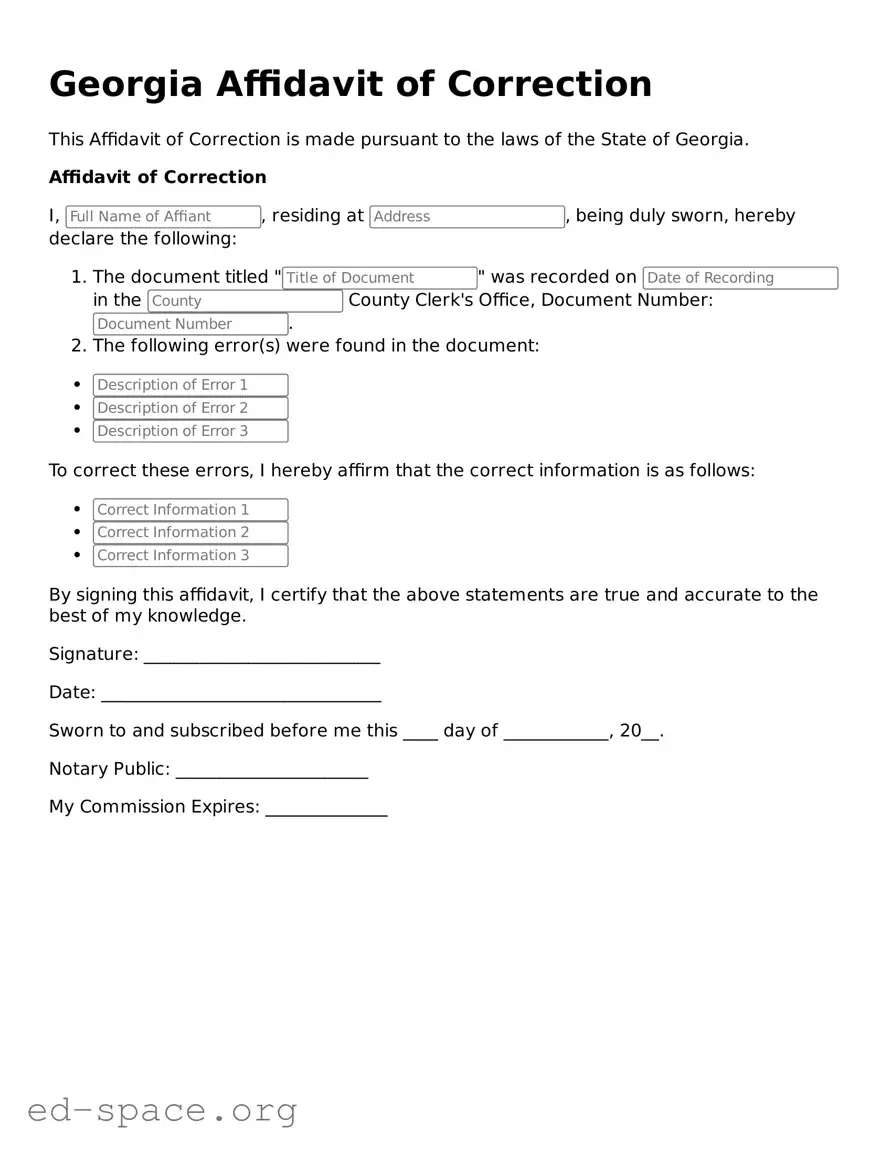
Georgia Affidavit of Correction
This Affidavit of Correction is made pursuant to the laws of the State of Georgia.
Affidavit of Correction
I, , residing at , being duly sworn, hereby declare the following:
To correct these errors, I hereby affirm that the correct information is as follows:
By signing this affidavit, I certify that the above statements are true and accurate to the best of my knowledge.
Signature: ___________________________
Date: ________________________________
Sworn to and subscribed before me this ____ day of ____________, 20__.
Notary Public: ______________________
My Commission Expires: ______________
| Fact Name | Details |
|---|---|
| Purpose | The Georgia Affidavit of Correction is used to correct errors in public records. |
| Governing Law | The form is governed by Georgia law, specifically O.C.G.A. § 15-6-77. |
| Who Can File | Any individual or entity with a vested interest in the document can file the affidavit. |
| Common Uses | It is commonly used to correct typographical errors, incorrect names, or misfiled documents. |
| Filing Location | The affidavit must be filed with the appropriate county clerk's office. |
| Signature Requirement | The affidavit must be signed by the individual correcting the information. |
| Supporting Documents | Additional documentation may be required to substantiate the correction. |
| Fees | Filing fees may apply, and they vary by county. |
| Effectiveness | The correction takes effect once the affidavit is properly filed and recorded. |
Once you have the Georgia Affidavit of Correction form in hand, the next step is to accurately fill it out. This form is essential for correcting errors in previously filed documents. Ensure that you have all necessary information at your disposal to complete the form correctly.
After filling out the form, review it carefully to ensure all information is accurate and complete. Once satisfied, you can proceed to submit it to the appropriate office or authority as required.
What is the Georgia Affidavit of Correction form?
The Georgia Affidavit of Correction form is a legal document used to rectify errors in official records. This could include mistakes in property deeds, titles, or other public documents. By filing this affidavit, individuals can ensure that the correct information is officially recognized, helping to avoid potential disputes or confusion in the future.
Who can file an Affidavit of Correction in Georgia?
Any individual or entity that has a vested interest in the document in question can file an Affidavit of Correction. This typically includes property owners, title holders, or their authorized representatives. It’s important to ensure that the person filing has the legal authority to make corrections to the document.
What types of errors can be corrected using this form?
The Affidavit of Correction can address a variety of errors, including typographical mistakes, incorrect names, wrong property descriptions, and other clerical errors. However, it is crucial to note that the form cannot be used to change substantive information or alter the intent of the original document.
How do I complete the Georgia Affidavit of Correction form?
To complete the form, you will need to provide specific information about the original document, including the nature of the error and the correct information. Be sure to include your signature and date the document. It’s advisable to review the form carefully to ensure all information is accurate before submission.
Where do I submit the Affidavit of Correction once it is completed?
After completing the Affidavit of Correction, you must submit it to the appropriate county office where the original document was filed. This is typically the county clerk’s office or the land records office. Some counties may allow electronic submissions, while others may require in-person delivery or mailing.
Is there a fee associated with filing the Affidavit of Correction?
Yes, there may be a fee for filing the Affidavit of Correction. The amount can vary by county, so it’s a good idea to check with the local office for the exact fee structure. Payment methods may also differ, so be prepared with the appropriate form of payment when you submit your affidavit.
What happens after I file the Affidavit of Correction?
Once filed, the Affidavit of Correction will be reviewed by the county office. If everything is in order, the correction will be officially recorded, and you will receive confirmation of the update. It’s wise to keep a copy of the filed affidavit for your records, as it serves as proof of the correction made.
Incomplete Information: Failing to provide all required details can lead to delays. Make sure to fill in every section of the form.
Incorrect Notarization: The affidavit must be notarized correctly. Ensure that the notary public signs and stamps the document as required.
Wrong Identification: Using incorrect identification can invalidate the affidavit. Double-check that the ID matches the name on the form.
Missing Signatures: Forgetting to sign the affidavit is a common mistake. All necessary parties must sign before submission.
Failure to Attach Supporting Documents: Some corrections may require additional documentation. Ensure you attach all necessary files.
Not Following Submission Guidelines: Each county may have different submission requirements. Verify the correct process for your specific location.
Ignoring Deadlines: Submitting the affidavit late can lead to complications. Be aware of any deadlines associated with your correction.
When filing an Affidavit of Correction in Georgia, several other forms and documents may be needed to support the process. Each of these documents serves a specific purpose and can help clarify or rectify issues related to legal records. Below is a list of commonly used forms alongside the Affidavit of Correction.
Understanding these documents can facilitate the correction process and ensure that all necessary information is submitted accurately. It is advisable to consult with a legal professional to ensure compliance with all requirements when filing these forms.
The Affidavit of Correction form is used to amend or correct errors in official documents. It shares similarities with several other legal documents. Here are five documents that are similar to the Affidavit of Correction:
Filling out the Georgia Affidavit of Correction form can be a straightforward process if you follow the right steps. Here are ten essential do's and don'ts to keep in mind:
By adhering to these guidelines, you can help ensure a smoother experience when submitting your Georgia Affidavit of Correction form.
The Georgia Affidavit of Correction form is often misunderstood. Here are six common misconceptions about this document:
Understanding these misconceptions can help individuals navigate the process more effectively and avoid potential pitfalls when dealing with the Georgia Affidavit of Correction form.
When filling out and using the Georgia Affidavit of Correction form, keep these key takeaways in mind: