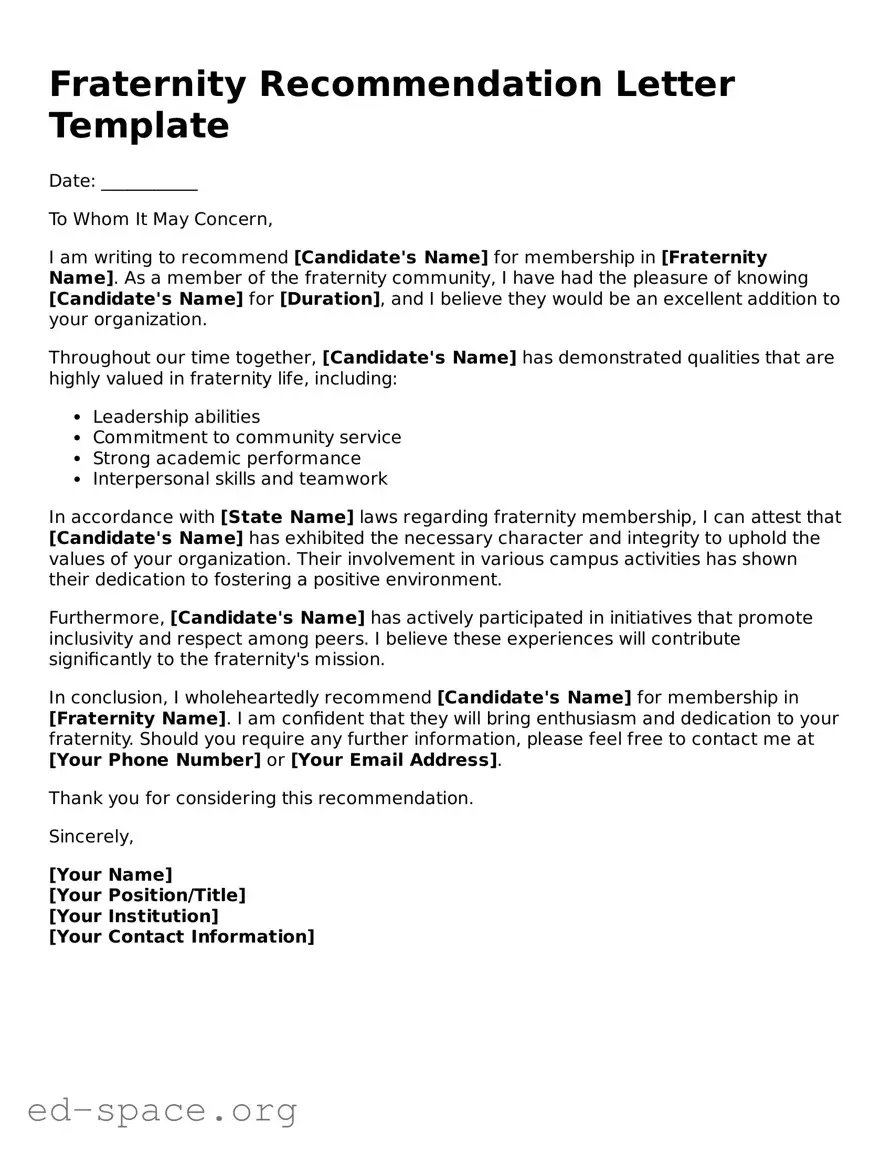
The Fraternity Recommendation Letter form serves as a crucial tool in the recruitment process for many fraternities across the United States. This document is designed to provide insight into a potential member’s character, achievements, and compatibility with the values of the fraternity. Typically, the form requires detailed information about the candidate, including academic performance, extracurricular involvement, and personal attributes. Additionally, it often includes sections for the recommender to share their relationship with the candidate and specific examples that highlight their qualifications. By compiling this information, the form helps fraternity chapters make informed decisions during the selection process. It plays a vital role in ensuring that new members align with the fraternity's mission and culture, ultimately contributing to a cohesive brotherhood. Understanding the importance of this document can empower candidates and recommenders alike, fostering a more meaningful connection to the fraternity experience.
Fraternity Recommendation Letter Template
Date: ___________
To Whom It May Concern,
I am writing to recommend [Candidate's Name] for membership in [Fraternity Name]. As a member of the fraternity community, I have had the pleasure of knowing [Candidate's Name] for [Duration], and I believe they would be an excellent addition to your organization.
Throughout our time together, [Candidate's Name] has demonstrated qualities that are highly valued in fraternity life, including:
In accordance with [State Name] laws regarding fraternity membership, I can attest that [Candidate's Name] has exhibited the necessary character and integrity to uphold the values of your organization. Their involvement in various campus activities has shown their dedication to fostering a positive environment.
Furthermore, [Candidate's Name] has actively participated in initiatives that promote inclusivity and respect among peers. I believe these experiences will contribute significantly to the fraternity's mission.
In conclusion, I wholeheartedly recommend [Candidate's Name] for membership in [Fraternity Name]. I am confident that they will bring enthusiasm and dedication to your fraternity. Should you require any further information, please feel free to contact me at [Your Phone Number] or [Your Email Address].
Thank you for considering this recommendation.
Sincerely,
[Your Name]
[Your Position/Title]
[Your Institution]
[Your Contact Information]
| Fact Name | Description |
|---|---|
| Purpose | A Fraternity Recommendation Letter form is used to recommend a potential new member to a fraternity. |
| Eligibility | Typically, the form is filled out by alumni or current members of the fraternity. |
| Information Required | The form usually asks for the applicant's personal details, academic achievements, and extracurricular activities. |
| Submission Process | Once completed, the form is submitted to the fraternity's recruitment chair or designated officer. |
| Confidentiality | Many fraternities treat the contents of the recommendation letter as confidential. |
| State-Specific Forms | Some states may have specific guidelines for fraternity recruitment, but generally, forms follow a national standard. |
| Governing Laws | In some states, fraternity recruitment practices are governed by local laws regarding discrimination and equal opportunity. |
| Deadlines | Each fraternity may set its own deadlines for submission, often aligning with recruitment events. |
| Impact on Membership | A strong recommendation can significantly enhance an applicant's chances of being invited to join. |
| Follow-Up | After submission, the fraternity may contact the recommender for additional information or clarification. |
Once you have the Fraternity Recommendation Letter form in hand, you’re ready to begin the process of filling it out. This form is an important step in helping a potential new member gain consideration for membership. Follow the steps carefully to ensure all necessary information is accurately provided.
After completing the form, it will need to be submitted according to the fraternity's specific guidelines. Make sure to follow any additional instructions provided to ensure the recommendation is received properly.
What is a Fraternity Recommendation Letter?
A Fraternity Recommendation Letter is a document that supports a potential member's application to join a fraternity. It typically highlights the individual's character, achievements, and suitability for fraternity membership. This letter is often written by someone who knows the applicant well, such as a current member or an alumnus of the fraternity.
Who should write the recommendation letter?
The recommendation letter should ideally be written by someone who has a strong understanding of the fraternity's values and can speak to the applicant's qualifications. This could be a current fraternity member, an alumnus, or even a respected mentor or professor who can provide insight into the applicant's character and leadership abilities.
What information should be included in the letter?
The letter should include specific details about the applicant, such as their academic achievements, extracurricular involvement, and personal qualities. It should also explain why the applicant would be a good fit for the fraternity, referencing shared values and goals. Including anecdotes or examples can strengthen the letter and provide a clearer picture of the applicant.
Is there a specific format for the recommendation letter?
While there is no strict format, the letter should be professionally written. It should include a clear introduction, body paragraphs detailing the applicant's qualifications, and a conclusion that summarizes the writer's endorsement. Using a standard business letter format is recommended, including the date, the recipient's address, and a formal closing.
How do I submit the recommendation letter?
The submission process may vary by fraternity. Typically, the letter can be submitted electronically via email or through an online form provided by the fraternity. It's important to check the specific submission guidelines for the fraternity to ensure that the letter reaches the appropriate individuals in a timely manner.
What is the deadline for submitting the recommendation letter?
Deadlines for submitting recommendation letters can vary based on the fraternity's recruitment schedule. It's crucial to check the fraternity's website or contact their recruitment chair for the exact deadline. Submitting the letter well in advance of this date is advisable to ensure it is considered during the recruitment process.
Not providing complete contact information. Ensure that you include a valid phone number and email address. This allows the fraternity to reach out for any follow-up questions.
Failing to include specific details about the candidate. It’s important to highlight the candidate's strengths, achievements, and character traits that make them a good fit for the fraternity.
Using vague or generic language. Be specific in your descriptions. Instead of saying “he is a good leader,” provide examples of leadership roles or situations where the candidate excelled.
Not adhering to the submission guidelines. Each fraternity may have different requirements regarding format, length, and submission methods. Always double-check these details before sending.
Neglecting to proofread the letter. Spelling and grammatical errors can create a negative impression. Take the time to review your letter for clarity and professionalism.
Overlooking the deadline for submission. Timeliness is crucial. Make sure to submit the recommendation letter well before the fraternity's deadline to ensure it is considered.
Not being honest about the candidate. While it’s important to highlight positive traits, it’s equally important to be truthful. Misrepresenting a candidate can harm both parties in the long run.
When seeking membership in a fraternity, candidates often need to provide various forms and documents to support their application. Each of these documents plays a crucial role in presenting a comprehensive view of the candidate’s qualifications, character, and potential fit within the fraternity. Below is a list of commonly used documents alongside the Fraternity Recommendation Letter form.
Each of these documents contributes to a holistic evaluation of a candidate’s readiness for fraternity membership. By providing a clear picture of their qualifications and values, candidates can better demonstrate their alignment with the fraternity's mission and community.
When filling out the Fraternity Recommendation Letter form, attention to detail is crucial. Here’s a guide on what to do and what to avoid:
Many people have misunderstandings about the Fraternity Recommendation Letter form. These misconceptions can lead to confusion and frustration during the recruitment process. Here are eight common misconceptions:
Understanding these misconceptions can help candidates navigate the fraternity recruitment process more effectively. It is always best to research the specific requirements of each fraternity to ensure compliance and increase the chances of a positive outcome.
When filling out and using the Fraternity Recommendation Letter form, keep these key takeaways in mind: