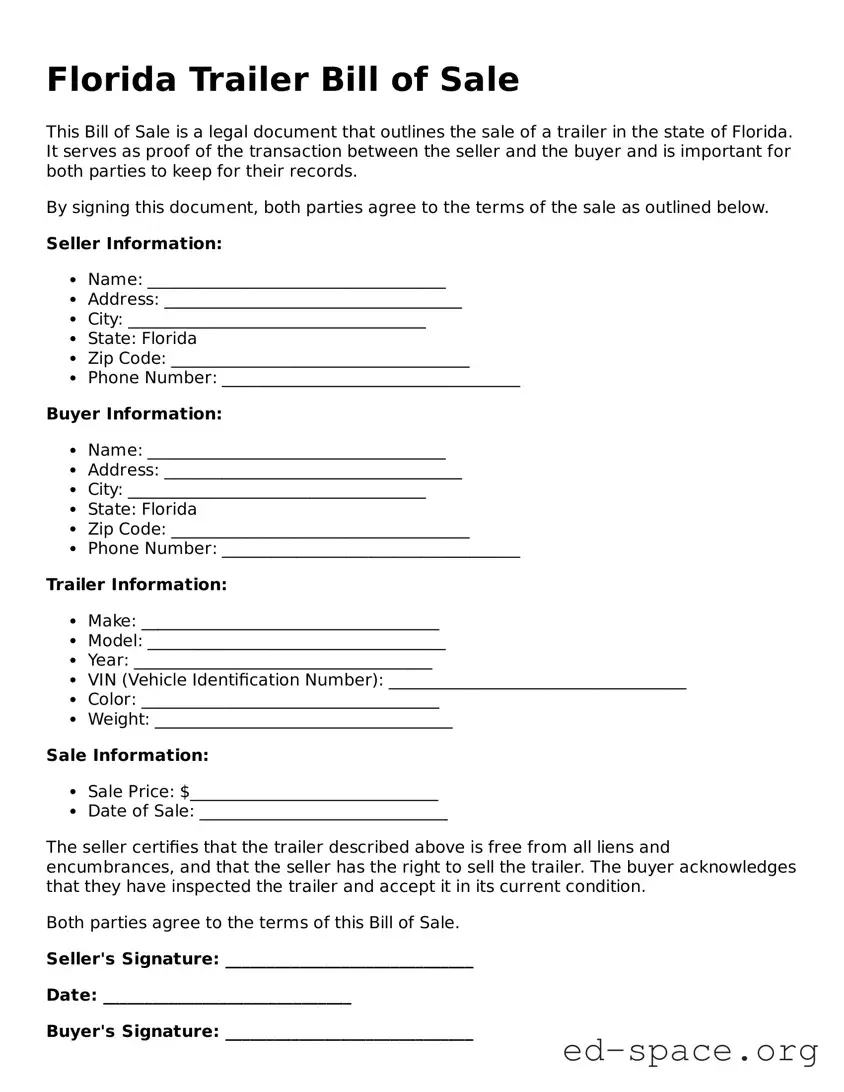
When it comes to buying or selling a trailer in Florida, having the right paperwork is essential to ensure a smooth transaction. The Florida Trailer Bill of Sale form serves as a critical document that outlines the details of the sale, protecting both the buyer and the seller. This form typically includes vital information such as the names and addresses of both parties, a description of the trailer, including its make, model, and Vehicle Identification Number (VIN), as well as the purchase price and the date of the transaction. Additionally, it often requires the signatures of both parties to validate the agreement. By completing this form, individuals not only comply with state regulations but also create a clear record of ownership transfer, which can be crucial for future registration and potential resale. Understanding the importance of this document can help you navigate the process with confidence and ensure that all legal bases are covered.
Florida Trailer Bill of Sale
This Bill of Sale is a legal document that outlines the sale of a trailer in the state of Florida. It serves as proof of the transaction between the seller and the buyer and is important for both parties to keep for their records.
By signing this document, both parties agree to the terms of the sale as outlined below.
Seller Information:
Buyer Information:
Trailer Information:
Sale Information:
The seller certifies that the trailer described above is free from all liens and encumbrances, and that the seller has the right to sell the trailer. The buyer acknowledges that they have inspected the trailer and accept it in its current condition.
Both parties agree to the terms of this Bill of Sale.
Seller's Signature: ______________________________
Date: ______________________________
Buyer's Signature: ______________________________
Date: ______________________________
This Bill of Sale is governed by the laws of the state of Florida.
| Fact Name | Description |
|---|---|
| Purpose | The Florida Trailer Bill of Sale form is used to document the sale of a trailer between a seller and a buyer. |
| Governing Law | This form is governed by the Florida Statutes, specifically Chapter 319 related to motor vehicle titles. |
| Information Required | Both parties must provide their names, addresses, and signatures, along with the trailer's details such as make, model, year, and Vehicle Identification Number (VIN). |
| Notarization | While notarization is not mandatory, it is recommended for added legal protection and to verify the identities of the parties involved. |
| Tax Implications | The buyer is responsible for paying sales tax based on the purchase price when registering the trailer. |
| Record Keeping | Both the seller and the buyer should keep a copy of the Bill of Sale for their records to avoid future disputes. |
| Transfer of Ownership | Ownership of the trailer is officially transferred to the buyer upon signing the Bill of Sale. |
| Usage | This form can be used for both new and used trailers, ensuring clarity in the transaction regardless of the trailer's condition. |
Once you have your Florida Trailer Bill of Sale form ready, you can begin filling it out. This document will require specific information about the transaction, including details about the trailer and the parties involved. Ensure that all information is accurate to avoid any complications later.
After completing the form, make copies for both the seller and buyer. This ensures that both parties have a record of the transaction. Store the original in a safe place, as it may be needed for registration or future reference.
What is a Florida Trailer Bill of Sale form?
The Florida Trailer Bill of Sale form is a legal document used to record the sale of a trailer between a seller and a buyer. This form provides essential details about the transaction, including the names and addresses of both parties, a description of the trailer, and the sale price. It serves as proof of ownership transfer and can be helpful for registration purposes with the Florida Department of Highway Safety and Motor Vehicles.
Why is a Bill of Sale important when selling a trailer in Florida?
A Bill of Sale is important because it protects both the seller and the buyer. For the seller, it provides evidence that the trailer has been sold, which can help avoid future liability for any issues that may arise after the sale. For the buyer, it serves as proof of ownership, which is necessary for registering the trailer in their name. Without this document, the transaction may not be legally recognized, leading to potential disputes.
What information should be included in the Florida Trailer Bill of Sale?
When completing the Florida Trailer Bill of Sale, several key pieces of information should be included. First, the full names and addresses of both the buyer and seller must be listed. Next, a detailed description of the trailer is required, including its make, model, year, Vehicle Identification Number (VIN), and any additional identifying features. Finally, the sale price and the date of the transaction should be clearly stated. Both parties should sign the document to validate the sale.
Do I need to have the Bill of Sale notarized?
In Florida, notarization of the Bill of Sale is not required for the sale of a trailer. However, having it notarized can provide an extra layer of security and authenticity to the transaction. It can also be beneficial if any disputes arise in the future. While notarization is not mandatory, it is often recommended for added peace of mind.
How do I use the Bill of Sale for trailer registration?
After completing the Bill of Sale, the buyer can use it to register the trailer in their name. To do this, they must take the signed Bill of Sale, along with any other required documents, to their local tax collector’s office or the Florida Department of Highway Safety and Motor Vehicles. The registration process may also require proof of identification and payment of applicable fees. Ensuring that all documents are in order will help facilitate a smooth registration process.
Failing to include accurate information about the trailer. This includes the VIN (Vehicle Identification Number), make, model, and year. Incomplete or incorrect details can lead to registration issues.
Not providing the seller's and buyer's full legal names and addresses. Omitting this information can create complications in proving ownership and may affect the enforceability of the sale.
Neglecting to sign and date the form. Both parties must sign the document to validate the transaction. Without signatures, the bill of sale may not hold legal weight.
Overlooking the need for a witness or notarization. While not always required, having a witness or notarizing the bill of sale can add an extra layer of protection and credibility to the transaction.
When buying or selling a trailer in Florida, several documents often accompany the Trailer Bill of Sale. Each of these forms plays a crucial role in ensuring a smooth transaction and protecting both parties involved. Here’s a brief overview of some essential documents you might need.
Having these documents ready can make the buying or selling process much easier. They help ensure that everything is documented correctly and that both parties are protected. Always check with local authorities for any specific requirements related to your transaction.
The Trailer Bill of Sale form shares similarities with several other documents related to the sale and transfer of ownership of vehicles and trailers. Below are nine documents that have comparable features or purposes:
When filling out the Florida Trailer Bill of Sale form, it is important to follow certain guidelines to ensure accuracy and compliance. Below are some dos and don’ts to keep in mind.
When it comes to the Florida Trailer Bill of Sale form, several misconceptions can lead to confusion for buyers and sellers alike. Below are six common misunderstandings regarding this important document.
Understanding these misconceptions can help ensure a smoother transaction when buying or selling a trailer in Florida. Always take the time to familiarize yourself with the necessary documentation and requirements to protect your interests.
When filling out and using the Florida Trailer Bill of Sale form, keep these key takeaways in mind:
By following these guidelines, you can ensure a smooth transaction when buying or selling a trailer in Florida.