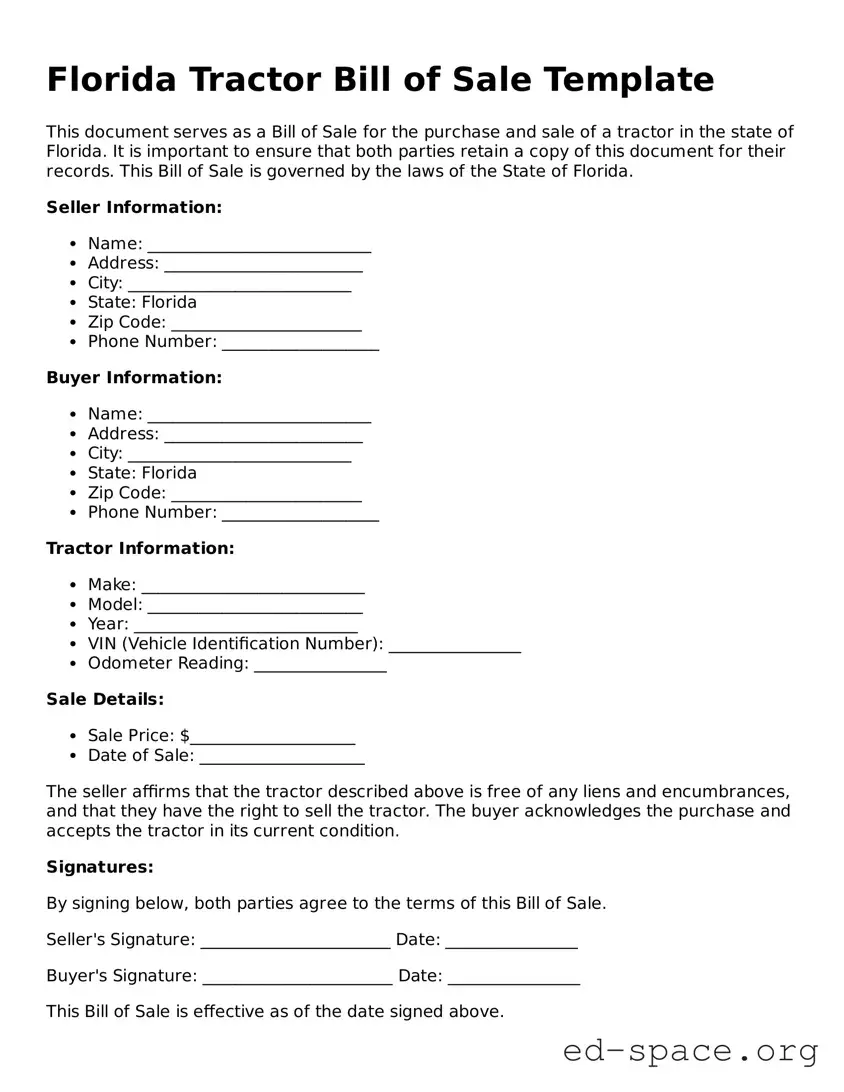
When buying or selling a tractor in Florida, having a well-drafted Bill of Sale is crucial. This document serves as a formal record of the transaction, providing essential details about the tractor, such as its make, model, year, and Vehicle Identification Number (VIN). It also outlines the sale price and any terms agreed upon by both parties. Importantly, the Bill of Sale helps protect the interests of both the buyer and the seller by confirming ownership transfer and ensuring that all necessary disclosures have been made. Additionally, this form can be useful for registration purposes and may be required by the Florida Department of Highway Safety and Motor Vehicles. Whether you are a seasoned farmer or a first-time buyer, understanding the components of the Florida Tractor Bill of Sale will ensure a smooth and legally sound transaction.
Florida Tractor Bill of Sale Template
This document serves as a Bill of Sale for the purchase and sale of a tractor in the state of Florida. It is important to ensure that both parties retain a copy of this document for their records. This Bill of Sale is governed by the laws of the State of Florida.
Seller Information:
Buyer Information:
Tractor Information:
Sale Details:
The seller affirms that the tractor described above is free of any liens and encumbrances, and that they have the right to sell the tractor. The buyer acknowledges the purchase and accepts the tractor in its current condition.
Signatures:
By signing below, both parties agree to the terms of this Bill of Sale.
Seller's Signature: _______________________ Date: ________________
Buyer's Signature: _______________________ Date: ________________
This Bill of Sale is effective as of the date signed above.
| Fact Name | Description |
|---|---|
| Purpose | The Florida Tractor Bill of Sale form is used to document the sale and transfer of ownership of a tractor in Florida. |
| Governing Law | This form is governed by Florida Statutes, specifically Chapter 319 regarding the transfer of motor vehicles. |
| Parties Involved | The form requires information from both the seller and the buyer, including names and addresses. |
| Vehicle Information | Details about the tractor, such as make, model, year, and Vehicle Identification Number (VIN), must be included. |
| Purchase Price | The agreed-upon purchase price for the tractor must be clearly stated in the form. |
| Signatures | Both the seller and the buyer must sign the form to validate the transaction. |
| Notarization | While notarization is not required, it is recommended to add an extra layer of authenticity. |
| Record Keeping | It is advisable for both parties to keep a copy of the completed form for their records. |
After obtaining the Florida Tractor Bill of Sale form, you will need to complete it accurately to ensure a smooth transaction. This document serves as proof of the sale between the buyer and the seller, detailing essential information about the tractor being sold.
Once the form is completed, both parties should retain a copy for their records. This document may be necessary for registration and title transfer processes in Florida.
What is a Florida Tractor Bill of Sale?
A Florida Tractor Bill of Sale is a legal document that records the sale and transfer of ownership of a tractor from one party to another. This form includes essential details such as the names of the buyer and seller, the tractor's description, and the sale price. It's an important tool for both parties to ensure that the transaction is documented and legally binding.
Why do I need a Bill of Sale for my tractor?
A Bill of Sale serves multiple purposes. It provides proof of ownership, which can be crucial if any disputes arise later. Additionally, it helps protect both the buyer and seller by clearly outlining the terms of the sale. This document can also be useful for tax purposes and when registering the tractor with the state.
What information should be included in the Bill of Sale?
When completing a Florida Tractor Bill of Sale, you should include the following information: the names and addresses of both the buyer and seller, the tractor's make, model, year, and Vehicle Identification Number (VIN), the sale price, and the date of the transaction. It's also a good idea to include any warranties or conditions of the sale.
Is the Bill of Sale required to register my tractor in Florida?
While a Bill of Sale is not strictly required to register a tractor in Florida, it is highly recommended. The document can help establish proof of ownership, which may be needed during the registration process. Additionally, some local tax authorities may require it for tax assessment purposes.
Can I create my own Bill of Sale?
Yes, you can create your own Bill of Sale. However, it's essential to ensure that all necessary information is included and that the document meets Florida's legal requirements. There are many templates available online that can guide you in creating a comprehensive and legally sound Bill of Sale.
Do I need a notary for the Bill of Sale?
In Florida, a Bill of Sale does not need to be notarized to be valid. However, having it notarized can add an extra layer of protection for both parties. It helps verify the identities of the buyer and seller and can be beneficial if any disputes arise in the future.
What if the tractor has a lien on it?
If the tractor has a lien, it’s crucial to disclose this information in the Bill of Sale. The seller should ensure that the lien is satisfied before transferring ownership. Buyers should also verify the lien status to avoid any future complications. A clear title is essential for a smooth transaction.
Can I use the Bill of Sale for other types of equipment?
Yes, a Bill of Sale can be used for various types of equipment, not just tractors. The key is to ensure that the document accurately reflects the specific details of the equipment being sold. Adjustments can be made to the template to accommodate different types of machinery or vehicles.
Where can I find a Florida Tractor Bill of Sale template?
Templates for a Florida Tractor Bill of Sale can be found online through various legal websites, state government resources, or even local agricultural extension offices. Many of these templates are free and easy to customize, making it simple to create a document that meets your needs.
Incorrect Vehicle Identification Number (VIN): One of the most common mistakes is entering an incorrect VIN. This number is crucial for identifying the tractor and should match the one on the tractor itself.
Omitting Seller Information: Failing to provide complete seller details, such as name, address, and contact information, can lead to confusion and issues later on.
Incomplete Buyer Information: Just like the seller, the buyer's information must be fully completed. Missing details can complicate the transfer of ownership.
Not Specifying the Purchase Price: Leaving out the purchase price can create disputes. It is essential to clearly state how much the buyer is paying for the tractor.
Failure to Date the Document: Forgetting to include the date of the sale can lead to problems in establishing when the transaction took place.
Not Including a Bill of Sale Statement: Some people neglect to include a statement that confirms the sale, which is necessary for legal purposes.
Ignoring Signatures: Both parties must sign the document. Without signatures, the bill of sale is not valid and cannot be used to prove ownership transfer.
Not Keeping Copies: Failing to make copies of the completed bill of sale for both the buyer and seller can lead to issues if disputes arise later.
Neglecting to Check Local Requirements: Some counties or municipalities may have specific requirements for a bill of sale. Ignoring these can result in legal complications.
Using Incomplete or Outdated Forms: Always ensure that the most current version of the Florida Tractor Bill of Sale form is used. Outdated forms may not be accepted.
When completing a transaction involving a tractor in Florida, several documents may accompany the Tractor Bill of Sale to ensure a smooth process. Each of these forms serves a specific purpose, providing clarity and legal backing to the sale.
Having these documents ready can facilitate a seamless transaction and protect both parties involved. Always ensure that all forms are filled out accurately and retained for future reference.
When filling out the Florida Tractor Bill of Sale form, it's essential to ensure that all details are accurate and complete. Here are some important dos and don'ts to keep in mind:
By following these guidelines, you can ensure a smooth transaction when selling or buying a tractor in Florida.
When dealing with the Florida Tractor Bill of Sale form, several misconceptions often arise. Understanding the truth behind these can help avoid confusion and ensure a smooth transaction.
Understanding these misconceptions can help ensure that anyone buying or selling a tractor in Florida does so with confidence and clarity.
When filling out and using the Florida Tractor Bill of Sale form, there are several important points to keep in mind. Here are key takeaways to ensure a smooth transaction:
Following these guidelines will help facilitate a successful sale and protect both the buyer's and seller's interests.