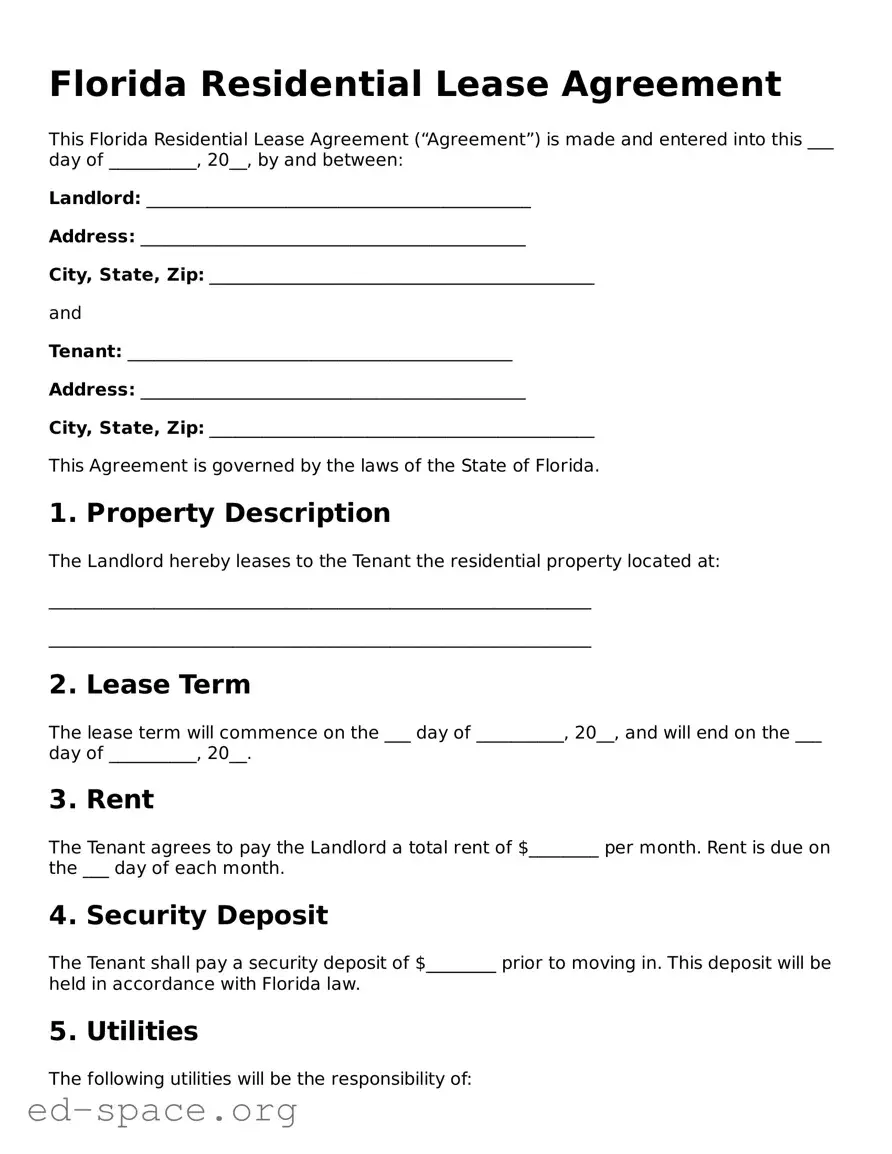
The Florida Residential Lease Agreement form serves as an essential document for landlords and tenants entering into a rental arrangement. This form outlines the terms and conditions of the lease, ensuring both parties understand their rights and responsibilities. Key aspects include the duration of the lease, the amount of rent due, and the security deposit requirements. It also addresses maintenance responsibilities, rules regarding pets, and procedures for terminating the lease. By clearly defining these elements, the agreement helps prevent misunderstandings and disputes, fostering a smoother rental experience. Understanding this form is crucial for anyone involved in a residential lease in Florida, whether you are a first-time renter or an experienced landlord.
Florida Residential Lease Agreement
This Florida Residential Lease Agreement (“Agreement”) is made and entered into this ___ day of __________, 20__, by and between:
Landlord: ____________________________________________
Address: ____________________________________________
City, State, Zip: ____________________________________________
and
Tenant: ____________________________________________
Address: ____________________________________________
City, State, Zip: ____________________________________________
This Agreement is governed by the laws of the State of Florida.
1. Property Description
The Landlord hereby leases to the Tenant the residential property located at:
______________________________________________________________
______________________________________________________________
2. Lease Term
The lease term will commence on the ___ day of __________, 20__, and will end on the ___ day of __________, 20__.
3. Rent
The Tenant agrees to pay the Landlord a total rent of $________ per month. Rent is due on the ___ day of each month.
4. Security Deposit
The Tenant shall pay a security deposit of $________ prior to moving in. This deposit will be held in accordance with Florida law.
5. Utilities
The following utilities will be the responsibility of:
6. Maintenance and Repairs
The Tenant agrees to maintain the property in good condition and notify the Landlord of any necessary repairs.
7. Pets
Pets are:
8. Termination
Either party may terminate this Agreement by providing written notice at least ___ days prior to the intended termination date.
9. Governing Law
This Agreement shall be governed by the laws of the State of Florida.
10. Signatures
By signing below, both parties agree to the terms of this Lease Agreement.
Landlord Signature: _______________________________ Date: _____________
Tenant Signature: _______________________________ Date: _____________
| Fact Name | Description |
|---|---|
| Governing Law | The Florida Residential Lease Agreement is governed by Florida Statutes, particularly Chapter 83, which covers landlord-tenant law. |
| Duration | This agreement can specify a lease term, which may be month-to-month or for a fixed period, typically ranging from six months to one year. |
| Security Deposit | Landlords may require a security deposit, which must be held in a separate account and returned within 15 days after the lease ends, barring any damages. |
| Notice Requirements | Both landlords and tenants must provide written notice before terminating the lease. The notice period varies based on the lease duration. |
Completing the Florida Residential Lease Agreement form requires careful attention to detail. Each section must be filled out accurately to ensure both parties understand their rights and responsibilities. Below are the steps to successfully complete the form.
After completing the form, both the landlord and tenant should keep a copy for their records. This ensures that both parties have access to the agreed-upon terms throughout the lease period.
What is a Florida Residential Lease Agreement?
A Florida Residential Lease Agreement is a legal document that outlines the terms and conditions between a landlord and a tenant for renting a residential property. This agreement specifies important details such as the rental amount, duration of the lease, security deposits, and the responsibilities of both parties. It serves to protect the rights of both landlords and tenants by clearly defining expectations and obligations.
What are the key components of a Florida Residential Lease Agreement?
Several key components should be included in a Florida Residential Lease Agreement. These include the names of the landlord and tenant, the address of the rental property, the lease term (whether it is month-to-month or for a fixed period), the rent amount and due date, security deposit details, maintenance responsibilities, and rules regarding pets or smoking. Additionally, the agreement should outline the procedures for terminating the lease and any penalties for late payments.
How long is a typical lease term in Florida?
In Florida, lease terms can vary widely. A typical residential lease might last for one year, but many landlords also offer month-to-month leases. Each type of lease has its own advantages. A fixed-term lease provides stability for both parties, while a month-to-month lease offers flexibility. It is essential for tenants to understand the implications of each type before signing the agreement.
Can a landlord increase the rent during the lease term?
Generally, a landlord cannot increase the rent during the lease term unless the lease agreement specifically allows for it. For month-to-month leases, landlords can typically raise the rent by providing proper notice, usually 30 days, depending on local laws. Tenants should carefully review their lease agreement to understand the conditions under which rent increases may occur.
What should I do if I need to terminate my lease early?
If you need to terminate your lease early, it is crucial to review the lease agreement for any clauses regarding early termination. Some leases may allow for early termination under specific conditions, while others may impose penalties. Communicating with your landlord as soon as possible is essential. They may be willing to negotiate an exit strategy, such as finding a replacement tenant or agreeing to a mutual termination.
Incorrect Names: People often forget to include the full legal names of all tenants and landlords. Ensure that everyone involved is properly identified.
Missing Dates: It's common to overlook the start and end dates of the lease. Make sure these dates are clearly stated to avoid confusion later.
Omitting Rent Amount: Some individuals forget to specify the monthly rent. Always include the exact amount and the due date to prevent any misunderstandings.
Ignoring Security Deposit Details: Failing to mention the security deposit can lead to disputes. Clearly outline the amount and conditions for its return.
Not Including Maintenance Responsibilities: Tenants and landlords sometimes neglect to specify who is responsible for maintenance and repairs. This can create issues if something breaks.
Skipping Signatures: Forgetting to sign the lease is a common mistake. All parties must sign and date the document to make it legally binding.
When entering into a residential lease agreement in Florida, several additional forms and documents may be necessary to ensure clarity and legal compliance. These documents help both landlords and tenants understand their rights and responsibilities, and they can provide essential information about the rental property.
These documents are essential for a smooth rental experience. They provide transparency and protection for both parties involved in the lease agreement. Understanding each form's purpose can help ensure a successful landlord-tenant relationship.
When filling out the Florida Residential Lease Agreement form, it's important to be thorough and accurate. Here are five things you should and shouldn't do:
When it comes to the Florida Residential Lease Agreement, many people hold misconceptions that can lead to confusion. Here are six common misunderstandings:
Many believe that all lease agreements follow a standard format. In reality, each lease can be customized to fit the specific needs of the landlord and tenant, including terms, conditions, and rules.
Some think that a verbal agreement is sufficient for a lease. However, having a written lease protects both parties and provides clear documentation of the agreed-upon terms.
There is a belief that security deposits cannot be refunded. In Florida, landlords must return the deposit within a certain timeframe unless there are valid deductions for damages or unpaid rent.
Many people assume that lease agreements are only applicable for long-term rentals. However, they can also be used for short-term rentals, providing clarity for both parties.
Some tenants think landlords have unrestricted access to the rental property. In reality, landlords must provide notice before entering, except in emergencies.
While many terms can be negotiated, some aspects, such as local laws and regulations, must be adhered to and cannot be changed.
Understanding these misconceptions can help both landlords and tenants navigate their lease agreements more effectively.
When filling out and using the Florida Residential Lease Agreement form, there are several important points to keep in mind. Here are some key takeaways: