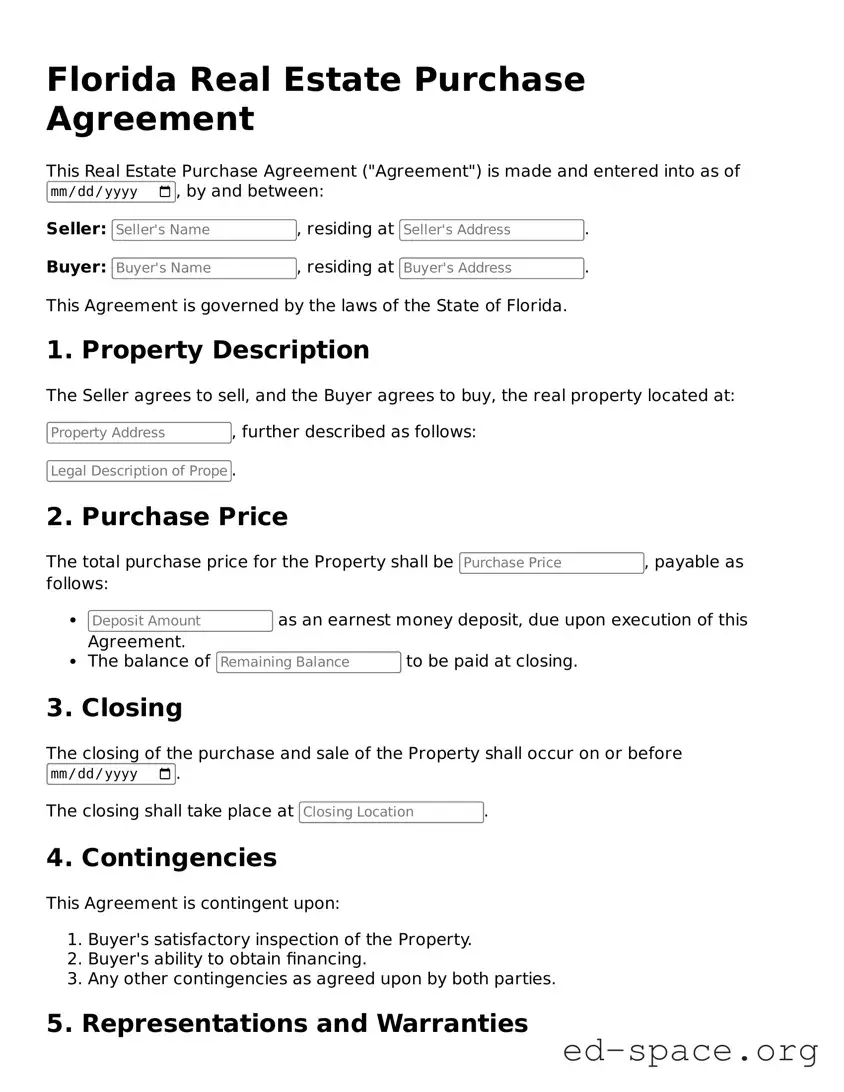
In the vibrant landscape of Florida's real estate market, understanding the nuances of the Real Estate Purchase Agreement form is essential for both buyers and sellers. This document serves as a foundational blueprint for the transaction, outlining critical elements such as the purchase price, financing details, and the closing date. It also addresses contingencies that may affect the sale, including inspections and appraisals, ensuring that both parties are protected throughout the process. Additionally, the agreement stipulates the responsibilities of each party, including disclosures and any agreed-upon repairs. By clearly delineating these aspects, the form fosters transparency and minimizes potential disputes, making it a vital tool for anyone looking to navigate the complexities of real estate transactions in the Sunshine State. Whether you are a seasoned investor or a first-time homebuyer, grasping the intricacies of this agreement can significantly impact the success of your real estate endeavors.
Florida Real Estate Purchase Agreement
This Real Estate Purchase Agreement ("Agreement") is made and entered into as of , by and between:
Seller: , residing at .
Buyer: , residing at .
This Agreement is governed by the laws of the State of Florida.
1. Property Description
The Seller agrees to sell, and the Buyer agrees to buy, the real property located at:
, further described as follows:
.
2. Purchase Price
The total purchase price for the Property shall be , payable as follows:
3. Closing
The closing of the purchase and sale of the Property shall occur on or before .
The closing shall take place at .
4. Contingencies
This Agreement is contingent upon:
5. Representations and Warranties
The Seller represents and warrants that:
6. Governing Law
This Agreement shall be governed by and construed in accordance with the laws of the State of Florida.
7. Signatures
IN WITNESS WHEREOF, the parties hereto have executed this Agreement as of the date first above written.
__________________________
__________________________
__________________________
| Fact Name | Description |
|---|---|
| Governing Law | The Florida Real Estate Purchase Agreement is governed by the laws of the State of Florida. |
| Purpose | This agreement outlines the terms and conditions for the sale of real estate in Florida. |
| Essential Elements | It typically includes details such as purchase price, property description, and closing date. |
| Contingencies | Buyers can include contingencies, such as financing or inspection, to protect their interests. |
| Signature Requirement | Both the buyer and seller must sign the agreement for it to be legally binding. |
After obtaining the Florida Real Estate Purchase Agreement form, you will need to fill it out carefully. This process involves providing specific information about the property, the buyer, and the seller. Ensure that all details are accurate to avoid complications later.
Once you have completed the form, review it for accuracy. Make sure both parties have copies for their records. This agreement is a crucial step in the real estate transaction process.
What is a Florida Real Estate Purchase Agreement?
A Florida Real Estate Purchase Agreement is a legal document that outlines the terms and conditions under which a property is bought and sold in Florida. This agreement serves as a binding contract between the buyer and the seller, detailing essential aspects such as the purchase price, property description, and closing date.
What key elements should be included in the agreement?
Several critical elements should be present in a Florida Real Estate Purchase Agreement. These include the names of the buyer and seller, the legal description of the property, the purchase price, earnest money deposit details, financing contingencies, inspection rights, and the closing date. Additionally, any specific terms or conditions agreed upon by both parties should also be included.
Is an attorney required to draft a Florida Real Estate Purchase Agreement?
While it's not legally required to have an attorney draft a Florida Real Estate Purchase Agreement, it is highly recommended. An attorney can ensure that the agreement complies with Florida laws and adequately protects your interests. They can also help clarify complex terms and conditions, making the process smoother for both parties.
What happens if one party breaches the agreement?
If one party fails to fulfill their obligations as outlined in the agreement, it is considered a breach of contract. The non-breaching party may have several options, including seeking damages, enforcing the contract, or terminating the agreement. It’s essential to consult with a legal professional to understand the best course of action in such situations.
Can the agreement be modified after signing?
Yes, a Florida Real Estate Purchase Agreement can be modified after both parties have signed it, but only if both parties agree to the changes. Any modifications should be documented in writing and signed by both the buyer and seller to ensure they are legally enforceable.
What is an earnest money deposit, and why is it important?
An earnest money deposit is a sum of money that the buyer provides to show their serious intent to purchase the property. This deposit is typically held in escrow until the closing of the sale. It serves as a security for the seller and can be forfeited if the buyer backs out without a valid reason. The amount is usually a percentage of the purchase price and is an important aspect of the agreement.
How does financing affect the purchase agreement?
Financing plays a crucial role in a Florida Real Estate Purchase Agreement. If the buyer is obtaining a mortgage, the agreement should include a financing contingency. This clause allows the buyer to back out of the agreement if they are unable to secure the necessary funds. It’s important for buyers to communicate their financing plans clearly to avoid potential issues.
What is the closing process, and what should I expect?
The closing process is the final step in a real estate transaction where ownership of the property is transferred from the seller to the buyer. During closing, both parties will review and sign various documents, including the deed and settlement statement. Buyers should expect to pay closing costs, which can include fees for inspections, title insurance, and other related expenses. It’s advisable to prepare for this process by gathering necessary documents and understanding the timeline involved.
Failing to include all necessary parties. Every person involved in the transaction must be named in the agreement. This includes buyers, sellers, and any other stakeholders.
Not specifying the purchase price clearly. The total amount should be stated explicitly to avoid confusion later.
Overlooking important dates. Key deadlines, such as the closing date and inspection periods, must be clearly outlined to ensure everyone is on the same page.
Neglecting to include contingencies. Buyers should consider adding contingencies for financing, inspections, or other conditions that must be met before the sale is finalized.
Using vague language. Clear and precise wording is essential. Ambiguities can lead to misunderstandings or disputes down the line.
Forgetting to sign and date the document. All parties must sign and date the agreement to make it legally binding.
Not consulting with a real estate professional. Seeking advice from a qualified agent or attorney can help avoid common pitfalls and ensure the agreement is properly completed.
When engaging in real estate transactions in Florida, several forms and documents accompany the Florida Real Estate Purchase Agreement. Each document serves a specific purpose and helps ensure a smooth transaction process.
Understanding these documents is essential for anyone involved in a real estate transaction in Florida. They help protect the interests of both buyers and sellers, ensuring a clear and efficient process.
When filling out the Florida Real Estate Purchase Agreement form, it's essential to approach the task with care. Here are some important dos and don'ts to keep in mind:
By following these guidelines, you can help ensure a smoother transaction process.
Many people have misunderstandings about the Florida Real Estate Purchase Agreement form. Below are some common misconceptions and clarifications regarding this important document.
Understanding these misconceptions can help individuals navigate the real estate process more effectively. It is important to seek guidance if there are any uncertainties regarding the agreement.
When filling out and using the Florida Real Estate Purchase Agreement form, there are several important points to keep in mind. Here are some key takeaways:
By keeping these points in mind, you can navigate the Florida Real Estate Purchase Agreement more effectively.