In Florida, a Power of Attorney (POA) form serves as a crucial legal tool that allows individuals to designate someone else to make decisions on their behalf. This form can cover a wide range of powers, from managing financial affairs to making healthcare decisions. It’s essential for ensuring that your wishes are respected, especially in situations where you may be unable to communicate or make decisions for yourself. The POA can be tailored to be broad or limited in scope, depending on your specific needs. Additionally, you can choose whether the authority becomes effective immediately or only under certain conditions, such as incapacity. Understanding the nuances of the Florida Power of Attorney form can help you prepare for the future and ensure that your interests are protected. Whether you are planning for long-term care or simply want to ensure that your financial matters are handled appropriately, this form is a vital part of your estate planning toolkit.
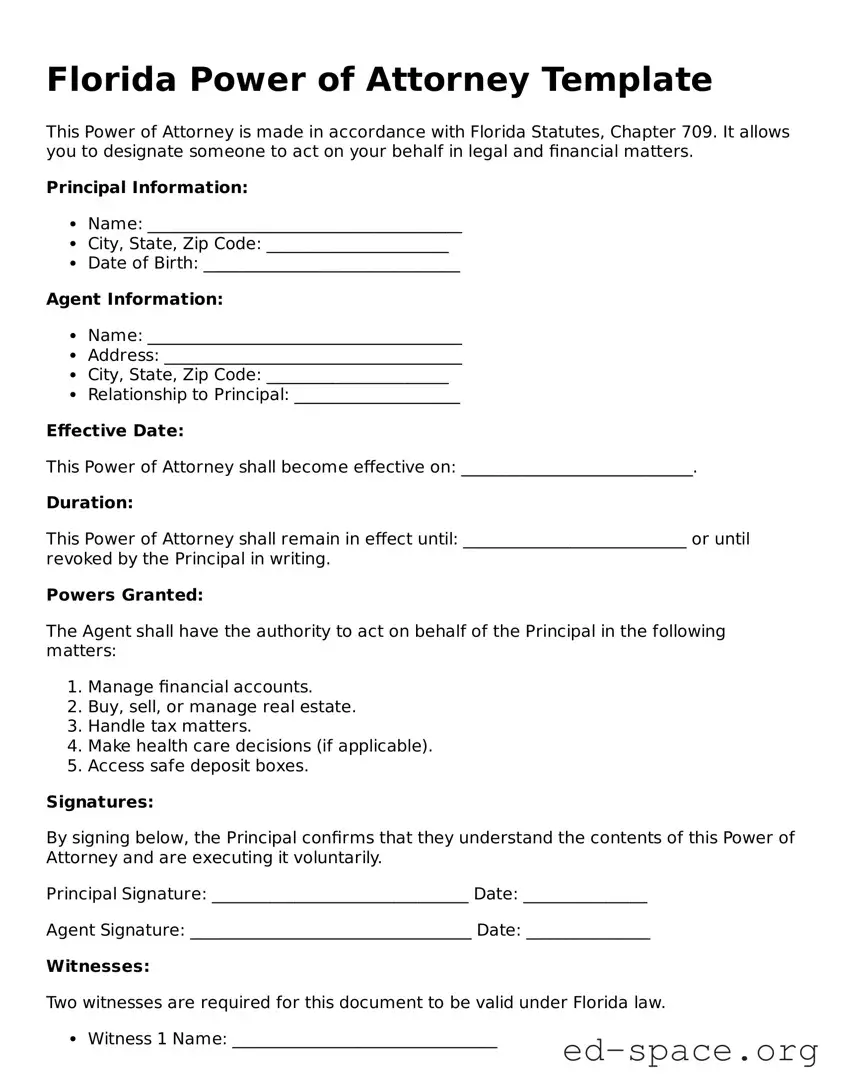
Florida Power of Attorney Template
This Power of Attorney is made in accordance with Florida Statutes, Chapter 709. It allows you to designate someone to act on your behalf in legal and financial matters.
Principal Information:
Agent Information:
Effective Date:
This Power of Attorney shall become effective on: ____________________________.
Duration:
This Power of Attorney shall remain in effect until: ___________________________ or until revoked by the Principal in writing.
Powers Granted:
The Agent shall have the authority to act on behalf of the Principal in the following matters:
Signatures:
By signing below, the Principal confirms that they understand the contents of this Power of Attorney and are executing it voluntarily.
Principal Signature: _______________________________ Date: _______________
Agent Signature: __________________________________ Date: _______________
Witnesses:
Two witnesses are required for this document to be valid under Florida law.
Notary Acknowledgment:
State of Florida, County of _______________
On this ______ day of ____________, 20__, before me, a Notary Public, personally appeared ______________________, known to me to be the person whose name is subscribed to this Power of Attorney, and acknowledged that they executed the same for the purposes therein contained.
Notary Public Signature: ___________________________
My Commission Expires: ___________________________
| Fact Name | Description |
|---|---|
| Definition | A Florida Power of Attorney form allows one person to grant another the authority to make decisions on their behalf. |
| Governing Law | This form is governed by Florida Statutes Chapter 709. |
| Durability | The power of attorney can be durable, meaning it remains effective even if the principal becomes incapacitated. |
| Types | There are different types of power of attorney in Florida, including limited, general, and healthcare powers of attorney. |
| Signature Requirement | The principal must sign the document in the presence of a notary public or two witnesses for it to be valid. |
| Revocation | A Florida Power of Attorney can be revoked at any time by the principal, as long as they are mentally competent. |
Completing the Florida Power of Attorney form is an important step in ensuring that your financial and legal matters can be handled by someone you trust when you are unable to do so. Follow these steps carefully to fill out the form correctly.
Once the form is filled out and signed, it is essential to keep it in a safe place and ensure that your agent knows where to find it. This preparation will help facilitate any necessary actions in the future.
What is a Florida Power of Attorney?
A Florida Power of Attorney is a legal document that allows one person, known as the principal, to grant another person, called the agent or attorney-in-fact, the authority to act on their behalf. This authority can cover a wide range of decisions, including financial matters, healthcare decisions, or legal transactions. The document can be tailored to be broad or limited in scope, depending on the principal's needs.
How do I create a Power of Attorney in Florida?
To create a Power of Attorney in Florida, you must be at least 18 years old and mentally competent. You need to complete a written document that clearly states your intentions. The form must be signed by you in the presence of two witnesses and a notary public. It's essential to ensure that the witnesses are not related to you or beneficiaries of your estate to avoid any conflicts of interest.
Can I revoke a Power of Attorney in Florida?
Yes, you can revoke a Power of Attorney in Florida at any time as long as you are mentally competent. To do this, you should create a written revocation document stating your intention to revoke the previous Power of Attorney. After signing the revocation, provide copies to your agent and any institutions or individuals who had relied on the original document. This ensures that everyone is aware of the change.
What happens if I become incapacitated and have a Power of Attorney?
If you become incapacitated and have a valid Power of Attorney in place, your appointed agent can make decisions on your behalf as outlined in the document. This can include managing your finances, making healthcare decisions, and handling legal matters. The agent must act in your best interest and according to the authority granted in the Power of Attorney. If no Power of Attorney exists, your family may need to seek guardianship through the court system, which can be time-consuming and costly.
Not Specifying Powers Clearly: Individuals often fail to clearly outline the specific powers they want to grant. This can lead to confusion and misuse.
Forgetting to Date the Document: A common oversight is neglecting to include the date on the form. Without a date, it may be difficult to determine when the powers were granted.
Not Initialing Changes: If any changes are made to the standard form, people sometimes forget to initial those changes. This can render the document invalid.
Choosing an Unreliable Agent: Selecting someone without considering their reliability or ability to act in your best interest can lead to serious consequences.
Neglecting Witness Signatures: In Florida, a Power of Attorney must be signed in the presence of two witnesses. Skipping this step can invalidate the document.
Failing to Notify the Agent: People often fill out the form but forget to inform their chosen agent. The agent cannot act on your behalf if they are unaware of their role.
Not Reviewing State Laws: Each state has specific requirements for Power of Attorney documents. Failing to review Florida's laws can lead to mistakes.
Using an Outdated Form: Laws and regulations change. Using an outdated version of the Power of Attorney form can lead to complications.
When considering a Power of Attorney in Florida, it is important to recognize that several other forms and documents may be relevant to ensure comprehensive legal planning. Each of these documents serves a specific purpose and can complement the Power of Attorney, providing clarity and additional authority where necessary.
Understanding these forms and their purposes can help individuals make informed decisions about their legal and financial planning. Each document plays a vital role in ensuring that personal wishes are honored and that someone trusted is available to manage affairs when needed.
When filling out a Florida Power of Attorney form, it’s important to ensure that you do it correctly to avoid any complications in the future. Here are five things you should and shouldn't do:
By following these guidelines, you can help ensure that your Power of Attorney form is filled out correctly and serves your intentions effectively.
When it comes to the Florida Power of Attorney form, several misconceptions can lead to confusion. Understanding these myths is essential for anyone considering this important legal document.
This misconception overlooks the fact that anyone can benefit from a Power of Attorney, regardless of age or health status. It can be a useful tool for individuals who travel frequently, are busy professionals, or simply want to ensure their affairs are managed if they become unable to do so.
While a Power of Attorney does grant authority to the designated agent, it does not mean they have unrestricted power. The principal can specify the scope of authority, which can include financial matters, healthcare decisions, or other specific tasks. The agent must act in the best interest of the principal.
This is not true. A Power of Attorney can be revoked at any time by the principal, as long as they are mentally competent. It’s important to communicate any changes to the agent and to ensure that any third parties are aware of the revocation.
Power of Attorney forms can vary significantly from state to state. Florida has specific requirements and language that must be included in the form for it to be valid. It is crucial to use the correct form that complies with Florida law to avoid any issues.
When considering a Florida Power of Attorney form, it’s essential to understand its importance and implications. Here are some key takeaways: