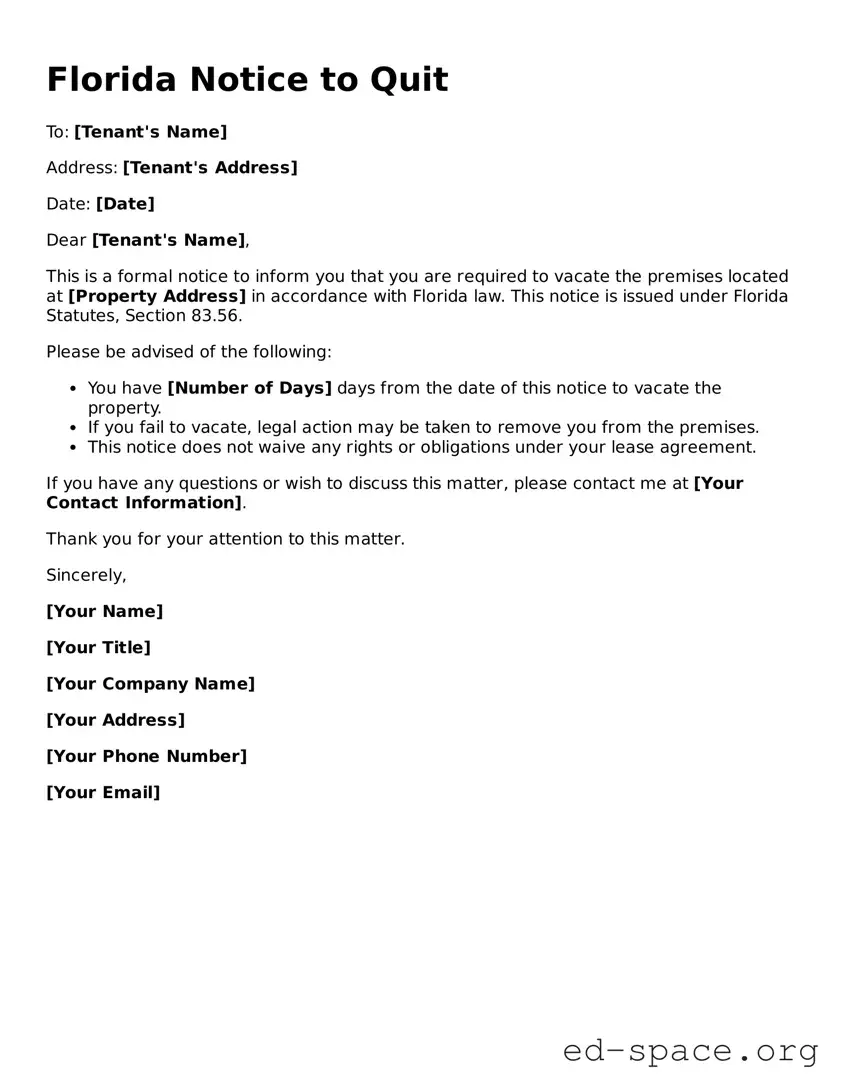
In the realm of landlord-tenant relationships in Florida, the Notice to Quit form serves as a crucial instrument for property owners seeking to regain possession of their rental properties. This form typically marks the initial step in the eviction process, allowing landlords to formally communicate their intent to terminate a lease agreement. It is important to understand that the Notice to Quit must be delivered in accordance with specific legal requirements, which can vary based on the circumstances surrounding the tenant's lease. Common reasons for issuing this notice include non-payment of rent, lease violations, or the expiration of a rental agreement. The document not only outlines the reasons for termination but also specifies the timeframe within which the tenant must vacate the premises. By adhering to the proper procedures, landlords can safeguard their rights while ensuring that tenants are given fair notice of their obligations. Understanding the nuances of the Notice to Quit form is essential for both landlords and tenants, as it lays the groundwork for any subsequent legal actions and helps maintain a clear line of communication between the parties involved.
Florida Notice to Quit
To: [Tenant's Name]
Address: [Tenant's Address]
Date: [Date]
Dear [Tenant's Name],
This is a formal notice to inform you that you are required to vacate the premises located at [Property Address] in accordance with Florida law. This notice is issued under Florida Statutes, Section 83.56.
Please be advised of the following:
If you have any questions or wish to discuss this matter, please contact me at [Your Contact Information].
Thank you for your attention to this matter.
Sincerely,
[Your Name]
[Your Title]
[Your Company Name]
[Your Address]
[Your Phone Number]
[Your Email]
| Fact Name | Details |
|---|---|
| Purpose | The Florida Notice to Quit form is used by landlords to inform tenants of the termination of their lease agreement. |
| Governing Law | This form is governed by Florida Statutes Chapter 83, which covers residential tenancies. |
| Notice Period | Depending on the reason for termination, the notice period can vary from 3 to 30 days. |
| Delivery Methods | The notice can be delivered in person, by mail, or by posting it on the rental property. |
| Reasons for Termination | Common reasons include non-payment of rent, lease violations, or the end of the lease term. |
| Tenant's Response | Tenants have the right to respond to the notice and may contest the eviction in court. |
| Legal Requirements | The notice must include specific information, such as the reason for termination and the date by which the tenant must vacate. |
| Effect of Non-Compliance | If the tenant does not comply with the notice, the landlord may initiate eviction proceedings. |
| Documentation | It is advisable for landlords to keep a copy of the notice and any related correspondence for their records. |
After completing the Florida Notice to Quit form, the next step involves delivering it to the tenant. This notice serves as a formal request for the tenant to vacate the property. Ensure that you follow the local regulations regarding delivery methods and timeframes.
What is a Florida Notice to Quit form?
The Florida Notice to Quit form is a legal document used by landlords to inform tenants that they must vacate the rental property. This notice typically arises when a tenant has violated the terms of their lease agreement or has failed to pay rent. The form serves as a formal request for the tenant to leave the premises, and it outlines the reasons for the eviction. It is an important first step in the eviction process, as it establishes the landlord's intention to terminate the tenancy.
How much notice must be given in a Florida Notice to Quit?
The amount of notice required can vary depending on the reason for the eviction. For non-payment of rent, landlords must provide a three-day notice. This means the tenant has three days to pay the overdue rent or vacate the property. If the eviction is for a lease violation, the notice period can be seven days, giving the tenant a week to correct the issue or move out. It is crucial for landlords to follow these timelines to ensure the eviction process proceeds legally.
What happens if a tenant does not comply with the Notice to Quit?
If a tenant fails to comply with the Notice to Quit, the landlord may proceed with filing an eviction lawsuit, known as an unlawful detainer action. The landlord must first file the appropriate paperwork with the court and serve the tenant with a summons. If the court rules in favor of the landlord, a judgment will be issued, allowing for the tenant to be removed from the property. It is essential for landlords to document all communications and notices sent to the tenant to support their case in court.
Can a tenant contest a Notice to Quit?
Yes, a tenant has the right to contest a Notice to Quit. If a tenant believes the notice is unjust or that they have not violated the lease terms, they can respond to the eviction lawsuit in court. The tenant may present evidence, such as proof of rent payment or documentation showing compliance with lease terms. The court will then evaluate the case based on the evidence presented by both parties. It is advisable for tenants to seek legal advice if they plan to contest an eviction to ensure their rights are protected.
Failing to include the correct tenant's name. It is essential to ensure that the name matches the lease agreement. A mismatch can lead to confusion and potential legal issues.
Not specifying the reason for the notice. Whether it’s for non-payment of rent or a lease violation, clarity is crucial. A vague reason may weaken the case.
Omitting the date by which the tenant must vacate. Clearly stating this date helps avoid misunderstandings and establishes a timeline for both parties.
Using incorrect or incomplete property address information. Ensure that the address is accurate, including unit numbers if applicable. This helps prevent disputes about the location.
Neglecting to sign the form. A signature is necessary to validate the document. Without it, the notice may not hold up in court.
Not providing proper delivery of the notice. Florida law requires that the notice be delivered in a specific manner, such as by certified mail or personal delivery. Failing to follow these rules can invalidate the notice.
When dealing with landlord-tenant issues in Florida, the Notice to Quit form is just one part of the process. Several other documents may be required to ensure that both parties understand their rights and responsibilities. Here’s a list of commonly used forms and documents that may accompany the Notice to Quit.
Understanding these documents can help both landlords and tenants navigate their rights and obligations effectively. Being prepared with the right forms can make a significant difference in resolving disputes and ensuring compliance with Florida's rental laws.
Eviction Notice: This document serves as a formal notification to a tenant that they must vacate the rental property. Like the Notice to Quit, it outlines the reasons for eviction and the timeframe within which the tenant must leave.
Lease Termination Letter: This letter communicates the end of a lease agreement. It is similar to a Notice to Quit in that it informs the tenant of the requirement to vacate, but it may not always cite specific violations.
Demand for Possession: This document is a request for the tenant to return possession of the property to the landlord. It closely resembles the Notice to Quit by emphasizing the urgency of the situation.
Notice of Non-Renewal: This notice informs a tenant that their lease will not be renewed. It shares similarities with the Notice to Quit in that it provides a clear timeframe for the tenant to vacate.
Notice of Default: This document is issued when a tenant fails to meet lease obligations, such as non-payment of rent. Like the Notice to Quit, it outlines specific issues that must be resolved.
Notice of Lease Violation: This notice details specific breaches of the lease agreement. It is similar to the Notice to Quit because it can lead to eviction if the tenant does not rectify the violations.
Notice of Intent to Evict: This document informs a tenant that eviction proceedings may begin. It parallels the Notice to Quit in its purpose to alert the tenant of potential legal action.
Rental Agreement Termination Notice: This notice indicates that the rental agreement is being terminated. It functions similarly to the Notice to Quit by requiring the tenant to vacate the premises.
Notice to Remedy: This document gives tenants a chance to correct lease violations before further action is taken. It is akin to the Notice to Quit in that it serves as a precursor to potential eviction.
Notice of Abandonment: This notice is used when a landlord believes a tenant has abandoned the property. It is similar to the Notice to Quit in that it addresses the tenant's need to vacate, albeit under different circumstances.
When filling out the Florida Notice to Quit form, it is essential to follow specific guidelines to ensure the process goes smoothly. Here are some important do's and don'ts to consider:
By adhering to these guidelines, you can help facilitate a clear and effective communication process with tenants regarding their rental agreements.
Understanding the Florida Notice to Quit form is crucial for both landlords and tenants. However, several misconceptions persist regarding its purpose and usage. Below is a list of nine common misconceptions, along with clarifications.
Addressing these misconceptions can help both landlords and tenants navigate the rental process more effectively and avoid unnecessary disputes.
When dealing with the Florida Notice to Quit form, it's essential to understand its purpose and the proper way to fill it out. Here are some key takeaways to keep in mind:
By following these guidelines, you can navigate the process of using the Florida Notice to Quit form more effectively and ensure that your rights as a landlord are protected.