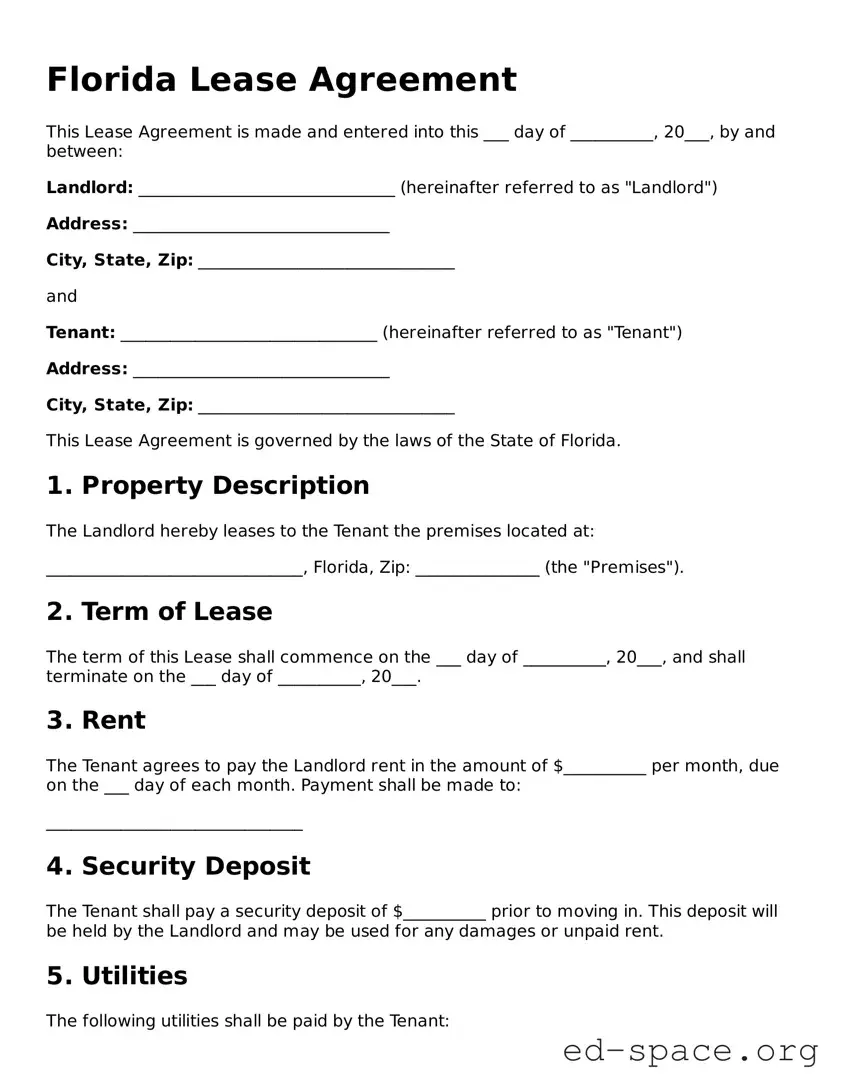
When renting a property in Florida, a Lease Agreement form serves as a crucial document that outlines the terms and conditions between a landlord and tenant. This form typically includes essential details such as the rental amount, payment due dates, and the duration of the lease. It also specifies the responsibilities of both parties, covering aspects like maintenance, repairs, and utilities. Additionally, the Lease Agreement may address rules regarding pets, smoking, and alterations to the property. Understanding these components is vital for both landlords and tenants, as they help prevent misunderstandings and ensure a smoother rental experience. By clearly defining the rights and obligations of each party, the Lease Agreement fosters a sense of security and clarity throughout the leasing period.
Florida Lease Agreement
This Lease Agreement is made and entered into this ___ day of __________, 20___, by and between:
Landlord: _______________________________ (hereinafter referred to as "Landlord")
Address: _______________________________
City, State, Zip: _______________________________
and
Tenant: _______________________________ (hereinafter referred to as "Tenant")
Address: _______________________________
City, State, Zip: _______________________________
This Lease Agreement is governed by the laws of the State of Florida.
1. Property Description
The Landlord hereby leases to the Tenant the premises located at:
_______________________________, Florida, Zip: _______________ (the "Premises").
2. Term of Lease
The term of this Lease shall commence on the ___ day of __________, 20___, and shall terminate on the ___ day of __________, 20___.
3. Rent
The Tenant agrees to pay the Landlord rent in the amount of $__________ per month, due on the ___ day of each month. Payment shall be made to:
_______________________________
4. Security Deposit
The Tenant shall pay a security deposit of $__________ prior to moving in. This deposit will be held by the Landlord and may be used for any damages or unpaid rent.
5. Utilities
The following utilities shall be paid by the Tenant:
6. Maintenance and Repairs
The Tenant agrees to keep the Premises in good condition. Any necessary repairs should be reported to the Landlord promptly.
7. Termination
Either party may terminate this Lease by providing a written notice of ___ days prior to the intended termination date.
8. Governing Law
This Lease Agreement shall be governed by and construed in accordance with the laws of the State of Florida.
9. Signatures
By signing below, both parties agree to the terms outlined in this Lease Agreement.
Landlord Signature: _______________________________ Date: _______________
Tenant Signature: _______________________________ Date: _______________
| Fact Name | Description |
|---|---|
| Governing Law | The Florida Lease Agreement is governed by the Florida Statutes, particularly Chapter 83, which covers landlord-tenant relationships. |
| Written Requirement | In Florida, lease agreements for a term longer than one year must be in writing to be enforceable. |
| Security Deposit Regulations | Florida law does not limit the amount a landlord can charge for a security deposit, but it requires landlords to provide written notice of how the deposit will be held. |
| Disclosure Obligations | Landlords must disclose specific information, such as the existence of lead-based paint in properties built before 1978. |
| Tenant's Right to Privacy | Florida law protects a tenant's right to privacy, requiring landlords to provide reasonable notice before entering the rental property. |
| Termination Notice Period | The notice period for terminating a month-to-month lease in Florida is 15 days, while for longer leases, it depends on the terms specified in the agreement. |
Filling out the Florida Lease Agreement form is an important step in establishing a rental relationship. By completing this form accurately, both the landlord and tenant can ensure that their rights and responsibilities are clearly defined. Follow these steps carefully to fill out the form correctly.
What is a Florida Lease Agreement?
A Florida Lease Agreement is a legal document that outlines the terms and conditions under which a landlord allows a tenant to occupy a rental property. This agreement typically includes details such as the rental amount, duration of the lease, responsibilities of both parties, and any specific rules that apply to the property. It serves to protect the rights of both landlords and tenants, ensuring clarity in the rental arrangement.
What are the key components of a Florida Lease Agreement?
Key components of a Florida Lease Agreement include the names of the landlord and tenant, the address of the rental property, the lease term (whether it is month-to-month or for a fixed duration), the rental amount and payment schedule, security deposit details, maintenance responsibilities, and rules regarding pets or smoking. Additionally, it may outline procedures for handling disputes or terminating the lease.
Is a Florida Lease Agreement required by law?
While a written lease agreement is not legally required in all situations, it is highly recommended. Having a written document helps to avoid misunderstandings and provides legal protection for both parties. In Florida, if a lease term is longer than one year, it must be in writing to be enforceable. For shorter leases, verbal agreements can be valid but may lead to complications if disputes arise.
What happens if a tenant wants to break the lease early?
If a tenant needs to break the lease early, the consequences depend on the terms outlined in the lease agreement. Many agreements include a clause that specifies penalties for early termination, such as losing the security deposit or paying a set fee. It is essential for tenants to communicate with their landlord to discuss possible options, such as finding a replacement tenant or negotiating a mutually agreeable solution.
Can a landlord increase rent during the lease term?
Generally, a landlord cannot increase rent during the lease term unless the lease agreement specifically allows for it. In Florida, if the lease is for a fixed term, the rent amount is locked in for the duration of that term. However, if the lease is month-to-month, the landlord can increase the rent with proper notice, typically 15 days before the next rental period begins.
What are the tenant's rights regarding maintenance and repairs?
In Florida, tenants have the right to live in a safe and habitable environment. This means that landlords are responsible for maintaining the property and addressing necessary repairs in a timely manner. If a landlord fails to make repairs, tenants may have the right to withhold rent or take other legal actions, but they should first provide the landlord with written notice of the issue and give them a reasonable opportunity to fix it.
What should be done if a dispute arises between the landlord and tenant?
When disputes arise, it is advisable for both parties to first attempt to resolve the issue through open communication. If this does not lead to a satisfactory outcome, mediation can be a helpful next step. In some cases, legal action may be necessary, but it is often seen as a last resort. Keeping thorough documentation of all communications and agreements can be beneficial in any dispute resolution process.
Not Reading the Entire Agreement: Many people skim through the lease, missing important clauses that could affect their rights and responsibilities.
Incorrect Dates: Entering the wrong start or end dates can lead to confusion about the lease term. Double-check these dates for accuracy.
Omitting Signatures: Forgetting to sign the lease is a common mistake. Ensure that all required parties sign the document.
Failing to Specify Rent Payment Details: Clearly stating the amount, due date, and payment method is crucial. Ambiguity can lead to disputes later.
Ignoring Additional Fees: Some leases include extra fees for maintenance or late payments. Be aware of all costs associated with the lease.
Not Noting Condition of the Property: Documenting the property's condition before moving in can prevent disagreements about security deposits when moving out.
When entering into a rental agreement in Florida, several additional forms and documents can be beneficial for both landlords and tenants. These documents help clarify responsibilities, outline expectations, and protect the rights of all parties involved. Below is a list of commonly used forms that often accompany a Florida Lease Agreement.
Utilizing these forms alongside the Florida Lease Agreement can foster clear communication and understanding between landlords and tenants. Each document serves a specific purpose, enhancing the rental experience for everyone involved.
When filling out the Florida Lease Agreement form, it's important to be thorough and accurate. Here are some key dos and don'ts to keep in mind:
By following these guidelines, you can help ensure that the lease agreement is completed correctly and protects the interests of all parties involved.
When it comes to the Florida Lease Agreement form, many misunderstandings can arise. These misconceptions can lead to confusion for both landlords and tenants. Here are nine common misconceptions clarified:
While it is strongly recommended to have a written lease for clarity and legal protection, oral leases can be valid in Florida for rental agreements of one year or less. However, written agreements help avoid disputes.
Security deposits can be partially or fully withheld if there are damages beyond normal wear and tear or if the tenant fails to pay rent. It’s important to understand the conditions under which a deposit may not be returned.
Once a lease is signed, its terms cannot be changed without mutual consent from both parties. Any modifications should be documented in writing to avoid future disputes.
Landlords must provide reasonable notice, typically 24 hours, before entering the rental property, except in emergencies. Respecting tenant privacy is crucial.
Lease agreements can vary significantly based on the property, the landlord's preferences, and local laws. It’s essential to read and understand the specific terms of each lease.
Tenants cannot simply withhold rent due to dissatisfaction with repairs or issues unless proper legal procedures are followed. There are specific circumstances under which withholding rent is permissible.
While verbal agreements may seem sufficient, they can lead to misunderstandings. A written lease agreement provides clear evidence of the terms agreed upon, which is vital in case of disputes.
Florida law requires landlords to provide written notice to tenants before initiating eviction proceedings. The type of notice depends on the reason for eviction.
While many terms can be negotiated, some may be non-negotiable due to local laws or the landlord's policies. It’s important to discuss and agree on key terms before signing.
Understanding these misconceptions can empower both landlords and tenants to navigate their rental agreements more effectively. Clarity in these matters helps build a positive landlord-tenant relationship.
When filling out and using the Florida Lease Agreement form, it is essential to consider the following key takeaways:
These elements are crucial for creating a comprehensive and enforceable lease agreement in Florida. Addressing them carefully can prevent future disputes and provide clarity for all parties involved.