When buying or selling a horse in Florida, having a clear and comprehensive Bill of Sale is essential. This document serves as a formal agreement between the buyer and seller, outlining important details such as the horse's identification, health status, and sale price. It ensures that both parties are protected by documenting the transaction and providing a record of ownership transfer. Additionally, the form may include information about any warranties or guarantees regarding the horse's condition, which can help prevent disputes later on. By utilizing the Florida Horse Bill of Sale form, individuals can navigate the complexities of equine transactions with confidence, ensuring a smooth process that adheres to state regulations.
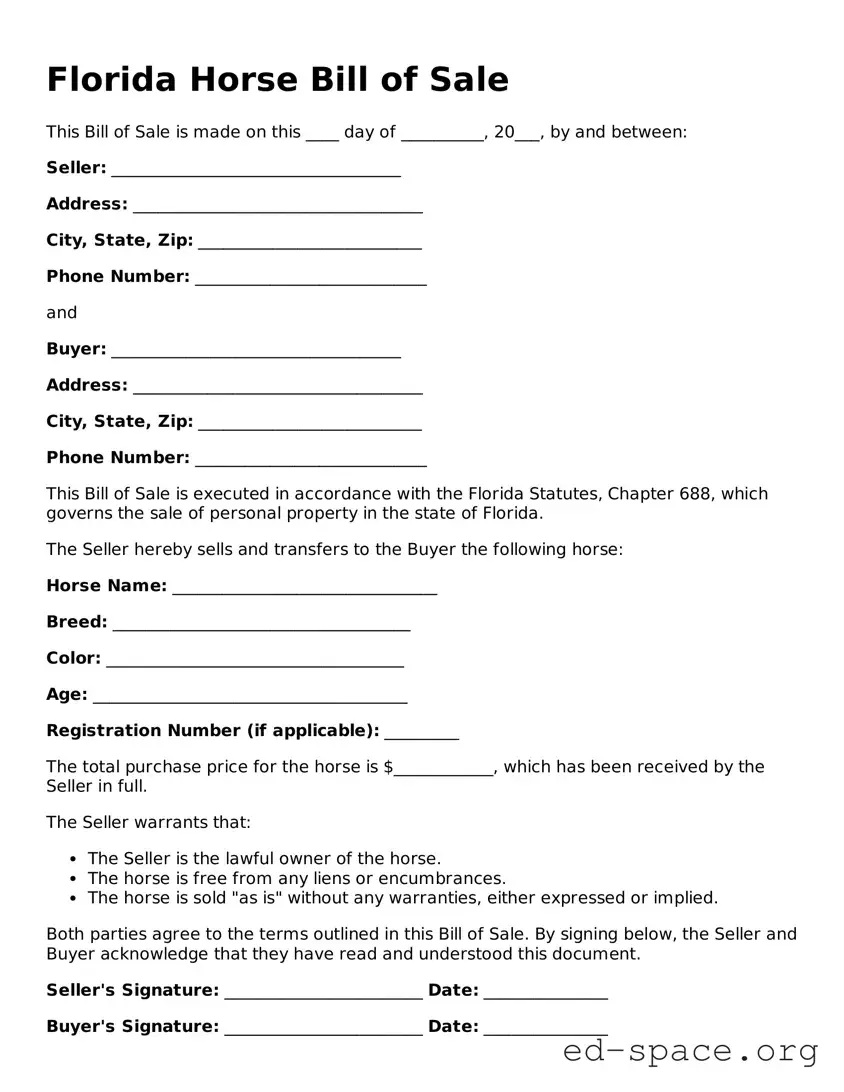
Florida Horse Bill of Sale
This Bill of Sale is made on this ____ day of __________, 20___, by and between:
Seller: ___________________________________
Address: ___________________________________
City, State, Zip: ___________________________
Phone Number: ____________________________
and
Buyer: ___________________________________
Address: ___________________________________
City, State, Zip: ___________________________
Phone Number: ____________________________
This Bill of Sale is executed in accordance with the Florida Statutes, Chapter 688, which governs the sale of personal property in the state of Florida.
The Seller hereby sells and transfers to the Buyer the following horse:
Horse Name: ________________________________
Breed: ____________________________________
Color: ____________________________________
Age: ______________________________________
Registration Number (if applicable): _________
The total purchase price for the horse is $____________, which has been received by the Seller in full.
The Seller warrants that:
Both parties agree to the terms outlined in this Bill of Sale. By signing below, the Seller and Buyer acknowledge that they have read and understood this document.
Seller's Signature: ________________________ Date: _______________
Buyer's Signature: ________________________ Date: _______________
This Bill of Sale shall be governed by the laws of the State of Florida.
| Fact Name | Description |
|---|---|
| Purpose | The Florida Horse Bill of Sale form serves as a legal document that records the sale and transfer of ownership of a horse. |
| Governing Law | This form is governed by Florida Statutes, specifically Chapter 678, which pertains to the sale of goods. |
| Required Information | Essential details include the buyer's and seller's names, the horse's description, and the sale price. |
| Signatures | Both the buyer and seller must sign the document for it to be legally binding. |
| Transfer of Ownership | Completion of the bill of sale signifies the transfer of ownership from the seller to the buyer. |
| Record Keeping | It is advisable for both parties to keep a copy of the bill of sale for their records, as it may be needed for future reference. |
Completing the Florida Horse Bill of Sale form is a straightforward process that requires attention to detail. Once the form is filled out correctly, it can serve as a vital document for both the buyer and the seller, ensuring clarity in the transaction. Below are the steps to guide you through the process.
What is a Florida Horse Bill of Sale?
A Florida Horse Bill of Sale is a legal document that records the transfer of ownership of a horse from one party to another. It serves as proof of the transaction and includes essential details about the horse, the seller, and the buyer. This document is important for establishing ownership and can be useful in case of disputes or for future reference.
Is a Horse Bill of Sale required in Florida?
While it is not legally required to have a Horse Bill of Sale in Florida, it is highly recommended. This document protects both the buyer and seller by providing a clear record of the transaction. Without it, proving ownership or the terms of the sale can become complicated.
What information should be included in a Horse Bill of Sale?
A comprehensive Horse Bill of Sale should include the following information: the names and addresses of both the seller and buyer, a detailed description of the horse (including breed, age, color, and any identifying markings), the sale price, the date of the transaction, and any warranties or guarantees provided by the seller. Additionally, both parties should sign and date the document.
Can I create my own Horse Bill of Sale?
Yes, you can create your own Horse Bill of Sale. However, it is crucial to ensure that the document includes all necessary information and complies with Florida laws. Many templates are available online, or you may choose to consult a legal professional for assistance in drafting a document that meets your needs.
What happens if there is a dispute after the sale?
If a dispute arises after the sale, the Horse Bill of Sale can serve as vital evidence. It outlines the terms of the sale and can clarify any misunderstandings between the parties. If issues cannot be resolved amicably, the document may be used in legal proceedings to support either party's claims.
Is a Horse Bill of Sale valid if it is not notarized?
A Horse Bill of Sale does not need to be notarized to be legally valid in Florida. However, having the document notarized can add an extra layer of authenticity and may be beneficial if disputes arise. Notarization can help verify the identities of the parties involved and the legitimacy of the signatures.
Do I need to register the Horse Bill of Sale with any authority?
No, there is no requirement to register a Horse Bill of Sale with any governmental authority in Florida. The document is primarily for the parties involved in the transaction. However, if the horse is registered with a breed association, you may need to notify them of the ownership change to update their records.
What if the horse has health issues or is sold "as is"?
If the horse has health issues, it is essential to disclose this information in the Horse Bill of Sale. The seller should be transparent about any known problems. If the horse is sold "as is," this should also be clearly stated in the document, indicating that the buyer accepts the horse in its current condition without warranties from the seller.
Can I use a Horse Bill of Sale for other types of livestock?
While a Horse Bill of Sale is specifically designed for horses, the general format can be adapted for other types of livestock. However, it is advisable to use a document tailored to the specific type of animal being sold to ensure all relevant details are included.
Where can I find a template for a Horse Bill of Sale?
Templates for a Horse Bill of Sale can be found online through various legal websites, equestrian organizations, and local agricultural extensions. Many of these resources provide free or low-cost templates that can be customized to suit your specific transaction needs.
Incomplete Information: Many individuals fail to provide all required details on the form. Missing information, such as the horse's breed, age, or registration number, can lead to confusion or disputes later.
Incorrect Dates: Entering the wrong date of sale can create legal complications. It is essential to ensure that the date reflects when the transaction actually occurred.
Neglecting Signatures: Both the buyer and seller must sign the document. Omitting one or both signatures invalidates the sale and can complicate ownership claims.
Not Including Payment Terms: Failing to specify how payment will be made can lead to misunderstandings. Clearly outlining payment terms protects both parties and clarifies expectations.
Ignoring State Regulations: Each state may have specific requirements for a horse bill of sale. Not adhering to Florida's regulations can result in legal issues down the line.
Forgetting to Keep Copies: After completing the form, it is crucial to retain a copy for personal records. Not having documentation can complicate future transactions or disputes.
When buying or selling a horse in Florida, several documents may accompany the Horse Bill of Sale to ensure a smooth transaction. Each of these forms serves a specific purpose and helps protect the interests of both the buyer and the seller. Here is a list of commonly used documents in conjunction with the Florida Horse Bill of Sale:
Having these documents prepared and organized can facilitate a smoother transaction process when buying or selling a horse in Florida. Each document plays a vital role in ensuring that both parties are informed and protected throughout the sale.
The Horse Bill of Sale form shares similarities with several other documents used in transactions involving animals or property. Here are seven documents that are comparable:
When filling out the Florida Horse Bill of Sale form, it's important to ensure that all information is accurate and complete. Here are five things you should and shouldn't do:
The Florida Horse Bill of Sale form is a crucial document for anyone involved in the buying or selling of horses in the state. However, several misconceptions about this form can lead to confusion. Below are some common misunderstandings, along with clarifications.
Many people believe that a bill of sale is merely a receipt and holds no legal weight. In reality, a properly completed and signed Horse Bill of Sale is a legally binding document that can be enforced in court.
Some individuals think that this form is only required for high-value transactions. However, regardless of the horse's price, having a bill of sale protects both the buyer and the seller.
While notarization can add an extra layer of authenticity, it is not a legal requirement for the Florida Horse Bill of Sale. A simple signature from both parties is sufficient.
Many assume that this document is only necessary for private transactions. In fact, it is equally important for sales conducted through dealers or at auctions.
Some people believe that a general description is enough. However, including detailed information—such as breed, age, and registration number—helps prevent disputes later on.
While the bill of sale is a strong piece of evidence, it does not eliminate the possibility of disputes. Issues such as misrepresentation or fraud can still arise, leading to potential legal challenges.
Some sellers may think that once they sell the horse, they have no further responsibilities. In reality, both parties should keep a copy of the bill of sale for their records, as it can be important for future reference.
When dealing with the Florida Horse Bill of Sale form, it's important to keep a few key points in mind to ensure a smooth transaction.
Following these guidelines will help protect both the buyer and seller during the transaction.