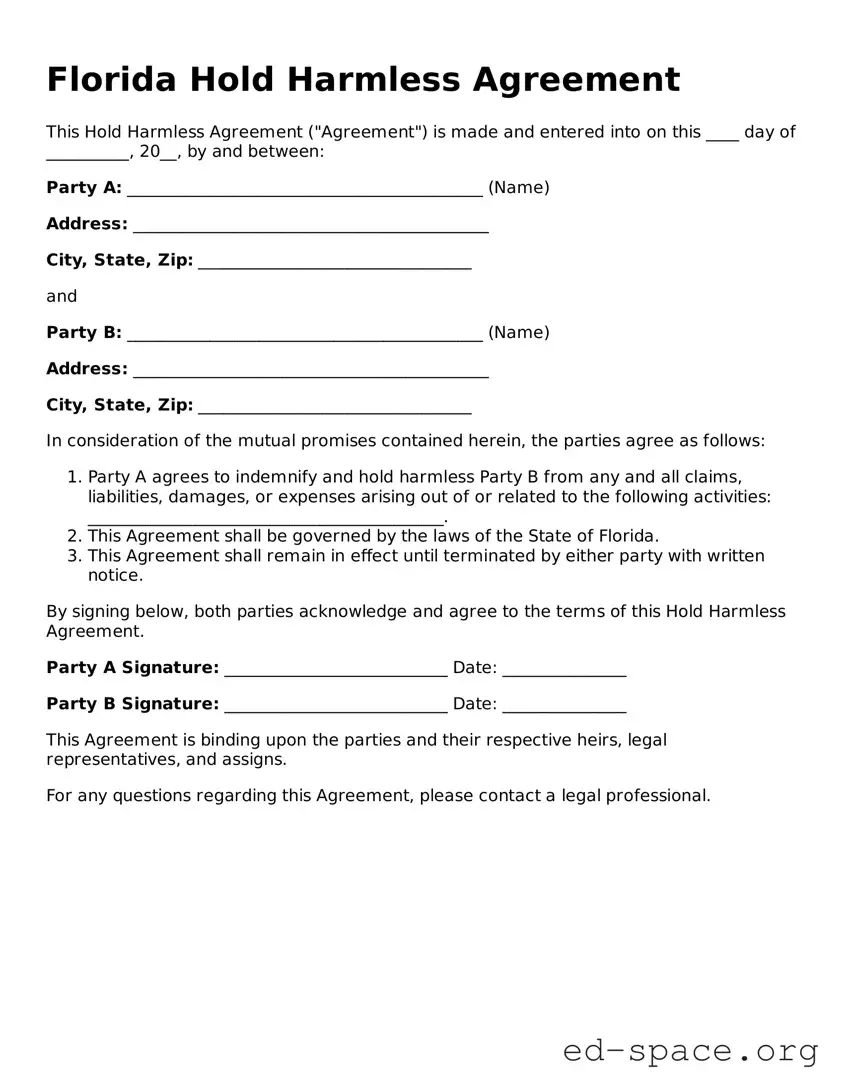
The Florida Hold Harmless Agreement form serves as a crucial document in various contractual relationships, providing a framework for protecting parties from liability. This form is often utilized in situations where one party agrees to assume the risks associated with a particular activity or event, thereby shielding the other party from legal claims or damages that may arise. Key aspects of the agreement include the identification of the parties involved, a clear description of the activities covered, and the specific liabilities being waived. Additionally, the form typically outlines the duration of the agreement and any conditions under which it may be terminated. By detailing these elements, the Hold Harmless Agreement fosters transparency and mutual understanding, allowing individuals and organizations to engage in activities with a clear awareness of their respective responsibilities. It is essential for those considering this form to recognize its implications and ensure that it aligns with their needs and intentions.
Florida Hold Harmless Agreement
This Hold Harmless Agreement ("Agreement") is made and entered into on this ____ day of __________, 20__, by and between:
Party A: ___________________________________________ (Name)
Address: ___________________________________________
City, State, Zip: _________________________________
and
Party B: ___________________________________________ (Name)
Address: ___________________________________________
City, State, Zip: _________________________________
In consideration of the mutual promises contained herein, the parties agree as follows:
By signing below, both parties acknowledge and agree to the terms of this Hold Harmless Agreement.
Party A Signature: ___________________________ Date: _______________
Party B Signature: ___________________________ Date: _______________
This Agreement is binding upon the parties and their respective heirs, legal representatives, and assigns.
For any questions regarding this Agreement, please contact a legal professional.
| Fact Name | Description |
|---|---|
| Purpose | The Florida Hold Harmless Agreement is designed to protect one party from legal liability for damages or injuries that may occur during a specific event or activity. |
| Governing Law | This agreement is governed by Florida state law, specifically under the principles of contract law. |
| Parties Involved | Typically, the agreement involves at least two parties: the indemnitor (the party agreeing to hold harmless) and the indemnitee (the party being protected). |
| Key Considerations | It is essential for all parties to understand the terms of the agreement, including any limitations on liability and the scope of coverage. |
Filling out the Florida Hold Harmless Agreement form is a straightforward process. Once completed, you will have a legally binding document that outlines the responsibilities and liabilities of the parties involved. Follow the steps below to ensure that you fill out the form correctly.
What is a Florida Hold Harmless Agreement?
A Florida Hold Harmless Agreement is a legal document that protects one party from liability for certain risks or damages that may occur during a specific activity or event. This agreement is often used in various contexts, such as construction projects, rental agreements, or events where one party may be exposed to risks associated with the actions of another party. By signing this agreement, the parties agree to assume responsibility for their own actions and to indemnify each other against claims arising from those actions.
Who typically uses a Hold Harmless Agreement in Florida?
Various individuals and organizations utilize Hold Harmless Agreements in Florida. Common users include contractors, property owners, event organizers, and businesses that engage in activities where there is a potential for injury or damage. For instance, a contractor may require a Hold Harmless Agreement from a subcontractor to ensure that they are protected from liability for any accidents that occur on the job site.
What are the key components of a Hold Harmless Agreement?
A typical Hold Harmless Agreement includes several essential components. First, it identifies the parties involved in the agreement. Second, it outlines the specific activities or events covered by the agreement. Third, it clarifies the extent of liability being waived, specifying what types of claims or damages are included. Finally, it often includes a section on governing law, indicating that Florida law will apply to the agreement.
Is a Hold Harmless Agreement legally binding in Florida?
Yes, a Hold Harmless Agreement can be legally binding in Florida, provided it meets certain legal requirements. The agreement must be clear, voluntary, and signed by all parties involved. It is important that the terms are not overly broad or ambiguous, as this could lead to enforceability issues in court. Courts generally uphold these agreements as long as they are reasonable and do not violate public policy.
Can a Hold Harmless Agreement protect against negligence?
In Florida, Hold Harmless Agreements can provide some protection against negligence claims, but there are limitations. If a party is grossly negligent or engages in willful misconduct, a court may not enforce the agreement. It is essential for parties to understand that while these agreements can limit liability, they do not provide blanket immunity for all actions.
How can I create a Hold Harmless Agreement?
Creating a Hold Harmless Agreement involves drafting a document that clearly outlines the terms and conditions agreed upon by the parties. It is advisable to include specific details about the activities involved, the extent of liability being waived, and any indemnification provisions. While templates are available online, consulting with a legal professional can ensure that the agreement is tailored to your specific needs and complies with Florida law.
What should I consider before signing a Hold Harmless Agreement?
Before signing a Hold Harmless Agreement, carefully review the terms to understand your rights and obligations. Consider the risks involved in the activity and whether the agreement adequately protects you. It may also be wise to consult with a legal professional to clarify any confusing language or to negotiate terms that better suit your interests.
Can a Hold Harmless Agreement be revoked?
Generally, a Hold Harmless Agreement can be revoked or modified, but this typically requires the consent of all parties involved. If one party wishes to change the terms, it is best to document those changes in writing and have all parties sign the new agreement. However, once an agreement is signed, it remains in effect until it is revoked or replaced, so careful consideration should be given before making any changes.
Incomplete Information: One of the most common mistakes is failing to provide all required details. Individuals often overlook sections that ask for specific names, addresses, or dates. This can lead to confusion or even invalidate the agreement.
Not Understanding the Terms: Many people sign the agreement without fully grasping what they are agreeing to. It’s essential to read through the terms carefully. Misunderstanding the implications can lead to unintended liabilities.
Missing Signatures: Forgetting to sign the document is another frequent error. Both parties should sign the agreement to ensure it is legally binding. A missing signature can render the entire document ineffective.
Using Outdated Versions: Sometimes, individuals use older versions of the Hold Harmless Agreement. Laws and requirements can change, so it’s vital to ensure that the most current form is being utilized to avoid potential legal issues.
Neglecting Witness or Notary Requirements: Depending on the situation, some agreements may need to be witnessed or notarized. Failing to meet these requirements can lead to questions about the document's validity.
The Florida Hold Harmless Agreement is often used in various situations to protect one party from liability for certain actions or events. However, it is typically accompanied by other forms and documents that provide additional context, legal protection, or specific details related to the agreement. Below is a list of commonly used documents alongside the Hold Harmless Agreement in Florida.
These documents help clarify responsibilities, outline protections, and ensure that all parties are aware of their rights and obligations. Utilizing these forms in conjunction with the Florida Hold Harmless Agreement can enhance legal protection and reduce potential disputes.
When filling out the Florida Hold Harmless Agreement form, it’s important to follow certain guidelines to ensure the document is completed correctly. Below is a list of things you should and shouldn't do.
Misconceptions about the Florida Hold Harmless Agreement can lead to confusion and potential legal issues. Understanding the truth behind these misunderstandings is crucial for anyone considering this type of agreement. Below are seven common misconceptions:
Addressing these misconceptions can help individuals and businesses make informed decisions regarding the use of Hold Harmless Agreements in Florida.
When filling out and using the Florida Hold Harmless Agreement form, keep these key takeaways in mind: