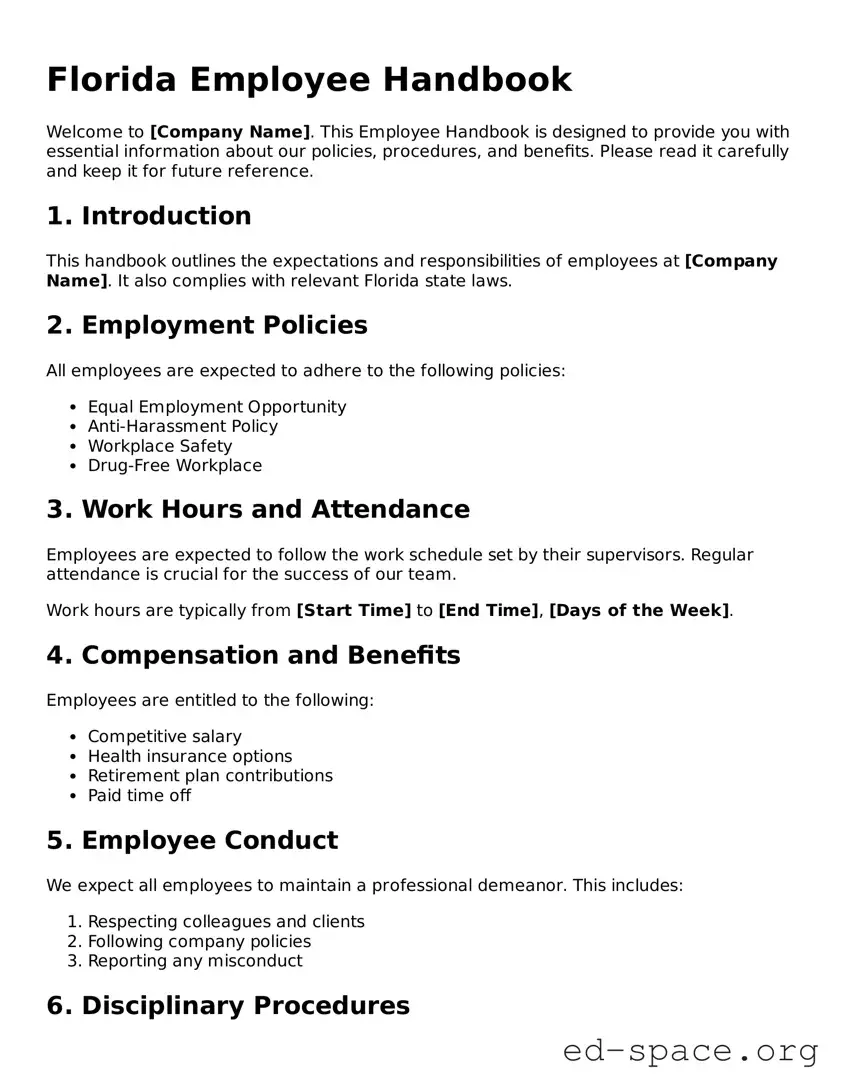
Creating a comprehensive employee handbook is essential for any business in Florida. This document serves as a crucial resource for both employers and employees, outlining workplace policies, procedures, and expectations. It typically includes sections on company culture, employee rights, anti-discrimination policies, and workplace safety. Additionally, the handbook addresses topics such as attendance, dress code, and disciplinary actions. By clearly defining these aspects, the handbook helps to foster a positive work environment and ensures that employees understand their responsibilities and benefits. A well-structured employee handbook can also protect employers by providing a reference point for handling disputes and maintaining compliance with state and federal laws.
Florida Employee Handbook
Welcome to [Company Name]. This Employee Handbook is designed to provide you with essential information about our policies, procedures, and benefits. Please read it carefully and keep it for future reference.
1. Introduction
This handbook outlines the expectations and responsibilities of employees at [Company Name]. It also complies with relevant Florida state laws.
2. Employment Policies
All employees are expected to adhere to the following policies:
3. Work Hours and Attendance
Employees are expected to follow the work schedule set by their supervisors. Regular attendance is crucial for the success of our team.
Work hours are typically from [Start Time] to [End Time], [Days of the Week].
4. Compensation and Benefits
Employees are entitled to the following:
5. Employee Conduct
We expect all employees to maintain a professional demeanor. This includes:
6. Disciplinary Procedures
Failure to comply with company policies may result in disciplinary action, which can include:
7. Acknowledgment of Receipt
Please sign below to acknowledge that you have received and read the Employee Handbook.
Employee Name: [Employee Name]
Employee Signature: ______________________
Date: [Date]
8. Contact Information
If you have any questions or need further clarification, please contact:
Human Resources Department
Email: [HR Email]
Phone: [HR Phone Number]
Thank you for being a part of [Company Name]. We look forward to a successful journey together.
| Fact Name | Description |
|---|---|
| Purpose | The Florida Employee Handbook serves to communicate company policies and expectations to employees. |
| State Requirement | While not mandated by law, having an employee handbook is considered best practice in Florida. |
| Content Guidelines | It should include sections on company culture, code of conduct, and employee benefits. |
| Legal Compliance | Handbooks must comply with federal laws, such as the Fair Labor Standards Act and Title VII of the Civil Rights Act. |
| At-Will Employment | It is important to clarify the at-will employment status in the handbook to avoid misunderstandings. |
| Updates and Revisions | Regular updates are necessary to reflect changes in laws and company policies. |
| Employee Acknowledgment | Employees should sign an acknowledgment form to confirm they have received and understood the handbook. |
| Governing Laws | The handbook must adhere to Florida Statutes, particularly those related to employment and labor. |
Completing the Florida Employee Handbook form is an important step in ensuring that you understand your rights and responsibilities as an employee. Following these steps will help you accurately fill out the form and submit it as required.
What is the Florida Employee Handbook form?
The Florida Employee Handbook form serves as a guide for employees regarding company policies, procedures, and expectations. It outlines essential information such as workplace conduct, benefits, and employee rights. This document helps to ensure that all employees are aware of their responsibilities and the resources available to them within the organization.
Who is required to have an Employee Handbook in Florida?
While not legally mandated, having an Employee Handbook is highly recommended for all employers in Florida. It provides clarity and consistency in the workplace. Employers of all sizes can benefit from having a handbook, as it helps to protect the organization from potential legal issues and misunderstandings by clearly communicating policies to employees.
How often should the Employee Handbook be updated?
It is advisable to review and update the Employee Handbook at least annually. Changes in state or federal laws, shifts in company policies, or updates in workplace practices may necessitate revisions. Regular updates ensure that the handbook remains relevant and compliant with current regulations, thereby protecting both the employer and employees.
What should be included in the Employee Handbook?
An effective Employee Handbook should include sections on company culture, code of conduct, anti-discrimination policies, benefits and compensation, leave policies, and safety procedures. It may also cover topics such as performance evaluations, disciplinary procedures, and grievance processes. Including clear and concise information in these areas fosters a positive work environment and helps employees understand their rights and obligations.
Incomplete Information: Many individuals forget to fill out all required fields. Missing information can delay the processing of the form.
Incorrect Personal Details: Some people enter incorrect names, addresses, or social security numbers. Double-checking these details is crucial to avoid future complications.
Not Reading Instructions: Skipping the instructions can lead to misunderstandings about what is required. Taking a moment to read through the guidelines can save time later.
Failure to Sign and Date: Omitting a signature or date is a common mistake. Ensure that the form is signed and dated before submission to validate it.
The Florida Employee Handbook is an essential resource for both employers and employees, outlining workplace policies, expectations, and rights. However, it often accompanies several other important forms and documents that help clarify the employer-employee relationship. Below is a list of commonly used documents alongside the Employee Handbook.
These documents, along with the Employee Handbook, create a comprehensive framework that supports a clear understanding of workplace policies and employee rights. Properly managing these forms can lead to a more informed and compliant workplace environment.
When filling out the Florida Employee Handbook form, it is important to follow certain guidelines to ensure accuracy and compliance. Here are some things to keep in mind:
Following these guidelines can help you complete the form correctly and avoid potential issues down the line.
Understanding the Florida Employee Handbook form is essential for both employers and employees. However, several misconceptions can lead to confusion. Here are four common misconceptions:
Many believe that creating an employee handbook is not necessary. While it is true that Florida does not legally require all employers to have one, a well-crafted handbook can provide clarity on policies and expectations, helping to prevent misunderstandings and potential legal issues.
Some think that there is a one-size-fits-all format for employee handbooks. In reality, each handbook should reflect the specific culture, policies, and practices of the organization. Employers have the flexibility to tailor their handbooks to meet their unique needs.
This misconception suggests that an employee handbook is a static document. However, it is crucial for employers to regularly review and update the handbook to reflect changes in laws, company policies, and workplace practices.
Some individuals believe that only large organizations need an employee handbook. In truth, even small businesses can benefit from having a handbook. It sets clear expectations for employees and helps protect the employer from potential disputes.
When filling out and using the Florida Employee Handbook form, consider the following key takeaways:
Following these guidelines can help ensure that the Employee Handbook serves its intended purpose effectively.