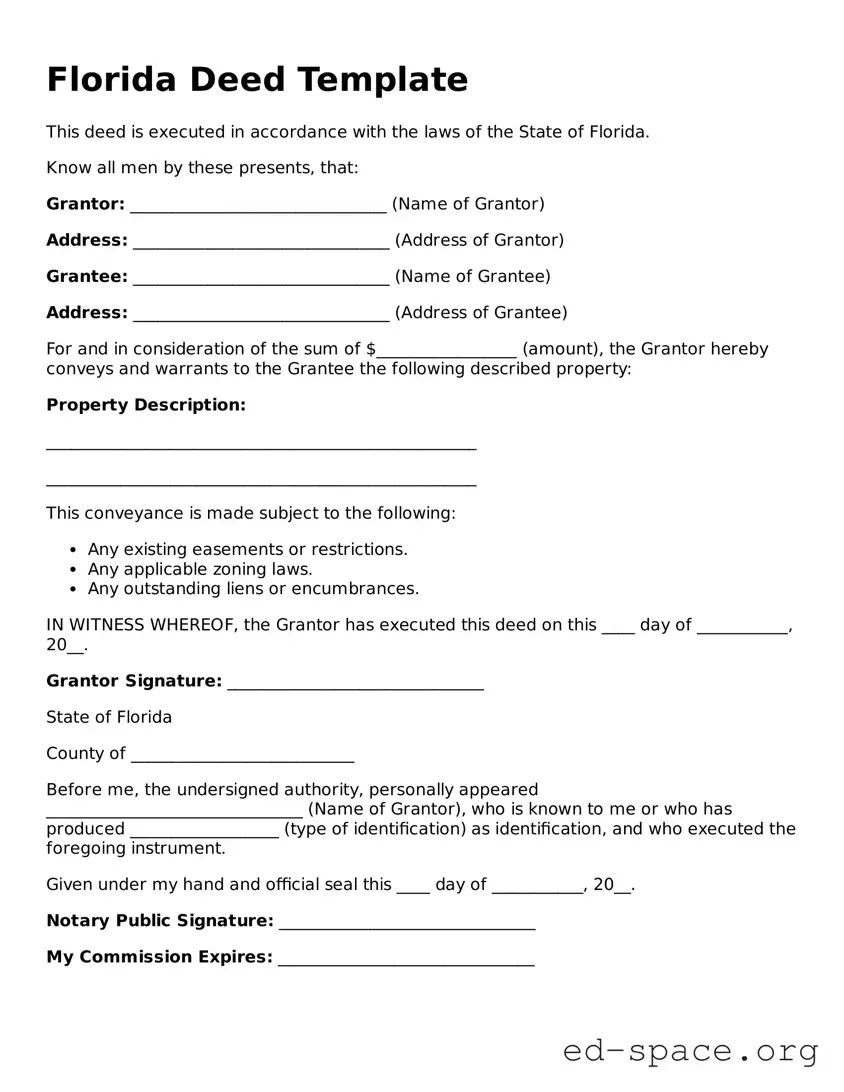
When it comes to transferring property ownership in Florida, understanding the Florida Deed form is essential. This legal document serves as a critical tool in real estate transactions, ensuring that the transfer of title is conducted smoothly and legally. Various types of deeds exist, including warranty deeds, quitclaim deeds, and special warranty deeds, each serving different purposes and providing varying levels of protection for the buyer. The Florida Deed form typically includes key information such as the names of the parties involved, a detailed description of the property, and any applicable warranties or covenants. Additionally, it must be signed, notarized, and recorded in the county where the property is located to be legally binding. By grasping the fundamental aspects of this form, property owners and buyers can navigate the complexities of real estate transactions with confidence, ensuring their rights are protected throughout the process.
Florida Deed Template
This deed is executed in accordance with the laws of the State of Florida.
Know all men by these presents, that:
Grantor: _______________________________ (Name of Grantor)
Address: _______________________________ (Address of Grantor)
Grantee: _______________________________ (Name of Grantee)
Address: _______________________________ (Address of Grantee)
For and in consideration of the sum of $_________________ (amount), the Grantor hereby conveys and warrants to the Grantee the following described property:
Property Description:
____________________________________________________
____________________________________________________
This conveyance is made subject to the following:
IN WITNESS WHEREOF, the Grantor has executed this deed on this ____ day of ___________, 20__.
Grantor Signature: _______________________________
State of Florida
County of ___________________________
Before me, the undersigned authority, personally appeared _______________________________ (Name of Grantor), who is known to me or who has produced __________________ (type of identification) as identification, and who executed the foregoing instrument.
Given under my hand and official seal this ____ day of ___________, 20__.
Notary Public Signature: _______________________________
My Commission Expires: _______________________________
| Fact Name | Description |
|---|---|
| Definition | A Florida Deed is a legal document used to transfer ownership of real estate in the state of Florida. |
| Types of Deeds | Common types include Warranty Deeds, Quitclaim Deeds, and Special Purpose Deeds. |
| Governing Laws | Florida Statutes, Chapter 689 governs the execution and recording of deeds. |
| Signing Requirements | The deed must be signed by the grantor and, in some cases, by witnesses. |
| Notarization | A Florida Deed must be notarized to be valid and enforceable. |
| Recording | To protect ownership rights, the deed should be recorded in the county where the property is located. |
| Property Description | A legal description of the property must be included for clarity and legal purposes. |
| Transfer Tax | Florida imposes a documentary stamp tax on the transfer of real estate, which must be paid upon recording. |
| Validity Period | Once executed, a deed remains valid as long as it is properly recorded and not revoked. |
| Common Uses | Deeds are often used in sales, gifts, or inheritance of real estate. |
After completing the Florida Deed form, you will need to ensure that it is signed and notarized before submitting it to the appropriate county office for recording. This process is essential for the deed to be legally recognized.
What is a Florida Deed form?
A Florida Deed form is a legal document used to transfer ownership of real estate in the state of Florida. It serves as proof of the transfer and outlines the rights and responsibilities of the parties involved. There are various types of deeds, such as warranty deeds and quitclaim deeds, each serving different purposes based on the level of protection and guarantees provided to the buyer.
Who needs to use a Florida Deed form?
Anyone involved in the sale or transfer of real estate in Florida should utilize a Florida Deed form. This includes sellers, buyers, and even those who are gifting property. It’s essential for ensuring that the transfer is legally recognized and that the new owner has clear title to the property. Additionally, real estate professionals often use these forms to facilitate transactions on behalf of their clients.
How do I fill out a Florida Deed form?
Filling out a Florida Deed form requires careful attention to detail. Start by clearly identifying the parties involved, including their full names and addresses. Next, provide a legal description of the property being transferred, which can often be found on the property’s tax records. Finally, sign and date the document in the presence of a notary public. Remember that each type of deed may have specific requirements, so it’s wise to consult guidelines for the particular deed you’re using.
Do I need to record the Florida Deed form?
Yes, it is highly recommended to record the Florida Deed form with the county clerk’s office where the property is located. Recording provides public notice of the ownership transfer and protects the new owner’s rights. If the deed is not recorded, there may be challenges in asserting ownership against future claims. Recording typically involves a small fee, but the peace of mind it offers is invaluable.
What happens if I don’t use a Florida Deed form?
Failing to use a Florida Deed form when transferring property can lead to significant complications. Without a formal deed, the transfer may not be legally recognized, which can result in disputes over ownership. Additionally, the lack of documentation can complicate future sales or refinancing efforts. It’s always best to have a proper deed in place to ensure that the transfer is valid and to protect your investment.
Incorrect Names: Many people fail to spell the names of the grantor and grantee correctly. This can lead to legal complications later. Always double-check for accuracy.
Missing Signatures: A common mistake is neglecting to sign the document. Both the grantor and, if applicable, the grantee must sign the deed for it to be valid.
Improper Notarization: Not having the deed notarized can invalidate the document. Ensure that a qualified notary public witnesses the signing.
Incorrect Legal Description: Failing to provide a precise legal description of the property can cause issues. Use the description from the property’s title or a recent survey.
Inaccurate Property Information: Listing incorrect property details, such as the address or parcel number, can lead to disputes. Verify all information before submission.
Not Filing with the County: After completing the deed, some individuals forget to file it with the appropriate county office. This step is crucial for the deed to be legally recognized.
When completing a property transfer in Florida, several additional forms and documents may be required alongside the Florida Deed form. These documents help to ensure that the transaction is legally sound and that all necessary information is properly recorded. Below are some commonly used forms in conjunction with the Florida Deed.
Each of these documents plays a vital role in ensuring a smooth property transfer process. It is important to review them carefully and ensure that all information is accurate and complete. Engaging with a knowledgeable professional can further assist in navigating these requirements effectively.
The Deed form is a vital document in real estate and property transactions, but it shares similarities with several other legal documents. Each of these documents serves a unique purpose while maintaining some common features with the Deed form. Here are six documents that are similar to the Deed form:
When filling out the Florida Deed form, it’s essential to be thorough and precise. Here’s a list of things to do and avoid to ensure a smooth process.
By following these guidelines, you can help ensure that your Florida Deed form is completed correctly and efficiently.
When it comes to the Florida Deed form, several misconceptions can lead to confusion for those looking to transfer property. Understanding these misconceptions can help clarify the process and ensure a smoother transaction.
By addressing these misconceptions, individuals can approach the Florida Deed form with greater confidence and clarity, ensuring a more successful property transfer process.
When dealing with real estate transactions in Florida, understanding how to properly fill out and use a deed form is crucial. Here are some key takeaways to consider: