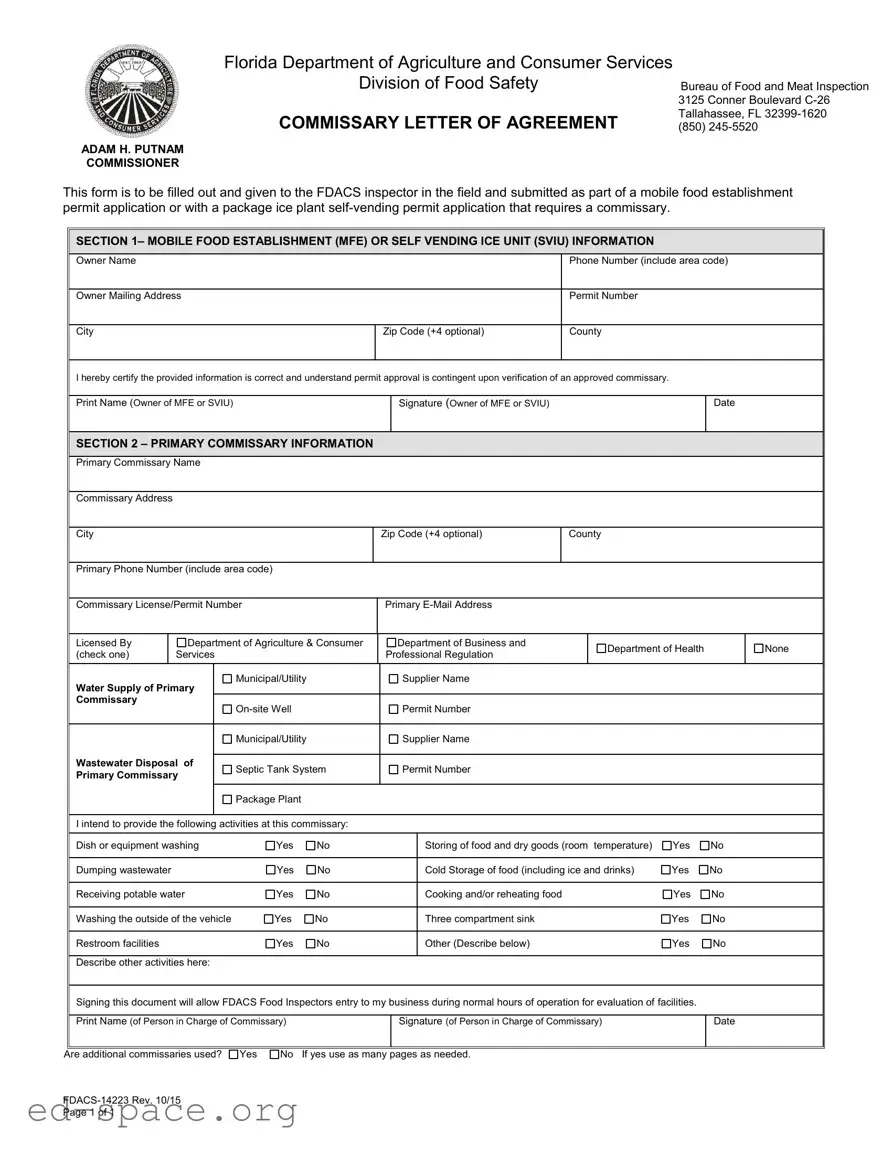
The Florida Commissary Letter of Agreement form plays a crucial role in the regulatory framework for mobile food establishments and self-vending ice units in the state. This form is required to be completed and presented to inspectors from the Florida Department of Agriculture and Consumer Services (FDACS) during the permit application process. It serves as a formal agreement between the mobile food business and the commissary, outlining essential information such as the owner’s contact details, the primary commissary's name and address, and the specific activities that will take place at the commissary. The form includes sections for certifying the accuracy of the provided information and for detailing the types of services the commissary will offer, such as food storage, dishwashing, and wastewater disposal. Additionally, it grants FDACS inspectors the authority to access the commissary during regular business hours for evaluation purposes. The completion of this form is vital for ensuring compliance with health and safety regulations, as it confirms that the mobile food operation has a designated, approved commissary for its operational needs.
Florida Department of Agriculture and Consumer Services
Division of Food Safety
COMMISSARY LETTER OF AGREEMENT
Bureau of Food and Meat Inspection 3125 Conner Boulevard
ADAM H. PUTNAM
COMMISSIONER
This form is to be filled out and given to the FDACS inspector in the field and submitted as part of a mobile food establishment permit application or with a package ice plant
SECTION 1– MOBILE FOOD ESTABLISHMENT (MFE) OR SELF VENDING ICE UNIT (SVIU) INFORMATION
|
|
Owner Name |
|
|
|
|
|
|
|
|
|
Phone Number (include area code) |
|||||
|
|
|
|
|
|
|
|
|
|
|
|
|
|
|
|
|
|
|
|
Owner Mailing Address |
|
|
|
|
|
|
|
Permit Number |
|
|
|
||||
|
|
|
|
|
|
|
|
|
|
|
|
|
|
|
|
|
|
|
|
City |
|
|
|
|
|
Zip Code (+4 optional) |
|
County |
|
|
|
||||
|
|
|
|
|
|
|
|
|
|
|
|
|
|||||
|
|
I hereby certify the provided information is correct and understand permit approval is contingent upon verification of an approved commissary. |
|
|
|
||||||||||||
|
|
|
|
|
|
|
|
|
|
|
|
|
|
|
|
|
|
|
|
Print Name (Owner of MFE or SVIU) |
|
|
|
|
Signature (Owner of MFE or SVIU) |
|
|
|
Date |
||||||
|
|
|
|
|
|
|
|
|
|
|
|
|
|
||||
|
|
SECTION 2 – PRIMARY COMMISSARY INFORMATION |
|
|
|
|
|
|
|
|
|
||||||
|
|
|
|
|
|
|
|
|
|
|
|||||||
|
|
|
|
|
|
|
|
|
|
|
|||||||
|
|
|
|
|
|
|
|
|
|
|
|
|
|
|
|
|
|
|
|
Primary Commissary Name |
|
|
|
|
|
|
|
|
|
|
|
|
|||
|
|
|
|
|
|
|
|
|
|
|
|
|
|
|
|
|
|
|
|
Commissary Address |
|
|
|
|
|
|
|
|
|
|
|
|
|
|
|
|
|
|
|
|
|
|
|
|
|
|
|
|
|
|
|
|
|
|
|
City |
|
|
|
|
|
Zip Code (+4 optional) |
|
County |
|
|
|
||||
|
|
|
|
|
|
|
|
|
|
|
|
|
|
|
|
||
|
|
Primary Phone Number (include area code) |
|
|
|
|
|
|
|
|
|
|
|
||||
|
|
|
|
|
|
|
|
|
|
|
|
|
|
||||
|
|
Commissary License/Permit Number |
|
|
Primary |
|
|
|
|
|
|||||||
|
|
|
|
|
|
|
|
|
|
|
|
|
|
||||
|
|
Licensed By |
|
Department of Agriculture & Consumer |
|
Department of Business and |
|
Department of Health |
|
None |
|||||||
|
|
(check one) |
|
Services |
|
|
|
Professional Regulation |
|
|
|||||||
|
|
|
|
|
|
|
|
|
|
|
|||||||
|
|
|
|
|
|
|
|
|
|
|
|
|
|
|
|||
|
|
Water Supply of Primary |
|
Municipal/Utility |
|
Supplier Name |
|
|
|
|
|
||||||
|
|
|
|
|
|
|
|
|
|
|
|
|
|
|
|||
|
|
Commissary |
|
|
|
|
|
|
|
|
|
|
|
|
|
|
|
|
|
|
|
|
|
|
|
Permit Number |
|
|
|
|
|
||||
|
|
|
|
|
|
|
|
|
|
|
|
|
|
|
|||
|
|
|
|
|
|
Municipal/Utility |
|
Supplier Name |
|
|
|
|
|
||||
|
|
Wastewater Disposal of |
|
|
|
|
|
|
|
|
|
|
|
|
|
||
|
|
|
Septic Tank System |
|
Permit Number |
|
|
|
|
|
|||||||
|
|
Primary Commissary |
|
|
|
|
|
|
|
||||||||
|
|
|
|
|
|
|
|
|
|
|
|
|
|
|
|||
|
|
|
|
|
|
Package Plant |
|
|
|
|
|
|
|
|
|
|
|
|
|
|
|
|
|
|
|
|
|
|
|
|
|||||
|
|
I intend to provide the following activities at this commissary: |
|
|
|
|
|
|
|
|
|
||||||
|
|
|
|
|
|
|
|
|
|
|
|||||||
|
|
Dish or equipment washing |
|
Yes |
No |
|
|
Storing of food and dry goods (room temperature) |
Yes |
No |
|||||||
|
|
|
|
|
|
|
|
|
|
|
|
|
|||||
|
|
Dumping wastewater |
|
|
|
Yes |
No |
|
|
Cold Storage of food (including ice and drinks) |
Yes |
No |
|||||
|
|
|
|
|
|
|
|
|
|
|
|
|
|||||
|
|
Receiving potable water |
|
Yes |
No |
|
|
Cooking and/or reheating food |
|
|
Yes |
No |
|||||
|
|
|
|
|
|
|
|
|
|
|
|
|
|||||
|
|
Washing the outside of the vehicle |
|
Yes |
No |
|
|
Three compartment sink |
|
|
Yes |
No |
|||||
|
|
|
|
|
|
|
|
|
|
|
|
|
|
|
|||
|
|
Restroom facilities |
|
|
|
Yes |
No |
|
|
Other (Describe below) |
|
|
Yes |
No |
|||
|
|
|
|
|
|
|
|
|
|
|
|
|
|
|
|||
|
|
Describe other activities here: |
|
|
|
|
|
|
|
|
|
|
|
|
|||
|
|
|
|
|
|||||||||||||
|
|
Signing this document will allow FDACS Food Inspectors entry to my business during normal hours of operation for evaluation of facilities. |
|
|
|||||||||||||
|
|
|
|
|
|
|
|
||||||||||
|
|
Print Name (of Person in Charge of Commissary) |
|
|
Signature (of Person in Charge of Commissary) |
|
Date |
||||||||||
|
|
|
|
|
|
|
|
|
|
|
|||||||
Are additional commissaries used? |
Yes |
No |
If yes use as many pages as needed. |
|
|
|
|
|
|||||||||
|
|
|
|
|
|
|
|
|
|
|
|
||||||
Page 1 of 1 |
|
|
|
|
|
|
|
|
|
|
|
|
|
|
|||
| Fact Name | Description |
|---|---|
| Purpose | The Florida Commissary Letter of Agreement form is essential for mobile food establishments and self-vending ice units. It serves as a formal declaration of the relationship between the mobile vendor and the commissary, ensuring compliance with state regulations. |
| Submission Requirement | This form must be submitted to the Florida Department of Agriculture and Consumer Services (FDACS) as part of the mobile food establishment permit application or for a package ice plant self-vending permit application. |
| Inspection Access | By signing the form, the owner grants FDACS food inspectors the right to access the commissary during normal business hours. This is crucial for ensuring that health and safety standards are met. |
| Governing Laws | The form operates under Florida's food safety laws, specifically governed by the Florida Department of Agriculture and Consumer Services regulations, which ensure safe food handling practices. |
Filling out the Florida Commissary Letter of Agreement form is an important step for mobile food establishments and self-vending ice units. This form needs to be completed accurately and submitted as part of the permit application process. Below are the steps to guide you through the completion of the form.
After completing the form, ensure that all information is accurate and clear before submitting it to the FDACS inspector. This will help facilitate the permit application process for your mobile food establishment or self-vending ice unit.
What is the purpose of the Florida Commissary Letter Of Agreement form?
The Florida Commissary Letter Of Agreement form serves as a crucial document for mobile food establishments and self-vending ice units. It must be filled out and submitted to the Florida Department of Agriculture and Consumer Services (FDACS) as part of the permit application process. This form ensures that the food establishment has access to an approved commissary, which is essential for food safety and compliance with state regulations.
Who needs to fill out this form?
Owners of mobile food establishments (MFE) and self-vending ice units (SVIU) are required to complete this form. It is necessary for those applying for a mobile food establishment permit or a package ice plant self-vending permit that mandates the use of a commissary. The owner must provide accurate information regarding their establishment and the commissary they will be using.
What information is required on the form?
The form requires various details, including the owner's name, contact information, and mailing address. Additionally, it asks for the permit number, the primary commissary's name and address, and its contact information. The owner must also indicate the activities they intend to conduct at the commissary, such as washing equipment, storing food, and receiving potable water.
What activities can be conducted at the commissary?
Several activities can take place at the commissary, as outlined in the form. These include washing dishes or equipment, storing food and dry goods, dumping wastewater, cold storage of food, cooking or reheating food, and providing restroom facilities. Owners must check the applicable activities they plan to use at the commissary, ensuring compliance with health and safety regulations.
What happens after the form is submitted?
Once the form is submitted, FDACS inspectors may conduct an evaluation of the commissary during normal business hours. This evaluation ensures that the facilities meet the necessary health and safety standards. Approval of the mobile food establishment or self-vending ice unit permit is contingent upon verification of an approved commissary.
Is there a need to list additional commissaries?
If a mobile food establishment or self-vending ice unit utilizes more than one commissary, the form allows for this. Owners can indicate "yes" to the question about additional commissaries and use extra pages as needed to provide the necessary information. This ensures that all commissaries used are documented and approved.
What should be done if information changes after submitting the form?
If any information provided on the form changes after submission, it is essential to notify FDACS as soon as possible. Changes in ownership, commissary details, or operational activities may affect the permit's validity. Keeping FDACS informed helps maintain compliance with state regulations and ensures the safety of food operations.
How can I contact FDACS for more information?
For additional questions or concerns regarding the Florida Commissary Letter Of Agreement form, individuals can contact the FDACS Bureau of Food and Meat Inspection at (850) 245-5520. This office can provide guidance on the form, the permit application process, and any other related inquiries.
Incomplete Information: Many people forget to fill in all required fields. Missing details, such as the owner’s phone number or the commissary address, can lead to delays in processing.
Incorrect Permit Numbers: Providing an incorrect permit number can cause confusion. Double-checking the permit number is crucial to ensure it matches the records.
Neglecting Signatures: Failing to sign the form is a common oversight. Both the owner of the mobile food establishment and the person in charge of the commissary must sign to validate the agreement.
Not Specifying Activities: Some applicants forget to indicate which activities will take place at the commissary. Clearly stating activities, such as cooking or washing, is essential for compliance.
Ignoring Contact Information: Providing outdated or incorrect contact information can hinder communication with inspectors. Ensure that the phone number and email address are current.
Failing to Review the Form: Skimming through the form before submission can lead to mistakes. Taking a moment to review all entries can prevent unnecessary complications.
The Florida Commissary Letter of Agreement is an essential document for mobile food establishments and self-vending ice units. However, it is often accompanied by several other forms and documents to ensure compliance with state regulations. Below are some of the key documents that are typically used alongside the Commissary Letter of Agreement.
Each of these documents plays a vital role in the operation of a mobile food establishment in Florida. Together, they help ensure that businesses comply with health and safety standards while providing safe food to the public.
When filling out the Florida Commissary Letter Of Agreement form, it's important to follow specific guidelines to ensure accuracy and compliance. Here’s a list of what to do and what to avoid:
Misconceptions about the Florida Commissary Letter Of Agreement form can lead to confusion for mobile food establishment owners and operators. Here are six common misconceptions, along with clarifications:
Understanding these misconceptions can help ensure a smoother application process and compliance with Florida's food safety regulations.
When filling out and using the Florida Commissary Letter Of Agreement form, keep these key takeaways in mind: