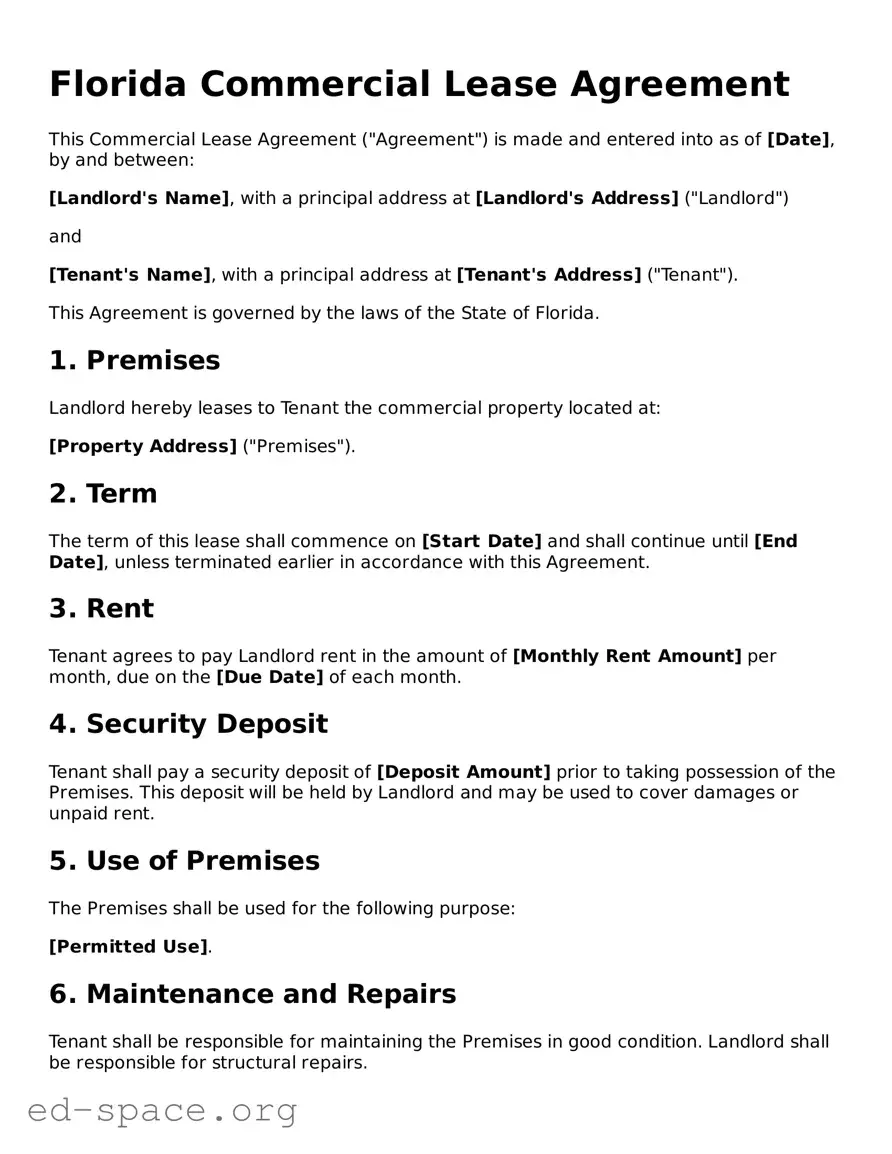
When entering into a commercial lease in Florida, understanding the Florida Commercial Lease Agreement form is crucial for both landlords and tenants. This form outlines the terms and conditions governing the rental of commercial property, ensuring that both parties have clear expectations. Key elements include the duration of the lease, rental amount, and payment schedule, which provide a solid foundation for the landlord-tenant relationship. Additionally, the agreement addresses maintenance responsibilities, property use restrictions, and provisions for renewal or termination. By clearly defining these aspects, the form helps prevent disputes and fosters a positive business environment. Whether you’re a seasoned property manager or a first-time business owner, familiarity with this document can significantly impact your leasing experience.
Florida Commercial Lease Agreement
This Commercial Lease Agreement ("Agreement") is made and entered into as of [Date], by and between:
[Landlord's Name], with a principal address at [Landlord's Address] ("Landlord")
and
[Tenant's Name], with a principal address at [Tenant's Address] ("Tenant").
This Agreement is governed by the laws of the State of Florida.
1. Premises
Landlord hereby leases to Tenant the commercial property located at:
[Property Address] ("Premises").
2. Term
The term of this lease shall commence on [Start Date] and shall continue until [End Date], unless terminated earlier in accordance with this Agreement.
3. Rent
Tenant agrees to pay Landlord rent in the amount of [Monthly Rent Amount] per month, due on the [Due Date] of each month.
4. Security Deposit
Tenant shall pay a security deposit of [Deposit Amount] prior to taking possession of the Premises. This deposit will be held by Landlord and may be used to cover damages or unpaid rent.
5. Use of Premises
The Premises shall be used for the following purpose:
[Permitted Use].
6. Maintenance and Repairs
Tenant shall be responsible for maintaining the Premises in good condition. Landlord shall be responsible for structural repairs.
7. Alterations
Tenant shall not make any alterations to the Premises without prior written consent from Landlord.
8. Insurance
Tenant shall maintain insurance coverage for liability and property damage in an amount not less than [Insurance Amount].
9. Termination
This Agreement may be terminated by either party with written notice of [Notice Period] days.
10. Governing Law
This Agreement shall be governed by and construed in accordance with the laws of the State of Florida.
IN WITNESS WHEREOF, the parties hereto have executed this Agreement as of the date first above written.
Landlord: ___________________________ Date: ________________
Tenant: _____________________________ Date: ________________
| Fact Name | Description |
|---|---|
| Governing Law | The Florida Commercial Lease Agreement is governed by Florida state law, specifically Chapter 83 of the Florida Statutes. |
| Parties Involved | The agreement typically involves a landlord (lessor) and a tenant (lessee), both of whom must be clearly identified. |
| Property Description | A detailed description of the commercial property being leased must be included, specifying the address and type of property. |
| Lease Term | The duration of the lease should be clearly stated, including the start and end dates of the lease period. |
| Rent Payment Terms | The agreement must specify the amount of rent, payment frequency, and acceptable payment methods. |
| Security Deposit | Details about the security deposit, including the amount and conditions for its return, should be outlined. |
| Use of Premises | The permitted uses of the property must be defined, ensuring that the tenant understands any restrictions. |
| Maintenance Responsibilities | The agreement should clarify the maintenance obligations of both the landlord and the tenant. |
| Termination Clauses | Conditions under which the lease may be terminated early by either party should be included, along with notice requirements. |
Filling out the Florida Commercial Lease Agreement form requires careful attention to detail. Ensure you have all necessary information ready before you start. Follow the steps below to complete the form accurately.
Once completed, review the form for accuracy. Ensure all parties receive a copy of the signed agreement for their records.
What is a Florida Commercial Lease Agreement?
A Florida Commercial Lease Agreement is a legal document that outlines the terms and conditions under which a property owner (landlord) allows a business to use their commercial space. This agreement includes details such as rent, duration, and responsibilities of both parties. It serves to protect the interests of both the landlord and the tenant.
What are the key components of a Commercial Lease Agreement?
Key components typically include the lease term, rent amount, payment schedule, security deposit, maintenance responsibilities, and any restrictions on the use of the property. It may also specify renewal options and conditions for terminating the lease. Clarity in these areas helps prevent misunderstandings in the future.
How long does a commercial lease typically last?
The duration of a commercial lease can vary widely, often ranging from one year to several years. Many leases are set for three to five years, but longer terms are not uncommon. The specific duration should be clearly stated in the lease agreement to ensure both parties are on the same page.
Can a commercial lease be negotiated?
Yes, commercial leases are often negotiable. Tenants should feel empowered to discuss terms such as rent, maintenance responsibilities, and lease duration with the landlord. Open communication can lead to a mutually beneficial agreement, so don’t hesitate to ask for adjustments that better suit your business needs.
What happens if a tenant needs to break the lease early?
If a tenant needs to break the lease early, they should first review the lease agreement for any early termination clauses. These clauses may outline penalties or conditions for breaking the lease. It’s advisable to communicate with the landlord and seek a resolution, as there may be options available to minimize financial impact.
What is a security deposit, and how is it handled?
A security deposit is a sum of money collected by the landlord to cover potential damages or unpaid rent. In Florida, landlords can typically charge up to two months’ rent for commercial leases. Upon lease termination, the landlord must return the deposit within a specified time frame, minus any deductions for damages or unpaid rent, if applicable.
Are there any specific laws governing commercial leases in Florida?
Yes, commercial leases in Florida are governed by state laws, including the Florida Statutes. These laws address various aspects of leasing, such as the obligations of landlords and tenants. It’s important for both parties to be aware of their rights and responsibilities under these laws to ensure compliance and protect their interests.
What should a tenant do if there are disputes with the landlord?
In the event of a dispute, tenants should first try to resolve the issue through direct communication with the landlord. If that doesn’t work, they may consider mediation or legal action, depending on the severity of the dispute. Keeping thorough records of all communications and agreements can be helpful in these situations.
Can a commercial lease be renewed?
Many commercial leases include a renewal clause that allows tenants to extend their lease for an additional term. The terms of renewal, including any changes in rent, should be clearly outlined in the lease agreement. Tenants should notify their landlord in advance if they wish to exercise this option.
What are the consequences of not adhering to the lease terms?
Failing to adhere to the lease terms can lead to serious consequences, including eviction, loss of the security deposit, or legal action. It’s crucial for tenants to understand their obligations and comply with the lease to avoid these potential pitfalls. Regular communication with the landlord can help prevent misunderstandings and ensure a smooth leasing experience.
Failing to provide accurate property information. Ensure that the address and details of the commercial space are correct.
Not specifying the lease term. Clearly state the duration of the lease, including start and end dates.
Overlooking rent payment details. Include the amount of rent, payment schedule, and acceptable payment methods.
Neglecting to outline maintenance responsibilities. Define who is responsible for repairs and upkeep of the property.
Missing out on renewal options. If applicable, specify any terms for renewing the lease at the end of the term.
Not including security deposit terms. Clearly state the amount of the security deposit and the conditions for its return.
Failing to address subleasing options. If subleasing is allowed, include the conditions under which it may occur.
Overlooking the use clause. Clearly define what the leased space can be used for to avoid any future disputes.
Not reviewing the termination clause. Understand the conditions under which either party can terminate the lease.
Ignoring local laws and regulations. Ensure compliance with Florida laws governing commercial leases to avoid legal issues.
When entering into a commercial lease agreement in Florida, several additional forms and documents may be necessary to ensure all parties are protected and informed. Understanding these documents can help streamline the leasing process and clarify expectations. Here’s a list of commonly used forms that accompany the Florida Commercial Lease Agreement.
By familiarizing yourself with these documents, you can navigate the complexities of commercial leasing with greater confidence. Each form plays a critical role in protecting your interests and ensuring a smooth leasing experience.
Residential Lease Agreement: This document outlines the terms for renting a residential property. Like a commercial lease, it specifies the duration, rent amount, and responsibilities of both the landlord and tenant.
Sublease Agreement: A sublease agreement allows a tenant to rent out their leased space to another party. Similar to a commercial lease, it includes terms regarding rent, duration, and the obligations of all involved parties.
Rental Agreement: This is a more general term that can apply to both residential and commercial properties. It defines the terms of rental, including payment details and maintenance responsibilities, much like a commercial lease.
Property Management Agreement: This document is between a property owner and a management company. It details the management company's responsibilities, including leasing and maintenance, similar to the landlord's obligations in a commercial lease.
Joint Venture Agreement: This agreement is often used in real estate partnerships. It outlines the roles and responsibilities of each party in a business venture, akin to the collaborative nature of a commercial lease.
When filling out the Florida Commercial Lease Agreement form, it’s important to approach the process carefully. Here are four key do's and don'ts to keep in mind:
When it comes to Florida Commercial Lease Agreements, there are several misconceptions that can lead to confusion. Understanding these misconceptions can help both landlords and tenants navigate their leasing arrangements more effectively.
This is not true. Each commercial lease can vary significantly based on the property type, the needs of the tenant, and the preferences of the landlord. It's essential to review the specific terms of each lease agreement.
While verbal agreements may seem convenient, they can lead to misunderstandings. A written lease provides clarity and legal protection for both parties, ensuring that everyone is on the same page.
Most commercial leases require tenants to obtain written consent from the landlord before making any significant alterations to the property. This protects the landlord's investment and maintains the property's integrity.
Lease durations are typically fixed and defined in the agreement. Modifying the lease term usually requires mutual consent and a formal amendment to the contract.
In Florida, security deposits are often refundable, provided the tenant meets the conditions outlined in the lease. It's important to understand the terms regarding the return of the deposit to avoid surprises at the end of the lease.
It's highly advisable for both landlords and tenants to have their lease agreements reviewed by a legal professional. This ensures that all terms are fair and that both parties are protected under the law.
When filling out and using the Florida Commercial Lease Agreement form, keep these key takeaways in mind: