In the state of Florida, the Affidavit of Gift form plays a crucial role in the process of transferring ownership of property or assets without the exchange of money. This form is particularly significant for individuals who wish to gift real estate, vehicles, or other valuable items to another person. By using this affidavit, the giver can formally declare their intention to transfer ownership, ensuring that the recipient is recognized as the new owner. The form typically includes essential information such as the names and addresses of both the giver and the recipient, a detailed description of the property being gifted, and the date of the transfer. Additionally, the affidavit may require the signature of a witness or a notary public, adding an extra layer of authenticity to the transaction. Understanding the nuances of this form is vital for anyone considering a gift of significant value, as it helps to prevent future disputes and clarifies the intentions of both parties involved.
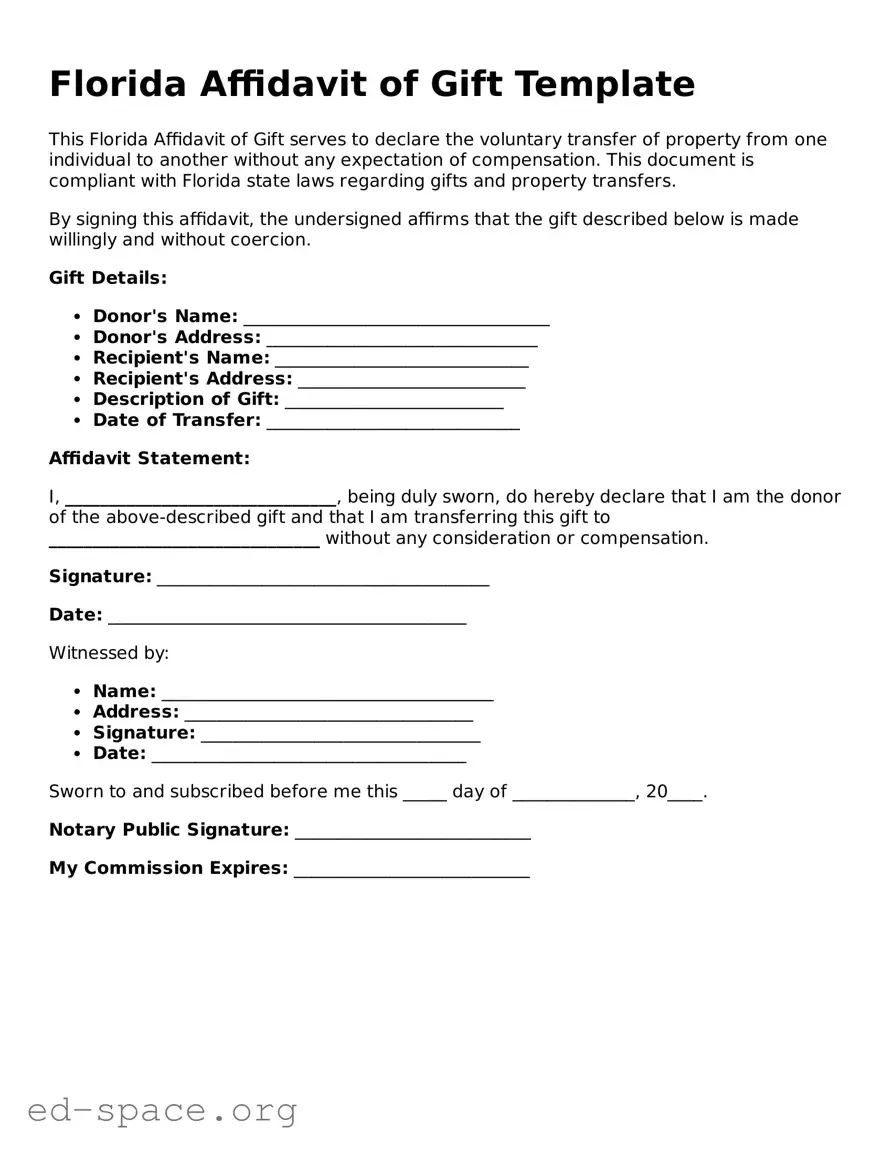
Florida Affidavit of Gift Template
This Florida Affidavit of Gift serves to declare the voluntary transfer of property from one individual to another without any expectation of compensation. This document is compliant with Florida state laws regarding gifts and property transfers.
By signing this affidavit, the undersigned affirms that the gift described below is made willingly and without coercion.
Gift Details:
Affidavit Statement:
I, _______________________________, being duly sworn, do hereby declare that I am the donor of the above-described gift and that I am transferring this gift to _______________________________ without any consideration or compensation.
Signature: ______________________________________
Date: _________________________________________
Witnessed by:
Sworn to and subscribed before me this _____ day of ______________, 20____.
Notary Public Signature: ___________________________
My Commission Expires: ___________________________
| Fact Name | Details |
|---|---|
| Purpose | The Florida Affidavit of Gift form is used to document the transfer of property or assets as a gift. |
| Governing Law | This form is governed by Florida Statutes, specifically Chapter 731 relating to the transfer of property. |
| Who Can Use It | Any individual or entity wishing to make a gift of property can utilize this form. |
| Signature Requirement | The form must be signed by both the donor and the recipient of the gift. |
| Notarization | Notarization of the signatures is required to validate the affidavit. |
| Tax Implications | Gifts may have tax implications; consulting a tax professional is advisable. |
| Record Keeping | It is important to keep a copy of the completed form for personal records. |
| Form Availability | The form can typically be obtained from legal offices or online legal resources. |
| Usage in Legal Proceedings | This affidavit may be used in legal proceedings to establish ownership of gifted property. |
After obtaining the Florida Affidavit of Gift form, you will need to complete it accurately to ensure the transfer of the gift is properly documented. Follow these steps carefully to fill out the form.
Once you have completed the form, keep a copy for your records. You may need to submit the original to the relevant authority or organization to finalize the gift transfer.
What is the Florida Affidavit of Gift form?
The Florida Affidavit of Gift form is a legal document used to transfer ownership of personal property as a gift. This form is often used when someone wants to give a vehicle, real estate, or other valuable items to another person without expecting anything in return. It serves as proof that the gift has been made and can help clarify ownership in the future.
Who needs to use this form?
This form is typically used by individuals who wish to gift property to a family member, friend, or other recipient. If you are giving away something of value and want to ensure that the transfer is documented, using the Affidavit of Gift is a good idea. It can also be useful in situations where the recipient needs proof of ownership for registration or insurance purposes.
What information is required on the form?
The form requires basic information about both the giver and the recipient. This includes names, addresses, and contact information. You will also need to describe the property being gifted, including any relevant details like the make and model of a vehicle or the address of real estate. Additionally, both parties may need to sign the document to validate the transfer.
Is the Affidavit of Gift form legally binding?
Yes, once completed and signed, the Affidavit of Gift form is legally binding. It creates a record of the gift and helps prevent disputes over ownership in the future. However, it’s important to ensure that the form is filled out correctly and that both parties understand the terms of the gift.
Do I need to file the Affidavit of Gift with any government agency?
In most cases, you do not need to file the Affidavit of Gift with a government agency. However, if the gift involves real estate or a vehicle, you may need to submit the form to the appropriate agency for registration or title transfer. It’s best to check with local regulations to determine if any additional steps are necessary.
Can the Affidavit of Gift be revoked?
Once the gift is made and the Affidavit of Gift is signed, it generally cannot be revoked. The transfer is considered complete. However, if there are specific circumstances or conditions tied to the gift, it may be possible to challenge the gift in court. It's always a good idea to consult with a legal expert if you have concerns about revoking a gift.
Incomplete Information: Failing to provide all required details can lead to delays or rejection. Ensure every section is filled out completely.
Incorrect Signatures: Signatures must match the names provided on the form. Double-check that the correct parties have signed.
Not Notarizing the Document: This form requires notarization. Skipping this step can invalidate the affidavit.
Using Incorrect Dates: Ensure that all dates are accurate. Mistakes in dates can create confusion and may require re-filing.
Failure to Include Supporting Documentation: Attach any necessary documents that support the gift. Missing paperwork can lead to complications.
Ignoring State-Specific Requirements: Each state has unique rules. Familiarize yourself with Florida's specific requirements before submission.
Not Keeping Copies: Always make copies of the completed form and any attachments. This ensures you have records for future reference.
The Florida Affidavit of Gift form serves as a vital document in the transfer of property or assets without a monetary exchange. When completing this process, several other forms and documents may also be necessary to ensure a smooth and legally sound transaction. Below are some commonly used documents that accompany the Affidavit of Gift.
By understanding these additional documents, individuals can navigate the gifting process more effectively. Ensuring that all necessary paperwork is completed can help avoid potential disputes and ensure compliance with legal requirements.
The Affidavit of Gift form is a legal document used to declare the transfer of ownership of a gift. It serves as proof of the donor's intent and the recipient's acceptance. Here are five documents that share similarities with the Affidavit of Gift:
When filling out the Florida Affidavit of Gift form, it’s important to ensure accuracy and compliance with state requirements. Here are six key actions to take and avoid:
The Florida Affidavit of Gift form is often misunderstood. Here are five common misconceptions that people have about this important document:
This form can be used for various types of gifts, not just real estate. It applies to personal property as well, making it versatile for different gifting situations.
While having a notary can add an extra layer of authenticity, it is not a strict requirement for the Affidavit of Gift to be valid. The form can be effective without notarization, depending on the context.
People often think that only substantial gifts require this form. In reality, even smaller gifts can benefit from the clarity and documentation that the affidavit provides.
Using the Affidavit of Gift does not automatically exempt the giver from tax responsibilities. Gift tax regulations still apply, and it’s wise to consult a tax professional to understand any potential implications.
This is a common belief, but it is not true. The giver can revoke the gift under certain circumstances, provided they follow the proper legal procedures to do so.
Understanding these misconceptions can help individuals navigate the gifting process more effectively and ensure that they are making informed decisions.
When considering the Florida Affidavit of Gift form, it is essential to understand its purpose and the steps involved in its completion. Here are some key takeaways to guide you through the process:
By following these key points, you can navigate the process of completing the Florida Affidavit of Gift with confidence. Properly documenting your gift can help avoid potential legal issues down the line.