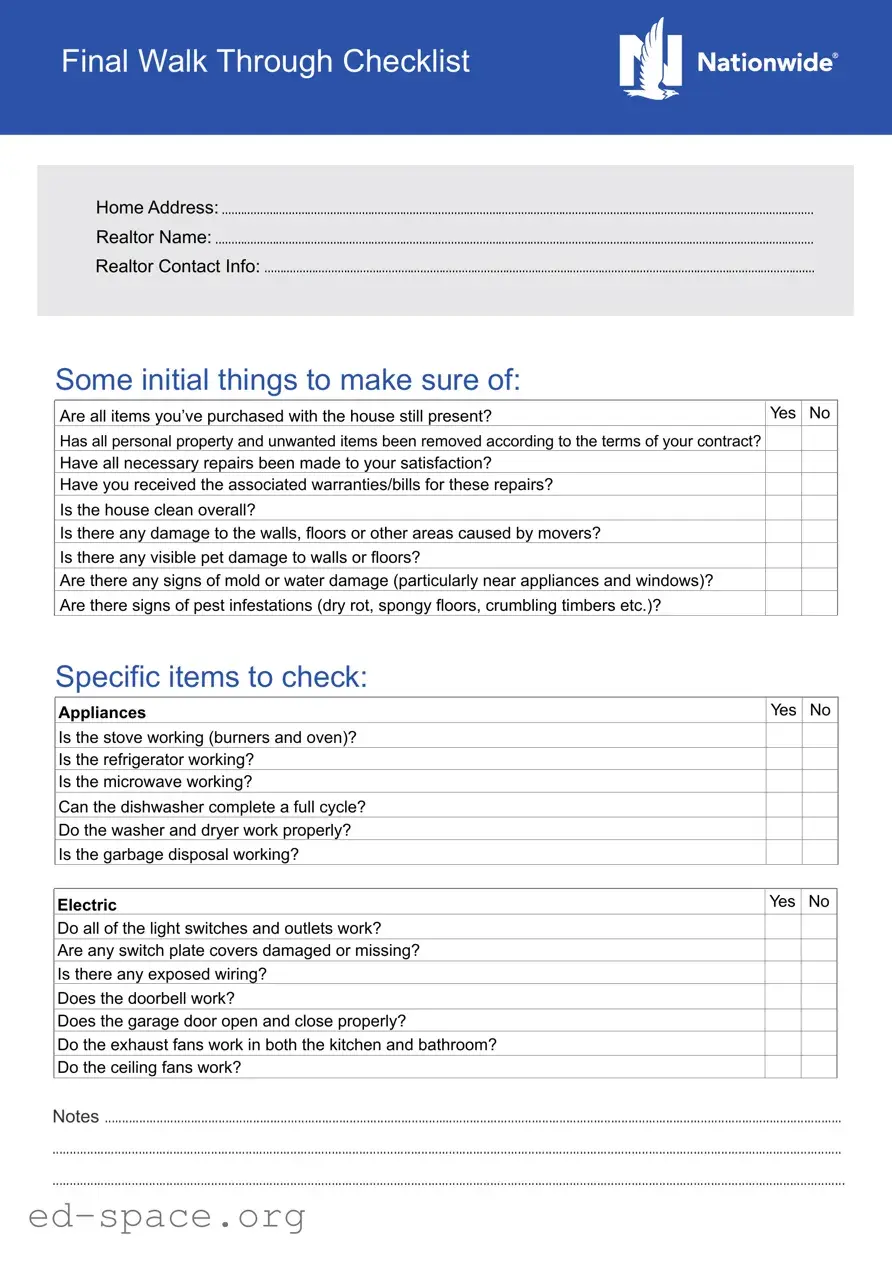
The Final Walk Through Checklist is an essential tool for homebuyers, ensuring that every detail of the property is accounted for before closing the deal. This checklist encompasses various aspects of the home, starting with a verification of personal property and any items purchased with the house. It prompts buyers to confirm that all agreed-upon repairs have been completed to their satisfaction and that warranties or bills for those repairs have been received. Cleanliness is also assessed, along with potential damages from moving, such as scratches on walls or floors. Additionally, the checklist includes a thorough inspection for any signs of mold, water damage, or pest infestations, which could indicate larger issues. Specific sections guide buyers through checking appliances, electrical systems, plumbing, HVAC units, and the condition of windows and doors. It even prompts an inspection of the basement, attic, and outdoor areas to ensure everything is in order. By following this checklist, buyers can approach their new home with confidence, knowing they have addressed crucial elements before finalizing their purchase.
Final Walk Through Checklist
Home Address: ..........................................................................................................................................................................................
Realtor Name: ............................................................................................................................................................................................
Realtor Contact Info: .............................................................................................................................................................................
Some initial things to make sure of:
Are all items you’ve purchased with the house still present? |
Yes No |
Has all personal property and unwanted items been removed according to the terms of your contract?
Have all necessary repairs been made to your satisfaction?
Have you received the associated warranties/bills for these repairs?
Is the house clean overall?
Is there any damage to the walls, floors or other areas caused by movers?
Is there any visible pet damage to walls or floors?
Are there any signs of mold or water damage (particularly near appliances and windows)?
Are there signs of pest infestations (dry rot, spongy floors, crumbling timbers etc.)?
Specific items to check:
Appliances
Is the stove working (burners and oven)?
Is the refrigerator working?
Is the microwave working?
Can the dishwasher complete a full cycle?
Do the washer and dryer work properly?
Is the garbage disposal working?
Electric
Do all of the light switches and outlets work?
Are any switch plate covers damaged or missing?
Is there any exposed wiring?
Does the doorbell work?
Does the garage door open and close properly?
Do the exhaust fans work in both the kitchen and bathroom?
Do the ceiling fans work?
Yes No
Yes No
Notes ......................................................................................................................................................................................................................
.....................................................................................................................................................................................................................................
......................................................................................................................................................................................................................................
Plumbing
Do the toilets flush properly (do they run or leak)?
Do the sinks, bathtubs and showers drain properly?
Is the water pressure sufficient?
Are there signs of leaking near faucets?
HVAC
Does the heating system work properly?
Does the air conditioning unit work properly?
Does the thermostat work?
Windows/Doors
Are there any signs of condensation or fog near
Are any windows broken or missing screens?
Do all windows open and close properly?
Do all doors open and close properly?
Do the locks and latches work?
Basement/Attic/Crawlspace
Have the spaces been cleared out and emptied?
Are there any signs of exposed plumbing?
Are there any signs of pests?
Outdoors
Is landscaping as you remembered?
Do the sprinklers work?
Yes No
Yes No
Yes No
Yes No
Yes No
Notes ......................................................................................................................................................................................................................
.....................................................................................................................................................................................................................................
.....................................................................................................................................................................................................................................
| Fact Name | Details |
|---|---|
| Purpose of the Checklist | The Final Walk Through Checklist helps buyers ensure that the property is in the agreed-upon condition before closing the sale. |
| Home Address Section | This section requires the complete address of the property being purchased, ensuring clarity and specificity in the transaction. |
| Realtor Information | Buyers must fill in the realtor's name and contact information, providing a point of reference for any questions or concerns during the walk-through. |
| Condition of Items | The checklist prompts buyers to verify that all purchased items are present and that unwanted personal property has been removed, as per the contract. |
| Repair Verification | Buyers are encouraged to confirm that all agreed-upon repairs have been completed satisfactorily and that warranties or bills are received. |
| Signs of Damage | The checklist includes checks for visible damage, such as pet damage, mold, or signs of pest infestations, protecting the buyer's investment. |
| State-Specific Forms | Some states may require specific forms or additional disclosures during the final walk-through, governed by local real estate laws. |
| Final Review | Buyers should take notes during the walk-through, documenting any issues that need to be addressed before closing, ensuring all concerns are noted. |
Completing the Final Walk Through Checklist is essential for ensuring that the property meets your expectations before finalizing the purchase. After filling out this form, you will have a clearer understanding of any issues that need to be addressed before closing. This checklist will help you document the condition of the property and confirm that all agreed-upon terms have been met.
What is the purpose of the Final Walk Through Checklist?
The Final Walk Through Checklist is designed to help homebuyers ensure that the property they are purchasing meets their expectations before closing the sale. It allows buyers to verify that all agreed-upon items are present, that repairs have been made, and that the home is in satisfactory condition. This checklist serves as a guide to identify any issues that may need to be addressed before finalizing the purchase.
What should I check for regarding appliances during the final walk-through?
During the final walk-through, it is essential to test all major appliances to ensure they are functioning correctly. Check if the stove, refrigerator, microwave, dishwasher, washer, dryer, and garbage disposal are all operational. Make sure to run the dishwasher through a full cycle to confirm it works properly. If any appliance does not function as expected, it may need to be addressed before closing.
How do I know if the house is clean overall?
A clean house should be free of dust, debris, and any personal belongings left by the previous owner. Check all rooms, including closets, cabinets, and the garage. Pay attention to surfaces such as countertops and floors. If you notice any areas that require cleaning, make a note of them. A clean home is important for your comfort and can indicate that the previous owner took good care of the property.
What are the signs of potential water damage I should look for?
During your walk-through, look for any signs of mold or water damage, especially near appliances and windows. This may include discoloration on walls or ceilings, soft spots in floors, or a musty smell. Inspect areas like the kitchen and bathrooms closely, as these are common places for water issues to arise. If you find any signs of water damage, it is advisable to consult a professional before closing.
What should I do if I notice damage caused by movers?
If you see any damage to walls, floors, or other areas that may have been caused by movers, document it. Take photos and note the specific locations of the damage. This information can be useful when discussing repairs with the seller or your realtor. It is essential to address any damage before closing to ensure that it is resolved to your satisfaction.
How can I check the functionality of the electrical systems?
To check the electrical systems, test all light switches and outlets to confirm they are working. Look for any damaged or missing switch plate covers and inspect for exposed wiring. Don’t forget to test the doorbell and ensure that the garage door opens and closes smoothly. Additionally, check that exhaust fans in the kitchen and bathroom function correctly, as well as any ceiling fans in the home.
What plumbing issues should I be aware of during the walk-through?
When examining the plumbing, ensure that toilets flush properly and do not run or leak. Check that sinks, bathtubs, and showers drain effectively, and verify that the water pressure is sufficient. Look for any signs of leaks near faucets or under sinks. Addressing plumbing issues before closing can prevent future complications.
What should I look for regarding windows and doors?
Inspect all windows and doors to ensure they open and close easily. Look for any signs of condensation or fog between double-pane windows, as this may indicate a seal failure. Check for broken or missing screens and ensure that all locks and latches function correctly. Properly functioning windows and doors contribute to the security and energy efficiency of your new home.
How do I assess the outdoor areas of the property?
When evaluating the outdoor areas, take a moment to review the landscaping. Ensure it looks as you remember and check that any sprinklers are functioning properly. Look for any signs of neglect or damage in the yard. A well-maintained outdoor space can enhance your enjoyment of the property and may require attention if issues are found.
Overlooking Personal Property: One common mistake is failing to confirm that all items included in the sale are present. Buyers should ensure that all appliances and fixtures they expected to receive are in the home during the final walk-through.
Neglecting to Check Repairs: Many individuals forget to verify that all agreed-upon repairs have been completed to their satisfaction. It's essential to not only check if repairs were made but also to assess their quality.
Ignoring Cleanliness and Damage: A thorough inspection for cleanliness and potential damage is crucial. Buyers often miss checking for issues like pet damage, water damage, or even signs of pest infestations, which can lead to unexpected costs later.
Failing to Test Appliances and Systems: It is vital to actively test all appliances and systems, such as the heating and cooling units, plumbing fixtures, and electrical outlets. Skipping this step can lead to unpleasant surprises after moving in.
Not Reviewing Outdoor Areas: Lastly, buyers sometimes forget to inspect the outdoor areas, including landscaping and sprinkler systems. Ensuring these aspects are in good condition is just as important as checking the interior of the home.
When buying a home, the final walk-through is a crucial step in the process. It helps ensure that everything is in order before closing the deal. Along with the Final Walk Through Checklist, several other forms and documents can assist in making the transition smoother. Here’s a list of some important documents you might encounter.
Being familiar with these documents can help buyers feel more confident during the final stages of purchasing a home. Each document plays a role in ensuring that the transaction goes smoothly and protects the interests of everyone involved.
When filling out the Final Walk Through Checklist form, consider the following do's and don'ts:
When it comes to the Final Walk Through Checklist, there are several misconceptions that can lead to confusion. Understanding these can help ensure a smoother home buying experience.
Many buyers believe that the Final Walk Through is just a formality. In reality, it’s an essential step to confirm that the property is in the agreed-upon condition before closing. Skipping this can lead to unexpected issues after the purchase.
Some think that the checklist is only for significant problems, like structural damage. However, it also addresses smaller details, such as the functionality of appliances and the condition of surfaces. Every item matters.
Buyers often expect the home to be in pristine condition. It's important to remember that minor wear and tear is common. The goal is to ensure that all agreed-upon repairs have been made and that no new issues have arisen.
While some buyers may feel confident enough to conduct the walk-through without help, it’s advisable to have your realtor present. They can offer valuable insights and help identify potential issues you might overlook.
Many assume that the checklist solely protects the buyer. In truth, it also safeguards the seller by ensuring that all contractual obligations are met. This mutual benefit helps facilitate a smoother transaction for both parties.
Using the Final Walk Through Checklist is essential for ensuring a smooth transition into a new home. Here are key takeaways to consider:
Completing this checklist can help ensure that your new home meets expectations and is ready for occupancy.