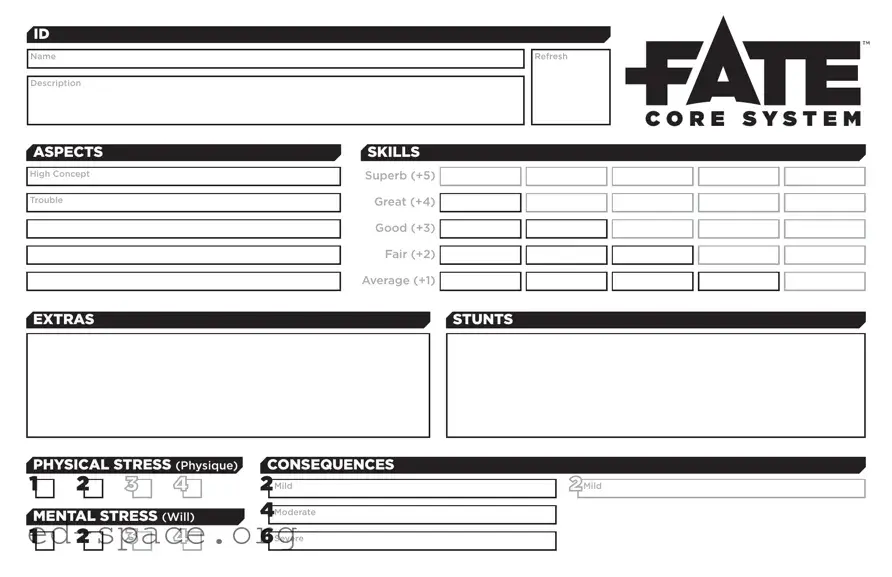
The Fate Character Sheet is an essential tool for players engaging in the Fate role-playing game, providing a structured way to outline and develop their characters. This form captures the essence of a character through various components, starting with the ID, Name, and Description, which establish the character's identity and background. At the heart of the sheet are the Aspects, including the High Concept and Trouble, which define the character's strengths and weaknesses, guiding their actions and decisions during gameplay. Players can also track their character's skills, rated from Superb to Average, which influence their abilities in different situations. Additionally, the sheet includes a section for Extras and Refresh, detailing special features and resources available to the character. Stunts, which offer unique advantages, are also recorded, enhancing gameplay dynamics. The physical and mental stress sections, along with consequences, provide a framework for managing character challenges and setbacks, ensuring a balanced and engaging experience throughout the game.
ID
Name
Description
ASPECTS
High Concept
Trouble
EXTRAS
Refresh
SKILLS
Superb (+5)
Great (+4)
Good (+3)
Fair (+2)
Average (+1)
STUNTS
C O R E S Y S T E M
PHYSICAL STRESS (Physique) |
CONSEQUENCES |
||||
1 |
2 |
3 |
4 |
|
|
2Mild |
|||||
|
|
|
|
|
|
MENTAL STRESS (Will) |
|
Moderate |
|||
4 |
|||||
|
|
|
|
|
|
2Mild
1 2
3
4
6Severe
| Fact Name | Description |
|---|---|
| ID | The unique identifier for each character sheet, ensuring proper tracking and organization. |
| Aspects | Includes High Concept and Trouble, which define a character's personality and conflicts. |
| Skills | Ranked from Superb (+5) to Average (+1), these determine a character's abilities and strengths. |
| Stress and Consequences | Physical and mental stress levels are indicated, along with consequences that affect gameplay. |
Filling out the Fate Character Sheet form is essential for creating a character that fits within the Fate system. This process involves providing specific information about your character's identity, abilities, and traits. Following the steps below will help you complete the form accurately and efficiently.
Once you have filled out all sections of the Fate Character Sheet, review your entries for accuracy and completeness. This ensures that your character is well-defined and ready for gameplay.
What is the purpose of the Fate Character Sheet?
The Fate Character Sheet is designed to help players organize and track their characters in the Fate role-playing game. It provides a structured format for detailing essential aspects of a character, such as their name, description, skills, and unique traits. This sheet serves as a reference during gameplay, ensuring that players can easily access important information about their characters.
What are "Aspects" in the Fate Character Sheet?
Aspects are key phrases that define a character's personality, background, or motivations. Each character has a "High Concept," which summarizes who they are, and a "Trouble," which highlights a significant challenge or flaw they face. These aspects guide character development and influence how players interact with the game world.
How do "Skills" work on the Fate Character Sheet?
Skills represent a character's abilities and are ranked from Superb (+5) to Average (+1). Players allocate points to different skills based on their character's strengths and weaknesses. This ranking system determines how effective a character is in various situations during gameplay, influencing outcomes of actions and challenges.
What are "Stunts" and how do they function?
Stunts are special abilities or advantages that give characters unique capabilities in the game. They can enhance skills or provide additional options during play. Each stunt is crafted to fit a character's theme and can significantly impact gameplay by allowing for creative solutions to challenges.
What is meant by "Refresh" in the context of the character sheet?
Refresh refers to the number of Fate Points a character starts with at the beginning of a session. Fate Points are a crucial resource that players can use to influence the game, invoke aspects, or activate stunts. The refresh value can vary depending on the game setting and character creation rules.
How is "Physical Stress" represented on the character sheet?
Physical Stress is tracked through a series of boxes on the character sheet, corresponding to the character's Physique skill. Players fill in these boxes as their character takes damage or faces physical challenges. This system helps manage how much physical punishment a character can endure before facing more severe consequences.
What are "Consequences" and how do they affect gameplay?
Consequences represent the lasting effects of physical or mental stress a character experiences. They are categorized into Mild, Moderate, and Severe, indicating the severity of the impact. Players must manage these consequences carefully, as they can affect a character's abilities and decision-making throughout the game.
Can you explain the "Mental Stress" section of the character sheet?
Mental Stress is similar to Physical Stress but focuses on a character's Will skill. It tracks how much mental strain a character can handle before facing consequences. This section is crucial for managing situations that challenge a character's mental resilience, such as fear, anxiety, or overwhelming situations.
Failing to clearly define High Concept and Trouble aspects. These are essential for character development and gameplay.
Neglecting to fill in the Description section. A well-rounded description helps others understand your character better.
Overlooking the Refresh value. This number is crucial for determining how many Fate Points you start with.
Misplacing skill levels. Ensure that each skill is accurately rated from Superb (+5) to Average (+1).
Ignoring the importance of Stunts. Stunts can significantly enhance your character's abilities and should be thoughtfully selected.
Inaccurate recording of Physical Stress and Mental Stress values. These numbers affect your character’s resilience during play.
Not utilizing the Consequences section properly. This section is vital for tracking the impact of injuries and challenges faced.
When engaging in a tabletop role-playing game using the Fate system, several forms and documents complement the Fate Character Sheet. Each document serves a unique purpose, helping players develop their characters and enhance gameplay. Below is a list of these essential documents.
Utilizing these forms and documents alongside the Fate Character Sheet enhances the gaming experience. They provide structure and clarity, allowing players to focus on storytelling and character development while navigating the complexities of the game.
The Fate Character Sheet form serves as a structured template for role-playing games, focusing on character attributes and abilities. Several other documents share similarities with this form, particularly in their organization and purpose. Below are ten documents that exhibit comparable features:
When filling out the Fate Character Sheet form, it’s important to be clear and accurate. Here are some do's and don'ts to keep in mind:
Understanding the Fate Character Sheet can be challenging, especially with the various elements involved. Here are some common misconceptions that people often have:
Many believe the High Concept is merely a label. In reality, it defines your character's essence and motivations, shaping how they interact with the world.
While Trouble often presents challenges, it also provides opportunities for character growth and storytelling. Embracing it can lead to exciting developments.
Extras enhance your character's abilities and story. They are crucial for adding depth and unique traits, making your character more engaging.
Skills are not just a simple ranking. Each level reflects your character's proficiency and can influence gameplay in significant ways.
Stunts provide mechanical benefits and can change how you approach challenges. They are essential for maximizing your character's potential.
Physical Stress relates to your character's bodily endurance, while Mental Stress deals with emotional and psychological challenges. Both are vital for different aspects of gameplay.
Consequences can have serious implications for your character. They affect how you navigate the story and can lead to significant character development.
Refresh is not just a one-time resource. It replenishes your character's abilities, so understanding its management is crucial for long-term play.
When filling out and using the Fate Character Sheet form, consider the following key takeaways: