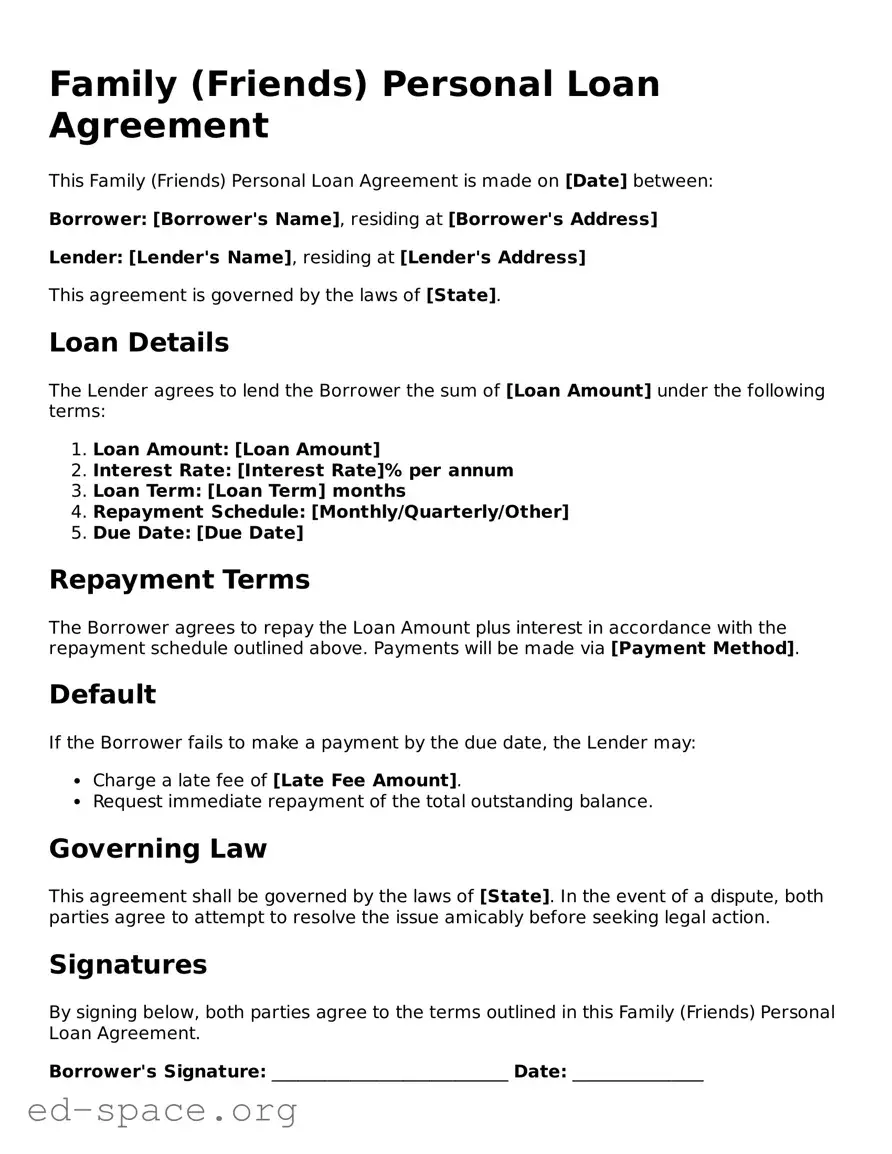
When individuals consider borrowing money from family or friends, a clear understanding of the terms involved is essential to maintaining relationships and ensuring accountability. The Family (Friends) Personal Loan Agreement form serves as a vital tool in this process, outlining the key components of the loan arrangement. This document typically includes details such as the loan amount, interest rate, repayment schedule, and any collateral involved. Additionally, it specifies the rights and responsibilities of both the lender and the borrower, thereby reducing the potential for misunderstandings. By formalizing the agreement, parties can foster transparency and trust, which are crucial for preserving personal relationships while navigating financial transactions. This form not only provides a written record of the agreement but also serves as a reference point for both parties throughout the loan period.
Family (Friends) Personal Loan Agreement
This Family (Friends) Personal Loan Agreement is made on [Date] between:
Borrower: [Borrower's Name], residing at [Borrower's Address]
Lender: [Lender's Name], residing at [Lender's Address]
This agreement is governed by the laws of [State].
Loan Details
The Lender agrees to lend the Borrower the sum of [Loan Amount] under the following terms:
Repayment Terms
The Borrower agrees to repay the Loan Amount plus interest in accordance with the repayment schedule outlined above. Payments will be made via [Payment Method].
Default
If the Borrower fails to make a payment by the due date, the Lender may:
Governing Law
This agreement shall be governed by the laws of [State]. In the event of a dispute, both parties agree to attempt to resolve the issue amicably before seeking legal action.
Signatures
By signing below, both parties agree to the terms outlined in this Family (Friends) Personal Loan Agreement.
Borrower's Signature: ___________________________ Date: _______________
Lender's Signature: ___________________________ Date: _______________
| Fact Name | Description |
|---|---|
| Purpose | The Family (Friends) Personal Loan Agreement form is used to outline the terms of a loan between individuals who are friends or family members. |
| Loan Amount | The form specifies the exact amount of money being loaned, ensuring clarity for both parties. |
| Interest Rate | It may include an interest rate, which can be set at a rate that is agreeable to both the lender and the borrower. |
| Repayment Terms | The agreement outlines how and when the borrower will repay the loan, including any specific due dates. |
| Governing Law | Each state may have specific laws governing personal loans. For example, in California, the governing law is the California Civil Code. |
| Default Clause | The form can include a clause detailing what happens if the borrower fails to repay the loan on time. |
| Signatures | Both parties must sign the agreement to make it legally binding, indicating their acceptance of the terms. |
| Confidentiality | The agreement may include a confidentiality clause to protect the privacy of both parties regarding the loan details. |
Once you have the Family (Friends) Personal Loan Agreement form ready, you will need to fill it out carefully to ensure all necessary information is included. This will help both parties understand the terms of the loan clearly and protect everyone's interests.
Once the form is completed and signed, both parties should keep a copy for their records. This ensures that everyone is aware of the agreement and can refer back to it if necessary.
What is a Family (Friends) Personal Loan Agreement?
A Family (Friends) Personal Loan Agreement is a written document that outlines the terms of a loan between individuals who are friends or family members. This agreement helps to clarify the expectations of both the lender and the borrower. It includes important details such as the loan amount, interest rate, repayment schedule, and any other terms that both parties agree upon. Having this document in place can help prevent misunderstandings and conflicts in the future.
Why should I use a written agreement for a personal loan between friends or family?
Using a written agreement is crucial, even among friends or family. It ensures that everyone is on the same page regarding the loan terms. A written document protects both parties by providing a clear record of what was agreed upon. This can be especially important if there are any disputes later on. It also helps to maintain relationships by setting clear expectations and responsibilities.
What key elements should be included in the agreement?
Several key elements should be included in a Family (Friends) Personal Loan Agreement. First, specify the loan amount. Next, outline the interest rate, if applicable, and the repayment schedule, including due dates. It’s also important to include any penalties for late payments or defaults. Lastly, both parties should sign and date the document to show that they agree to the terms. Including these details can help avoid future misunderstandings.
Can I charge interest on a personal loan to a family member or friend?
Yes, you can charge interest on a personal loan to a family member or friend. However, it’s important to keep in mind that the interest rate should be reasonable and comply with state laws. Charging too high of an interest rate could lead to legal issues. It’s wise to discuss and agree on the interest rate upfront and include it in the loan agreement.
What happens if the borrower cannot repay the loan?
If the borrower cannot repay the loan, the situation can become complicated. The written agreement should outline what happens in case of default. This may include a grace period, late fees, or even legal action if necessary. Open communication is key. The lender and borrower should discuss the issue as soon as possible to find a solution that works for both parties. This can help preserve the relationship while addressing the financial concern.
Incomplete Information: Many people forget to fill out all required fields, such as the loan amount, interest rate, or repayment terms. This can lead to confusion later on.
Not Specifying the Purpose of the Loan: Failing to mention what the loan is for can create misunderstandings. Clear communication about the purpose helps set expectations.
Ignoring Interest Rates: Some individuals skip adding an interest rate or do not discuss it with the borrower. This can lead to financial strain if the lender expects repayment without any additional cost.
Vague Repayment Terms: Being unclear about when and how payments should be made can lead to disputes. Specific dates and methods of payment should always be outlined.
Not Including Late Fees: Omitting information about late fees can create issues if payments are missed. It’s wise to clarify any penalties for late payments upfront.
Failure to Sign: Some people neglect to sign the agreement, thinking it’s informal. A signature solidifies the commitment and protects both parties.
Not Keeping Copies: After filling out the form, failing to keep a copy for personal records can lead to problems. Both parties should have a signed copy for reference.
Overlooking Witnesses: Some agreements benefit from having a witness sign. This can provide additional validation if disputes arise later.
Not Reviewing the Agreement Together: Skipping a discussion about the terms before signing can lead to misunderstandings. Open dialogue ensures everyone is on the same page.
When entering into a personal loan agreement with family or friends, several other documents can complement the main agreement. These documents help clarify the terms of the loan, protect both parties, and provide a clear record of the transaction. Below are some commonly used forms and documents.
Using these documents alongside the Family (Friends) Personal Loan Agreement can provide clarity and security for both parties involved. By ensuring that all terms are clearly defined and agreed upon, the likelihood of disputes or misunderstandings decreases significantly.
When filling out a Family (Friends) Personal Loan Agreement form, it is important to approach the process with care. Below are some essential dos and don'ts to consider.
Misconceptions about the Family (Friends) Personal Loan Agreement form can lead to misunderstandings and potential conflicts. Here are six common misconceptions explained:
Many people believe that a personal loan agreement between friends or family members is informal and cannot be enforced. In reality, if the agreement is written and signed, it can be legally binding, just like any other contract.
Some assume that only significant amounts of money require a formal loan agreement. However, even small loans can benefit from a written document to clarify terms and prevent misunderstandings.
Relying on a verbal agreement is a common misconception. While conversations may seem sufficient, they can lead to disputes over what was agreed upon. A written agreement provides clear evidence of the terms.
Another myth is that personal loans must have high-interest rates to be legitimate. In fact, loans can be made with little to no interest, and as long as the terms are clear, they remain valid.
Some people think that only financial institutions can issue loan agreements. However, individuals can create their own agreements that are just as valid, provided they follow legal guidelines.
Lastly, many believe loan agreements only apply to monetary loans. In reality, they can also cover other forms of lending, such as property or services, as long as the terms are clearly defined.
When filling out and using a Family (Friends) Personal Loan Agreement form, it’s important to keep several key points in mind. Here are some essential takeaways:
By following these key takeaways, you can help ensure that the loan agreement is clear, fair, and beneficial for both parties involved.