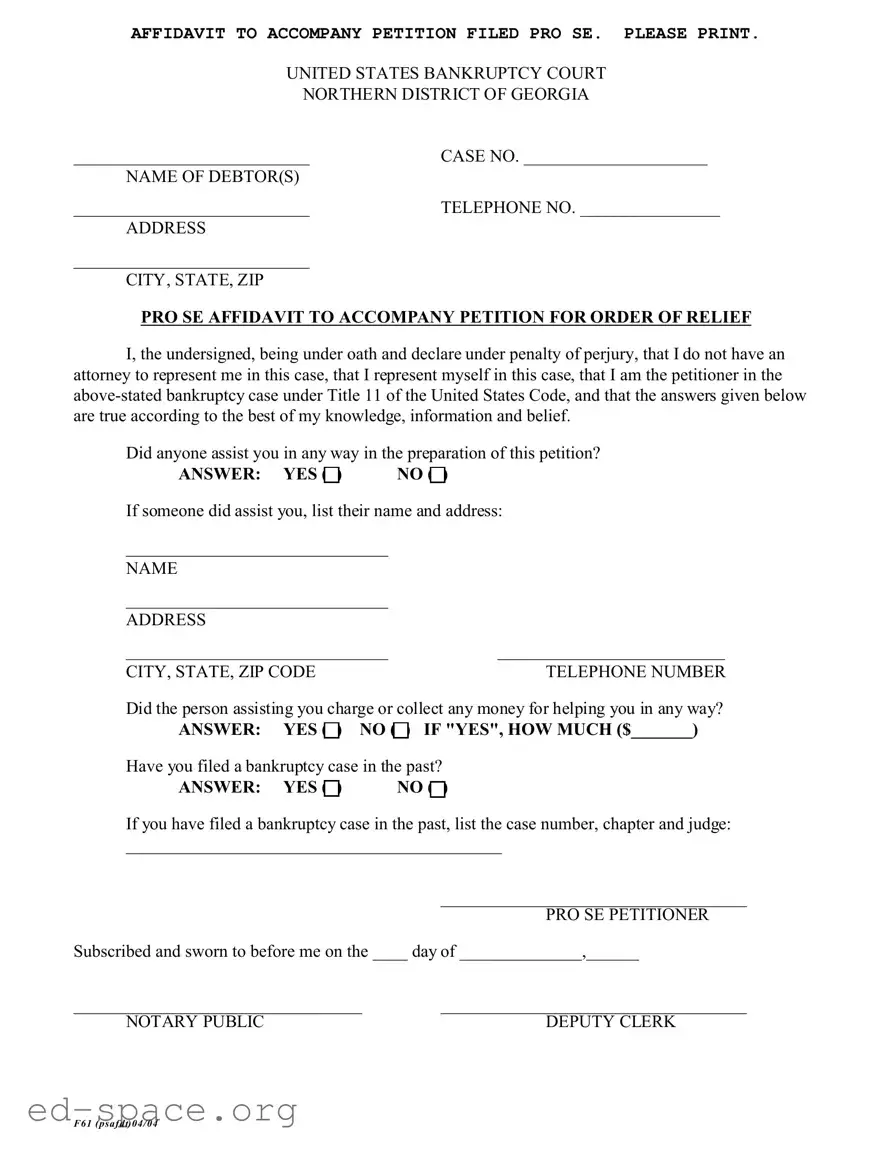
The F 61 Georgia form plays a crucial role for individuals filing for bankruptcy without an attorney, also known as pro se petitioners. This affidavit is a necessary document that accompanies the bankruptcy petition in the United States Bankruptcy Court for the Northern District of Georgia. It requires the individual to declare under oath that they are representing themselves in their bankruptcy case. The form includes essential details such as the debtor's name, contact information, and case number. Additionally, it prompts the petitioner to disclose whether anyone assisted them in preparing the petition, and if so, whether that person charged a fee for their help. The form also asks about any previous bankruptcy filings, ensuring that the court has a complete understanding of the petitioner's financial history. By signing this affidavit, the petitioner affirms that all information provided is accurate to the best of their knowledge, thereby maintaining transparency in the bankruptcy process.

AFFIDAVIT TO ACCOMPANY PETITION FILED PRO SE. PLEASE PRINT.
UNITED STATES BANKRUPTCY COURT
NORTHERN DISTRICT OF GEORGIA
___________________________ |
CASE NO. _____________________ |
NAME OF DEBTOR(S) |
|
___________________________ |
TELEPHONE NO. ________________ |
ADDRESS |
|
___________________________ |
|
CITY, STATE, ZIP |
|
PRO SE AFFIDAVIT TO ACCOMPANY PETITION FOR ORDER OF RELIEF
I, the undersigned, being under oath and declare under penalty of perjury, that I do not have an attorney to represent me in this case, that I represent myself in this case, that I am the petitioner in the
Did anyone assist you in any way in the preparation of this petition?
ANSWER: YES ( ) |
NO ( ) |
If someone did assist you, list their name and address:
______________________________
NAME
______________________________
ADDRESS
______________________________ |
__________________________ |
CITY, STATE, ZIP CODE |
TELEPHONE NUMBER |
Did the person assisting you charge or collect any money for helping you in any way?
ANSWER: YES ( ) NO ( ) IF "YES", HOW MUCH ($_______)
Have you filed a bankruptcy case in the past?
ANSWER: YES ( ) |
NO ( ) |
If you have filed a bankruptcy case in the past, list the case number, chapter and judge:
___________________________________________
|
___________________________________ |
|
PRO SE PETITIONER |
Subscribed and sworn to before me on the ____ day of ______________,______ |
|
_________________________________ |
___________________________________ |
NOTARY PUBLIC |
DEPUTY CLERK |
F61 (psafdt)04/04
| Fact Name | Description |
|---|---|
| Purpose | The F 61 Georgia form is an affidavit that accompanies a petition filed by individuals representing themselves in bankruptcy cases. |
| Governing Law | This form is governed by Title 11 of the United States Code, which outlines federal bankruptcy law. |
| Pro Se Representation | Individuals using this form confirm they do not have an attorney and are representing themselves in the bankruptcy process. |
| Previous Filings | The form requires individuals to disclose if they have filed for bankruptcy in the past, including details of previous cases. |
| Assistance Disclosure | Users must indicate if anyone assisted them in preparing the petition and whether that person charged a fee for their help. |
Filling out the F 61 Georgia form requires careful attention to detail. This affidavit is a key part of the bankruptcy petition process, and accuracy is essential. After completing the form, it will need to be submitted to the appropriate court, along with any other required documents.
What is the purpose of the F 61 Georgia form?
The F 61 Georgia form is an affidavit that must accompany a bankruptcy petition filed by an individual representing themselves, known as pro se. It serves to confirm that the individual does not have an attorney and provides necessary information regarding any assistance received in preparing the petition. This form helps the court understand the circumstances of the petitioner's representation and any prior bankruptcy filings.
Who needs to file the F 61 Georgia form?
Individuals who are filing for bankruptcy without the assistance of an attorney must complete and submit the F 61 form. This is specifically for those who are representing themselves in the bankruptcy process. The form ensures that the court is aware of the petitioner's pro se status and any assistance received during the preparation of the petition.
What information is required on the F 61 Georgia form?
The form requires the petitioner to provide their name, case number, contact information, and address. Additionally, it asks if anyone assisted in preparing the petition, whether that person charged for their help, and if the petitioner has filed for bankruptcy before. This information is crucial for the court to assess the petitioner's situation accurately.
What happens if I have previously filed for bankruptcy?
If you have filed for bankruptcy in the past, the F 61 form requires you to provide details about the previous case. This includes the case number, the chapter under which it was filed, and the judge assigned to that case. This information helps the court evaluate your current petition in the context of your bankruptcy history.
Is there a notary requirement for the F 61 Georgia form?
Yes, the F 61 form must be signed in front of a notary public. The petitioner must subscribe and swear to the affidavit, affirming that the information provided is true to the best of their knowledge. This notarization adds a layer of authenticity to the form and is a standard requirement for legal documents submitted to the court.
Failing to print the form clearly. It is important to ensure that all information is legible. Illegible handwriting can lead to misunderstandings or delays.
Not providing complete contact information. Missing details such as a telephone number or full address can hinder communication with the court.
Incorrectly marking the assistance question. Be sure to answer whether anyone helped in preparing the petition. Inaccurate responses can affect the validity of the affidavit.
Forgetting to include the name and address of the person who assisted. If assistance was received, it is necessary to provide this information to comply with the form's requirements.
Neglecting to disclose if the assistant charged for their help. If any fees were involved, this must be reported on the form.
Omitting previous bankruptcy case information. If you have filed before, it is crucial to include the case number, chapter, and judge to provide a complete history.
Not signing the affidavit. The form must be signed to confirm that the information provided is true and to fulfill the legal requirements.
Overlooking the notary section. The affidavit needs to be notarized, which is an important step that some may forget.
Using outdated forms. Always ensure that the most current version of the F 61 form is being used, as older versions may not be accepted.
Submitting the form without reviewing it. Take the time to double-check all entries for accuracy and completeness before filing.
The F 61 form is an important document used in bankruptcy cases in Georgia, particularly when an individual is representing themselves without an attorney. Along with this form, there are several other documents that may also be required to ensure the bankruptcy process proceeds smoothly. Below is a list of some of these essential documents.
Each of these documents plays a vital role in the bankruptcy process, providing necessary information to the court and helping to facilitate a fair resolution for all parties involved. Understanding these forms can help individuals navigate the complexities of filing for bankruptcy more effectively.
The F 61 Georgia form, which is an affidavit accompanying a pro se bankruptcy petition, shares similarities with several other legal documents. Each of these documents serves a specific purpose in legal proceedings, particularly in bankruptcy or self-representation contexts. Below is a list of documents that are comparable to the F 61 form:
When filling out the F 61 Georgia form, it is important to follow specific guidelines to ensure accuracy and compliance. Here are four things you should and shouldn't do:
Here are some common misconceptions about the F 61 Georgia form, which is used for filing a bankruptcy petition without an attorney:
When filling out the F 61 Georgia form, keep these key takeaways in mind: