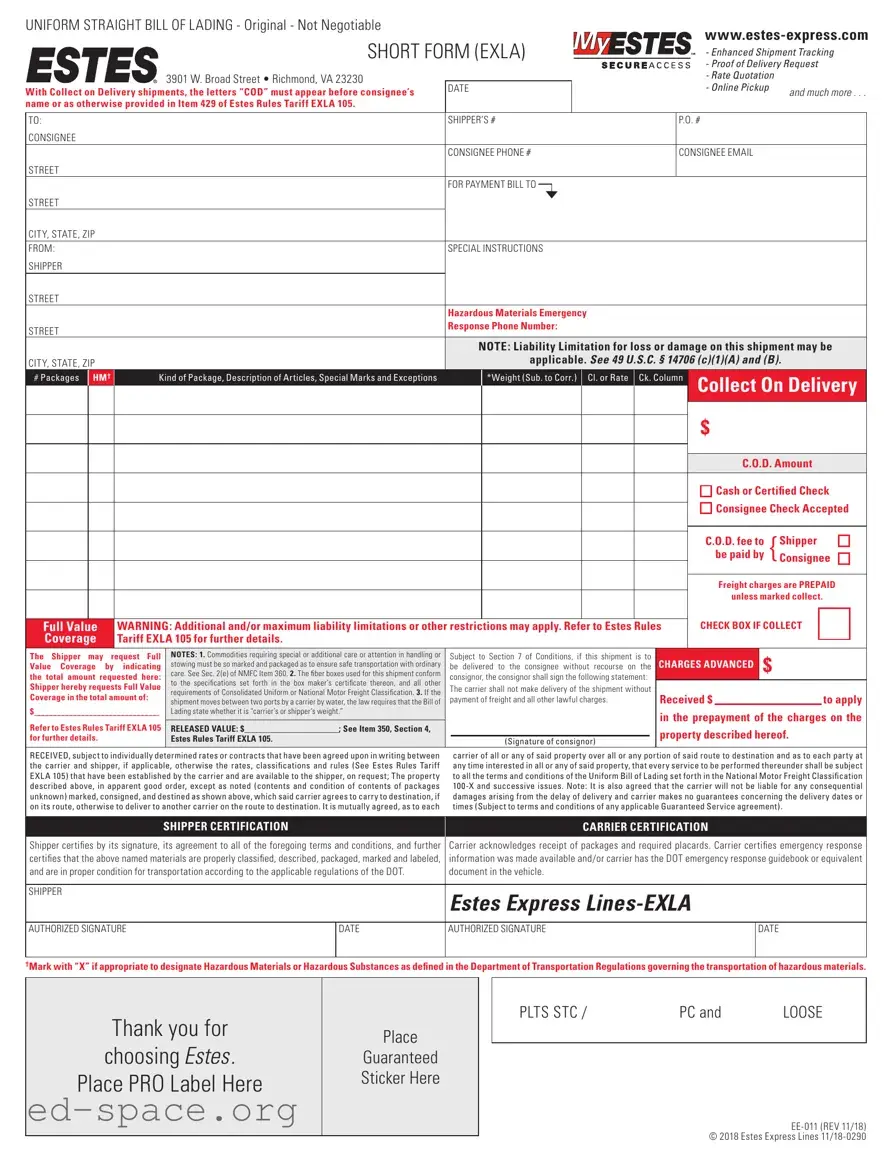
The Estes Express Bill of Lading form is a crucial document in the shipping process, serving multiple functions that facilitate the transportation of goods. This form is not negotiable and is typically used for straightforward shipments, providing essential information about the shipper, consignee, and the nature of the cargo. It includes fields for the shipper's and consignee's contact details, including phone numbers and email addresses, ensuring clear communication throughout the shipping process. Special instructions can be noted, particularly for hazardous materials, which require careful handling and emergency response protocols. The form also addresses payment terms, specifying whether freight charges are prepaid or collect, and outlines liability limitations for loss or damage, referencing applicable legal codes. Additionally, it allows for the request of Full Value Coverage, which provides extra protection for valuable shipments. The form is designed to be comprehensive, ensuring that all parties involved in the shipping process understand their responsibilities and the terms of service, thereby minimizing disputes and enhancing efficiency.
UNIFORM STRAIGHT BILL OF LADING - Original - Not Negotiable
SHORT FORM (EXLA)
3901 W. Broad Street • Richmond, VA 23230 |
|
With Collect on Delivery shipments, the letters “COD” must appear before consignee’s |
DATE |
|
|
name or as otherwise provided in Item 429 of Estes Rules Tariff EXLA 105. |
|
|
|
-Enhanced Shipment Tracking
-Proof of Delivery Request
-Rate Quotation
- Online Pickup |
and much more . . . |
|
TO: |
|
|
|
|
SHIPPER’S # |
|
|
|
P.O. # |
|
|
|
|
|||||||||||
CONSIGNEE |
|
|
|
|
|
|
|
|
|
|
|
|
|
|
|
|
|
|
|
|
|
|
|
|
|
|
|
|
|
|
CoNSIGNEE PhONE # |
|
|
|
CoNSIGNEE EmAIL |
|
|
|
|
||||||||||
STREET |
|
|
|
|
|
|
|
|
|
|
|
|
|
|
|
|
|
|
|
|
|
|
|
|
STREET |
|
|
|
|
FOR PAYMENT BILL TO |
|
|
|
|
|
|
|
|
|
|
|
|
|
|
|
|
|||
|
|
|
|
|
|
|
|
|
|
|
|
|
|
|
|
|
|
|
|
|||||
|
|
|
|
|
|
|
|
|
|
|
|
|
|
|
|
|
|
|
|
|
|
|
||
CITY, STATE, ZIP |
|
|
|
|
|
|
|
|
|
|
|
|
|
|
|
|
|
|
|
|
|
|
|
|
FROM: |
|
|
|
|
SPECIAL INSTRUCTIONS |
|
|
|
|
|
|
|
|
|
|
|
|
|||||||
SHIPPER |
|
|
|
|
|
|
|
|
|
|
|
|
|
|
|
|
|
|
|
|
|
|
|
|
STREET |
|
|
|
|
|
|
|
|
|
|
|
|
|
|
|
|
|
|
|
|
|
|
|
|
|
|
|
|
|
|
Hazardous Materials Emergency |
|
|
|
|
|
|
|
|
|
|
|
|
||||||
STREET |
|
|
|
|
Response Phone Number: |
|
|
|
|
|
|
|
|
|
|
|
|
|||||||
|
|
|
|
|
|
|
|
|
|
|
|
|
|
|
|
|
|
|
|
|
|
|
||
|
|
|
|
|
|
|
NOTE: Liability Limitation for loss or damage on this shipment may be |
|||||||||||||||||
CITY, STATE, ZIP |
|
|
|
|
|
|
applicable. See 49 U.S.C. § 14706 (c)(1)(A) and (B). |
|||||||||||||||||
# Packages |
HM† |
Kind of Package, Description of Articles, Special Marks and Exceptions |
|
|
*Weight (Sub. to Corr.) |
Cl. or Rate |
|
Ck. Column |
|
Collect On Delivery |
||||||||||||||
|
|
|
|
|
|
|
|
|
|
|
|
|
|
|
|
|
|
|||||||
|
|
|
|
|
|
|
|
|
|
|
|
|
|
|
|
|
|
$ |
|
|
|
|
|
|
|
|
|
|
|
|
|
|
|
|
|
|
|
|
|
|
|
|
|
|
|
|
|
|
|
|
|
|
|
|
|
|
|
|
|
|
|
|
|
|
|
|
|
|
|
|
|
|
|
|
|
|
|
|
|
|
|
|
|
|
|
|
|
|
|
|
|
|
|
|
|
|
|
|
|
|
|
|
|
|
|
|
|
|
|
|
|
|
|
|
|
|
|
|
C.O.D. Amount |
|||||
|
|
|
|
|
|
|
|
|
|
|
|
|
|
|
|
|
|
|
Cash or Certified Check |
|||||
|
|
|
|
|
|
|
|
|
|
|
|
|
|
|
|
|
|
|
Consignee Check Accepted |
|||||
|
|
|
|
|
|
|
|
|
|
|
|
|
|
|
|
|
|
|
||||||
|
|
|
|
|
|
|
|
|
|
|
|
|
|
|
|
|
|
|
|
|
||||
|
|
|
|
|
|
|
|
|
|
|
|
|
|
|
|
|
|
C.O.D. fee to |
Shipper |
|||||
|
|
|
|
|
|
|
|
|
|
|
|
|
|
|
|
|
|
|||||||
|
|
|
|
|
|
|
|
|
|
|
|
|
|
|
|
|
|
|
be paid by |
{Consignee |
||||
|
|
|
|
|
|
|
|
|
|
|
|
|
|
|
|
|
|
|
||||||
|
|
|
|
|
|
|
|
|
|
|
|
|
|
|
|
|
|
|
Freight charges are PREPAID |
|||||
|
|
|
|
|
|
|
|
|
|
|
|
|
|
|
|
|
|
|
unless marked collect. |
|||||
|
|
|
|
|
|
|
|
|
|
|
|
|
|
|
|
|
|
|
|
|
|
|||
|
|
|
|
|
|
|
|
|
|
|
|
|
|
|
|
|
|
|
|
|
|
|
|
|
Full Value |
WARNING: Additional and/or maximum liability limitations or other restrictions may apply. Refer to Estes Rules |
|
CHECK BOX IF COLLECT |
|
|
|
||||||||||||||||||
Coverage |
Tariff EXLA 105 for further details. |
|
|
|
|
|
|
|
|
|
|
|
|
|
|
|
|
|
|
|
||||
|
|
|
|
|
|
|
|
|
|
|
|
|
|
|
|
|
|
|
||||||
|
|
|
|
NOTES: 1. Commodities requiring special or additional care or attention in handling or |
|
|
|
|
|
|
|
|
|
|
|
|
|
|
|
|
|
|
||
The Shipper may request Full |
|
Subject to Section 7 of Conditions, if this shipment is to |
CHARGES ADVANCED |
$ |
|
|
|
|||||||||||||||||
Value Coverage by |
indicating |
|
care. See Sec. 2(e) of NMFC Item 360. 2. The fiber boxes used for this shipment conform |
be delivered to the consignee without recourse on |
the |
|
|
|
||||||||||||||||
|
|
|
|
stowing must be so marked and packaged as to ensure safe transportation with ordinary |
|
|
|
|
|
|
|
|
|
|
|
|
|
|
|
|
|
|
|
|
the total amount requested here: |
|
to the specifications set forth in the box maker’s certificate thereon, and all other |
consignor, the consignor shall sign the following statement: |
|
|
|
|
|
|
|
|
|
|
|||||||||||
Shipper hereby requests Full Value |
|
The carrier shall not make delivery of the shipment without |
|
|
|
|
|
|
|
|
|
|
||||||||||||
|
requirements of Consolidated Uniform or National Motor Freight Classification. 3. If the |
|
|
|
|
|
|
|
|
|
||||||||||||||
Coverage in the total amount of: |
|
payment of freight and all other lawful charges. |
|
|
Received $ |
|
|
|
|
to apply |
||||||||||||||
|
shipment moves between two ports by a carrier by water, the law requires that the Bill of |
|
|
|
|
|
|
|||||||||||||||||
$_______________________________ |
|
|
|
|
|
|
|
|
|
|
|
|
|
|
||||||||||
|
Lading state whether it is “carrier’s or shipper’s weight.” |
|
|
|
|
|
|
|
|
|
in the prepayment of the charges on the |
|||||||||||||
Refer to Estes Rules Tariff EXLA 105 |
RELEASED VALUE: $________________________; See Item 350, Section 4, |
|
|
|
|
|
|
|
|
|
||||||||||||||
|
|
|
|
|
|
|
|
|
property described hereof. |
|||||||||||||||
for further details. |
|
|
Estes Rules Tariff EXLA 105. |
|
|
|
|
|
|
|
|
|
||||||||||||
|
|
|
|
(Signature of consignor) |
|
|
||||||||||||||||||
RECEIVED, subject to individually determined rates or contracts that have been agreed upon in writing between |
|
carrier of all or any of said property over all or any portion of said route to destination and as to each party at |
||||||||||||||||||||||
the carrier and shipper, if applicable, otherwise the rates, classifications and rules (See Estes Rules Tariff |
|
any time interested in all or any of said property, that every service to be performed thereunder shall be subject |
||||||||||||||||||||||
EXLA 105) that have been established by the carrier and are available to the shipper, on request; The property |
|
to all the terms and conditions of the Uniform Bill of Lading set forth in the National Motor Freight Classification |
||||||||||||||||||||||
described above, in apparent good order, except as noted (contents and condition of contents of packages |
|
|||||||||||||||||||||||
unknown) marked, consigned, and destined as shown above, which said carrier agrees to carry to destination, if |
|
damages arising from the delay of delivery and carrier makes no guarantees concerning the delivery dates or |
||||||||||||||||||||||
on its route, otherwise to deliver to another carrier on the route to destination. It is mutually agreed, as to each |
|
times (Subject to terms and conditions of any applicable Guaranteed Service agreement). |
||||||||||||||||||||||
|
|
|
|
|
|
|
|
|
|
|
|
|
|
|
|
|
|
|
|
|
|
|
||
|
|
|
SHIPPER CERTIFICATION |
|
|
|
|
|
CARRIER CERTIFICATION |
|
|
|
|
|||||||||||
Shipper certifies by its signature, its agreement to all of the foregoing terms and conditions, and further |
Carrier acknowledges receipt of packages and required placards. Carrier certifies emergency response |
|||||||||||||||||||||||
certifies that the above named materials are properly classified, described, packaged, marked and labeled, |
information was made available and/or carrier has the DOT emergency response guidebook or equivalent |
|||||||||||||||||||||||
and are in proper condition for transportation according to the applicable regulations of the DOT. |
document in the vehicle. |
|
|
|
|
|
|
|
|
|
|
|
|
|||||||||||
|
|
|
|
|
|
|
|
|
|
|
|
|
|
|
|
|
|
|
|
|
|
|
|
|
SHIPPER |
|
|
|
|
Estes Express |
|
|
|
|
|
|
|
||||||||||||
|
|
|
|
|
|
|
|
|
|
|
|
|
||||||||||||
|
|
|
|
|
|
|
|
|
|
|
|
|
|
|
|
|
|
|
|
|||||
AUTHORIZED SIGNATURE |
|
|
DATE |
AUTHORIZED SIGNATURE |
|
|
|
|
|
|
|
DATE |
||||||||||||
|
|
|
|
|
|
|
|
|
|
|
|
|
|
|
|
|
|
|
|
|
|
|
|
|
†Mark with “X” if appropriate to designate Hazardous Materials or Hazardous Substances as defined in the Department of Transportation Regulations governing the transportation of hazardous materials.
Thank you for
choosing Estes.
Place PRO Label Here
Place
Guaranteed
Sticker Here
PLTS STC / |
PC and |
LOOSE |
|
|
|
| Fact Name | Description |
|---|---|
| Type of Bill | This is a Uniform Straight Bill of Lading, designated as Original and Not Negotiable. |
| Shipping Details | The form includes sections for the shipper's and consignee's information, including contact details. |
| Collect on Delivery (COD) | For COD shipments, "COD" must be noted before the consignee's name, as specified in Item 429 of Estes Rules Tariff EXLA 105. |
| Liability Limitations | Liability limitations for loss or damage are outlined under 49 U.S.C. § 14706 (c)(1)(A) and (B). |
| Governing Law | This form is governed by federal regulations and applicable state laws, including those in Virginia. |
Filling out the Estes Express Bill of Lading form is a crucial step in ensuring your shipment is processed correctly. This document serves as a receipt and contract between the shipper and the carrier. Completing it accurately helps to avoid delays and misunderstandings regarding your shipment. Follow these steps to ensure you fill out the form properly.
Once the form is complete, make sure to keep a copy for your records. This will be important for tracking your shipment and resolving any potential issues that may arise during transit.
What is the Estes Express Bill of Lading?
The Estes Express Bill of Lading is a crucial shipping document that serves as a receipt for goods and a contract between the shipper and the carrier. It outlines the details of the shipment, including the sender, recipient, and specific instructions regarding the handling and delivery of the items. This document is non-negotiable, meaning it cannot be transferred to another party.
What information is required on the Bill of Lading?
The Bill of Lading requires several key pieces of information. This includes the shipper's and consignee's names and addresses, contact information, and any special instructions. Additionally, details about the shipment itself, such as the number of packages, weight, and description of the contents, must be included. If applicable, it should also indicate if the shipment is a Collect on Delivery (COD) shipment.
What does "Collect on Delivery" mean?
Collect on Delivery (COD) is a service that allows the shipper to collect payment for the shipment at the time of delivery. The letters “COD” must be clearly indicated on the Bill of Lading before the consignee's name. This ensures that the carrier knows to collect the specified amount upon delivery. It is important to note that the consignee is responsible for paying the COD fee to the shipper.
Are there any liability limitations for loss or damage?
Yes, there are liability limitations for loss or damage on shipments. These limitations can vary based on the type of service and the specific terms outlined in the Estes Rules Tariff EXLA 105. It is essential to review these terms to understand the extent of coverage and any additional limitations that may apply. The Bill of Lading also allows shippers to request Full Value Coverage if they want greater protection for their shipment.
What should I do if my shipment contains hazardous materials?
If your shipment contains hazardous materials, you must mark the Bill of Lading appropriately. This includes indicating the presence of hazardous materials and providing an emergency response phone number. The shipper is responsible for ensuring that all materials are classified, described, packaged, marked, and labeled according to Department of Transportation (DOT) regulations. Failure to comply may lead to delays or refusal of shipment.
How do I request Full Value Coverage?
To request Full Value Coverage, the shipper must indicate the total amount of coverage desired on the Bill of Lading. This request should be made in accordance with Section 7 of the Conditions outlined in the document. It is important to ensure that the coverage amount aligns with the value of the shipment to provide adequate protection against loss or damage.
What happens if the shipment is delayed?
Delays in shipment can occur for various reasons, including weather, traffic, or other unforeseen circumstances. It is important to note that the carrier makes no guarantees regarding delivery dates. If a shipment is delayed, the carrier is generally not liable for any consequential damages that may arise from the delay. Shippers should plan accordingly and consider potential delays when scheduling their shipments.
Can I track my shipment?
Yes, Estes Express offers enhanced shipment tracking services. Shippers can monitor the status of their shipments online, providing peace of mind and allowing for better planning. Tracking information can be accessed through the Estes website, making it easier to stay updated on the delivery process.
What should I do if I have questions about my shipment?
If you have questions or concerns about your shipment, it is best to contact Estes Express directly. Their customer service team is equipped to assist with inquiries regarding the Bill of Lading, shipping procedures, and any other related matters. Having your Bill of Lading number handy can help expedite the process.
Missing Information: Failing to fill in all required fields can lead to delays. Ensure that the shipper’s and consignee’s names, addresses, and contact information are complete.
Incorrect Weight: Providing inaccurate weight details can cause issues with billing and delivery. Always double-check the weight of your shipment before submission.
Not Indicating COD: If your shipment is Collect on Delivery, the letters “COD” must be clearly marked. Omitting this can result in confusion and delays.
Ignoring Special Instructions: If your shipment requires special handling, make sure to include specific instructions. Neglecting this can lead to mishandling of your package.
Overlooking Liability Limitations: Be aware of liability limitations for loss or damage. Not understanding these can affect your shipment’s coverage in case of an issue.
The Estes Express Bill of Lading is a crucial document in the shipping process. However, several other forms and documents often accompany it to ensure smooth transportation and compliance with regulations. Below is a list of these essential documents.
Each of these documents plays a vital role in the shipping process, ensuring that all parties involved have the necessary information to facilitate a successful transaction. Proper handling of these forms can prevent delays and disputes, making the shipping experience more efficient for everyone involved.
When filling out the Estes Express Bill of Lading form, keep the following guidelines in mind:
Understanding the Estes Express Bill of Lading form is essential for anyone involved in shipping. However, several misconceptions can lead to confusion. Here are five common misunderstandings:
Recognizing these misconceptions can help shippers use the Estes Express Bill of Lading form more effectively and avoid potential issues during the shipping process.
When filling out the Estes Express Bill of Lading form, it's essential to be thorough and accurate. Here are some key takeaways to keep in mind:
By following these guidelines, you can ensure a smoother shipping process with Estes Express. Always double-check the completed form before submission to prevent any potential delays or issues.