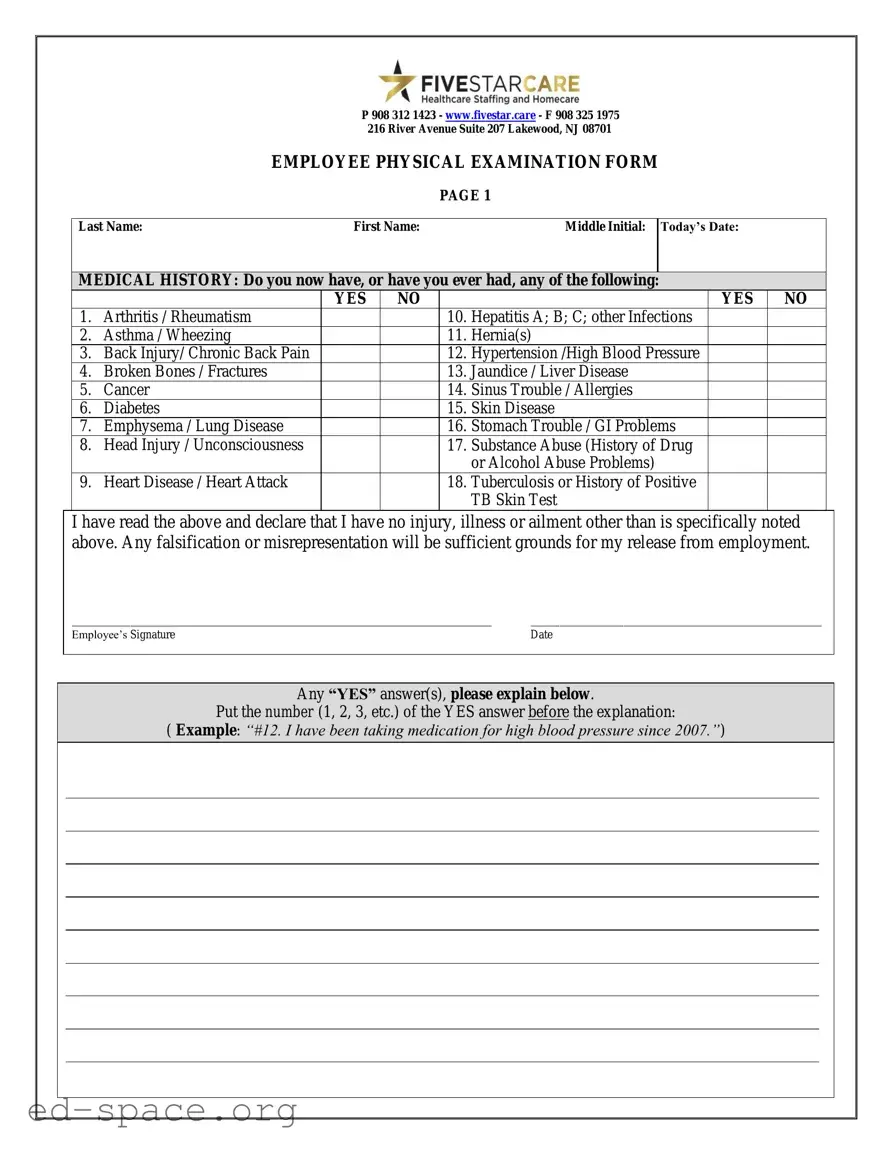
The Employee Physical Examination Form serves as a crucial document in the hiring process, ensuring that potential employees are fit for the demands of their roles. This form collects essential information about an individual's medical history, including previous conditions such as arthritis, asthma, and heart disease, which may impact their ability to perform specific job functions. It also requires candidates to disclose any current or past health issues, with a clear emphasis on honesty, as any misrepresentation could lead to termination. The form includes sections for vital statistics like height, weight, and vital signs, as well as assessments of vision and hearing capabilities. Furthermore, a thorough physical examination is documented, covering various systems of the body, from general appearance to neurological health. Physicians reviewing the form must evaluate the applicant's medical history and conduct tests for tuberculosis, ensuring a comprehensive understanding of the candidate's health status. Ultimately, the form not only safeguards the health of the workforce but also protects the organization from potential liability issues related to employee health and safety.
P 908 312 1423 - www.fivestar.care - F 908 325 1975 216 River Avenue Suite 207 Lakewood, NJ 08701
EMPLOYEE PHYSICAL EXAMINATION FORM
PAGE 1
Last Name: |
First Name: |
Middle Initial: Today’s Date: |
MEDICAL HISTORY: Do you now have, or have you ever had, any of the following:
|
|
|
YES |
NO |
|
|
YES |
NO |
|
|
1. |
Arthritis / Rheumatism |
|
|
10. |
Hepatitis A; B; C; other Infections |
|
|
|
|
2. |
Asthma / Wheezing |
|
|
11. |
Hernia(s) |
|
|
|
|
3. |
Back Injury/ Chronic Back Pain |
|
|
12. |
Hypertension /High Blood Pressure |
|
|
|
|
4. |
Broken Bones / Fractures |
|
|
13. Jaundice / Liver Disease |
|
|
|
|
|
5. |
Cancer |
|
|
14. |
Sinus Trouble / Allergies |
|
|
|
|
6. |
Diabetes |
|
|
15. |
Skin Disease |
|
|
|
|
7. |
Emphysema / Lung Disease |
|
|
16. |
Stomach Trouble / GI Problems |
|
|
|
|
8. |
Head Injury / Unconsciousness |
|
|
17. |
Substance Abuse (History of Drug |
|
|
|
|
|
|
|
|
|
or Alcohol Abuse Problems) |
|
|
|
|
9. |
Heart Disease / Heart Attack |
|
|
18. |
Tuberculosis or History of Positive |
|
|
|
|
|
|
|
|
|
TB Skin Test |
|
|
|
I have read the above and declare that I have no injury, illness or ailment other than is specifically noted above. Any falsification or misrepresentation will be sufficient grounds for my release from employment.
Employee’s Signature |
Date |
Any “YES” answer(s), please explain below.
Put the number (1, 2, 3, etc.) of the YES answer before the explanation:
( Example: “#12. I have been taking medication for high blood pressure since 2007.”)

P 908 312 1423 - www.fivestar.care - F 908 325 1975 216 River Avenue Suite 207 Lakewood, NJ 08701
EMPLOYEE PHYSICAL EXAMINATION FORM
PAGE 2
Last Name: |
|
|
|
|
|
|
|
First Name: |
|
|
|
|
Middle Initial: |
|
Today’s Date: |
|
Job Title: |
||||||||||
|
|
|
|
|
|
|
|
|
|
|
|
|
|
|
|
|
|
|
|
|
|
|
|
|
|
|
|
|
DOB |
|
Age |
|
Sex |
|
HT |
|
WT |
|
Temp. |
Pulse |
Resp. |
|
B/P |
|
Drug/Food Allergies |
||||||||||
|
|
|
|
|
|
|
|
|
|
|
|
|
|
|
|
|
|
|
|
||||||||
Vision: R 20/ |
|
|
L 20/ |
|
Pupils: Equal |
|
Unequal Glasses/Lenses: Y / N |
Hearing: Normal Impaired Hearing Aid |
|||||||||||||||||||
|
|
|
|
|
|
|
|
|
|
|
|
|
|
|
|
|
|
||||||||||
PHYSICAL EXAM |
|
|
|
NORMAL |
|
ABNORMAL |
|
|
|
COMMENTS |
|||||||||||||||||
1. |
General Appearance / BMI |
|
|
|
|
|
|
|
|
|
|
|
|
|
|
|
|
|
|
|
|||||||
|
|
|
|
|
|
|
|
|
|
|
|
|
|
|
|
|
|
|
|
|
|
|
|
|
|
||
2. |
Skin |
|
|
|
|
|
|
|
|
|
|
|
|
|
|
|
|
|
|
|
|
|
|
|
|
||
|
|
|
|
|
|
|
|
|
|
|
|
|
|
|
|
|
|
|
|
|
|
|
|
|
|
||
3. |
HEENT |
|
|
|
|
|
|
|
|
|
|
|
|
|
|
|
|
|
|
|
|
|
|
|
|
||
|
|
|
|
|
|
|
|
|
|
|
|
|
|
|
|
|
|
|
|
|
|
|
|
|
|
||
4. |
Teeth |
|
|
|
|
|
|
|
|
|
|
|
|
|
|
|
|
|
|
|
|
|
|
|
|
||
|
|
|
|
|
|
|
|
|
|
|
|
|
|
|
|
|
|
|
|
|
|
|
|
|
|
||
5. |
Neck |
|
|
|
|
|
|
|
|
|
|
|
|
|
|
|
|
|
|
|
|
|
|
|
|
||
|
|
|
|
|
|
|
|
|
|
|
|
|
|
|
|
|
|
|
|
|
|
|
|
|
|
||
6. |
Lungs |
|
|
|
|
|
|
|
|
|
|
|
|
|
|
|
|
|
|
|
|
|
|
|
|
||
|
|
|
|
|
|
|
|
|
|
|
|
|
|
|
|
|
|
|
|
|
|
|
|
|
|
||
7. |
Heart |
|
|
|
|
|
|
|
|
|
|
|
|
|
|
|
|
|
|
|
|
|
|
|
|
||
|
|
|
|
|
|
|
|
|
|
|
|
|
|
|
|
|
|
|
|
|
|
|
|
|
|
||
8. |
Abdomen |
|
|
|
|
|
|
|
|
|
|
|
|
|
|
|
|
|
|
|
|
|
|
|
|
||
|
|
|
|
|
|
|
|
|
|
|
|
|
|
|
|
|
|
|
|
|
|
|
|
|
|
||
9. |
GU System |
|
|
|
|
|
|
|
|
|
|
|
|
|
|
|
|
|
|
|
|
|
|
|
|
||
|
|
|
|
|
|
|
|
|
|
|
|
|
|
|
|
||||||||||||
10. Musculoskeletal Functioning |
|
|
|
|
|
|
|
|
|
|
|
|
|
|
|
||||||||||||
(Full ROM to all extremities? History |
|
|
|
|
|
|
|
|
|
|
|
|
|
|
|
||||||||||||
of injury to knees or hips?) |
|
|
|
|
|
|
|
|
|
|
|
|
|
|
|
|
|
|
|
|
|||||||
11. Back / Spine (History of injury?) |
|
|
|
|
|
|
|
|
|
|
|
|
|
|
|
||||||||||||
|
|
|
|
|
|
|
|
|
|
|
|
|
|
|
|
||||||||||||
12. Neurological (Gross observation |
|
|
|
|
|
|
|
|
|
|
|
|
|
|
|
||||||||||||
of gait, coordination, tremors, etc.) |
|
|
|
|
|
|
|
|
|
|
|
|
|
|
|
||||||||||||
|
|
|
|
|
|
|
|
|
|
|
|
|
|
|
|
||||||||||||
13. Psychiatric (tics, stuttering, nail- |
|
|
|
|
|
|
|
|
|
|
|
|
|
|
|
||||||||||||
biting, cognition, orientation, affect, |
|
|
|
|
|
|
|
|
|
|
|
|
|
|
|
||||||||||||
obvious personality disorders, etc.) |
|
|
|
|
|
|
|
|
|
|
|
|
|
|
|
||||||||||||
Physician’s review of person’s medical history as recorded on reverse side of this form:
PPD / Mantoux Test for Tuberculosis: 1st Step Date: |
|
|
|
_ Result: |
_ 2nd Step Date: |
Result: |
|
|||||||||
Chest |
|
|
Results: |
|
|
|
|
|
|
|
|
|
||||
|
|
|
|
|
|
|
|
|
|
|
|
|||||
THIS APPLICANT IS FIT FOR EMPLOYMENT: YES: |
|
|
|
|
NO: |
|
|
Deferred for Functional Capacity Evaluation: |
|
|
||||||
|
|
|
|
|
|
Examining Physician’s Signature |
|
Date Physical Examination Performed |
|
| Fact Name | Description |
|---|---|
| Purpose of the Form | The Employee Physical Examination Form is designed to assess the medical fitness of an employee before they begin work. |
| Medical History | The form requires employees to disclose any past or present medical conditions, including serious illnesses and chronic conditions. |
| Falsification Consequences | Employees must acknowledge that any false information provided may lead to termination of employment. |
| State-Specific Requirements | In New Jersey, the form must comply with state laws regarding employee health assessments, including regulations under the New Jersey Administrative Code. |
| Physician's Review | A physician must review the medical history and perform a physical examination, documenting their findings on the form. |
| Allergy Information | Employees are required to list any drug or food allergies, which is crucial for their safety in the workplace. |
| Fit for Employment | The examining physician must indicate whether the applicant is fit for employment based on the examination results. |
Completing the Employee Physical form is an essential step in the hiring process. This form gathers important information about your medical history and current health status. After filling out the form, it will be reviewed by a physician who will assess your fitness for employment.
What is the purpose of the Employee Physical form?
The Employee Physical form is designed to assess the overall health and medical history of an employee. This information helps employers ensure that employees are fit for their specific job roles and can safely perform their duties. By collecting relevant medical history, the form aims to identify any potential health risks that may affect job performance or safety.
What should I include in the medical history section?
In the medical history section, you should answer questions regarding any past or present health conditions. This includes serious issues such as heart disease, diabetes, or asthma, as well as other conditions like allergies or chronic pain. If you answer "YES" to any of the questions, it is important to provide additional details. This helps your employer understand your health better and make informed decisions regarding your work environment.
What happens if I provide false information on the form?
Providing false information on the Employee Physical form can have serious consequences. If discrepancies are found, it may lead to your release from employment. Honesty is crucial. Employers rely on accurate information to maintain a safe and healthy workplace for all employees.
Who reviews the Employee Physical form?
The form is typically reviewed by a qualified healthcare professional, such as a physician or a nurse. They will evaluate your medical history and the results of your physical examination. Their assessment helps determine if you are fit for employment and if any accommodations are necessary for your health and safety.
What should I do if I have a medical condition that may affect my job?
If you have a medical condition that could impact your job performance, it’s important to disclose this information on the form. You should also discuss it with your employer or HR department. They can provide guidance on any necessary accommodations or support that may be available to help you perform your duties effectively.
How often do I need to complete the Employee Physical form?
The frequency of completing the Employee Physical form can vary by employer and job type. Some employers may require a new form annually, while others may ask for it only when there is a change in your health status or job role. Always check with your HR department for specific requirements related to your position.
Failing to provide complete personal information, such as last name, first name, and date of birth, can lead to processing delays.
Not answering the medical history questions accurately may result in serious consequences. Each YES or NO must be marked correctly.
Neglecting to explain any YES answers can create misunderstandings regarding your health status.
Overlooking the section for drug and food allergies can pose risks during employment, especially in specific job environments.
Forgetting to sign and date the form invalidates the submission. A signature confirms the accuracy of the provided information.
Leaving out details about physical examination results can lead to incomplete assessments by the examining physician.
Failing to report any previous injuries or chronic conditions can impact your job performance and safety.
Not keeping a copy of the completed form for your records can hinder future reference or necessary follow-ups.
In addition to the Employee Physical form, several other documents are commonly used in the hiring and onboarding process. Each of these documents serves a unique purpose and contributes to ensuring a safe and compliant work environment.
These documents collectively ensure that both the employer and employee are aligned on expectations, legal requirements, and workplace standards. Proper completion and management of these forms can help facilitate a smooth onboarding experience.
When filling out the Employee Physical form, it’s essential to provide accurate and complete information. Here’s a list of things to keep in mind, both what to do and what to avoid.
Understanding the Employee Physical Examination Form is crucial for both employers and employees. However, several misconceptions often cloud its purpose and implications. Below are seven common misconceptions, along with clarifications.
Addressing these misconceptions can lead to a clearer understanding of the Employee Physical Examination Form and its significance in the workplace.
When filling out and using the Employee Physical Examination Form, consider these key takeaways: