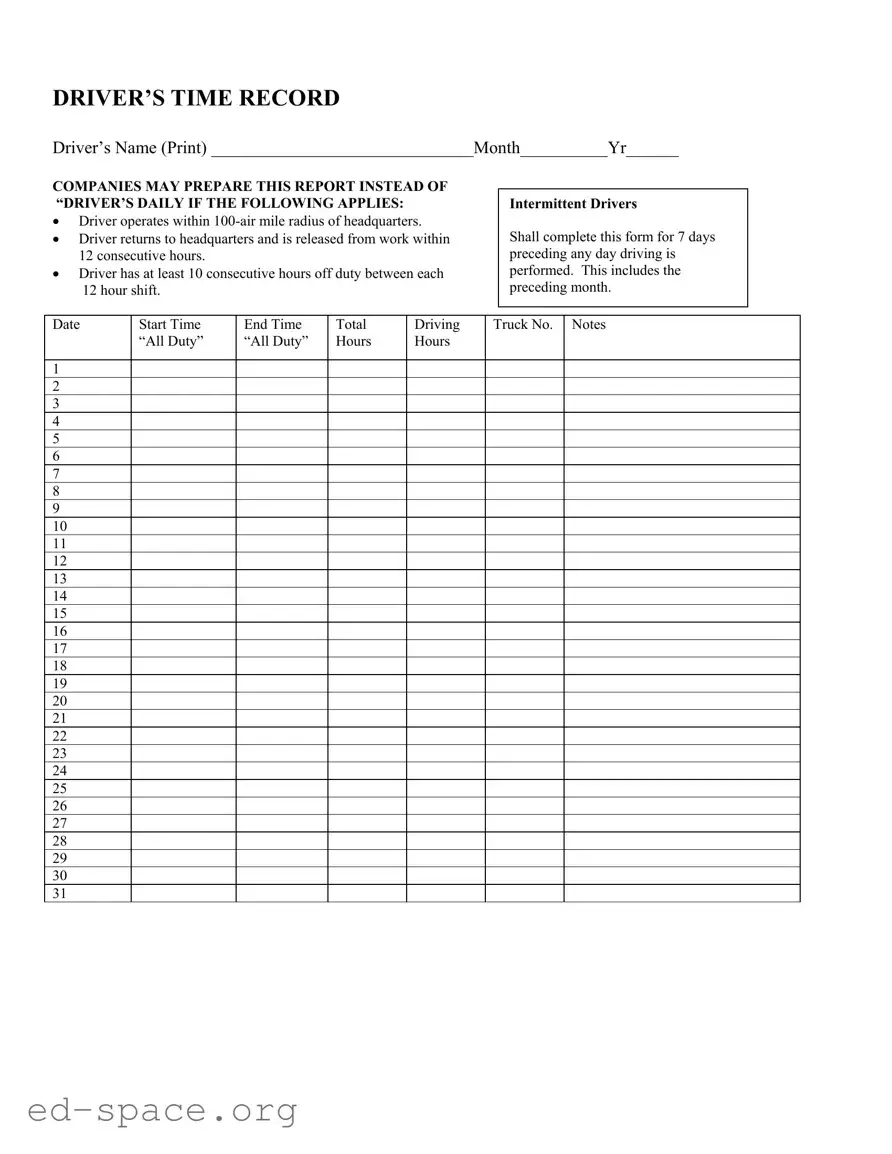
The Driver Time Record form is an essential tool for tracking the hours worked by commercial drivers, ensuring compliance with federal regulations. This form requires the driver's name, the month, and the year, serving as a straightforward way to document driving activities. Companies may opt to use this report in lieu of the traditional Driver’s Daily Log if specific conditions are met. For instance, if a driver operates within a 100-air mile radius of their headquarters and returns to that location within 12 consecutive hours, this form becomes applicable. Additionally, it is crucial that drivers have at least 10 consecutive hours off duty between each 12-hour shift. The form also caters to intermittent drivers, who must complete it for the seven days leading up to any day they perform driving duties, including the preceding month. The record includes sections for date, start time, end time, total driving hours, truck number, and notes, allowing for detailed tracking of driving hours and compliance with regulations.

DRIVER’S TIME RECORD
Driver’s Name (Print) ______________________________Month__________Yr______
COMPANIES MAY PREPARE THIS REPORT INSTEAD OF “DRIVER’S DAILY IF THE FOLLOWING APPLIES:
•Driver operates within
•Driver returns to headquarters and is released from work within 12 consecutive hours.
•Driver has at least 10 consecutive hours off duty between each 12 hour shift.
INTERMITTENT DRIVERS
Shall complete this form for 7 days preceding any day driving is performed. This includes the preceding month.
Date |
Start Time |
End Time |
Total |
Driving |
Truck No. |
Notes |
|
“All Duty” |
“All Duty” |
Hours |
Hours |
|
|
|
|
|
|
|
|
|
1 |
|
|
|
|
|
|
2 |
|
|
|
|
|
|
3 |
|
|
|
|
|
|
4 |
|
|
|
|
|
|
5 |
|
|
|
|
|
|
6 |
|
|
|
|
|
|
7 |
|
|
|
|
|
|
8 |
|
|
|
|
|
|
9 |
|
|
|
|
|
|
10 |
|
|
|
|
|
|
11 |
|
|
|
|
|
|
12 |
|
|
|
|
|
|
13 |
|
|
|
|
|
|
14 |
|
|
|
|
|
|
15 |
|
|
|
|
|
|
16 |
|
|
|
|
|
|
17 |
|
|
|
|
|
|
18 |
|
|
|
|
|
|
19 |
|
|
|
|
|
|
20 |
|
|
|
|
|
|
21 |
|
|
|
|
|
|
22 |
|
|
|
|
|
|
23 |
|
|
|
|
|
|
24 |
|
|
|
|
|
|
25 |
|
|
|
|
|
|
26 |
|
|
|
|
|
|
27 |
|
|
|
|
|
|
28 |
|
|
|
|
|
|
29 |
|
|
|
|
|
|
30 |
|
|
|
|
|
|
31 |
|
|
|
|
|
|

| Fact Name | Details |
|---|---|
| Form Purpose | This form records a driver's working hours and driving time for compliance with federal regulations. |
| Eligibility Criteria | Drivers must operate within a 100-air mile radius and return to headquarters within 12 hours to use this form. |
| Rest Requirements | Drivers must have at least 10 consecutive hours off duty between each 12-hour shift. |
| Intermittent Drivers | These drivers must complete the form for the 7 days preceding any driving day, including the previous month. |
| Data Fields | The form includes fields for date, start time, end time, total driving hours, truck number, and notes. |
| Signature Requirement | Drivers must print their name and sign the form to certify the accuracy of the information provided. |
| Record Keeping | Companies must keep these records for a specified duration as mandated by federal regulations. |
| Governing Law | This form is governed by the Federal Motor Carrier Safety Administration (FMCSA) regulations. |
| Compliance Importance | Accurate completion of this form is essential to avoid penalties and ensure safety on the road. |
Completing the Driver Time Record form is an important step in ensuring accurate tracking of driving hours. After filling out the form, it will be submitted as required by your company’s policies. This ensures compliance with regulations and contributes to safe driving practices.
What is the purpose of the Driver Time Record form?
The Driver Time Record form is designed to help drivers document their working hours and driving time. It serves as a record of the hours worked, ensuring compliance with regulations regarding rest periods and driving limits. This form is particularly useful for intermittent drivers who may not drive every day but need to maintain accurate records when they do.
Who is required to fill out the Driver Time Record form?
This form must be completed by intermittent drivers who operate within a 100-air mile radius of their headquarters. If you drive only occasionally and need to document your hours for the seven days prior to any driving day, this form is essential. It helps maintain compliance with federal regulations regarding driving hours.
What information do I need to provide on the form?
You will need to provide your name, the month and year, and details of your driving activities. This includes the date, start time, end time, total driving hours, truck number, and any additional notes. Filling out this information accurately is crucial for maintaining proper records.
Can companies create their own version of the Driver Time Record form?
Yes, companies may prepare their own version of the Driver Time Record form, provided they meet specific criteria. These criteria include operating within a 100-air mile radius, returning to headquarters within 12 consecutive hours, and having at least 10 consecutive hours off duty between shifts. Custom forms must still capture the necessary information to ensure compliance.
What are the requirements for intermittent drivers using this form?
Intermittent drivers must complete the Driver Time Record form for the seven days preceding any day they drive. This includes records from the previous month. It's important to keep these records up to date to avoid potential compliance issues.
How should I handle notes on the form?
The notes section on the form is your opportunity to provide additional context regarding your driving hours. You might include information about delays, rest breaks, or any unusual circumstances that affected your driving. Clear notes can be helpful if questions arise later about your driving records.
What happens if I don’t fill out the Driver Time Record form correctly?
Failing to complete the Driver Time Record form accurately can lead to compliance issues. It may result in penalties for both the driver and the employer. Keeping thorough and precise records is essential to avoid complications and ensure adherence to federal regulations regarding driving hours.
Failing to accurately print the driver's name at the top of the form can lead to confusion and issues with record-keeping. Ensuring that the name is legible is essential for identification purposes.
Not specifying the correct month and year can result in the form being misfiled or disregarded entirely. This detail is crucial for maintaining accurate driving records.
Omitting start and end times for each driving session can create gaps in the record. Each entry should clearly indicate the duration of driving to comply with regulations.
Neglecting to include truck numbers can complicate tracking and accountability. Each driving session should be linked to a specific vehicle to ensure accurate records.
Failing to provide notes for each entry can hinder the clarity of the record. Notes can explain unusual circumstances or deviations from standard driving patterns.
When managing driving records, several forms and documents complement the Driver Time Record form. Each of these documents serves a specific purpose and helps ensure compliance with regulations. Below is a list of commonly used forms that may accompany the Driver Time Record.
Using these forms alongside the Driver Time Record helps maintain thorough records and promotes safety and compliance. Keeping accurate documentation is essential for both drivers and companies.
The Driver Time Record form is an essential document for tracking a driver's hours and ensuring compliance with regulations. Several other documents share similarities with this form, each serving a unique purpose in the realm of transportation and driver management. Here are six documents that are similar to the Driver Time Record form:
When filling out the Driver Time Record form, it's essential to be thorough and accurate. Here’s a list of things to keep in mind:
By following these guidelines, you can ensure that your Driver Time Record form is filled out correctly and efficiently.
Misconceptions about the Driver Time Record form can lead to confusion and potential compliance issues. Here are seven common misunderstandings:
Understanding these misconceptions can help ensure compliance with regulations and promote safer driving practices. It’s important for all drivers to be aware of their responsibilities regarding the Driver Time Record form.
Filling out the Driver Time Record form is an important task for drivers. Here are some key takeaways to keep in mind:
Being diligent in completing this form helps ensure compliance and promotes safety on the road.