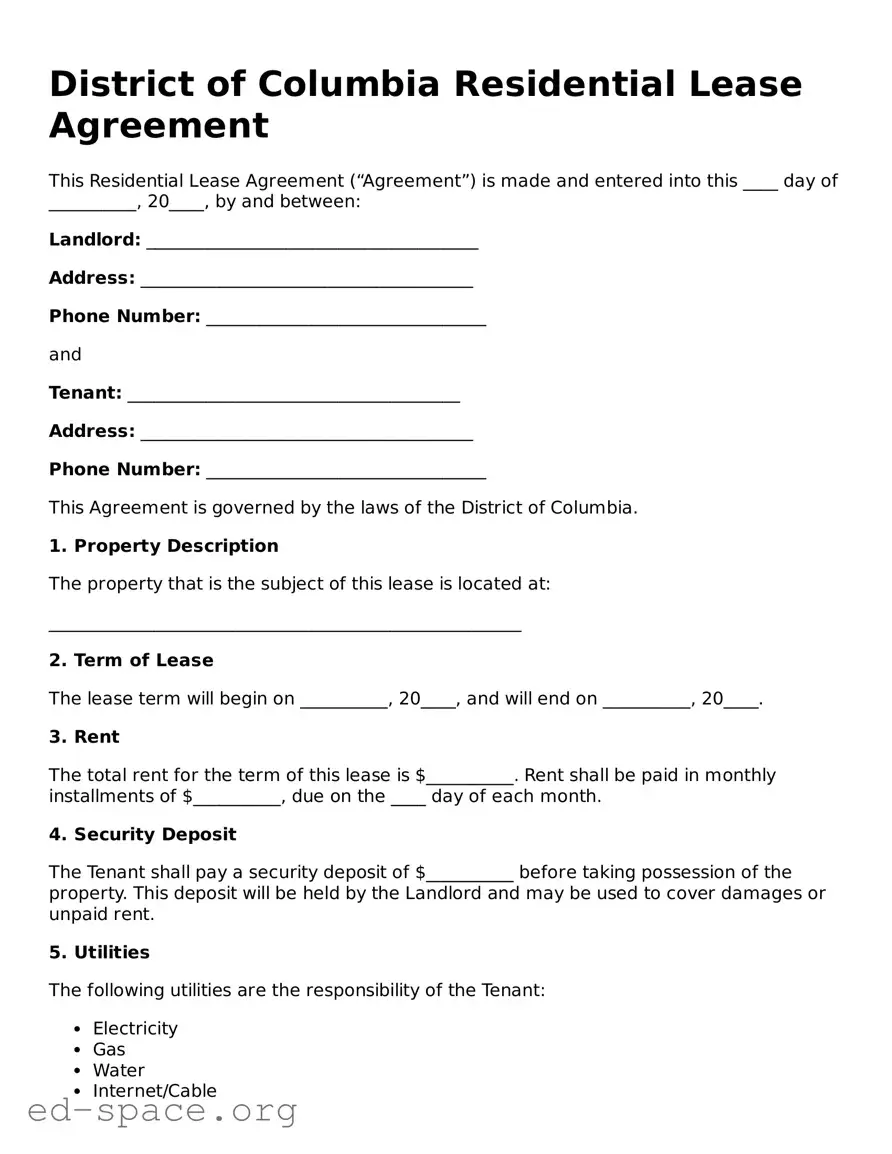
The District of Columbia Residential Lease Agreement form serves as a crucial document in the landlord-tenant relationship, outlining the rights and responsibilities of both parties involved in a rental arrangement. This legally binding contract typically includes essential details such as the names of the landlord and tenant, the rental property's address, and the duration of the lease. Additionally, it specifies the monthly rent amount, payment due dates, and any security deposit requirements. The agreement also addresses maintenance responsibilities, rules regarding pets, and provisions for terminating the lease. By clearly defining these aspects, the form helps to prevent misunderstandings and disputes, ensuring a smoother rental experience for both landlords and tenants. Understanding the key components of this agreement is vital for anyone looking to navigate the rental market in Washington, D.C.
District of Columbia Residential Lease Agreement
This Residential Lease Agreement (“Agreement”) is made and entered into this ____ day of __________, 20____, by and between:
Landlord: ______________________________________
Address: ______________________________________
Phone Number: ________________________________
and
Tenant: ______________________________________
Address: ______________________________________
Phone Number: ________________________________
This Agreement is governed by the laws of the District of Columbia.
1. Property Description
The property that is the subject of this lease is located at:
______________________________________________________
2. Term of Lease
The lease term will begin on __________, 20____, and will end on __________, 20____.
3. Rent
The total rent for the term of this lease is $__________. Rent shall be paid in monthly installments of $__________, due on the ____ day of each month.
4. Security Deposit
The Tenant shall pay a security deposit of $__________ before taking possession of the property. This deposit will be held by the Landlord and may be used to cover damages or unpaid rent.
5. Utilities
The following utilities are the responsibility of the Tenant:
The following utilities are the responsibility of the Landlord:
6. Maintenance and Repairs
The Tenant agrees to maintain the premises in good condition. The Tenant must promptly report any needed repairs to the Landlord.
7. Alterations
The Tenant may not make any alterations to the property without the written consent of the Landlord.
8. Termination
Either party may terminate this lease by providing a written notice of ____ days to the other party.
9. Governing Law
This Agreement shall be governed by the laws of the District of Columbia.
10. Signatures
By signing below, both parties agree to the terms of this Residential Lease Agreement.
_____________________________ Landlord Signature
Date: ________________________
_____________________________ Tenant Signature
Date: ________________________
| Fact Name | Details |
|---|---|
| Governing Law | The District of Columbia Residential Lease Agreement is governed by D.C. Code § 42-3501.01 et seq. |
| Lease Duration | The lease can be for a fixed term or month-to-month, depending on the agreement between the landlord and tenant. |
| Security Deposit | Landlords may collect a security deposit, which cannot exceed one month's rent. |
| Notice Requirements | Landlords must provide a 30-day notice for lease termination in a month-to-month agreement. |
| Rent Control | Some areas in D.C. have rent control regulations that limit how much rent can be increased each year. |
| Habitability Standards | Landlords are required to maintain the property in a habitable condition, ensuring basic living standards. |
| Tenant Rights | Tenants have the right to organize and form tenant associations under D.C. law. |
| Discrimination Protections | It is illegal to discriminate against tenants based on race, color, religion, sex, national origin, disability, or familial status. |
Filling out the District of Columbia Residential Lease Agreement form requires careful attention to detail. Each section must be completed accurately to ensure that both the landlord and tenant understand their rights and obligations. After completing the form, both parties should review it thoroughly before signing.
What is a District of Columbia Residential Lease Agreement?
A District of Columbia Residential Lease Agreement is a legal document that outlines the terms and conditions between a landlord and a tenant for renting a residential property. It details the rights and responsibilities of both parties, including rent amount, duration of the lease, and maintenance obligations.
What are the key components of this lease agreement?
The key components typically include the names of the landlord and tenant, property address, lease term, rent amount, payment due dates, security deposit details, maintenance responsibilities, and provisions for termination. It may also cover rules regarding pets, alterations to the property, and subleasing.
How long is a typical lease agreement in D.C.?
Lease agreements in Washington, D.C. can vary in length. Common terms include one year, six months, or even month-to-month arrangements. The duration should be specified in the agreement, and both parties must agree to the terms before signing.
Is a security deposit required?
Yes, landlords in D.C. can require a security deposit. The maximum amount allowed is generally one month's rent. This deposit protects the landlord against damages or unpaid rent. The agreement should specify the amount and conditions for its return at the end of the lease.
What happens if the tenant wants to terminate the lease early?
If a tenant wishes to terminate the lease early, they must review the lease terms for any early termination clauses. These clauses may require the tenant to provide written notice or pay a penalty. If no provisions exist, the tenant may still be liable for rent until the lease expires unless the landlord finds a new tenant.
Are there any specific laws governing residential leases in D.C.?
Yes, Washington, D.C. has specific laws that govern residential leases. These laws include regulations on security deposits, eviction procedures, and tenant rights. It is essential for both landlords and tenants to be familiar with these laws to ensure compliance and protect their rights.
Can landlords increase rent during the lease term?
Generally, landlords cannot increase rent during the lease term unless the lease agreement includes a provision allowing for rent increases. Any increase must be communicated in writing and comply with local rent control laws if applicable.
What should a tenant do if they have a dispute with their landlord?
If a tenant has a dispute with their landlord, they should first attempt to resolve the issue through direct communication. If that fails, they may seek mediation services or file a complaint with the D.C. Department of Consumer and Regulatory Affairs. Legal action is also an option, but it should be considered as a last resort.
Is it necessary to have the lease agreement notarized?
No, it is not necessary to have a District of Columbia Residential Lease Agreement notarized for it to be valid. However, both parties should sign the agreement to confirm their acceptance of the terms. Keeping a copy of the signed lease is advisable for future reference.
Incomplete Tenant Information: Many individuals fail to provide all necessary details about the tenants. This includes not listing all adult occupants or omitting contact information. Each adult who will reside in the property should be clearly identified.
Incorrect Dates: Another common error involves the lease term dates. People often miswrite the start and end dates, which can lead to confusion regarding the lease duration. It is essential to double-check that these dates are accurate and align with the agreed terms.
Neglecting to Specify Rent Payment Details: Rent payment methods and due dates are crucial components of the lease. Some individuals forget to include how and when rent should be paid. This can create misunderstandings and disputes later on.
Ignoring Security Deposit Terms: The lease should clearly outline the security deposit amount and conditions for its return. Often, people overlook this section, which can lead to disagreements about the deposit at the end of the lease.
Failing to Review Local Laws: Each jurisdiction has specific laws that govern residential leases. Some individuals do not take the time to familiarize themselves with these regulations, which can result in the inclusion of unenforceable terms or conditions.
When entering into a residential lease agreement in the District of Columbia, several additional forms and documents may be necessary to ensure a smooth rental process. These documents help clarify responsibilities, protect both parties, and outline important details about the rental arrangement. Here are some commonly used forms:
Having these forms and documents ready can streamline the rental process and help both landlords and tenants understand their rights and obligations. Each document plays a vital role in creating a transparent and effective rental relationship.
When filling out the District of Columbia Residential Lease Agreement form, it's essential to approach the task with care. Here’s a list of what you should and shouldn’t do to ensure the process goes smoothly.
By following these guidelines, you can fill out the lease agreement with confidence and clarity. This will help protect your rights and ensure a smoother rental experience.
Understanding the District of Columbia Residential Lease Agreement form is essential for both landlords and tenants. However, there are several misconceptions that can lead to confusion. Here are seven common misconceptions explained:
By addressing these misconceptions, both landlords and tenants can navigate the leasing process with greater confidence and understanding.
When filling out and using the District of Columbia Residential Lease Agreement form, it is important to keep several key points in mind. These takeaways will help ensure that the agreement is completed correctly and serves its intended purpose.
Following these guidelines will help create a clear and enforceable lease agreement, protecting the rights of both landlords and tenants.