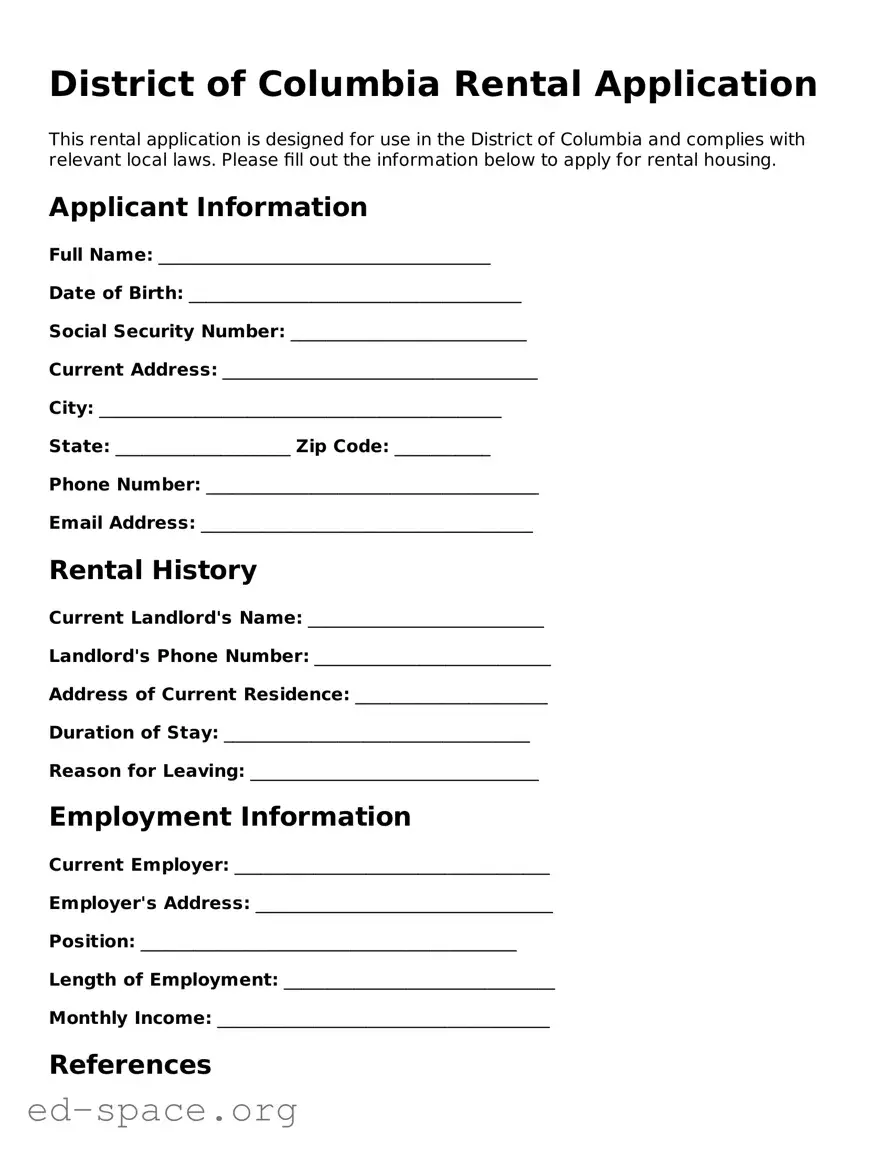
When searching for a new rental home in the District of Columbia, filling out the rental application form is a crucial step in the process. This form serves as a way for landlords to gather important information about potential tenants. It typically includes sections for personal details, such as your name, contact information, and social security number. You'll also need to provide your employment history, income details, and references. Some forms may even ask about your rental history, allowing landlords to assess your reliability as a tenant. Additionally, many applications require a consent for background and credit checks, ensuring that the landlord can verify your financial responsibility. Understanding each part of the application helps you present yourself in the best light, increasing your chances of securing that perfect place to call home.
District of Columbia Rental Application
This rental application is designed for use in the District of Columbia and complies with relevant local laws. Please fill out the information below to apply for rental housing.
Applicant Information
Full Name: ______________________________________
Date of Birth: ______________________________________
Social Security Number: ___________________________
Current Address: ____________________________________
City: ______________________________________________
State: ____________________ Zip Code: ___________
Phone Number: ______________________________________
Email Address: ______________________________________
Rental History
Current Landlord's Name: ___________________________
Landlord's Phone Number: ___________________________
Address of Current Residence: ______________________
Duration of Stay: ___________________________________
Reason for Leaving: _________________________________
Employment Information
Current Employer: ____________________________________
Employer's Address: __________________________________
Position: ___________________________________________
Length of Employment: _______________________________
Monthly Income: ______________________________________
References
Please provide two personal references:
Additional Information
Have you ever been evicted? Yes / No
If yes, please explain: _______________________________
Do you have any pets? Yes / No
If yes, please describe: _____________________________
Signature
By signing below, you certify that the information provided is accurate and complete to the best of your knowledge.
Applicant's Signature: _______________________________
Date: _____________________________________________
| Fact Name | Description |
|---|---|
| Purpose | The District of Columbia Rental Application form is used by landlords to screen potential tenants. |
| Information Required | Applicants typically need to provide personal details, rental history, employment information, and references. |
| Application Fee | Landlords in D.C. may charge a non-refundable application fee, which is capped by law. |
| Background Checks | Landlords often conduct background checks, including credit history and criminal records. |
| Fair Housing Compliance | The application process must comply with the Fair Housing Act, ensuring no discrimination based on protected classes. |
| Approval Process | Once submitted, the landlord reviews the application and decides whether to approve or deny it based on the provided information. |
| Disclosure Requirements | Landlords must disclose certain information, such as the presence of lead-based paint in older buildings. |
| Tenant Rights | Applicants have the right to know why their application was denied if that occurs. |
| Governing Law | The District of Columbia's rental application process is governed by the D.C. Code, specifically Title 42. |
| Signature Requirement | Most applications require the applicant's signature, indicating consent to verify the information provided. |
Completing the District of Columbia Rental Application form is an important step in securing a rental property. Once you have filled out the form, it will be reviewed by the landlord or property manager, who will assess your application based on various criteria. Here are the steps to help you accurately fill out the form.
Once you have completed the application, submit it to the landlord or property manager along with any required fees or documentation. This will initiate the review process, and you may be contacted for further information or to schedule a meeting.
What is the purpose of the District of Columbia Rental Application form?
The District of Columbia Rental Application form is used by landlords to screen potential tenants. It collects essential information such as employment history, rental history, and personal references to help landlords make informed decisions about prospective renters.
Who needs to fill out the rental application?
All prospective tenants who wish to rent a property in the District of Columbia typically need to complete the rental application. This includes anyone who will be living in the unit, including co-signers or guarantors.
What information is required on the rental application?
The rental application generally requires personal information such as your name, contact details, Social Security number, employment information, income, rental history, and references. Some applications may also ask for consent to conduct a background check.
Is there a fee for submitting the rental application?
Many landlords charge a non-refundable application fee to cover the costs of processing the application and conducting background checks. This fee can vary, so it’s important to ask the landlord about their specific policy before applying.
Can I apply for multiple rental properties using the same application?
Typically, rental applications are property-specific. If you’re interested in multiple properties, you may need to fill out a separate application for each one. Always check with the landlord or property manager for their specific requirements.
How long does it take to process a rental application?
The processing time can vary based on the landlord or property management company. It usually takes anywhere from a few hours to a few days. It's a good idea to ask the landlord about their timeline when you submit your application.
What happens if my rental application is denied?
If your application is denied, the landlord is generally required to provide you with a reason. You may also have the right to request a copy of your background check report if that was a factor in the decision. Understanding the reasons can help you improve your chances for future applications.
Can I appeal a rental application denial?
While there is no formal appeal process for rental application denials, you can communicate with the landlord to discuss the reasons for the denial. Sometimes, providing additional information or documentation may help in reconsidering your application.
What should I do if my information changes after I submit the application?
If your information changes, such as a new job or a change in income, notify the landlord or property manager immediately. Keeping them updated can help maintain transparency and improve your chances of approval.
Are there any protections against discrimination in the rental application process?
Yes, the Fair Housing Act protects individuals from discrimination based on race, color, national origin, religion, sex, familial status, or disability. If you believe you’ve faced discrimination during the application process, you can file a complaint with the appropriate authorities.
Incomplete Information: Many applicants fail to fill out all required fields. Missing details can delay the application process or lead to rejection.
Inaccurate Personal Information: Providing incorrect names, addresses, or contact information can create confusion. Always double-check your entries for accuracy.
Neglecting to Disclose Rental History: Some applicants forget to include their previous rental history. Landlords often check this information, and omitting it can raise red flags.
Not Providing References: Failing to list personal or professional references may weaken your application. References can vouch for your reliability and character.
Ignoring Financial Information: Applicants sometimes overlook the importance of providing accurate income details. This information is crucial for landlords to assess your ability to pay rent.
Skipping the Background Check Consent: Not signing the consent for a background check can halt the application process. Landlords typically require this to ensure tenant suitability.
Submitting Without Proof of Income: Many people forget to attach necessary documents like pay stubs or bank statements. This proof is essential to demonstrate financial stability.
When applying for a rental property in the District of Columbia, several forms and documents are commonly used alongside the Rental Application form. These documents help landlords assess potential tenants and ensure a smooth rental process. Below is a list of some essential forms and documents that may be required.
Gathering these documents can streamline the application process. Being prepared with the necessary paperwork can enhance the chances of securing the desired rental property.
When filling out the District of Columbia Rental Application form, it’s important to follow certain guidelines to ensure a smooth process. Here are some key dos and don’ts:
When it comes to the District of Columbia Rental Application form, several misconceptions can lead to confusion. Understanding the truth behind these common beliefs is essential for both landlords and tenants.
Many believe that once you pay the application fee, it cannot be refunded. However, in some cases, if the application is denied or the landlord decides not to proceed, the fee may be refundable.
Submitting a rental application does not guarantee that you will receive a lease. The landlord has the right to evaluate multiple applications and choose the best fit for their property.
Landlords are limited in the type of personal information they can request. They should only ask for information relevant to the rental process, such as credit history and rental history.
Rental applications can vary significantly from one landlord to another. Each may have different requirements and questions based on their specific criteria.
While many landlords request a Social Security number for background checks, it is not always mandatory. Alternatives may be accepted, depending on the landlord's policies.
A low credit score can be a concern for landlords, but it does not automatically disqualify an applicant. Many landlords consider other factors, such as rental history and income, before making a decision.
When filling out and using the District of Columbia Rental Application form, consider the following key takeaways: