The District of Columbia Notice to Quit form serves as a crucial document in the landlord-tenant relationship, particularly when a landlord seeks to terminate a lease agreement. This form outlines the specific reasons for termination, whether due to non-payment of rent, lease violations, or other grounds recognized under D.C. law. It requires landlords to provide tenants with a clear notice period, typically ranging from a few days to several weeks, depending on the reason for eviction. The Notice to Quit must be delivered in a manner that complies with legal requirements, ensuring that tenants receive proper notification of their impending eviction. Additionally, the form includes essential information such as the tenant's name, the address of the rental property, and the date of the notice. Understanding the intricacies of this form is vital for both landlords and tenants, as it can significantly impact the eviction process and the rights of all parties involved.
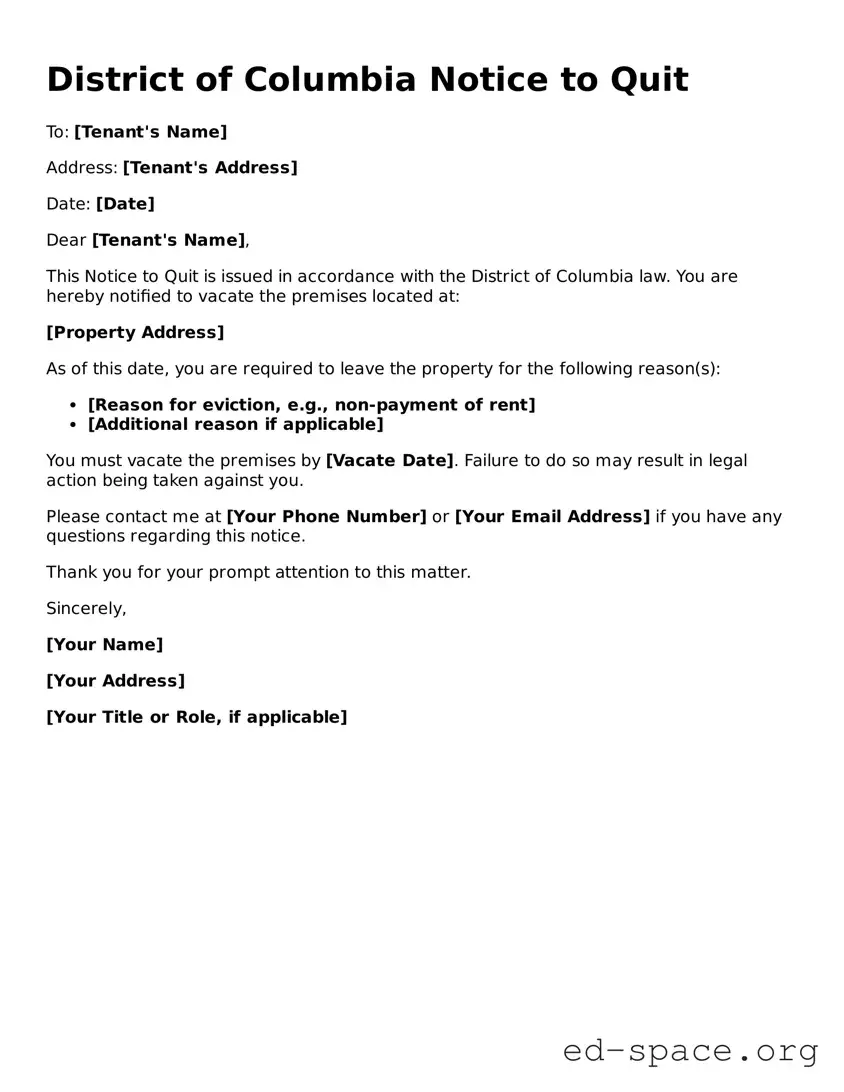
District of Columbia Notice to Quit
To: [Tenant's Name]
Address: [Tenant's Address]
Date: [Date]
Dear [Tenant's Name],
This Notice to Quit is issued in accordance with the District of Columbia law. You are hereby notified to vacate the premises located at:
[Property Address]
As of this date, you are required to leave the property for the following reason(s):
You must vacate the premises by [Vacate Date]. Failure to do so may result in legal action being taken against you.
Please contact me at [Your Phone Number] or [Your Email Address] if you have any questions regarding this notice.
Thank you for your prompt attention to this matter.
Sincerely,
[Your Name]
[Your Address]
[Your Title or Role, if applicable]
| Fact Name | Description |
|---|---|
| Purpose | The District of Columbia Notice to Quit form is used by landlords to inform tenants of their intent to terminate a lease agreement. |
| Governing Law | This form is governed by the D.C. Code, specifically Title 42, which outlines landlord-tenant laws. |
| Notice Period | Landlords must provide tenants with a minimum of 30 days' notice before the termination date specified in the form. |
| Delivery Methods | The Notice to Quit can be delivered in person, sent by certified mail, or posted on the tenant's door. |
| Tenant Rights | Tenants have the right to contest the notice and may seek legal assistance if they believe the termination is unjust. |
After you have obtained the District of Columbia Notice to Quit form, you will need to fill it out accurately to ensure that it serves its purpose effectively. This document is crucial for initiating the process of notifying a tenant to vacate a rental property. Follow these steps carefully to complete the form.
Once the form is completed and delivered, you will need to keep a copy for your records. This will be important if any further legal action becomes necessary. Remember to follow up and ensure the tenant has received the notice, as this can impact the next steps in the process.
What is a Notice to Quit in the District of Columbia?
A Notice to Quit is a formal document that a landlord uses to notify a tenant to vacate the rental property. In the District of Columbia, this notice is often the first step in the eviction process. It outlines the reason for the eviction and gives the tenant a specified amount of time to leave the premises.
When should a landlord use a Notice to Quit?
A landlord should use a Notice to Quit when a tenant fails to pay rent, violates the lease terms, or engages in illegal activities on the property. It's important to follow the legal procedures outlined by D.C. law to ensure the eviction process is valid.
How much notice must a landlord give a tenant?
The amount of notice required can vary depending on the reason for eviction. For non-payment of rent, a landlord typically must give a tenant at least 30 days to pay the owed rent or vacate. For lease violations, the notice period can be shorter, often around 10 days.
Can a tenant contest a Notice to Quit?
Yes, a tenant can contest a Notice to Quit. If a tenant believes the notice is unjust or that they have remedied the issue, they can respond to the landlord or challenge the eviction in court. It's advisable for tenants to seek legal advice in these situations.
What happens if a tenant does not leave after receiving a Notice to Quit?
If a tenant does not vacate the property after the notice period has expired, the landlord may file for eviction in court. This process can involve a hearing where both parties can present their cases. If the court rules in favor of the landlord, a judgment will be issued to remove the tenant.
Is a Notice to Quit the same as an eviction notice?
No, a Notice to Quit is not the same as an eviction notice. The Notice to Quit is the initial step, informing the tenant to leave. An eviction notice is issued after the Notice to Quit period has expired and the landlord has taken legal action to evict the tenant.
Can a tenant be evicted without a Notice to Quit?
In most cases, a tenant cannot be evicted without a Notice to Quit. D.C. law requires landlords to provide this notice as part of the eviction process. Skipping this step could lead to legal complications for the landlord.
What should a landlord include in a Notice to Quit?
A Notice to Quit should clearly state the reason for eviction, the date by which the tenant must vacate, and any relevant details about the lease agreement. It's important to be clear and concise to avoid confusion.
Where can I find a template for a Notice to Quit?
Templates for a Notice to Quit can often be found online through legal websites or local housing authority resources. It's crucial to ensure that any template used complies with D.C. laws and is tailored to the specific situation.
Incorrect Tenant Information: People often fail to provide the correct names of all tenants. It's important to list every individual who resides in the rental unit.
Missing Property Address: Some individuals neglect to include the full address of the rental property. This can lead to confusion and delays in the process.
Improper Notice Period: The form requires a specific notice period, which is usually 30 days. Failing to adhere to this timeline can invalidate the notice.
Not Signing the Form: A common oversight is forgetting to sign the Notice to Quit. Without a signature, the document is not legally binding.
Inaccurate Date: People sometimes put the wrong date on the form. This mistake can create issues with the timing of the notice.
Failure to Deliver Properly: After filling out the form, some do not deliver it according to legal requirements. Proper delivery methods must be followed to ensure the notice is valid.
When dealing with rental agreements and potential evictions in the District of Columbia, it's essential to understand the various forms and documents that may accompany the Notice to Quit. Each of these documents serves a specific purpose in the legal process, ensuring that both landlords and tenants are aware of their rights and responsibilities. Below is a list of commonly used documents alongside the District of Columbia Notice to Quit form.
Understanding these documents is crucial for both landlords and tenants to navigate the complexities of rental agreements and potential evictions. Each form plays a significant role in protecting rights and ensuring that all parties are informed throughout the process.
When filling out the District of Columbia Notice to Quit form, it is essential to follow certain guidelines to ensure accuracy and compliance. Below is a list of things you should and shouldn't do.
Following these guidelines will help ensure that the Notice to Quit is processed smoothly and effectively. If you have any questions, consider seeking assistance from a legal professional.
Many people have misunderstandings about the District of Columbia Notice to Quit form. Here are some common misconceptions:
Filling out and using the District of Columbia Notice to Quit form is an important step for landlords who wish to terminate a tenancy. Here are some key takeaways to keep in mind: