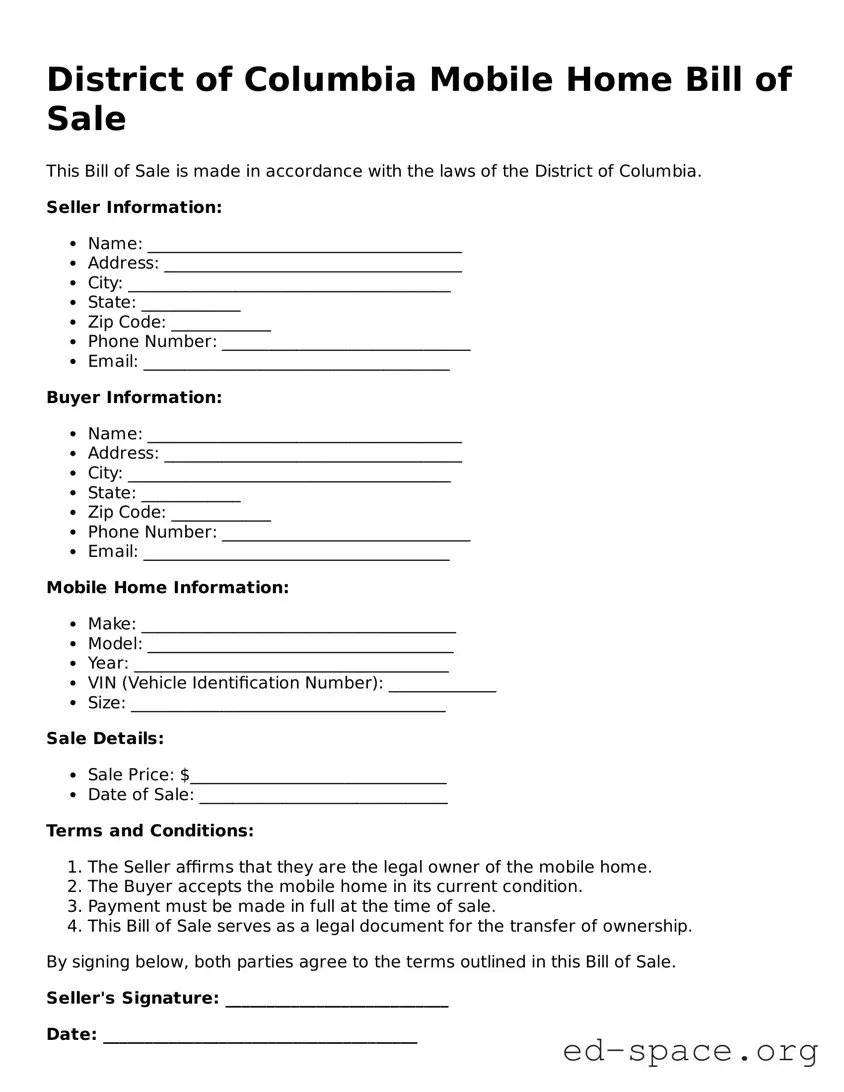
The District of Columbia Mobile Home Bill of Sale form serves as a crucial document in the transfer of ownership for mobile homes within the district. This form outlines essential details such as the names and addresses of both the seller and the buyer, ensuring that both parties are clearly identified. It includes a description of the mobile home being sold, which typically encompasses the make, model, year, and identification number, providing a comprehensive record of the specific unit involved in the transaction. Additionally, the form may address the sale price and any terms of payment, ensuring transparency in the financial aspects of the sale. Signatures from both the seller and buyer are required to validate the agreement, signifying mutual consent to the terms outlined. Furthermore, this document may also include a statement regarding the condition of the mobile home, which can help prevent disputes after the sale is finalized. Overall, the Mobile Home Bill of Sale form is designed to protect the interests of both parties while facilitating a smooth transfer of ownership in accordance with local regulations.
District of Columbia Mobile Home Bill of Sale
This Bill of Sale is made in accordance with the laws of the District of Columbia.
Seller Information:
Buyer Information:
Mobile Home Information:
Sale Details:
Terms and Conditions:
By signing below, both parties agree to the terms outlined in this Bill of Sale.
Seller's Signature: ___________________________
Date: ______________________________________
Buyer's Signature: ___________________________
Date: ______________________________________
| Fact Name | Description |
|---|---|
| Purpose | The District of Columbia Mobile Home Bill of Sale form serves as a legal document to transfer ownership of a mobile home from one party to another. |
| Governing Law | This form is governed by the laws of the District of Columbia, specifically the D.C. Code Title 42, Chapter 15. |
| Required Information | The form typically requires details such as the names of the buyer and seller, the mobile home’s identification number, and the sale price. |
| Signatures | Both the buyer and seller must sign the form to validate the transaction, ensuring that both parties agree to the terms outlined. |
Filling out the District of Columbia Mobile Home Bill of Sale form is an important step in transferring ownership of a mobile home. After completing the form, you will need to ensure that both the buyer and seller keep copies for their records. This document serves as proof of the sale and includes essential details about the transaction.
What is a Mobile Home Bill of Sale in the District of Columbia?
A Mobile Home Bill of Sale is a legal document that records the transfer of ownership of a mobile home from one party to another. This form is essential for both the seller and the buyer, as it provides proof of the transaction and outlines the terms agreed upon by both parties.
Why do I need a Bill of Sale for my mobile home?
The Bill of Sale serves multiple purposes. It protects both the buyer and seller by documenting the sale details, including the purchase price and any conditions of the sale. It also helps establish legal ownership, which is important for registration and title transfer processes.
What information is required on the Bill of Sale?
The form typically requires the names and addresses of both the seller and buyer, a description of the mobile home (including make, model, year, and VIN), the sale price, and the date of the transaction. Both parties should sign the document to validate it.
Is the Bill of Sale required for all mobile home sales?
While it is not always legally required, having a Bill of Sale is highly recommended. It provides a clear record of the transaction and can prevent disputes later on. Additionally, some local jurisdictions may require it for registration purposes.
Can I create my own Bill of Sale?
Yes, you can create your own Bill of Sale, but it is important to ensure that it includes all necessary information and complies with local laws. Using a standard form can help ensure that you don’t miss any critical details.
Do I need to have the Bill of Sale notarized?
Notarization is not typically required for a Mobile Home Bill of Sale in the District of Columbia. However, having it notarized can add an extra layer of protection and credibility to the document, especially if you anticipate any disputes.
What should I do after completing the Bill of Sale?
After completing the Bill of Sale, both the buyer and seller should keep a copy for their records. The buyer may need to present the document to the local Department of Motor Vehicles or other relevant authority to register the mobile home in their name.
What if there are issues after the sale?
If issues arise after the sale, such as disputes over payment or the condition of the mobile home, the Bill of Sale can serve as a reference point. It’s advisable to resolve such matters directly and, if necessary, seek legal assistance to address any unresolved issues.
Where can I obtain a Mobile Home Bill of Sale form?
You can typically obtain a Mobile Home Bill of Sale form from local government offices, online legal document services, or legal stationery stores. Ensure that the form you choose is specific to the District of Columbia to meet local requirements.
Incomplete Information: Many individuals fail to provide all necessary details, such as the names of both the buyer and the seller. This can lead to confusion and potential disputes later on.
Incorrect Mobile Home Identification: It's crucial to accurately identify the mobile home, including its make, model, and vehicle identification number (VIN). Errors here can cause significant issues during the transfer of ownership.
Omitting Signatures: Both parties must sign the bill of sale. Some forget this step, which can render the document invalid and complicate the sale process.
Failure to Date the Document: Not including the date of the transaction can create ambiguity about when the sale took place, potentially affecting legal rights.
Neglecting to Include Payment Details: Clearly stating the purchase price and payment method is essential. Omitting this information can lead to misunderstandings regarding the financial aspects of the sale.
Not Keeping Copies: After completing the form, many forget to make copies for both parties. Having a record of the transaction is vital for future reference.
Ignoring Local Regulations: Each jurisdiction may have specific requirements for mobile home sales. Failing to check these can lead to legal issues down the line.
Not Seeking Assistance: Some individuals attempt to fill out the form without seeking help or guidance. Consulting with a knowledgeable person can help avoid mistakes and ensure compliance.
The District of Columbia Mobile Home Bill of Sale form serves as a crucial document for transferring ownership of a mobile home. However, it is often accompanied by other important forms and documents that help facilitate the sale and ensure that all legal requirements are met. Below is a list of commonly used documents that work in conjunction with the Mobile Home Bill of Sale.
Having these documents prepared and available can streamline the process of buying or selling a mobile home in the District of Columbia. By ensuring that all necessary paperwork is in order, both buyers and sellers can feel more confident as they navigate this important transaction.
The Mobile Home Bill of Sale form shares similarities with several other documents related to the transfer of ownership and property transactions. Below are six such documents, each with a brief explanation of their similarities:
When filling out the District of Columbia Mobile Home Bill of Sale form, attention to detail is essential. Here are some important dos and don'ts to keep in mind.
The District of Columbia Mobile Home Bill of Sale form is often misunderstood. Here are nine common misconceptions about it:
This form is applicable to both new and used mobile homes. It serves as a record of the sale regardless of the home's age.
When properly filled out and signed, the Bill of Sale is a legally binding document. It protects both the buyer and the seller.
While notarization is not always mandatory, having the document notarized can provide an extra layer of protection and authenticity.
Both the buyer and the seller must sign the Bill of Sale for it to be valid. This ensures that both parties agree to the terms of the sale.
In some cases, it may be necessary to file the Bill of Sale with local authorities to officially transfer ownership. Always check local regulations.
The Bill of Sale is not a title transfer. It documents the sale, while the title is the legal proof of ownership.
It is best practice to complete the Bill of Sale at the time of the transaction to ensure all details are accurate and agreed upon.
The Bill of Sale can include warranties or statements about the condition of the mobile home, depending on what the seller is willing to offer.
The form can be used for both private and dealer sales. It is a versatile document that applies to various sale scenarios.
When filling out and using the District of Columbia Mobile Home Bill of Sale form, it is important to keep several key points in mind. This document serves as an official record of the sale and transfer of ownership of a mobile home. Below are essential takeaways to consider:
By following these guidelines, the process of transferring ownership of a mobile home can be made smoother and more transparent for all parties involved.