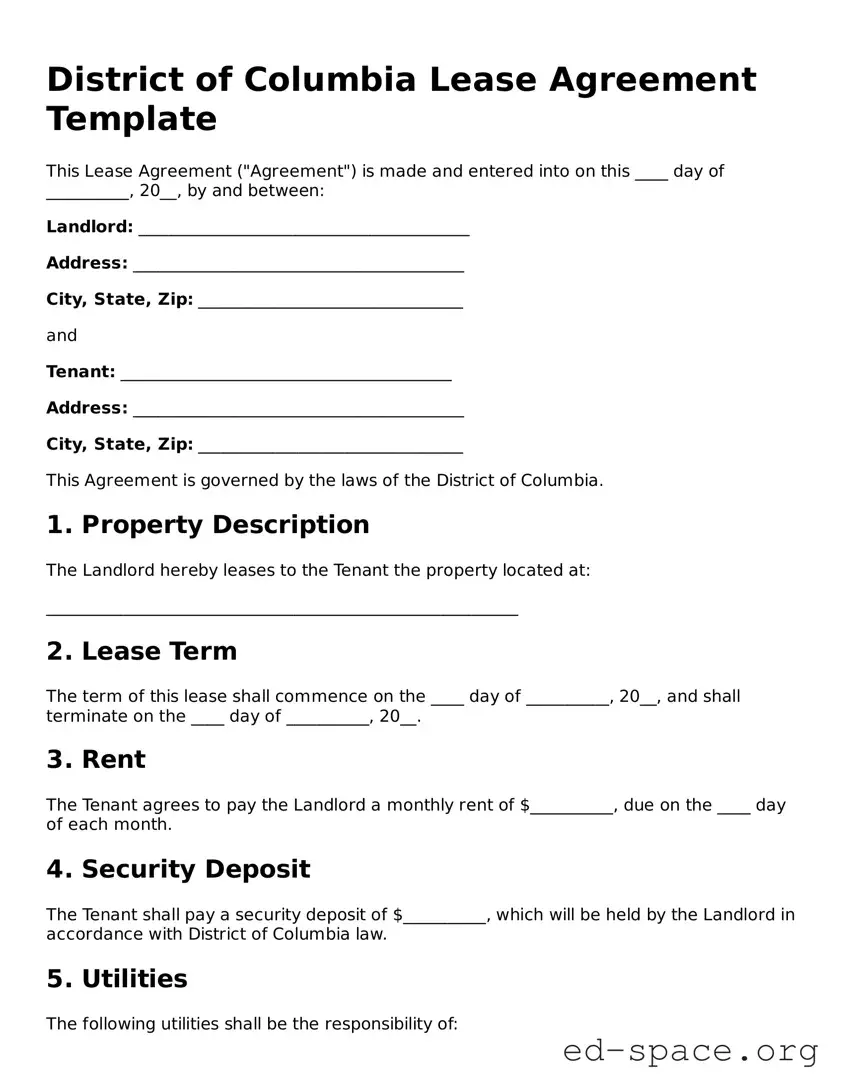
The District of Columbia Lease Agreement form serves as a crucial document in the rental process, outlining the rights and responsibilities of both landlords and tenants. This form typically includes essential details such as the names of the parties involved, the rental property address, and the duration of the lease. It also specifies the rent amount, payment due dates, and any late fees that may apply. Additionally, the agreement covers security deposits, maintenance responsibilities, and rules regarding pets, making it clear what is expected from both sides. By addressing issues like termination procedures and renewal options, the form provides a framework that helps prevent disputes and misunderstandings. Understanding these components is vital for anyone entering into a rental agreement in the District of Columbia, as it ensures that both parties are on the same page and aware of their legal obligations.
District of Columbia Lease Agreement Template
This Lease Agreement ("Agreement") is made and entered into on this ____ day of __________, 20__, by and between:
Landlord: ________________________________________
Address: ________________________________________
City, State, Zip: ________________________________
and
Tenant: ________________________________________
Address: ________________________________________
City, State, Zip: ________________________________
This Agreement is governed by the laws of the District of Columbia.
1. Property Description
The Landlord hereby leases to the Tenant the property located at:
_________________________________________________________
2. Lease Term
The term of this lease shall commence on the ____ day of __________, 20__, and shall terminate on the ____ day of __________, 20__.
3. Rent
The Tenant agrees to pay the Landlord a monthly rent of $__________, due on the ____ day of each month.
4. Security Deposit
The Tenant shall pay a security deposit of $__________, which will be held by the Landlord in accordance with District of Columbia law.
5. Utilities
The following utilities shall be the responsibility of:
6. Maintenance and Repairs
The Tenant shall keep the premises in good condition and shall promptly notify the Landlord of any needed repairs.
7. Governing Law
This Agreement shall be governed by and construed in accordance with the laws of the District of Columbia.
8. Signatures
By signing below, both parties agree to the terms outlined in this Lease Agreement.
Landlord Signature: _______________________________
Date: _________________________________________
Tenant Signature: ________________________________
Date: _________________________________________
| Fact Name | Description |
|---|---|
| Governing Law | The District of Columbia Lease Agreement is governed by D.C. Code § 42-3201 et seq. |
| Types of Leases | This form can be used for residential, commercial, and industrial leases. |
| Duration | The lease term can vary, typically ranging from one year to multiple years. |
| Security Deposit | Landlords may require a security deposit, usually capped at one month's rent. |
| Notice Requirements | Both parties must provide written notice for lease termination, typically 30 days in advance. |
| Disclosures | Landlords must disclose lead paint hazards in properties built before 1978. |
| Tenant Rights | Tenants have the right to a habitable living environment and protection against eviction without cause. |
Filling out the District of Columbia Lease Agreement form is an important step in establishing a clear understanding between a landlord and a tenant. This document outlines the terms and conditions of the rental arrangement. To ensure accuracy and completeness, follow these steps carefully.
Once the form is filled out completely and signed, both parties should retain a copy for their records. This ensures that everyone has access to the agreed-upon terms throughout the duration of the lease.
What is a District of Columbia Lease Agreement?
A District of Columbia Lease Agreement is a legal document that outlines the terms and conditions under which a landlord rents property to a tenant. This agreement specifies the duration of the lease, the amount of rent, and the responsibilities of both parties. It serves to protect the rights of both the landlord and the tenant while ensuring a clear understanding of the rental arrangement.
What are the essential components of a Lease Agreement in D.C.?
Key components of a Lease Agreement in the District of Columbia include the names of the landlord and tenant, the property address, the lease term (length of the rental period), rental payment details (amount and due date), security deposit information, maintenance responsibilities, and rules regarding pets or subleasing. Each of these elements plays a crucial role in defining the relationship between the landlord and tenant.
How long can a lease last in the District of Columbia?
In the District of Columbia, leases can vary in length. They may be short-term (such as month-to-month agreements) or long-term (typically lasting one year or more). The duration should be clearly stated in the lease agreement. It's important to note that both parties must agree to the terms before signing.
What are the tenant's rights under a D.C. Lease Agreement?
Tenants in the District of Columbia have several rights under a Lease Agreement. These include the right to a habitable living environment, the right to privacy, and the right to receive proper notice before eviction. Additionally, tenants can expect their security deposit to be returned within a specific timeframe after the lease ends, barring any legitimate deductions for damages.
What should I do if I want to terminate my lease early?
If you wish to terminate your lease early, it’s crucial to review the terms of your agreement. Many leases include a clause that outlines the process for early termination. Generally, you will need to provide written notice to your landlord and may be required to pay a penalty or forfeit your security deposit. Open communication with your landlord can often lead to a mutually agreeable solution.
Are there any specific laws governing leases in D.C.?
Yes, the District of Columbia has specific laws that govern residential leases. These laws cover various aspects, including rent control, security deposits, and tenant eviction processes. Familiarizing yourself with these regulations can help ensure that your lease agreement complies with local laws and protects your rights as a tenant or landlord.
Can a landlord increase rent during the lease term?
Typically, a landlord cannot increase rent during the lease term unless the lease agreement specifically allows for it. Most leases establish a fixed rental amount for the duration of the lease. However, if you are on a month-to-month lease, a landlord may increase the rent with proper notice, as required by local laws.
What happens if I don’t pay my rent on time?
If you fail to pay your rent on time, the landlord may charge a late fee as specified in the lease agreement. Continued non-payment can lead to eviction proceedings. It’s advisable to communicate with your landlord if you anticipate difficulties with payment. Many landlords are willing to work with tenants facing financial challenges.
Failing to include all required parties' names. Ensure that all tenants and landlords are listed accurately.
Not specifying the lease term clearly. The start and end dates of the lease must be stated to avoid confusion.
Overlooking the rental amount. The monthly rent should be clearly indicated, along with any additional fees.
Neglecting to outline security deposit details. Include the amount and conditions for its return to prevent disputes.
Inadequate description of the rental property. A detailed description helps clarify what is being rented.
Missing signatures. All parties must sign the agreement for it to be valid.
Not understanding local laws. Familiarity with District of Columbia rental laws is essential for compliance.
When entering into a lease agreement in the District of Columbia, several additional forms and documents may be necessary to ensure a smooth and legally sound rental process. These documents serve various purposes, from outlining specific terms to providing necessary disclosures. Below is a list of commonly used forms that accompany the District of Columbia Lease Agreement.
Utilizing these forms and documents in conjunction with the District of Columbia Lease Agreement can help both landlords and tenants navigate their rights and responsibilities. It is crucial to ensure that all paperwork is completed accurately and in accordance with local laws to avoid potential disputes down the line.
Rental Agreement: Similar to a lease agreement, a rental agreement outlines the terms under which a landlord allows a tenant to occupy property. While a lease typically spans a longer duration, a rental agreement may be more flexible, often on a month-to-month basis.
Sublease Agreement: This document allows a tenant to rent out their leased property to another party. It shares similarities with a lease agreement, as it includes terms regarding rent, duration, and responsibilities, but it involves three parties instead of two.
Commercial Lease Agreement: This type of lease is specifically for business properties. Like residential leases, it includes terms such as rent and duration but may also address unique factors like business hours and permitted uses of the space.
Month-to-Month Lease Agreement: This is a type of rental agreement that continues until either party gives notice to terminate. It shares the basic structure of a lease agreement but offers more flexibility regarding duration and notice periods.
Roommate Agreement: A roommate agreement outlines the responsibilities and rights of individuals sharing a rental unit. While it may not be a formal lease, it complements the lease agreement by detailing how shared living spaces will be managed.
Lease Option Agreement: This document gives a tenant the option to purchase the property at a later date. It includes terms similar to a lease agreement but adds conditions regarding the purchase price and timeframe.
Rent-to-Own Agreement: Similar to a lease option, this agreement allows tenants to rent a property with the intention of purchasing it later. It combines elements of both leasing and buying, often including a portion of the rent that goes toward the purchase price.
When filling out the District of Columbia Lease Agreement form, it is essential to approach the task with care and attention to detail. Here is a list of things you should and shouldn't do to ensure a smooth process.
By following these guidelines, you can help ensure that your lease agreement process is efficient and effective. Being thorough and attentive can save you time and prevent potential issues down the line.
When it comes to the District of Columbia Lease Agreement form, there are several misconceptions that can lead to confusion. Here are six common misunderstandings:
Understanding these misconceptions can help both tenants and landlords navigate the leasing process more effectively.
When filling out and using the District of Columbia Lease Agreement form, it is crucial to keep several key points in mind. These takeaways will help ensure that both landlords and tenants understand their rights and responsibilities.
By following these guidelines, both landlords and tenants can create a clear and effective lease agreement that protects their interests.