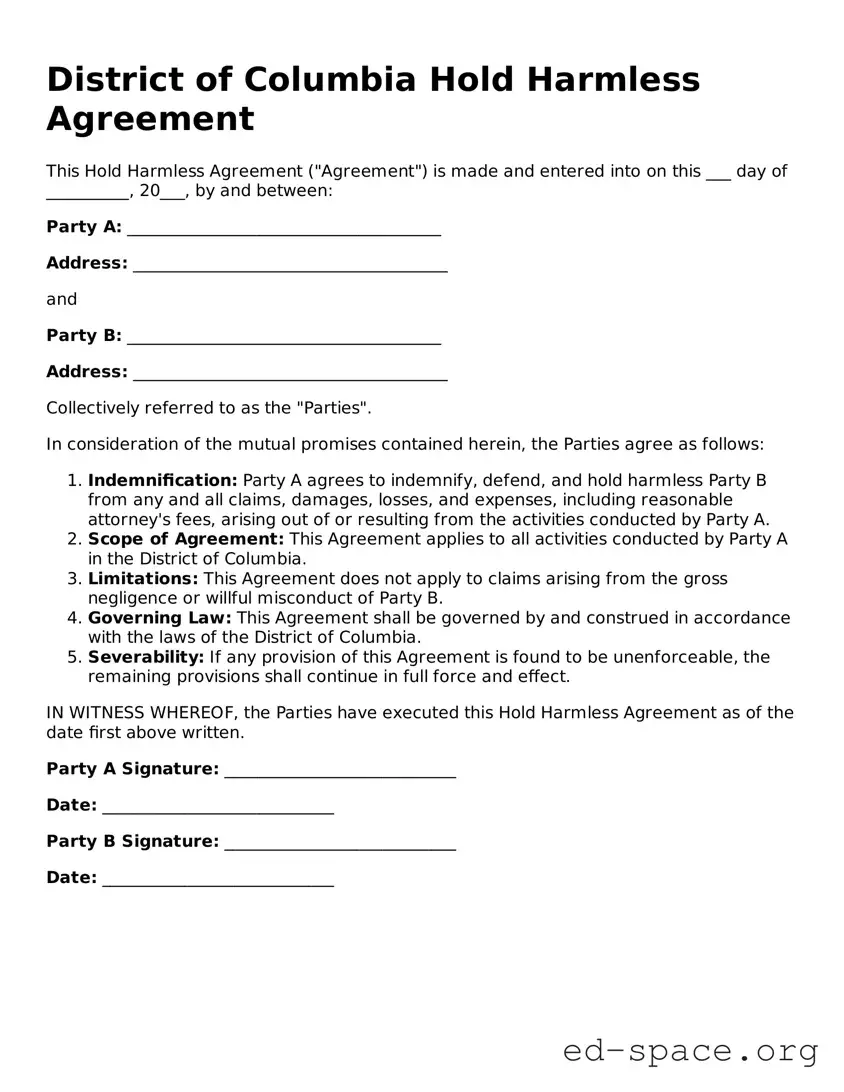
The District of Columbia Hold Harmless Agreement form is a crucial legal document designed to protect parties from liability in various situations. This form outlines the responsibilities of each party involved and specifies that one party agrees to hold the other harmless from any claims, damages, or losses that may arise during a particular activity or event. It is commonly used in scenarios such as rental agreements, event planning, or construction projects, where risks are inherent. By signing this agreement, individuals and organizations acknowledge potential hazards and agree to assume responsibility for their own actions. This proactive approach helps to mitigate legal disputes and ensures that all parties understand their obligations. Clarity and mutual consent are essential components, making it vital for all involved to read and comprehend the terms before signing. Understanding the implications of this agreement can significantly impact how risks are managed in various transactions.
District of Columbia Hold Harmless Agreement
This Hold Harmless Agreement ("Agreement") is made and entered into on this ___ day of __________, 20___, by and between:
Party A: ______________________________________
Address: ______________________________________
and
Party B: ______________________________________
Address: ______________________________________
Collectively referred to as the "Parties".
In consideration of the mutual promises contained herein, the Parties agree as follows:
IN WITNESS WHEREOF, the Parties have executed this Hold Harmless Agreement as of the date first above written.
Party A Signature: ____________________________
Date: ____________________________
Party B Signature: ____________________________
Date: ____________________________
| Fact Name | Details |
|---|---|
| Purpose | The Hold Harmless Agreement protects one party from legal liability for damages or injuries that may occur. |
| Governing Law | This agreement is governed by the laws of the District of Columbia. |
| Parties Involved | Typically, two parties are involved: the indemnitor (who agrees to hold harmless) and the indemnitee (who is protected). |
| Scope of Agreement | The agreement outlines specific activities or situations for which liability is waived. |
| Enforceability | For the agreement to be enforceable, it must be clear, specific, and voluntarily signed by both parties. |
| Limitations | Some liabilities, such as gross negligence or willful misconduct, may not be covered by the agreement. |
| Usage Context | This form is commonly used in contracts involving events, services, or activities where risks are present. |
| Signature Requirement | Both parties must sign the agreement for it to be valid and enforceable. |
Once you have the District of Columbia Hold Harmless Agreement form, you are ready to fill it out. This form is important for ensuring that all parties involved understand their responsibilities and liabilities. Follow these steps carefully to complete the form accurately.
After completing these steps, you will need to submit the form to the appropriate authority. Make sure to keep a copy for your records. This will help you track your submission and have a reference in the future.
What is a Hold Harmless Agreement in the District of Columbia?
A Hold Harmless Agreement is a legal document that protects one party from liability for any damages or injuries that may occur during a specific activity or event. In the District of Columbia, this agreement is often used in various contexts, such as rental agreements, event planning, or construction projects. By signing this agreement, one party agrees not to hold the other responsible for certain risks or damages that may arise.
Who typically uses a Hold Harmless Agreement?
This agreement is commonly used by businesses, property owners, event organizers, and contractors. For instance, a property owner might require a contractor to sign a Hold Harmless Agreement before beginning work on their property. Similarly, an event organizer may ask participants to sign this agreement to mitigate risks associated with the event.
What are the key components of a Hold Harmless Agreement?
A typical Hold Harmless Agreement includes several important elements. These may consist of the names of the parties involved, a clear description of the activity or event, the scope of liability being waived, and the duration of the agreement. It is crucial that the language is clear to ensure all parties understand their rights and responsibilities.
Is a Hold Harmless Agreement enforceable in the District of Columbia?
Yes, Hold Harmless Agreements can be enforceable in the District of Columbia, provided they meet specific legal requirements. The agreement must be clear and unambiguous. Additionally, it should not violate public policy or include any provisions that are deemed unconscionable. Courts may review the agreement to ensure it is fair and reasonable.
Can a Hold Harmless Agreement protect against all types of liability?
Not necessarily. While a Hold Harmless Agreement can provide protection against many types of liability, it may not cover all situations. For example, it typically cannot protect a party from liability due to gross negligence or willful misconduct. It is essential to understand the limitations of the agreement and consult with a legal professional if there are specific concerns.
How can I create a Hold Harmless Agreement?
Creating a Hold Harmless Agreement involves drafting the document with clear language that outlines the terms and conditions agreed upon by both parties. It is advisable to include all relevant details, such as the nature of the activity, the duration of the agreement, and any specific risks involved. Consulting with a legal professional can ensure that the agreement complies with local laws and adequately protects your interests.
Incomplete Information: One common mistake is not filling out all required fields. Each section of the form is important, and missing information can lead to delays or even rejection of the agreement. Ensure that every box is checked and every line is filled out as needed.
Incorrect Dates: People often forget to double-check the dates they enter. Using the wrong date can cause confusion about the agreement's validity. Always verify that the dates match the intended timeline of the agreement.
Failure to Sign: A signature is crucial for the Hold Harmless Agreement to be valid. Some individuals may forget to sign the document or may not have all necessary parties sign it. Remember, without signatures, the agreement is not legally binding.
Not Understanding the Terms: Many people rush through the form without fully understanding the terms they are agreeing to. It's essential to read and comprehend the agreement before signing. If there are any uncertainties, seeking clarification can prevent future issues.
A Hold Harmless Agreement is often used in various legal contexts to protect one party from liability. When working with this agreement in the District of Columbia, several other documents may also be necessary to ensure comprehensive coverage and clarity. Below is a list of commonly associated forms and documents that may be used alongside the Hold Harmless Agreement.
Each of these documents plays a crucial role in managing risk and protecting parties involved in various agreements. It is essential to understand how they interrelate and to ensure that all necessary forms are properly executed to provide adequate protection.
A Hold Harmless Agreement is a legal document designed to protect one party from liability or claims that may arise from specific activities or situations. Several other documents serve similar purposes, focusing on risk management and liability protection. Here are four documents that share similarities with a Hold Harmless Agreement:
When filling out the District of Columbia Hold Harmless Agreement form, it is essential to approach the process with care. Here are some important dos and don'ts to keep in mind:
By following these guidelines, you can help ensure that the form is filled out correctly and serves its intended purpose.
The District of Columbia Hold Harmless Agreement form is often misunderstood. Here are five common misconceptions about it:
Understanding these misconceptions can help individuals and businesses make informed decisions when using the Hold Harmless Agreement in the District of Columbia.
When dealing with the District of Columbia Hold Harmless Agreement form, several important aspects should be kept in mind. Understanding these key takeaways can help ensure that the form is filled out correctly and used effectively.
By keeping these points in mind, individuals and organizations can navigate the Hold Harmless Agreement process more effectively, ensuring that all parties are adequately protected.