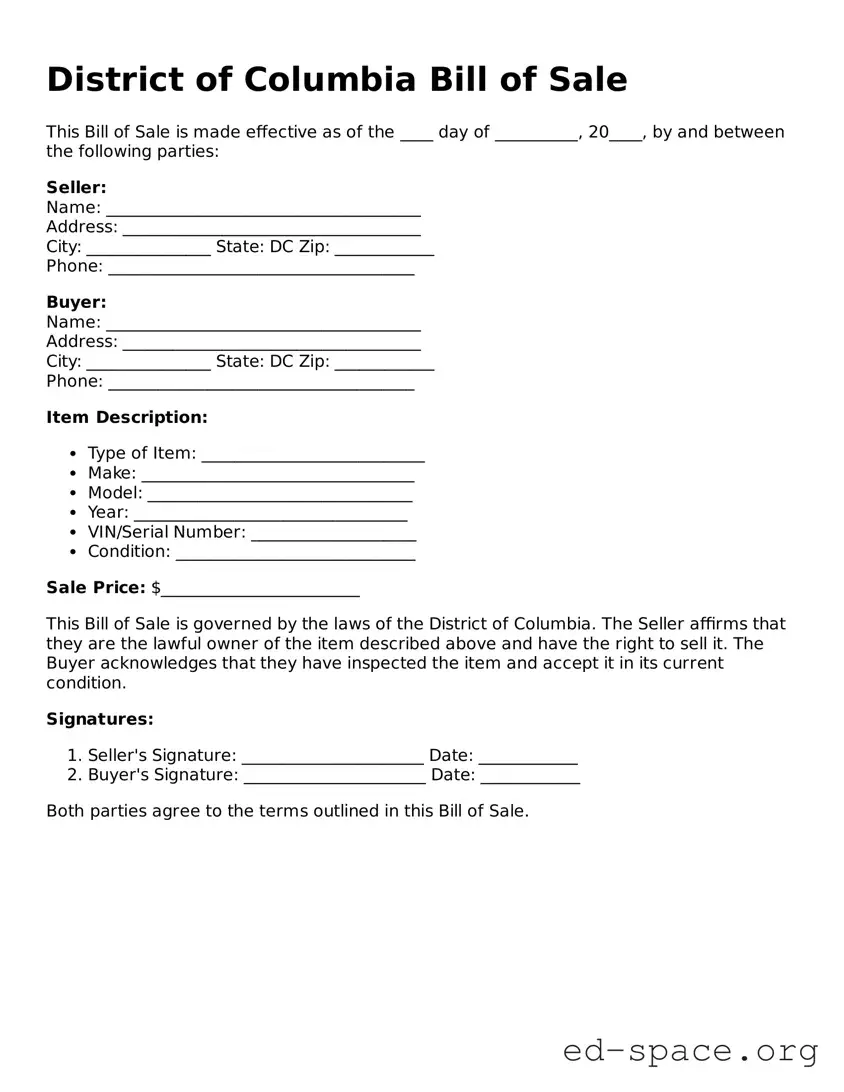
When it comes to buying or selling personal property in the District of Columbia, a Bill of Sale serves as a crucial document that protects both parties involved in the transaction. This form captures essential details such as the names and addresses of the buyer and seller, a thorough description of the item being sold, and the agreed-upon purchase price. Additionally, it may include information about warranties or guarantees, if applicable, ensuring that both parties understand their rights and responsibilities. By providing a clear record of the transaction, the Bill of Sale helps prevent disputes and provides legal proof of ownership transfer. Whether you’re dealing with a vehicle, furniture, or any other personal item, having this document in place not only streamlines the process but also instills confidence in the exchange. Understanding the significance of this form is vital for anyone looking to navigate the buying and selling landscape in D.C.
District of Columbia Bill of Sale
This Bill of Sale is made effective as of the ____ day of __________, 20____, by and between the following parties:
Seller:
Name: ______________________________________
Address: ____________________________________
City: _______________ State: DC Zip: ____________
Phone: _____________________________________
Buyer:
Name: ______________________________________
Address: ____________________________________
City: _______________ State: DC Zip: ____________
Phone: _____________________________________
Item Description:
Sale Price: $________________________
This Bill of Sale is governed by the laws of the District of Columbia. The Seller affirms that they are the lawful owner of the item described above and have the right to sell it. The Buyer acknowledges that they have inspected the item and accept it in its current condition.
Signatures:
Both parties agree to the terms outlined in this Bill of Sale.
| Fact Name | Description |
|---|---|
| Purpose | The District of Columbia Bill of Sale form is used to document the transfer of ownership of personal property from one party to another. |
| Governing Law | This form is governed by the laws of the District of Columbia, specifically under the Uniform Commercial Code (UCC) as it pertains to personal property transactions. |
| Required Information | The form typically requires details such as the names and addresses of both the seller and buyer, a description of the item being sold, and the sale price. |
| Signatures | Both the seller and buyer must sign the Bill of Sale to validate the transfer of ownership, ensuring that both parties agree to the terms of the sale. |
Once you have the District of Columbia Bill of Sale form in hand, you can begin the process of filling it out. This document will require specific information about the transaction and the parties involved. Make sure to have all necessary details ready before you start.
After completing the form, both parties should keep a copy for their records. This ensures that there is a clear understanding of the transaction and provides proof of ownership transfer.
What is a District of Columbia Bill of Sale?
A Bill of Sale is a legal document that transfers ownership of personal property from one person to another. In the District of Columbia, this form is often used for the sale of vehicles, boats, and other tangible items. It serves as proof of the transaction and outlines the terms agreed upon by both parties.
Why do I need a Bill of Sale?
A Bill of Sale provides a written record of the transaction. It protects both the buyer and the seller by documenting the sale details, including the date, purchase price, and description of the item. This record can be essential for resolving disputes or for tax purposes.
What information should be included in a Bill of Sale?
The Bill of Sale should include the names and addresses of both the buyer and the seller, a detailed description of the item being sold, the sale price, and the date of the transaction. It is also beneficial to include any warranties or conditions related to the sale.
Do I need to notarize the Bill of Sale?
Notarization is not required for a Bill of Sale in the District of Columbia, but it can add an extra layer of authenticity. Having the document notarized can help prevent disputes about the validity of the signatures and the transaction itself.
Can I use a Bill of Sale for a vehicle?
Yes, a Bill of Sale is commonly used for vehicle sales in the District of Columbia. It is important to ensure that the form complies with local regulations, especially if you plan to register the vehicle with the Department of Motor Vehicles (DMV).
Is there a specific format for the Bill of Sale in D.C.?
While there is no mandated format for a Bill of Sale in the District of Columbia, it should be clear and comprehensive. Using a template that includes all necessary information is advisable to avoid any omissions that could lead to confusion later.
What happens if I lose my Bill of Sale?
If you lose your Bill of Sale, it may complicate matters, especially if a dispute arises. It is wise to keep multiple copies of the document. If necessary, you can create a new Bill of Sale and have both parties sign it again to reaffirm the transaction.
Can I cancel a Bill of Sale after it has been signed?
Once a Bill of Sale is signed and the transaction is completed, it generally cannot be canceled unilaterally. However, if both parties agree to void the sale, they can create a new document stating the cancellation. It’s important to document this agreement to avoid future disputes.
Failing to include all necessary information about the buyer and seller. This includes names, addresses, and contact details.
Not accurately describing the item being sold. A clear description helps avoid disputes later.
Omitting the purchase price. This is a critical detail that establishes the value of the transaction.
Neglecting to include the date of the sale. This helps establish a timeline for the transaction.
Not signing the document. Both parties must sign the Bill of Sale for it to be valid.
Using incorrect or outdated forms. Ensure that the most current version of the Bill of Sale is used.
Failing to keep a copy of the completed Bill of Sale. Both the buyer and seller should retain a copy for their records.
When engaging in a sale or transfer of property in the District of Columbia, several other forms and documents may accompany the Bill of Sale. Each of these documents serves a specific purpose, ensuring that the transaction is transparent and legally binding. Below is a list of commonly used forms that can enhance the clarity and legality of your sale.
Utilizing these forms and documents alongside the District of Columbia Bill of Sale can facilitate a smoother transaction. Each document plays a vital role in ensuring that all parties are protected and that the sale adheres to local laws and regulations. Being thorough in your documentation will help prevent misunderstandings and disputes in the future.
When filling out the District of Columbia Bill of Sale form, there are important guidelines to follow. Here are five things you should and shouldn't do:
Understanding the District of Columbia Bill of Sale form can be challenging, and there are several misconceptions that people often have. Below are some common misunderstandings, along with clarifications to help you navigate the process more effectively.
By addressing these misconceptions, you can approach the Bill of Sale process with confidence and clarity. It is always wise to have a clear understanding of your rights and responsibilities in any transaction.
When dealing with the District of Columbia Bill of Sale form, it’s important to understand its purpose and the details involved. Here are some key takeaways to keep in mind:
By following these guidelines, you can ensure that the Bill of Sale is filled out correctly and serves its intended purpose effectively.