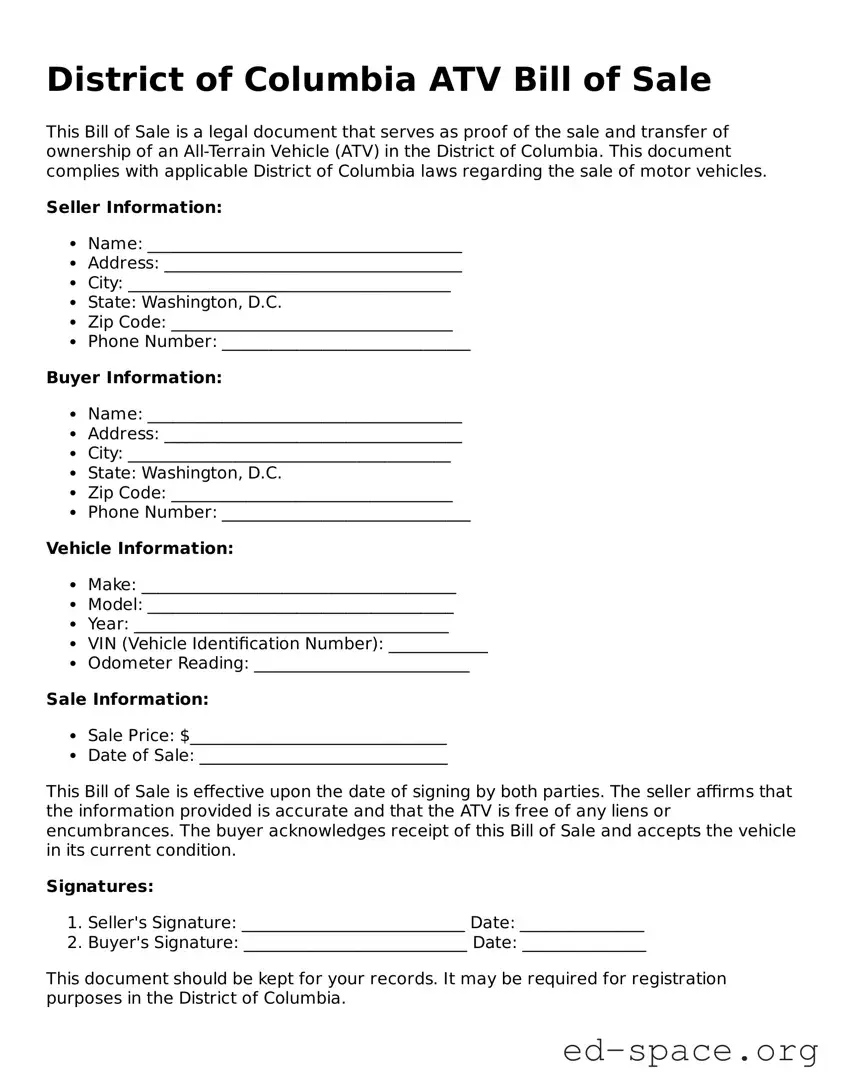
When engaging in the sale or purchase of an all-terrain vehicle (ATV) in the District of Columbia, having a properly completed ATV Bill of Sale form is essential for both parties involved in the transaction. This document serves as a written record that captures important details about the sale, including the names and addresses of the buyer and seller, the date of the transaction, and a description of the ATV itself, such as its make, model, year, and vehicle identification number (VIN). Additionally, the form typically includes information regarding the purchase price and any terms or conditions agreed upon by both parties. By providing clarity and transparency, this form helps protect the rights of both the buyer and seller while ensuring that the transfer of ownership is documented. Furthermore, having a Bill of Sale can simplify the registration process with local authorities and may be required for legal purposes, should any disputes arise in the future. Understanding the components and significance of the ATV Bill of Sale form is crucial for anyone looking to navigate the buying or selling process smoothly.
District of Columbia ATV Bill of Sale
This Bill of Sale is a legal document that serves as proof of the sale and transfer of ownership of an All-Terrain Vehicle (ATV) in the District of Columbia. This document complies with applicable District of Columbia laws regarding the sale of motor vehicles.
Seller Information:
Buyer Information:
Vehicle Information:
Sale Information:
This Bill of Sale is effective upon the date of signing by both parties. The seller affirms that the information provided is accurate and that the ATV is free of any liens or encumbrances. The buyer acknowledges receipt of this Bill of Sale and accepts the vehicle in its current condition.
Signatures:
This document should be kept for your records. It may be required for registration purposes in the District of Columbia.
| Fact Name | Description |
|---|---|
| Purpose | The District of Columbia ATV Bill of Sale form is used to document the sale of an all-terrain vehicle, providing a record for both the buyer and seller. |
| Governing Law | This form is governed by the laws of the District of Columbia, specifically under D.C. Code § 50-1501.01. |
| Required Information | Essential details include the names and addresses of both the buyer and seller, vehicle identification number (VIN), and the purchase price. |
| Notarization | While notarization is not always required, having the form notarized can provide additional legal protection for both parties. |
| Transfer of Ownership | Completing this form is crucial for transferring ownership of the ATV and ensuring that the new owner can register the vehicle. |
Completing the District of Columbia ATV Bill of Sale form is a straightforward process. After filling out the form, you will be able to finalize the sale of your all-terrain vehicle, ensuring that both the buyer and seller have a clear record of the transaction. Follow these steps to accurately complete the form.
What is an ATV Bill of Sale in the District of Columbia?
An ATV Bill of Sale is a legal document that records the sale of an all-terrain vehicle (ATV) between a seller and a buyer in the District of Columbia. This document serves as proof of the transaction and includes essential details such as the names and addresses of both parties, the vehicle identification number (VIN), make, model, year, and sale price. Having a Bill of Sale is important for registering the ATV and for any future ownership disputes.
Do I need a Bill of Sale to register my ATV in D.C.?
Yes, you will need a Bill of Sale to register your ATV in the District of Columbia. The Department of Motor Vehicles (DMV) requires this document as part of the registration process. It helps verify the ownership and provides a clear record of the transaction. Without it, you may face challenges in obtaining a title or registering the vehicle.
What information should be included in the ATV Bill of Sale?
When preparing an ATV Bill of Sale, it is crucial to include specific information. Start with the full names and addresses of both the seller and the buyer. Next, document the ATV's details, including the make, model, year, color, and VIN. The sale price should also be clearly stated, along with the date of the transaction. Lastly, both parties should sign and date the document to make it legally binding.
Is there a specific format for the ATV Bill of Sale in D.C.?
What should I do if I lose my ATV Bill of Sale?
If you lose your ATV Bill of Sale, it is advisable to take action promptly. You can request a duplicate from the seller if they have kept a copy. If that is not possible, consider drafting a new Bill of Sale. Ensure both parties sign it again to confirm the transaction. Additionally, it may be helpful to keep records of any correspondence related to the sale, as this can support your claim of ownership if needed.
Incomplete Information: Failing to provide all necessary details, such as the buyer's and seller's full names, addresses, and contact information, can lead to complications later on.
Incorrect Vehicle Identification Number (VIN): It's crucial to double-check the VIN. An incorrect number can result in ownership disputes or difficulties in registration.
Missing Signatures: Both the buyer and seller must sign the form. Omitting one of the signatures can invalidate the sale.
Failure to Date the Document: Not including the date of the sale can create confusion regarding when the transaction occurred, which is important for legal and tax purposes.
Neglecting to Include the Sale Price: Leaving out the sale price can lead to misunderstandings and may affect tax obligations.
Not Notarizing the Document: In some cases, notarization may be required for the bill of sale to be considered valid. Check local requirements to avoid this mistake.
Using Incorrect Terms: Mislabeling the type of vehicle or using vague descriptions can create confusion. Be specific about the make, model, and year of the ATV.
Ignoring State-Specific Requirements: Each state may have unique regulations regarding ATV sales. Not adhering to these can result in legal issues down the line.
When purchasing or selling an all-terrain vehicle (ATV) in the District of Columbia, the ATV Bill of Sale form serves as a crucial document. However, it is often accompanied by several other forms and documents that facilitate a smooth transaction. Understanding these additional documents can help ensure that both buyers and sellers are well-prepared for the process.
Each of these documents plays a vital role in the transaction process, ensuring that both buyers and sellers are protected and informed. By familiarizing oneself with these forms, individuals can navigate the complexities of buying or selling an ATV with greater confidence.
When filling out the District of Columbia ATV Bill of Sale form, it is important to follow certain guidelines to ensure the process goes smoothly. Here are some dos and don'ts to keep in mind:
When dealing with the District of Columbia ATV Bill of Sale form, several misconceptions can lead to confusion. Here are seven common misunderstandings:
Many believe that all ATVs require registration in the District of Columbia. However, registration is only necessary for ATVs that will be used on public roads or trails.
Some people think that a Bill of Sale is merely a formality. In reality, it serves as a legal document that outlines the terms of the sale and protects both the buyer and seller.
This is incorrect. Any individual can create a Bill of Sale for an ATV sale, as long as it includes the necessary information about the transaction.
While it may not be legally required for private sales, having a Bill of Sale is highly recommended. It provides proof of ownership and can help prevent disputes later on.
Notarization is not a requirement for a Bill of Sale in D.C. However, having it notarized can add an extra layer of authenticity.
Some believe that only the seller is responsible for taxes related to the sale. In fact, buyers may also be responsible for paying sales tax when registering the ATV.
While signing the Bill of Sale indicates agreement, it is important to ensure all terms are met before considering the transaction complete. This includes payment and transfer of ownership.
When filling out and using the District of Columbia ATV Bill of Sale form, it's important to keep several key points in mind. Here are some essential takeaways to ensure a smooth transaction:
By following these guidelines, you can ensure that your ATV sale is conducted smoothly and legally. Always double-check the form for completeness before finalizing the transaction.