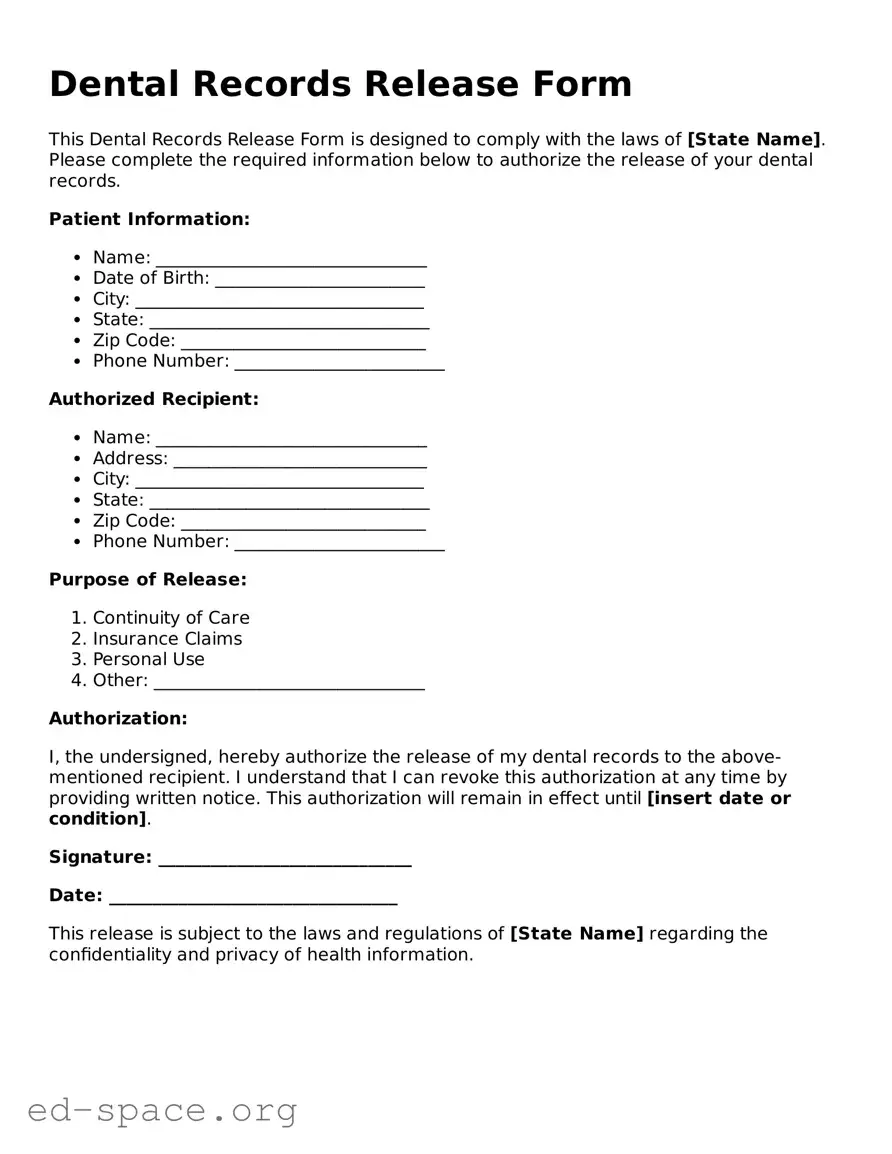
When it comes to managing your dental health, having access to your dental records can be crucial. A Dental Records Release form serves as an essential tool that allows patients to authorize the transfer of their dental information from one provider to another. This form typically includes personal details such as the patient’s name, contact information, and the name of the dental practice holding the records. It also specifies what information is being released, which may encompass treatment history, x-rays, and other pertinent documents. Importantly, the form requires the patient’s signature, indicating consent for the release. Understanding how to properly fill out and submit this form can streamline your dental care process, ensuring continuity in treatment and facilitating communication between dental professionals. By being informed about this form, patients can take proactive steps in managing their dental health and ensuring that their new provider has all the necessary information to provide optimal care.
Dental Records Release Form
This Dental Records Release Form is designed to comply with the laws of [State Name]. Please complete the required information below to authorize the release of your dental records.
Patient Information:
Authorized Recipient:
Purpose of Release:
Authorization:
I, the undersigned, hereby authorize the release of my dental records to the above-mentioned recipient. I understand that I can revoke this authorization at any time by providing written notice. This authorization will remain in effect until [insert date or condition].
Signature: _____________________________
Date: _________________________________
This release is subject to the laws and regulations of [State Name] regarding the confidentiality and privacy of health information.
| Fact Name | Description |
|---|---|
| Purpose | The Dental Records Release form allows patients to authorize the transfer of their dental records to another provider or individual. |
| Patient Consent | Patients must provide their consent for their dental records to be shared. This ensures their privacy is respected. |
| State-Specific Forms | Each state may have its own version of the form, reflecting local laws and regulations. |
| Governing Law | In many states, laws such as HIPAA (Health Insurance Portability and Accountability Act) govern the release of medical records, including dental records. |
| Revocation | Patients have the right to revoke their consent at any time, which must be done in writing. |
| Retention Period | Dental records are typically retained for a specific period, often dictated by state law, before they can be disposed of. |
Filling out the Dental Records Release form is an important step in ensuring that your dental information is shared appropriately. Once you have completed the form, it will be submitted to your dental office or the relevant entity to facilitate the transfer of your records. Follow these steps carefully to ensure that all necessary information is provided accurately.
After completing these steps, you can submit the form to the appropriate dental office or provider. They will then process your request and provide you with your dental records as needed.
What is a Dental Records Release form?
A Dental Records Release form is a document that allows a patient to authorize the transfer of their dental records from one dental office to another. This form ensures that the new dental provider has access to the patient's history, treatments, and any relevant information necessary for ongoing care.
Why would I need to complete a Dental Records Release form?
Completing this form is essential when changing dentists or seeking a second opinion. It facilitates the sharing of your dental history, which can be crucial for accurate diagnosis and treatment. Without this authorization, your previous dentist cannot legally share your records.
How do I obtain a Dental Records Release form?
You can typically obtain a Dental Records Release form directly from your current dental office. Many practices also offer the form on their websites. Alternatively, you can request it via phone or email, and the office will provide you with the necessary documentation.
What information do I need to provide on the form?
The form usually requires basic information such as your name, date of birth, and contact details. You will also need to specify the name and address of the new dental provider. Additionally, you may need to indicate the specific records you wish to be released and the purpose for the transfer.
Is there a fee associated with obtaining my dental records?
Some dental offices may charge a fee for copying and transferring your records, while others may not. The fee can vary based on state regulations and the office's policies. It's advisable to inquire about any potential costs when requesting your records.
How long does it take to process the Dental Records Release form?
The processing time can vary by office. Generally, it may take anywhere from a few days to a couple of weeks. It is beneficial to submit the form well in advance of your next appointment to ensure your records are available when needed.
Can I revoke the authorization after submitting the Dental Records Release form?
Yes, you can revoke your authorization at any time. To do so, you must submit a written request to your current dental office. Keep in mind that any actions taken prior to the revocation will remain valid, as the office may have already processed your request.
What should I do if my previous dentist refuses to release my records?
If your previous dentist refuses to release your records, it is important to understand your rights. You may want to discuss the situation with the office directly. If the issue persists, you can contact your state dental board for guidance on how to proceed and ensure your rights are protected.
Not providing complete personal information. Ensure your full name, address, and contact details are clearly written.
Failing to specify the records needed. Clearly indicate which dental records you wish to obtain to avoid delays.
Neglecting to sign and date the form. A signature and date are crucial for the release to be valid.
Overlooking the recipient's details. Make sure to include the name and address of the person or organization receiving the records.
Not reviewing the form for accuracy. Double-check all entries for errors before submission.
Ignoring privacy considerations. Be aware of how your information will be used and who will have access to it.
The Dental Records Release form is essential for patients wishing to share their dental history with another provider. However, several other documents often accompany this form to facilitate a smooth transition of care. Below is a list of commonly used forms that may be necessary in conjunction with the Dental Records Release form.
Each of these documents plays a vital role in the dental care process. Together with the Dental Records Release form, they help ensure that patient care is efficient, informed, and compliant with necessary regulations.
The Dental Records Release form serves a crucial purpose in healthcare, particularly in dentistry. It allows patients to authorize the transfer of their dental records to another provider or institution. This form has similarities with several other important documents in the healthcare field. Below are seven documents that share characteristics with the Dental Records Release form:
Understanding these documents is vital for patients navigating their healthcare journey. Each plays a role in ensuring that personal health information is shared responsibly and with the patient’s consent.
When filling out a Dental Records Release form, it is crucial to follow certain guidelines to ensure that the process goes smoothly. Below is a list of important dos and don’ts to consider.
Following these guidelines can help ensure that your dental records are released efficiently and without unnecessary delays.
Understanding the Dental Records Release form is crucial for both patients and dental professionals. However, several misconceptions can lead to confusion. Here are eight common misconceptions about this form:
In reality, the Dental Records Release form can also be used for sharing records with insurance companies or other healthcare providers.
Patients have the right to request their records at any time. The release form facilitates this process.
While it may seem optional, many dental offices require the form to ensure compliance with privacy laws.
The form typically allows for a temporary transfer, meaning records can be returned or revoked if necessary.
Some dental offices may charge a fee for copying and sending records, so it's essential to inquire about potential costs.
Only the patient or a legally authorized representative can complete the form to ensure proper consent.
Most dental offices accept a signed form without notarization, as long as it meets the required criteria.
Patients can revoke their consent at any time, but it must be done in writing to the dental office.
When filling out and using the Dental Records Release form, it's important to keep several key points in mind. Here are some essential takeaways: