When it comes to estate planning, individuals often seek ways to simplify the transfer of their property to loved ones after their passing. One effective tool available in Delaware is the Transfer-on-Death (TOD) deed form. This legal document allows property owners to designate beneficiaries who will automatically receive their real estate upon their death, bypassing the often lengthy and costly probate process. The TOD deed is particularly appealing because it provides property owners with the flexibility to retain full control over their property during their lifetime. They can sell, mortgage, or otherwise manage their real estate without any restrictions. Additionally, the form is relatively straightforward to complete and can be revoked or altered at any time before the owner's death, ensuring that changes in circumstances or intentions can easily be accommodated. Understanding the nuances of the TOD deed is essential for anyone looking to streamline their estate planning and provide for their heirs effectively.
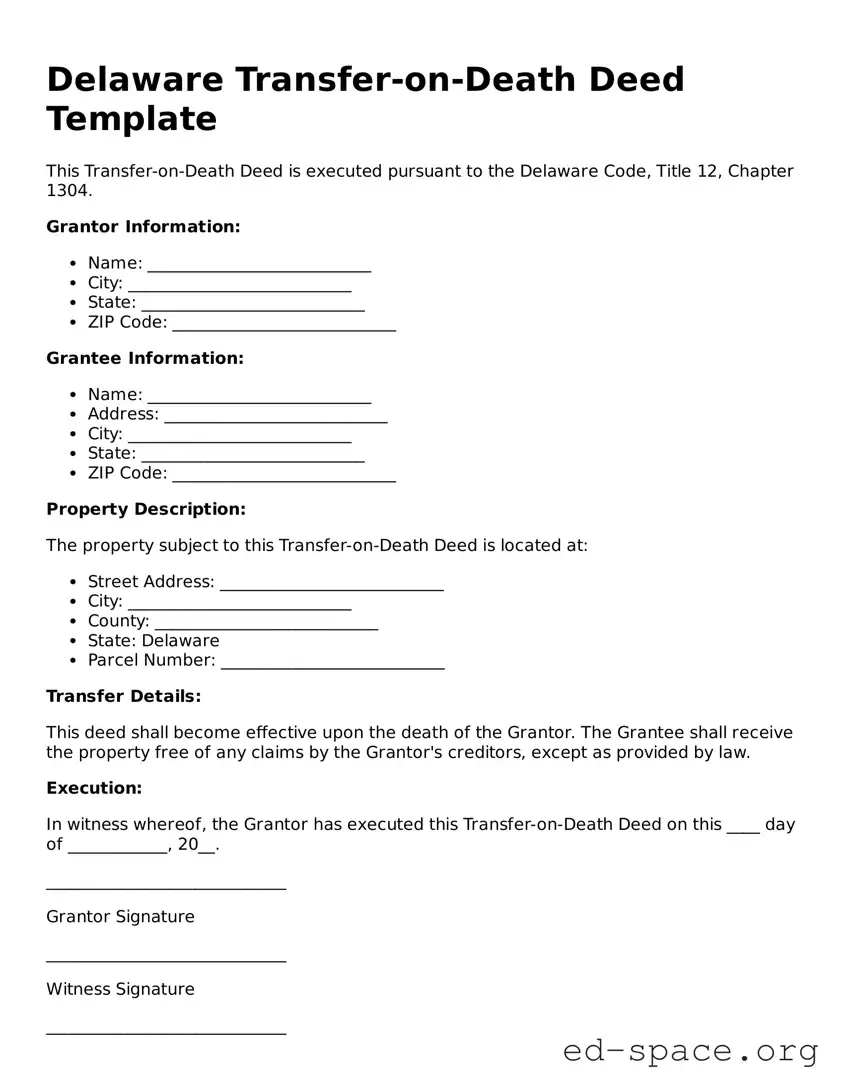
Delaware Transfer-on-Death Deed Template
This Transfer-on-Death Deed is executed pursuant to the Delaware Code, Title 12, Chapter 1304.
Grantor Information:
Grantee Information:
Property Description:
The property subject to this Transfer-on-Death Deed is located at:
Transfer Details:
This deed shall become effective upon the death of the Grantor. The Grantee shall receive the property free of any claims by the Grantor's creditors, except as provided by law.
Execution:
In witness whereof, the Grantor has executed this Transfer-on-Death Deed on this ____ day of ____________, 20__.
_____________________________
Grantor Signature
_____________________________
Witness Signature
_____________________________
Notary Public
My commission expires: ___________________________
| Fact Name | Details |
|---|---|
| Definition | A Transfer-on-Death (TOD) deed allows property owners to transfer real estate to beneficiaries upon their death without going through probate. |
| Governing Law | The TOD deed in Delaware is governed by Title 12, Chapter 6102 of the Delaware Code. |
| Eligibility | Any individual who owns real property in Delaware can create a TOD deed. |
| Revocation | A TOD deed can be revoked at any time before the property owner’s death, typically by executing a new deed or a written revocation. |
| Beneficiary Designation | Multiple beneficiaries can be named in the TOD deed, and the property can be transferred to them in equal shares or specific proportions. |
| Filing Requirements | The TOD deed must be recorded in the county where the property is located prior to the owner's death for it to be effective. |
Once you have the Delaware Transfer-on-Death Deed form ready, it’s important to ensure that all information is filled out correctly. This deed allows property to transfer automatically upon the owner's death, so accuracy is key. Follow the steps below to complete the form.
What is a Transfer-on-Death Deed in Delaware?
A Transfer-on-Death Deed (TODD) is a legal document that allows a property owner in Delaware to designate one or more beneficiaries who will receive the property upon the owner's death. This deed bypasses the probate process, allowing for a smoother transition of property ownership. The owner retains full control of the property during their lifetime and can revoke or change the deed at any time before death.
How do I create a Transfer-on-Death Deed in Delaware?
To create a TODD in Delaware, you must complete the form available through the Delaware Division of Professional Regulation or other legal resources. The form requires you to provide information about the property, your name, and the names of the beneficiaries. Once completed, the deed must be signed in the presence of a notary public and recorded with the appropriate county recorder’s office.
Can I revoke a Transfer-on-Death Deed?
Yes, a Transfer-on-Death Deed can be revoked. The property owner can do this by creating a new deed that explicitly revokes the previous one or by executing a written revocation. It is essential to record the revocation with the county recorder’s office to ensure that it is legally effective and recognized.
What happens if the beneficiary dies before the property owner?
If a designated beneficiary dies before the property owner, the transfer of the property will not occur to that beneficiary. Instead, the property will pass according to the terms outlined in the owner’s will, or if there is no will, according to Delaware's intestacy laws. It is advisable to name alternate beneficiaries to avoid complications.
Are there any tax implications associated with a Transfer-on-Death Deed?
Generally, there are no immediate tax implications when creating a Transfer-on-Death Deed. The property remains part of the owner’s estate for tax purposes until death. However, the beneficiaries may face estate taxes depending on the overall value of the estate. It is wise to consult a tax professional for personalized advice.
Is a Transfer-on-Death Deed the same as a will?
No, a Transfer-on-Death Deed is not the same as a will. While both documents deal with the transfer of property upon death, a TODD allows for direct transfer of property without going through probate. A will, on the other hand, outlines how all assets should be distributed and must go through the probate process.
Can I use a Transfer-on-Death Deed for all types of property?
A Transfer-on-Death Deed can be used for real estate properties, such as homes and land. However, it cannot be used for personal property, bank accounts, or vehicles. For these types of assets, other estate planning tools may be more appropriate.
What are the benefits of using a Transfer-on-Death Deed?
The primary benefit of using a Transfer-on-Death Deed is the ability to transfer property outside of probate, which can save time and reduce costs. Additionally, the property owner retains control over the property during their lifetime, allowing them to sell or change the property as they see fit. This can simplify the estate planning process and provide peace of mind.
Do I need a lawyer to create a Transfer-on-Death Deed?
While it is not legally required to have a lawyer to create a Transfer-on-Death Deed, consulting with one is often beneficial. A lawyer can help ensure that the deed is completed correctly and meets all legal requirements. They can also provide guidance on how the deed fits into your overall estate plan.
Incorrect Property Description: Failing to accurately describe the property can lead to complications. Ensure that the property address, parcel number, and legal description are complete and precise.
Not Naming Beneficiaries: Omitting the names of beneficiaries is a common mistake. Clearly list all individuals who will inherit the property to avoid confusion.
Improper Signatures: The deed must be signed by the property owner. If multiple owners exist, all must sign. Ensure that signatures are present and correctly dated.
Failure to Notarize: A Transfer-on-Death Deed requires notarization. Without this step, the deed may be deemed invalid, so be sure to have it notarized before submission.
Not Recording the Deed: After completing the deed, it must be recorded with the appropriate county office. Neglecting this step can prevent the transfer from being recognized legally.
Ignoring State Requirements: Each state has specific rules regarding Transfer-on-Death Deeds. Familiarize yourself with Delaware's requirements to ensure compliance.
The Delaware Transfer-on-Death Deed is a valuable tool for individuals looking to transfer property upon their passing without the need for probate. However, there are several other forms and documents that may be relevant in conjunction with this deed. Understanding these documents can help ensure a smooth transfer process and clarify the intentions of the property owner.
Each of these documents plays a significant role in estate planning and property management. By understanding their functions and how they relate to the Transfer-on-Death Deed, individuals can make informed decisions that align with their wishes and ensure their assets are handled appropriately after their passing.
The Transfer-on-Death (TOD) Deed is a unique estate planning tool that allows individuals to transfer real property to beneficiaries upon their death without going through probate. While the TOD Deed has its distinct features, it shares similarities with several other legal documents. Here are four documents that are comparable to the TOD Deed:
When filling out the Delaware Transfer-on-Death Deed form, it is crucial to follow specific guidelines to ensure the document is valid and effective. Here is a list of things you should and shouldn't do:
Understanding the Delaware Transfer-on-Death Deed can help individuals make informed decisions about property transfer. However, several misconceptions exist regarding this legal form. Below is a list of common misunderstandings and clarifications for each.
By addressing these misconceptions, individuals can better navigate the complexities of property transfer in Delaware and make informed choices regarding their estate planning.
When considering the Delaware Transfer-on-Death Deed form, it is essential to understand its implications and requirements. Here are key takeaways to guide you through the process:
Understanding these points will help ensure a smooth process when using the Delaware Transfer-on-Death Deed form.