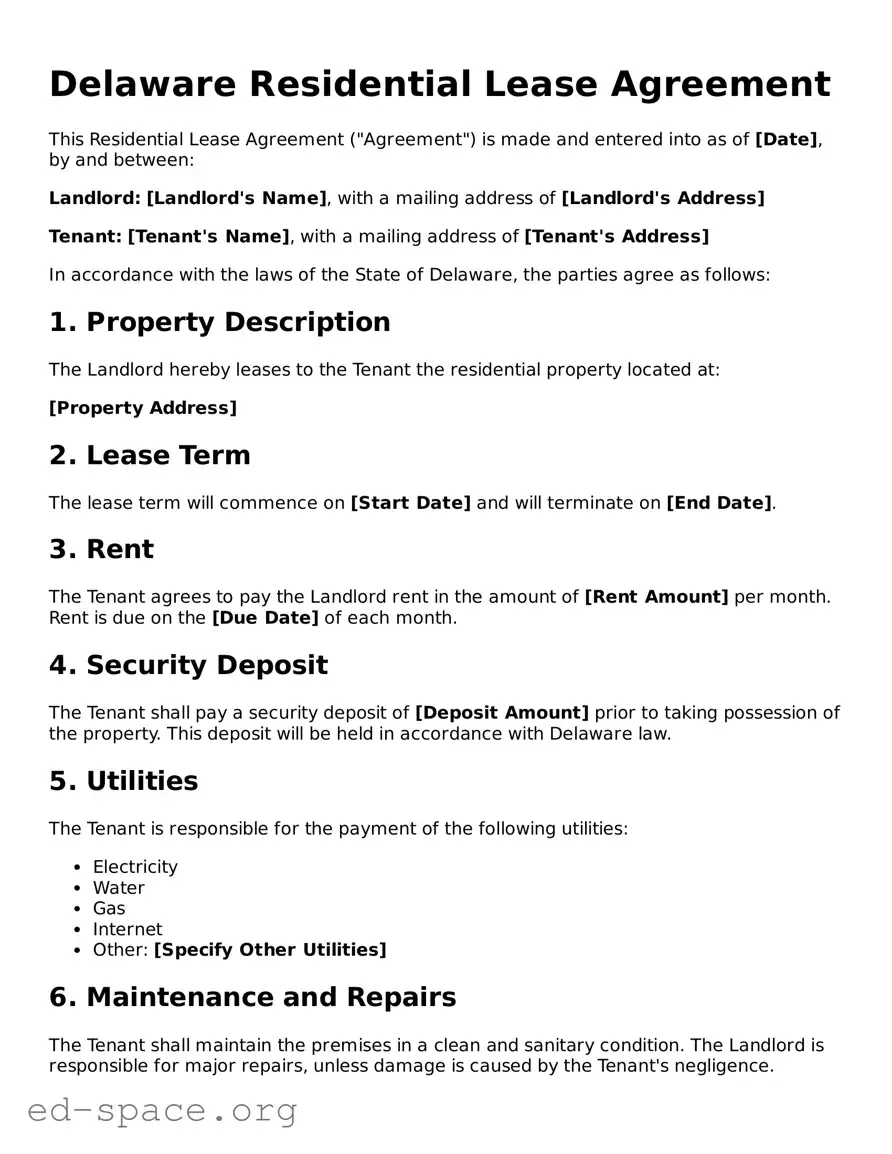
When renting a residential property in Delaware, having a clear and comprehensive lease agreement is essential for both landlords and tenants. The Delaware Residential Lease Agreement form serves as a crucial document that outlines the rights and responsibilities of both parties involved in the rental process. This form typically includes important details such as the names of the landlord and tenant, the property address, the duration of the lease, and the monthly rent amount. Additionally, it addresses security deposits, maintenance responsibilities, and rules regarding pets and smoking. By clearly defining these terms, the agreement helps prevent misunderstandings and disputes down the line. Understanding the various components of this lease form can empower both landlords and tenants to navigate their rental relationship with confidence and clarity.
Delaware Residential Lease Agreement
This Residential Lease Agreement ("Agreement") is made and entered into as of [Date], by and between:
Landlord: [Landlord's Name], with a mailing address of [Landlord's Address]
Tenant: [Tenant's Name], with a mailing address of [Tenant's Address]
In accordance with the laws of the State of Delaware, the parties agree as follows:
1. Property Description
The Landlord hereby leases to the Tenant the residential property located at:
[Property Address]
2. Lease Term
The lease term will commence on [Start Date] and will terminate on [End Date].
3. Rent
The Tenant agrees to pay the Landlord rent in the amount of [Rent Amount] per month. Rent is due on the [Due Date] of each month.
4. Security Deposit
The Tenant shall pay a security deposit of [Deposit Amount] prior to taking possession of the property. This deposit will be held in accordance with Delaware law.
5. Utilities
The Tenant is responsible for the payment of the following utilities:
6. Maintenance and Repairs
The Tenant shall maintain the premises in a clean and sanitary condition. The Landlord is responsible for major repairs, unless damage is caused by the Tenant's negligence.
7. Pets
[Specify Pet Policy]
8. Termination
Either party may terminate this Agreement by providing written notice at least [Notice Period] days prior to the intended termination date.
9. Governing Law
This Agreement shall be governed by the laws of the State of Delaware.
10. Signatures
By signing below, both parties agree to the terms of this Residential Lease Agreement:
Landlord Signature: ___________________________ Date: _______________
Tenant Signature: ___________________________ Date: _______________
| Fact Name | Description |
|---|---|
| Purpose | The Delaware Residential Lease Agreement is used to outline the terms of renting a residential property. |
| Governing Law | This agreement is governed by the laws of the State of Delaware. |
| Parties Involved | The lease involves a landlord and a tenant, both of whom must sign the document. |
| Lease Term | The agreement specifies the duration of the lease, which can be month-to-month or for a fixed term. |
| Rent Amount | The lease must clearly state the monthly rent amount and the due date for payment. |
| Security Deposit | It includes information about the security deposit, including the amount and conditions for its return. |
| Maintenance Responsibilities | The agreement outlines who is responsible for maintenance and repairs of the property. |
| Termination Conditions | It specifies how either party can terminate the lease and the required notice period. |
| Utilities | The lease indicates which utilities are included in the rent and which are the tenant's responsibility. |
| Signatures | Both parties must sign and date the lease for it to be legally binding. |
Filling out the Delaware Residential Lease Agreement form requires careful attention to detail. After completing the form, it will serve as a binding contract between the landlord and tenant, outlining the terms of the rental arrangement. Ensure all information is accurate and clear to avoid misunderstandings later on.
What is a Delaware Residential Lease Agreement?
A Delaware Residential Lease Agreement is a legally binding contract between a landlord and a tenant. It outlines the terms and conditions under which a tenant can occupy a rental property. This document typically includes details such as the duration of the lease, rental amount, payment due dates, and responsibilities for maintenance and repairs.
What are the key components of a Delaware Residential Lease Agreement?
Key components include the names of the parties involved, property address, lease term, rent amount, security deposit details, and rules regarding pets and maintenance. Additionally, it may specify the consequences of late payments and the process for terminating the lease.
How long is a typical lease term in Delaware?
Lease terms can vary widely, but they commonly range from one year to month-to-month agreements. A longer lease term often provides stability for both landlords and tenants, while a month-to-month lease offers flexibility.
Is a security deposit required in Delaware?
Yes, landlords in Delaware typically require a security deposit. This deposit serves as protection for the landlord against potential damages or unpaid rent. The amount is usually equivalent to one month's rent, but it can vary. Delaware law regulates the handling of security deposits, including how they should be returned at the end of the lease.
Can a landlord enter the rental property without notice?
No, landlords must provide reasonable notice before entering a tenant's rental unit. Generally, a 24-hour notice is considered reasonable, except in emergencies. This requirement helps protect the tenant's right to privacy.
What happens if a tenant fails to pay rent?
If a tenant fails to pay rent on time, the landlord may issue a notice to pay or quit, which gives the tenant a specific timeframe to pay the overdue rent or vacate the property. If the tenant does not comply, the landlord may initiate eviction proceedings.
Are there any restrictions on lease terms in Delaware?
Yes, lease terms must comply with Delaware law. For example, a lease cannot contain clauses that waive a tenant's rights under state law. Additionally, terms that are deemed unconscionable or unfair may be challenged in court.
Can a lease be terminated early in Delaware?
A lease can be terminated early under certain circumstances, such as mutual agreement between the landlord and tenant or if the tenant has legal grounds, such as uninhabitable conditions. It is important to review the lease agreement for specific termination clauses.
What should tenants do if they have a dispute with their landlord?
Tenants should first attempt to resolve the issue directly with the landlord. If that does not work, they may seek mediation or file a complaint with local housing authorities. Legal action is also an option, but it is advisable to consult with an attorney before proceeding.
Where can I obtain a Delaware Residential Lease Agreement form?
Delaware Residential Lease Agreement forms can be obtained from various sources, including online legal document services, local real estate offices, or legal aid organizations. It is essential to ensure that the form complies with Delaware laws and regulations.
Failing to include the full names of all tenants. Each tenant must be clearly identified in the lease agreement to ensure that all parties are held accountable.
Not specifying the lease term. It is crucial to outline the start and end dates of the lease to avoid confusion about the duration of the rental agreement.
Omitting rent payment details. The agreement should clearly state the amount of rent due, the due date, and acceptable payment methods to prevent misunderstandings.
Neglecting to address security deposit terms. Include the amount, conditions for its return, and any deductions that may be taken to ensure transparency.
Not including maintenance responsibilities. Clearly outline who is responsible for repairs and maintenance to avoid disputes during the tenancy.
Failing to specify pet policies. If pets are allowed or prohibited, this should be explicitly stated in the lease to prevent future issues.
Overlooking termination clauses. The agreement should detail how either party can terminate the lease, including notice periods and acceptable reasons for termination.
Not reviewing local laws and regulations. Familiarity with Delaware’s rental laws can prevent legal complications and ensure that the lease complies with state requirements.
When entering into a rental agreement in Delaware, several forms and documents may accompany the Residential Lease Agreement. Each serves a specific purpose and helps clarify the terms and conditions of the rental relationship. Below is a list of commonly used documents.
Understanding these documents can help both landlords and tenants navigate the rental process more effectively. Proper documentation fosters clear communication and can prevent misunderstandings down the line.
When filling out the Delaware Residential Lease Agreement form, it is important to follow specific guidelines to ensure accuracy and compliance. Below are nine things to do and avoid during this process.
Things You Should Do:
Things You Shouldn't Do:
Following these guidelines will help ensure a smooth leasing process and protect the interests of both parties involved.
When dealing with the Delaware Residential Lease Agreement form, several misconceptions can arise. Understanding these can help both landlords and tenants navigate their responsibilities and rights more effectively.
When filling out and using the Delaware Residential Lease Agreement form, keep these key takeaways in mind: