Homepage Free Real Estate Purchase Agreement Form for Delaware
Content Overview

The Delaware Real Estate Purchase Agreement is a crucial document in the home buying process, serving as a binding contract between buyers and sellers. This form outlines essential details such as the purchase price, property description, and financing terms, ensuring both parties have a clear understanding of their obligations. It also addresses contingencies, which protect buyers by allowing them to back out of the deal under certain conditions, such as failing to secure financing or unsatisfactory home inspections. Additionally, the agreement includes provisions for earnest money deposits, timelines for closing, and disclosures about the property’s condition. Understanding this form is vital for anyone involved in a real estate transaction in Delaware, as it helps facilitate a smooth transfer of ownership while minimizing potential disputes.

Document Preview

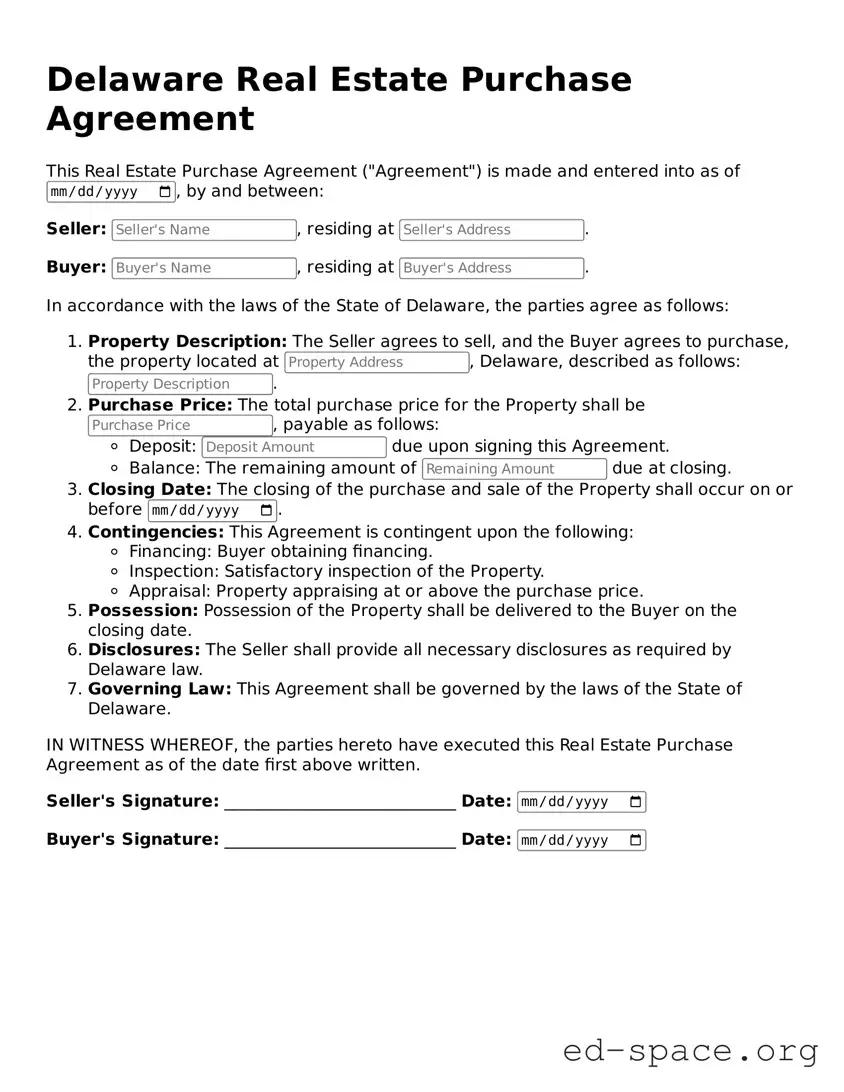
Delaware Real Estate Purchase Agreement

This Real Estate Purchase Agreement ("Agreement") is made and entered into as of , by and between:

Seller: , residing at .

Buyer: , residing at .

In accordance with the laws of the State of Delaware, the parties agree as follows:

  1. Property Description: The Seller agrees to sell, and the Buyer agrees to purchase, the property located at , Delaware, described as follows: .
  2. Purchase Price: The total purchase price for the Property shall be , payable as follows:
    • Deposit: due upon signing this Agreement.
    • Balance: The remaining amount of due at closing.
  3. Closing Date: The closing of the purchase and sale of the Property shall occur on or before .
  4. Contingencies: This Agreement is contingent upon the following:
    • Financing: Buyer obtaining financing.
    • Inspection: Satisfactory inspection of the Property.
    • Appraisal: Property appraising at or above the purchase price.
  5. Possession: Possession of the Property shall be delivered to the Buyer on the closing date.
  6. Disclosures: The Seller shall provide all necessary disclosures as required by Delaware law.
  7. Governing Law: This Agreement shall be governed by the laws of the State of Delaware.

IN WITNESS WHEREOF, the parties hereto have executed this Real Estate Purchase Agreement as of the date first above written.

Seller's Signature: ____________________________ Date:

Buyer's Signature: ____________________________ Date:

PDF Form Details

Fact Name Description
Purpose The Delaware Real Estate Purchase Agreement is used to outline the terms and conditions for buying real estate in Delaware.
Governing Law This agreement is governed by the laws of the State of Delaware.
Parties Involved The agreement includes the buyer(s) and seller(s) of the property.
Property Description A detailed description of the property being sold must be included in the agreement.
Purchase Price The total purchase price must be clearly stated, along with any deposit amounts.
Closing Date The agreement specifies the anticipated closing date for the transaction.
Contingencies Common contingencies, such as financing or inspection, can be outlined in the agreement.
Disclosures The seller is required to provide disclosures regarding the property's condition and any known issues.
Signatures Both parties must sign the agreement for it to be legally binding.

Delaware Real Estate Purchase Agreement: Usage Guidelines

After obtaining the Delaware Real Estate Purchase Agreement form, you will need to complete several sections. This document is crucial for formalizing the terms of a property sale. Follow these steps to ensure that all necessary information is accurately provided.

  1. Fill in the Date: Start by entering the date when the agreement is being signed.
  2. Identify the Parties: Write the full names and addresses of both the buyer and the seller. Ensure that spelling is correct.
  3. Describe the Property: Provide the address and any legal description of the property being sold. This information is essential for clarity.
  4. State the Purchase Price: Clearly indicate the total price for the property. Be specific about the amount.
  5. Include Earnest Money: Specify the amount of earnest money the buyer will provide to show their commitment to the purchase.
  6. Set the Closing Date: Enter the agreed-upon date for closing the sale. This date is important for both parties.
  7. Outline Contingencies: If there are any conditions that must be met before the sale can proceed, list them clearly.
  8. Signatures: Ensure that both the buyer and the seller sign and date the document. This step is crucial for the agreement to be valid.

Once you have filled out the form completely, review it for accuracy. Both parties should keep a copy for their records. After that, the next steps involve any additional negotiations or preparations needed for the closing process.

Your Questions, Answered

What is a Delaware Real Estate Purchase Agreement?

A Delaware Real Estate Purchase Agreement is a legal document that outlines the terms and conditions of a real estate transaction between a buyer and a seller. This agreement serves as a binding contract that details the property being sold, the purchase price, and any contingencies or conditions that must be met before the sale is finalized. It is essential for protecting the interests of both parties involved in the transaction.

What key elements should be included in the agreement?

Several important elements should be included in the Delaware Real Estate Purchase Agreement. These typically encompass the names of the buyer and seller, a detailed description of the property, the purchase price, the closing date, and any contingencies such as financing or inspections. Additionally, it may include provisions for earnest money deposits, disclosures, and any special conditions agreed upon by both parties.

Is the agreement legally binding?

Yes, once both the buyer and seller sign the Delaware Real Estate Purchase Agreement, it becomes a legally binding contract. This means that both parties are obligated to adhere to the terms outlined in the agreement. If either party fails to fulfill their obligations, the other party may have legal recourse to enforce the agreement or seek damages.

Can the agreement be modified after signing?

Modifications to the agreement can be made after signing, but both parties must agree to the changes. It is advisable to document any modifications in writing and have both parties sign the amended agreement. This helps ensure clarity and prevents misunderstandings in the future.

What happens if the buyer backs out of the agreement?

If the buyer decides to back out of the agreement without a valid reason or without meeting a contingency, they may forfeit their earnest money deposit. The seller may also have the option to pursue legal action for breach of contract. However, if the buyer withdraws due to a valid contingency, such as failing to secure financing, they may not face penalties.

Are there any contingencies commonly included in the agreement?

Yes, contingencies are often included in the Delaware Real Estate Purchase Agreement to protect both parties. Common contingencies include financing, home inspections, and appraisal contingencies. These conditions allow the buyer to back out of the agreement without penalty if certain requirements are not met.

Do I need a lawyer to draft or review the agreement?

While it is not legally required to have a lawyer draft or review the Delaware Real Estate Purchase Agreement, it is highly recommended. A legal professional can help ensure that the agreement is comprehensive, compliant with state laws, and that your interests are protected throughout the transaction.

Where can I obtain a Delaware Real Estate Purchase Agreement form?

Delaware Real Estate Purchase Agreement forms can be obtained from various sources, including real estate agents, online legal form providers, and local real estate associations. It is important to ensure that any form used is up-to-date and compliant with Delaware laws to avoid potential issues during the transaction.

Common mistakes

  1. Incomplete Information: Buyers and sellers often forget to fill in all required fields. This includes names, addresses, and property details. Missing information can lead to delays or complications in the transaction.

  2. Incorrect Dates: Failing to provide accurate dates for the agreement can cause confusion. It is crucial to specify the correct closing date and any deadlines for contingencies.

  3. Neglecting Contingencies: Some individuals overlook the importance of including contingencies. These might cover financing, inspections, or other conditions that must be met before the sale proceeds.

  4. Ignoring Signatures: A common mistake is not obtaining all necessary signatures. Both parties must sign the agreement for it to be legally binding. Without signatures, the document holds no validity.

Documents used along the form

When engaging in a real estate transaction in Delaware, several important documents accompany the Real Estate Purchase Agreement. Each of these documents plays a crucial role in ensuring a smooth and legally sound process. Below are five key forms often used in conjunction with the purchase agreement.

  • Property Disclosure Statement: This document provides essential information about the property's condition. Sellers must disclose any known issues, such as structural problems or environmental hazards, helping buyers make informed decisions.
  • Title Commitment: This document outlines the terms under which the title company will insure the title to the property. It details any liens or encumbrances and ensures that the buyer will receive clear title upon closing.
  • Settlement Statement (HUD-1): This statement itemizes all the costs associated with the transaction. It breaks down the financial aspects, including closing costs, fees, and adjustments, ensuring transparency for both parties.
  • Financing Addendum: If the buyer is obtaining a mortgage, this addendum outlines the terms of the financing. It includes details such as the loan amount, interest rate, and any contingencies related to the financing process.
  • Inspection Contingency Addendum: This document allows the buyer to conduct inspections of the property within a specified timeframe. It provides the buyer with the right to negotiate repairs or potentially withdraw from the agreement based on the inspection results.

Understanding these documents is vital for anyone involved in a real estate transaction. Each one serves to protect the interests of both buyers and sellers, ensuring that the process is as transparent and fair as possible. Be sure to review each document carefully and seek professional guidance if needed.

Similar forms

  • Lease Agreement: This document outlines the terms under which a tenant can occupy a property. Like a Real Estate Purchase Agreement, it specifies the parties involved, the property details, and the duration of the agreement.
  • Option to Purchase Agreement: This agreement gives a tenant the right to purchase the property at a later date. Similar to a purchase agreement, it includes terms regarding price and conditions for the sale.
  • Real Estate Listing Agreement: This document is used between a property owner and a real estate agent. It details the terms of sale and the responsibilities of the agent, paralleling the clarity found in a purchase agreement.
  • Sale and Purchase Agreement for Business Assets: This document governs the sale of business assets, similar to how a Real Estate Purchase Agreement governs property transactions. It includes terms, conditions, and obligations of both parties.
  • Escrow Agreement: In this document, the terms for holding funds during a real estate transaction are specified. Like a purchase agreement, it aims to protect the interests of both the buyer and seller.
  • Title Agreement: This document ensures that the seller has the right to sell the property and that the title is clear. It complements the purchase agreement by providing assurance regarding ownership.
  • Joint Venture Agreement: When two or more parties collaborate to purchase real estate, this agreement outlines their roles and contributions. It shares similarities with a purchase agreement in defining the relationship and obligations of the parties involved.
  • Purchase and Sale Agreement for Commercial Real Estate: This document serves a similar purpose as a residential purchase agreement but is tailored for commercial properties. It includes terms specific to commercial transactions.
  • Real Estate Development Agreement: This outlines the terms for developing a property, including purchase terms. Like a Real Estate Purchase Agreement, it establishes expectations and responsibilities among the parties.

Dos and Don'ts

When filling out the Delaware Real Estate Purchase Agreement form, it is essential to approach the task with care. Here are some important dos and don'ts to keep in mind:

  • Do read the entire agreement carefully before starting to fill it out.
  • Do ensure that all parties involved sign the document.
  • Do provide accurate and complete information about the property.
  • Do consult with a real estate professional if you have questions.
  • Don't leave any sections blank unless instructed to do so.
  • Don't rush through the form; take your time to avoid mistakes.
  • Don't use ambiguous language; be clear and precise in your wording.
  • Don't forget to keep a copy of the completed agreement for your records.

Misconceptions

Understanding the Delaware Real Estate Purchase Agreement form is crucial for anyone involved in real estate transactions. However, several misconceptions can lead to confusion. Here are eight common misconceptions, along with clarifications.

  • It is a legally binding document without signatures. Many people believe that the agreement becomes binding simply by being filled out. In reality, signatures from both parties are required to make it enforceable.
  • All terms are negotiable. While many terms can be negotiated, some aspects, like state laws and regulations, must be adhered to and cannot be changed.
  • Only the buyer needs to sign. Some think that only the buyer's signature is necessary. Both the buyer and the seller must sign the agreement for it to be valid.
  • It covers all aspects of the transaction. The agreement does not include every detail. Additional documents may be needed to address financing, inspections, or contingencies.
  • It is the same as a lease agreement. A purchase agreement is distinct from a lease. It involves the sale of property, while a lease pertains to rental agreements.
  • Once signed, it cannot be changed. Some believe that any signed agreement is final. Amendments can be made, but both parties must agree to any changes.
  • It protects both parties equally. While the agreement aims to protect both buyer and seller, the level of protection can vary based on the terms negotiated.
  • It is only necessary for residential properties. This form is often associated with residential transactions, but it can also be used for commercial real estate purchases.

Awareness of these misconceptions can lead to a smoother transaction process and better understanding of the Delaware Real Estate Purchase Agreement form.

Key takeaways

When filling out and using the Delaware Real Estate Purchase Agreement form, keep these key takeaways in mind:

  • Understand the Basics: The agreement outlines the terms of the sale, including the purchase price and property details.
  • Identify the Parties: Clearly state the names and addresses of both the buyer and the seller to avoid confusion.
  • Property Description: Provide a detailed description of the property, including its address and any relevant legal descriptions.
  • Contingencies: Be aware of any contingencies that may affect the sale, such as financing or inspection requirements.
  • Closing Date: Specify a closing date to ensure both parties are aligned on when the transaction will be finalized.
  • Earnest Money: Include details about the earnest money deposit, which shows the buyer's commitment to the purchase.
  • Disclosures: Ensure that all required disclosures are made, including any known defects or issues with the property.
  • Legal Review: Consider having a legal professional review the agreement before signing to ensure all terms are fair and clear.

Following these takeaways can help streamline the process and protect the interests of both parties involved in the transaction.