When engaging in business relationships, protecting sensitive information is crucial. The Delaware Non-disclosure Agreement (NDA) form serves as a vital tool for individuals and organizations looking to safeguard their proprietary data. This legally binding document outlines the terms under which confidential information can be shared between parties, ensuring that both sides understand their responsibilities regarding the handling of such information. Key aspects of the NDA include the definition of what constitutes confidential information, the duration of the agreement, and the obligations of each party to maintain secrecy. Additionally, it addresses the consequences of unauthorized disclosure, providing a clear framework for legal recourse if necessary. By utilizing this form, businesses can foster trust while minimizing the risk of information leaks, ultimately supporting a secure and productive collaboration.
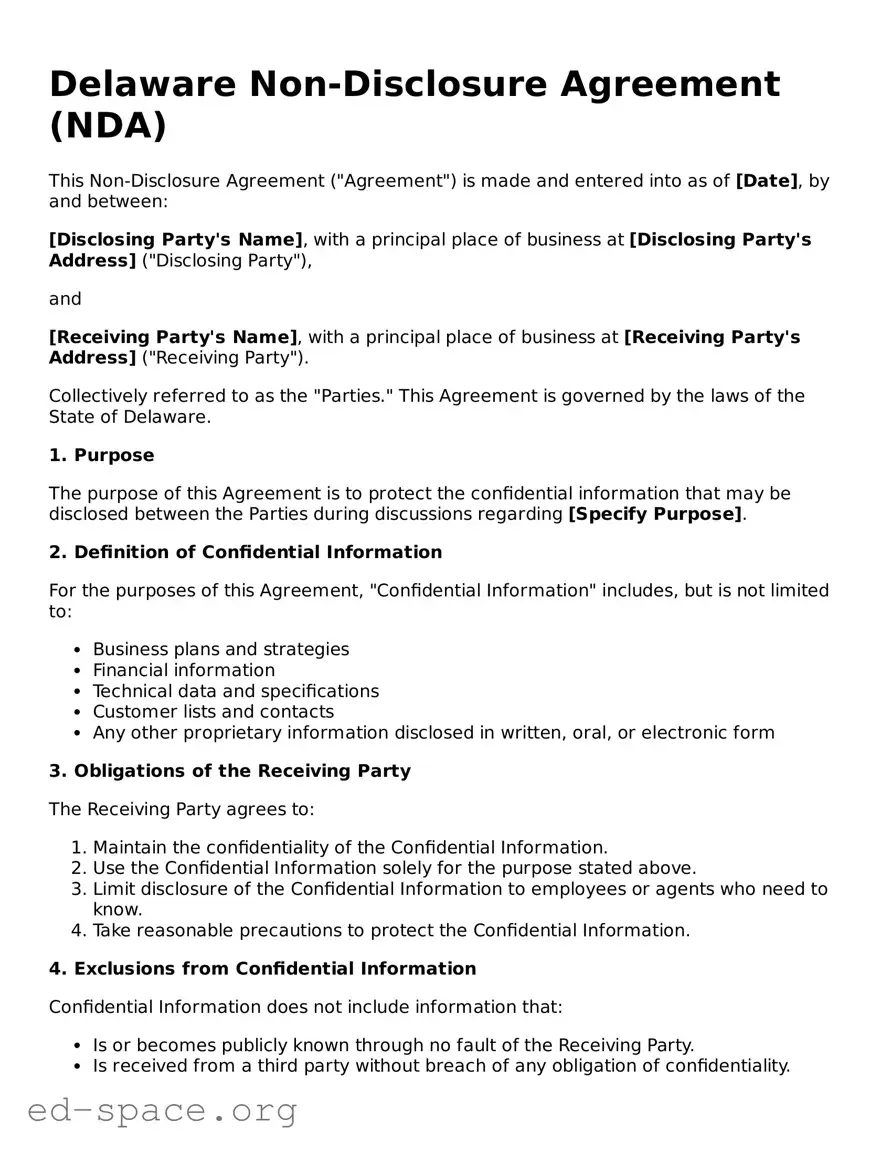
Delaware Non-Disclosure Agreement (NDA)
This Non-Disclosure Agreement ("Agreement") is made and entered into as of [Date], by and between:
[Disclosing Party's Name], with a principal place of business at [Disclosing Party's Address] ("Disclosing Party"),
and
[Receiving Party's Name], with a principal place of business at [Receiving Party's Address] ("Receiving Party").
Collectively referred to as the "Parties." This Agreement is governed by the laws of the State of Delaware.
1. Purpose
The purpose of this Agreement is to protect the confidential information that may be disclosed between the Parties during discussions regarding [Specify Purpose].
2. Definition of Confidential Information
For the purposes of this Agreement, "Confidential Information" includes, but is not limited to:
3. Obligations of the Receiving Party
The Receiving Party agrees to:
4. Exclusions from Confidential Information
Confidential Information does not include information that:
5. Term
This Agreement shall commence on the date first written above and shall continue for a period of [Specify Duration], unless terminated by either Party with [Specify Notice Period] written notice to the other Party.
6. Return of Materials
Upon termination of this Agreement, the Receiving Party agrees to return or destroy all materials containing Confidential Information.
7. No License
This Agreement does not grant any rights to the Receiving Party in or to the Disclosing Party's Confidential Information, except as expressly set forth herein.
8. Governing Law
This Agreement shall be governed by and construed in accordance with the laws of the State of Delaware.
9. Entire Agreement
This Agreement constitutes the entire understanding between the Parties regarding the subject matter hereof and supersedes all prior discussions and agreements.
IN WITNESS WHEREOF, the Parties have executed this Non-Disclosure Agreement as of the date first above written.
Disclosing Party:
Signature: _________________________
Name: [Disclosing Party's Name]
Title: [Disclosing Party's Title]
Receiving Party:
Signature: _________________________
Name: [Receiving Party's Name]
Title: [Receiving Party's Title]
| Fact Name | Description |
|---|---|
| Definition | A Delaware Non-disclosure Agreement (NDA) is a legal contract that protects confidential information shared between parties. |
| Purpose | The primary purpose of an NDA is to prevent the unauthorized disclosure of sensitive information. |
| Governing Law | The NDA is governed by the laws of the State of Delaware. |
| Parties Involved | Typically, an NDA involves at least two parties: the disclosing party and the receiving party. |
| Duration | The duration of confidentiality obligations can vary, but it is often specified within the agreement. |
| Enforceability | Delaware courts generally enforce NDAs as long as they are reasonable in scope and duration. |
| Types of Information | The NDA usually defines what constitutes confidential information, which may include trade secrets, business plans, and proprietary data. |
| Consequences of Breach | Violating an NDA can lead to legal action, including monetary damages and injunctive relief. |
Filling out the Delaware Non-disclosure Agreement form is an important step in protecting sensitive information. Once you have completed the form, it will need to be signed by the parties involved, ensuring that all parties are aware of their obligations regarding confidentiality.
What is a Delaware Non-disclosure Agreement (NDA)?
A Delaware Non-disclosure Agreement is a legal contract that protects confidential information shared between parties. It ensures that sensitive information, such as trade secrets, business strategies, or proprietary data, remains confidential and is not disclosed to unauthorized individuals or entities.
Who should use a Delaware NDA?
Any individual or business that plans to share confidential information with another party should consider using a Delaware NDA. This includes entrepreneurs, startups, established businesses, and employees who need to protect sensitive information during discussions or collaborations.
What are the key components of a Delaware NDA?
A Delaware NDA typically includes the definition of confidential information, obligations of the receiving party, the duration of confidentiality, and any exclusions from confidentiality. It also outlines the consequences of breaching the agreement, ensuring that both parties understand their responsibilities.
How long does the confidentiality obligation last?
The duration of the confidentiality obligation can vary based on the terms set in the NDA. Generally, it lasts for a specified period, often ranging from two to five years. However, some information may remain confidential indefinitely, depending on its nature and the agreement terms.
What happens if someone breaches the NDA?
If a party breaches the NDA, the other party may seek legal remedies. This can include monetary damages, injunctive relief, or other legal actions to enforce the agreement. It's crucial for both parties to understand the consequences of a breach before signing the NDA.
Incomplete Information: Many individuals forget to provide all necessary details, such as the names of the parties involved or the effective date of the agreement. This can lead to confusion or disputes later.
Improper Signatures: It is essential that all parties sign the document. Failing to include signatures or not having them dated can render the agreement unenforceable.
Vague Terms: Some people use unclear language when defining confidential information. Specificity is crucial to ensure all parties understand what is considered confidential.
Neglecting to Review: Skipping the review process can lead to overlooking important clauses. Taking the time to read the entire document ensures that all terms are acceptable and understood.
The Delaware Non-disclosure Agreement (NDA) is often used in conjunction with several other documents to ensure comprehensive protection of confidential information. Below is a list of common forms and documents that may accompany the NDA, each serving a specific purpose in the context of business relationships and information sharing.
Understanding these related documents can help parties navigate their obligations and rights regarding confidential information. It is essential to consider these forms when entering into agreements that involve sensitive data sharing.
A Non-Disclosure Agreement (NDA) is a legal document designed to protect sensitive information. Several other documents serve similar purposes in safeguarding confidential information or outlining expectations in business and personal relationships. Below are five documents that share similarities with an NDA:
When filling out the Delaware Non-disclosure Agreement form, it is important to follow certain guidelines to ensure accuracy and compliance. Here are seven things you should and shouldn't do:
When it comes to Non-disclosure Agreements (NDAs) in Delaware, several misconceptions often cloud the understanding of this important legal document. Here are eight common misunderstandings that can lead to confusion or missteps.
All NDAs are the same. Many believe that all NDAs are interchangeable. In reality, each NDA can be tailored to fit specific situations, industries, and parties involved. The terms can vary significantly based on the nature of the information being protected.
NDAs are only for large companies. This is a misconception. Small businesses and even individuals can benefit from NDAs. Protecting sensitive information is crucial regardless of the size of the entity involved.
Signing an NDA means you can never talk about the project. While NDAs do restrict the sharing of confidential information, they often allow for discussions within certain parameters. It’s essential to understand what is covered and what is not.
All NDAs are enforceable. Not every NDA holds up in court. If an NDA is overly broad, vague, or lacks consideration, it may be deemed unenforceable. Proper drafting is key to ensure its validity.
NDAs are only necessary when sharing trade secrets. While protecting trade secrets is a common reason for NDAs, they can also safeguard other sensitive information, such as business plans, financial data, and client lists.
You can’t talk to anyone about the NDA. Many people think they cannot discuss the existence of an NDA at all. However, parties can often share information with legal counsel or other advisors, as long as those individuals are also bound by confidentiality.
NDAs are permanent. This is misleading. Most NDAs have a specific duration, after which the obligations to keep information confidential may no longer apply. Understanding the timeline is crucial.
Once signed, an NDA cannot be changed. This is not true. Parties can negotiate amendments or modifications to an NDA as long as all involved agree to the changes in writing.
By debunking these misconceptions, individuals and businesses can better navigate the complexities of NDAs and ensure their sensitive information remains protected.
Understanding the Delaware Non-disclosure Agreement (NDA) form is essential for protecting sensitive information. Here are some key takeaways to consider when filling out and utilizing this important document:
By keeping these takeaways in mind, individuals and businesses can effectively navigate the complexities of the Delaware Non-disclosure Agreement and ensure that their confidential information is well-protected.