The Delaware Medical Power of Attorney form is a crucial document that empowers individuals to make important healthcare decisions on behalf of another person when that individual is unable to do so. This form allows you to designate a trusted person, known as an agent or proxy, to act in your best interest regarding medical treatment and care. It covers a wide range of decisions, from routine medical procedures to life-sustaining treatments, ensuring that your preferences are honored even when you cannot communicate them. Importantly, this form can be tailored to reflect your specific wishes, providing peace of mind for both you and your loved ones. Additionally, understanding the requirements for executing this document, including signatures and witness provisions, is essential to ensure its validity. By preparing a Medical Power of Attorney, you take a proactive step in managing your healthcare, allowing your chosen agent to advocate for your needs and desires in critical situations.
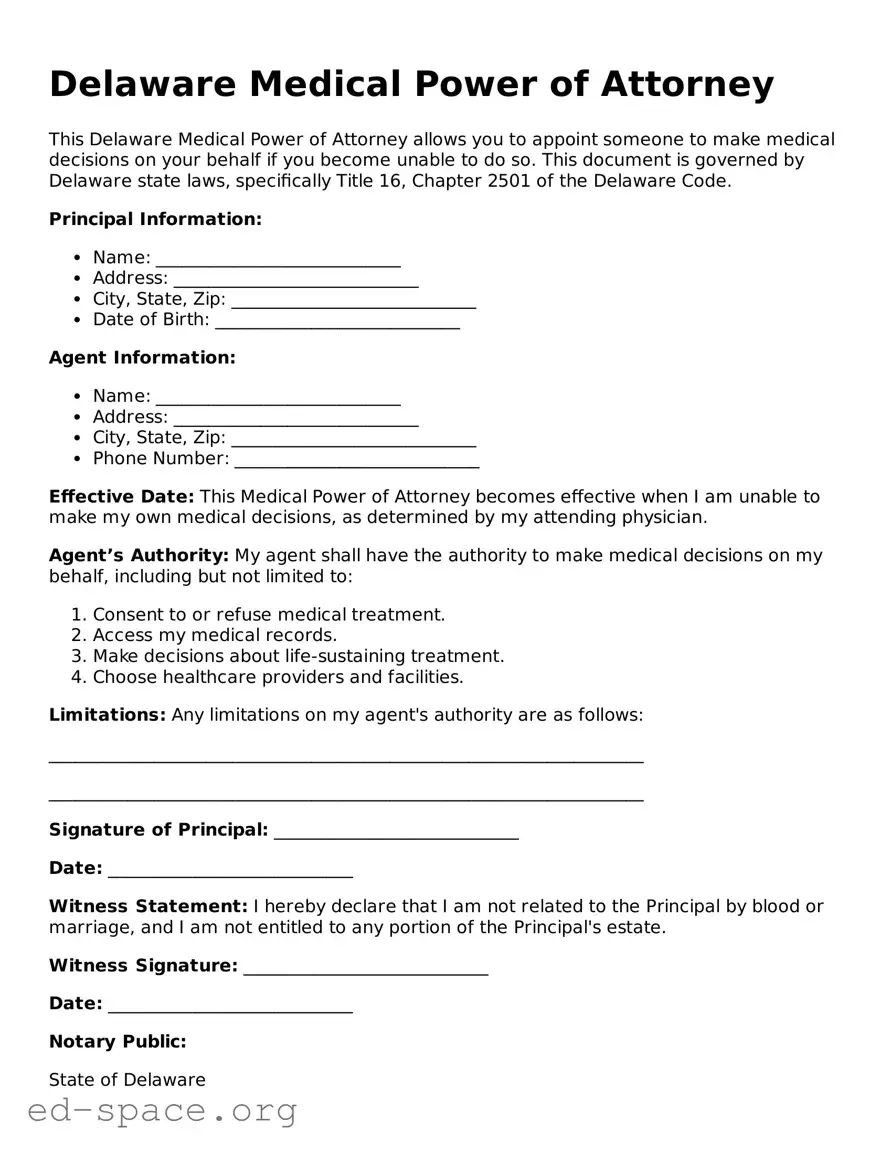
Delaware Medical Power of Attorney
This Delaware Medical Power of Attorney allows you to appoint someone to make medical decisions on your behalf if you become unable to do so. This document is governed by Delaware state laws, specifically Title 16, Chapter 2501 of the Delaware Code.
Principal Information:
Agent Information:
Effective Date: This Medical Power of Attorney becomes effective when I am unable to make my own medical decisions, as determined by my attending physician.
Agent’s Authority: My agent shall have the authority to make medical decisions on my behalf, including but not limited to:
Limitations: Any limitations on my agent's authority are as follows:
____________________________________________________________________
____________________________________________________________________
Signature of Principal: ____________________________
Date: ____________________________
Witness Statement: I hereby declare that I am not related to the Principal by blood or marriage, and I am not entitled to any portion of the Principal's estate.
Witness Signature: ____________________________
Date: ____________________________
Notary Public:
State of Delaware
County of ____________________________
Subscribed and sworn before me this _____ day of ____________, 20__.
Notary Signature: ____________________________
My Commission Expires: ____________________________
| Fact Name | Details |
|---|---|
| Definition | A Delaware Medical Power of Attorney allows an individual to designate someone to make healthcare decisions on their behalf if they are unable to do so. |
| Governing Law | The form is governed by Delaware Code Title 16, Chapter 2501, which outlines the laws related to advance healthcare directives. |
| Eligibility | Any competent adult, 18 years or older, can create a Medical Power of Attorney in Delaware. |
| Agent Selection | The principal can choose any adult as their agent, except for certain healthcare providers involved in the principal’s care. |
| Signature Requirements | The form must be signed by the principal and witnessed by two individuals or notarized to be valid. |
| Revocation | A Medical Power of Attorney can be revoked at any time by the principal, provided they communicate their decision clearly. |
| Durability | This power of attorney remains effective even if the principal becomes incapacitated, unless revoked. |
| Healthcare Decisions | The agent can make decisions about medical treatment, including life-sustaining measures, based on the principal's wishes. |
| Form Availability | The Delaware Medical Power of Attorney form can be obtained from various sources, including legal websites and healthcare providers. |
| Importance of Communication | It is crucial for the principal to discuss their wishes with the chosen agent to ensure decisions align with their values. |
Filling out the Delaware Medical Power of Attorney form is an important step in ensuring that your healthcare wishes are respected. After completing the form, you will need to sign it in the presence of a witness or notary, depending on the requirements in your area. Make sure to keep a copy for your records and provide copies to your designated agent and healthcare providers.
What is a Delaware Medical Power of Attorney?
A Delaware Medical Power of Attorney is a legal document that allows an individual to appoint someone else, known as an agent, to make medical decisions on their behalf. This document is particularly important in situations where the individual is unable to communicate their wishes due to illness or incapacity. The appointed agent can make decisions about medical treatment, surgical procedures, and other healthcare-related matters, ensuring that the individual's preferences are respected even when they cannot express them directly.
Who can serve as an agent under the Medical Power of Attorney?
In Delaware, any competent adult can serve as an agent under a Medical Power of Attorney. This means that family members, friends, or trusted advisors can be designated to make healthcare decisions. However, it is important to choose someone who understands your values and wishes regarding medical care. Additionally, certain individuals, such as healthcare providers or employees of healthcare facilities where the individual is receiving care, may not be eligible to serve as agents to avoid potential conflicts of interest.
How do I create a Medical Power of Attorney in Delaware?
To create a Medical Power of Attorney in Delaware, you must complete the appropriate form, which can be obtained from various legal resources or healthcare providers. The form typically requires you to provide your name, the name of your chosen agent, and any specific instructions regarding your healthcare preferences. After filling out the form, it must be signed in the presence of two witnesses or a notary public to be legally valid. It is advisable to keep copies of the signed document in accessible locations and to inform your healthcare providers about its existence.
Can I revoke or change my Medical Power of Attorney?
Yes, you can revoke or change your Medical Power of Attorney at any time, as long as you are still competent to make decisions. To revoke the document, you should create a written notice stating your intention to revoke the previous Medical Power of Attorney. It is essential to inform your agent and any relevant healthcare providers about the revocation. If you wish to appoint a new agent, you will need to complete a new Medical Power of Attorney form and follow the same signing and witnessing requirements.
What happens if I do not have a Medical Power of Attorney?
If you do not have a Medical Power of Attorney and become unable to make your own medical decisions, healthcare providers may need to rely on state laws to determine who can make decisions on your behalf. This process can lead to delays and may not reflect your personal wishes. In some cases, a court may need to appoint a guardian to make healthcare decisions for you. To avoid such complications, it is advisable to establish a Medical Power of Attorney while you are still able to express your preferences clearly.
Not choosing the right agent: It's crucial to select someone who understands your wishes and can make decisions on your behalf. Many people choose a family member or friend without considering their ability to handle medical situations.
Leaving sections blank: Failing to fill out all required sections can lead to confusion or disputes later. Ensure every part of the form is completed to avoid complications.
Using outdated forms: Laws and forms can change. Always use the most current version of the Delaware Medical Power of Attorney form to ensure compliance.
Not discussing wishes with the agent: Simply appointing someone is not enough. Have an open conversation about your medical preferences and values to ensure they understand your wishes.
Forgetting to sign and date: A signature is essential for the document to be valid. Make sure you sign and date the form, and encourage your agent to do the same.
Neglecting witnesses or notarization: Delaware requires that your Medical Power of Attorney be signed in front of witnesses or a notary. Failing to do this can render the document invalid.
Not reviewing the document periodically: Life circumstances change. Regularly review your Medical Power of Attorney to ensure it still reflects your wishes and that your chosen agent is still appropriate.
Assuming the agent knows your wishes: Don’t assume your agent will automatically know your preferences. Clearly outline your desires in the document and discuss them in detail.
When preparing a Delaware Medical Power of Attorney, it's beneficial to consider additional forms and documents that can complement this important legal tool. Each of these documents serves a unique purpose in ensuring that healthcare decisions align with an individual's wishes and needs.
Utilizing these documents alongside the Delaware Medical Power of Attorney can provide a comprehensive approach to healthcare planning. Each form plays a vital role in ensuring that a person's medical preferences are respected and followed, fostering peace of mind for both the individual and their loved ones.
Filling out a Medical Power of Attorney form in Delaware is an important step in ensuring your healthcare wishes are respected. Here are some key things to keep in mind:
By following these guidelines, you can ensure that your Medical Power of Attorney form is filled out correctly and effectively communicates your healthcare preferences.
Here are nine common misconceptions about the Delaware Medical Power of Attorney form:
Filling out and using the Delaware Medical Power of Attorney form is an important step in ensuring that your healthcare wishes are respected. Here are some key takeaways to keep in mind:
By following these guidelines, you can ensure that your medical wishes are honored and that your appointed agent is prepared to act in your best interest.