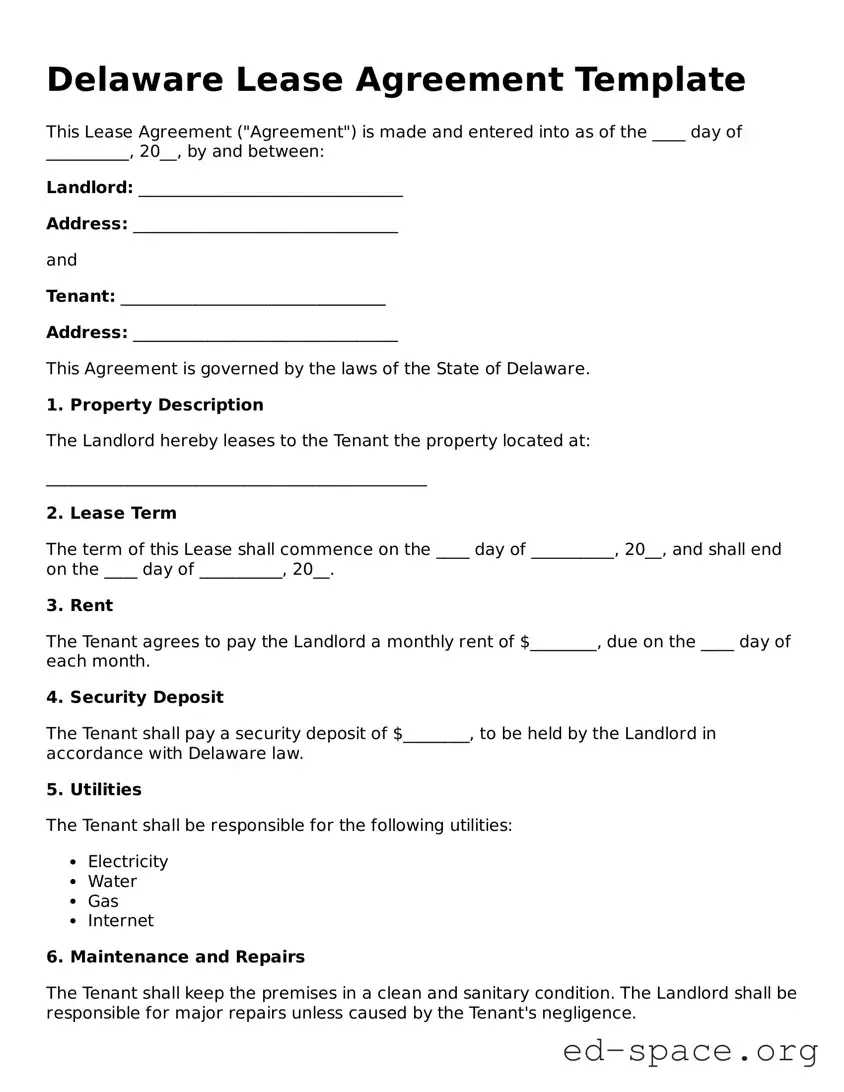
When entering into a rental arrangement in Delaware, a well-structured lease agreement is essential for both landlords and tenants. This legal document outlines the rights and responsibilities of each party, ensuring clarity and protection throughout the duration of the lease. Key aspects of the Delaware Lease Agreement form include the identification of the property being rented, the duration of the lease, and the agreed-upon rent amount. Additionally, it addresses security deposits, maintenance responsibilities, and the terms for renewing or terminating the lease. By clearly delineating these components, the lease agreement serves as a vital tool for preventing misunderstandings and disputes. Understanding this form is crucial for anyone looking to navigate the rental market in Delaware, as it lays the foundation for a harmonious landlord-tenant relationship.
Delaware Lease Agreement Template
This Lease Agreement ("Agreement") is made and entered into as of the ____ day of __________, 20__, by and between:
Landlord: ________________________________
Address: ________________________________
and
Tenant: ________________________________
Address: ________________________________
This Agreement is governed by the laws of the State of Delaware.
1. Property Description
The Landlord hereby leases to the Tenant the property located at:
______________________________________________
2. Lease Term
The term of this Lease shall commence on the ____ day of __________, 20__, and shall end on the ____ day of __________, 20__.
3. Rent
The Tenant agrees to pay the Landlord a monthly rent of $________, due on the ____ day of each month.
4. Security Deposit
The Tenant shall pay a security deposit of $________, to be held by the Landlord in accordance with Delaware law.
5. Utilities
The Tenant shall be responsible for the following utilities:
6. Maintenance and Repairs
The Tenant shall keep the premises in a clean and sanitary condition. The Landlord shall be responsible for major repairs unless caused by the Tenant's negligence.
7. Termination
Either party may terminate this Agreement by providing ____ days written notice to the other party.
8. Governing Law
This Agreement shall be governed by the laws of the State of Delaware.
IN WITNESS WHEREOF, the parties have executed this Lease Agreement as of the date first above written.
Landlord Signature: ________________________________
Date: ________________________________
Tenant Signature: ________________________________
Date: ________________________________
| Fact Name | Description |
|---|---|
| Governing Law | The Delaware Lease Agreement is governed by Delaware state law. |
| Parties Involved | The lease agreement must identify the landlord and tenant clearly. |
| Property Description | A detailed description of the rental property is required. |
| Lease Term | The agreement should specify the duration of the lease, whether it's month-to-month or fixed-term. |
| Rent Amount | The lease must state the rent amount and payment due date. |
| Security Deposit | Delaware law regulates the maximum security deposit amount and its return. |
| Maintenance Responsibilities | The lease should outline maintenance responsibilities for both the landlord and tenant. |
| Termination Clause | It is important to include terms for terminating the lease. |
| Utilities | The agreement should clarify which utilities are the tenant's responsibility. |
| Signature Requirements | Both parties must sign the lease for it to be legally binding. |
Filling out the Delaware Lease Agreement form requires careful attention to detail. This process ensures that all necessary information is accurately provided, setting the stage for a clear understanding between the landlord and tenant.
After completing these steps, both parties should retain a copy of the signed lease for their records. This agreement will serve as a reference point throughout the duration of the lease.
What is a Delaware Lease Agreement?
A Delaware Lease Agreement is a legally binding document between a landlord and a tenant. It outlines the terms and conditions under which a tenant may occupy a rental property in Delaware. This agreement typically includes details such as the duration of the lease, rent amount, security deposit, and responsibilities of both parties.
What are the key components of a Delaware Lease Agreement?
The key components include the names of the landlord and tenant, property address, lease term, rent payment details, security deposit amount, maintenance responsibilities, and any rules or regulations specific to the property. It's essential to ensure that all parties understand their obligations as outlined in the agreement.
How long is a typical lease term in Delaware?
Lease terms in Delaware can vary widely. They typically range from six months to one year. However, shorter or longer terms may be negotiated based on the needs of both the landlord and tenant. It's important to clearly specify the lease duration in the agreement to avoid any confusion.
Can a landlord increase the rent during the lease term?
Generally, a landlord cannot increase the rent during the lease term unless the lease agreement specifically allows for it. Rent increases are typically addressed at the end of the lease term when a new agreement may be negotiated. Tenants should review their lease for any clauses regarding rent adjustments.
What should I do if I need to terminate the lease early?
If you need to terminate the lease early, it's crucial to review the lease agreement for any clauses regarding early termination. Many agreements require written notice to the landlord. Depending on the terms, you may also be responsible for paying rent until a new tenant is found or until the lease officially ends. Open communication with the landlord is advisable to discuss potential options.
Incomplete Information: Many individuals fail to provide all required details, such as the names of all tenants or the property address. This can lead to confusion and disputes later on.
Incorrect Dates: Entering the wrong lease start or end dates is a common error. This mistake can affect the duration of the tenancy and the obligations of both parties.
Neglecting Signatures: Some people forget to sign the lease. Without signatures from all parties, the agreement may not be legally binding.
Missing Initials on Changes: If any modifications are made to the lease, failing to initial those changes can lead to disputes about what was agreed upon.
Ignoring State-Specific Laws: Delaware has specific regulations regarding leases. Not adhering to these can result in unenforceable provisions.
Omitting Payment Details: Not specifying the rent amount or payment method can create confusion regarding financial obligations.
Failing to Include Terms for Repairs: Many overlook the need to outline responsibilities for property maintenance and repairs, which can lead to disputes later.
Not Stipulating Security Deposit Terms: It's essential to clarify the amount of the security deposit and the conditions for its return. Failing to do so can lead to misunderstandings.
Overlooking Pet Policies: If pets are allowed, this should be clearly stated. Conversely, if pets are not permitted, this must also be included to avoid future issues.
Ignoring the Renewal Clause: Not addressing whether the lease will automatically renew or how it can be terminated can create uncertainty for both parties.
When entering into a lease agreement in Delaware, several other forms and documents may be necessary to ensure a smooth transaction and clear understanding between landlords and tenants. These documents help clarify responsibilities, protect rights, and facilitate communication. Below is a list of commonly used forms that accompany the Delaware Lease Agreement.
These documents collectively support the leasing process, helping both landlords and tenants navigate their rights and responsibilities. Understanding and utilizing these forms can lead to a more harmonious rental experience and minimize potential conflicts.
When filling out the Delaware Lease Agreement form, it is important to follow specific guidelines to ensure accuracy and compliance. Here are four things you should and shouldn't do:
Misconceptions about the Delaware Lease Agreement form can lead to misunderstandings for both landlords and tenants. Here are five common misconceptions:
Filling out and using a Delaware Lease Agreement form is an important step in establishing a rental relationship. Here are some key takeaways to keep in mind:
By keeping these points in mind, both landlords and tenants can create a clear and effective lease agreement that protects their interests.