In today's competitive job market, having a well-structured employee handbook is essential for any organization, especially in Delaware. This document serves as a vital communication tool between employers and employees, outlining company policies, expectations, and procedures. It typically covers a range of important topics, including workplace conduct, anti-discrimination policies, benefits, and leave policies. Furthermore, the handbook can clarify the procedures for addressing grievances and the consequences of policy violations. By providing clear guidelines, it helps foster a positive workplace culture while ensuring compliance with state and federal laws. Employers must recognize the urgency of creating an effective handbook, as it not only protects the organization but also empowers employees with the knowledge they need to thrive within the company. In Delaware, the Employee Handbook form serves as a foundational template that can be customized to meet the specific needs of each business, ensuring that all employees understand their rights and responsibilities from day one.
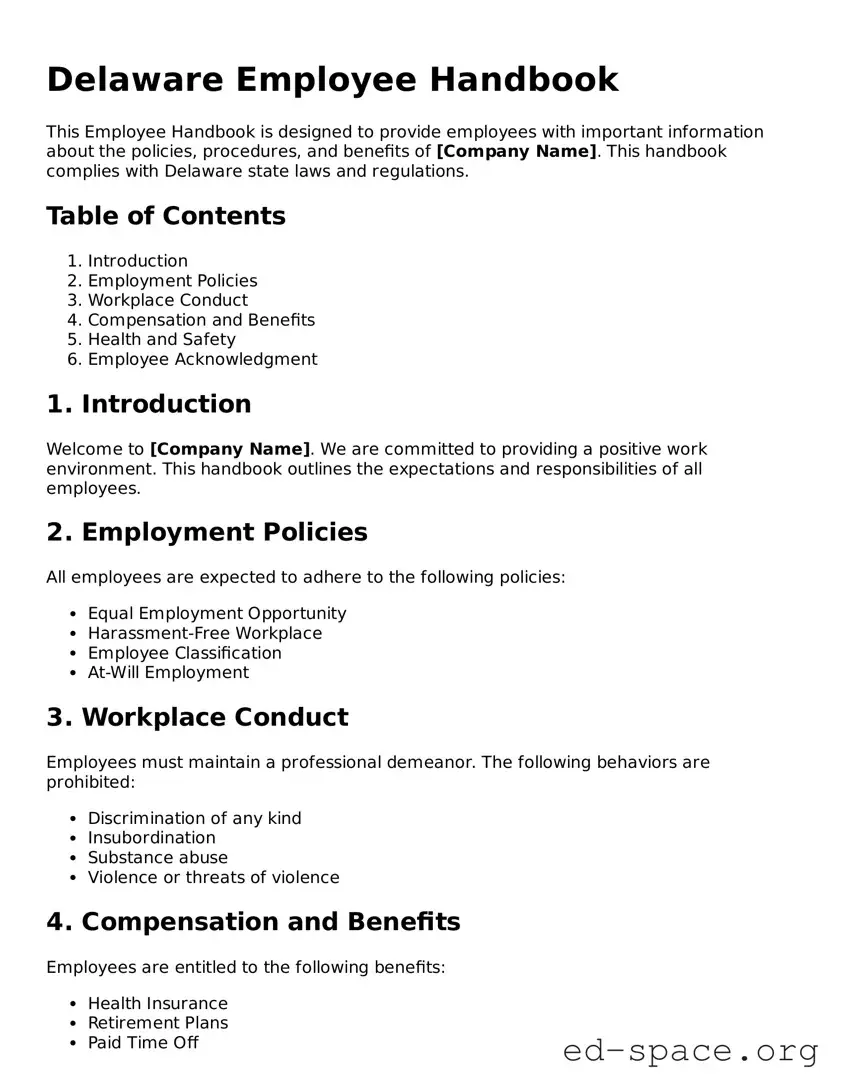
Delaware Employee Handbook
This Employee Handbook is designed to provide employees with important information about the policies, procedures, and benefits of [Company Name]. This handbook complies with Delaware state laws and regulations.
Table of Contents
1. Introduction
Welcome to [Company Name]. We are committed to providing a positive work environment. This handbook outlines the expectations and responsibilities of all employees.
2. Employment Policies
All employees are expected to adhere to the following policies:
3. Workplace Conduct
Employees must maintain a professional demeanor. The following behaviors are prohibited:
4. Compensation and Benefits
Employees are entitled to the following benefits:
5. Health and Safety
The safety of our employees is a priority. Employees must:
6. Employee Acknowledgment
By signing below, you acknowledge that you have received, read, and understood the Employee Handbook of [Company Name].
Employee Name: [Employee Name]
Date: [Date]
Thank you for being a part of [Company Name]. Your contributions are valued, and we look forward to a successful working relationship.
| Fact Name | Description |
|---|---|
| Purpose | The Delaware Employee Handbook serves as a guide for employees, outlining company policies, procedures, and expectations. |
| Governing Law | The handbook is governed by Delaware labor laws, including the Delaware Code Title 19, which addresses employment regulations. |
| Mandatory Policies | Employers are encouraged to include mandatory policies such as anti-discrimination, harassment, and leave policies. |
| Employee Acknowledgment | Employees should sign an acknowledgment form to confirm they have received and understood the handbook. |
| Updates | The handbook should be reviewed and updated regularly to reflect changes in laws and company policies. |
| Accessibility | Employers must ensure that the handbook is accessible to all employees, including those with disabilities. |
Filling out the Delaware Employee Handbook form is a straightforward process. Following these steps will ensure that all necessary information is accurately provided. Once the form is completed, it will be reviewed for compliance and clarity.
What is the Delaware Employee Handbook form?
The Delaware Employee Handbook form is a document that outlines the policies, procedures, and expectations for employees within a company based in Delaware. It serves as a guide for employees to understand their rights and responsibilities while working for the organization.
Who should have access to the Employee Handbook?
All employees should have access to the Employee Handbook. It is important for both new hires and existing employees to refer to the handbook to ensure they are aware of company policies and any updates that may occur.
How often should the Employee Handbook be updated?
The Employee Handbook should be reviewed and updated regularly, at least once a year. This ensures that it reflects any changes in company policies, state laws, or federal regulations. Regular updates help maintain clarity and compliance.
Is the Employee Handbook legally required?
What should be included in the Employee Handbook?
The Employee Handbook should include various sections, such as company values, code of conduct, attendance policies, benefits information, and procedures for reporting issues. It may also cover topics like discrimination, harassment, and safety protocols to ensure a positive work environment.
Can employees suggest changes to the Employee Handbook?
Yes, employees can suggest changes to the Employee Handbook. Open communication is encouraged, and feedback can help improve the handbook. Employees should feel comfortable discussing any concerns or recommendations with their supervisors or human resources.
Incomplete Information: Failing to provide all required details can lead to confusion. Ensure every section is filled out completely.
Incorrect Dates: Entering wrong dates can create discrepancies. Double-check all dates for accuracy.
Ignoring Company Policies: Not reviewing the company's policies before filling out the form can lead to misunderstandings. Familiarize yourself with the handbook.
Omitting Signature: Forgetting to sign the form is a common mistake. A signature indicates acknowledgment and acceptance of the policies.
Using Unclear Language: Avoid vague terms. Be specific and clear when describing any personal circumstances or requests.
Not Updating Information: If there have been changes in personal circumstances, such as a new address or phone number, ensure these are reflected on the form.
Failing to Ask Questions: If unsure about any section, do not hesitate to seek clarification. It’s better to ask than to fill out incorrectly.
Neglecting to Keep a Copy: After submission, not retaining a copy for personal records can lead to issues later. Always keep a copy for your reference.
Submitting Late: Delaying the submission of the form can cause problems with compliance. Adhere to deadlines to avoid complications.
When preparing an Employee Handbook for a Delaware-based organization, several other forms and documents may also be beneficial. These documents can help ensure compliance with state and federal regulations while providing clear guidelines for employees. Below is a list of commonly used forms that complement the Employee Handbook.
Incorporating these documents alongside the Employee Handbook can help create a comprehensive framework that supports both the organization and its employees. By clearly communicating expectations and policies, you foster a positive workplace culture and promote understanding among all team members.
When filling out the Delaware Employee Handbook form, it's important to follow some best practices. Here’s a list of things you should and shouldn't do:
By following these guidelines, you can help ensure that your submission is complete and accurate, which can lead to a smoother process overall.
Understanding the Delaware Employee Handbook form is essential for both employers and employees. However, several misconceptions can cloud the clarity of this important document. Here are seven common misconceptions:
In reality, while there are guidelines to follow, each handbook can be tailored to fit the unique culture and needs of the organization.
Many people believe that once an employee handbook is distributed, it becomes a contract. However, it typically serves as a guideline rather than a legally enforceable agreement.
Not all handbooks need to have identical policies. Companies can customize their handbooks to reflect their specific practices and values.
This misconception can lead to outdated policies. Regular reviews and updates are crucial to ensure compliance with changing laws and organizational needs.
While HR plays a significant role, input from various departments can enhance the handbook's relevance and effectiveness.
Assuming that all employees will read the handbook in detail can be misleading. Engaging training sessions can help ensure that employees understand key policies.
It's impossible to anticipate every situation that may arise. Handbooks should provide guidance while allowing for flexibility in unique circumstances.
Addressing these misconceptions can help create a more effective employee handbook that serves its intended purpose while fostering a positive workplace environment.
Creating a Delaware Employee Handbook is an important step for any business. Here are some key takeaways to keep in mind when filling out and using the Employee Handbook form:
By keeping these points in mind, you can create an effective Employee Handbook that serves as a valuable resource for both your business and your employees.