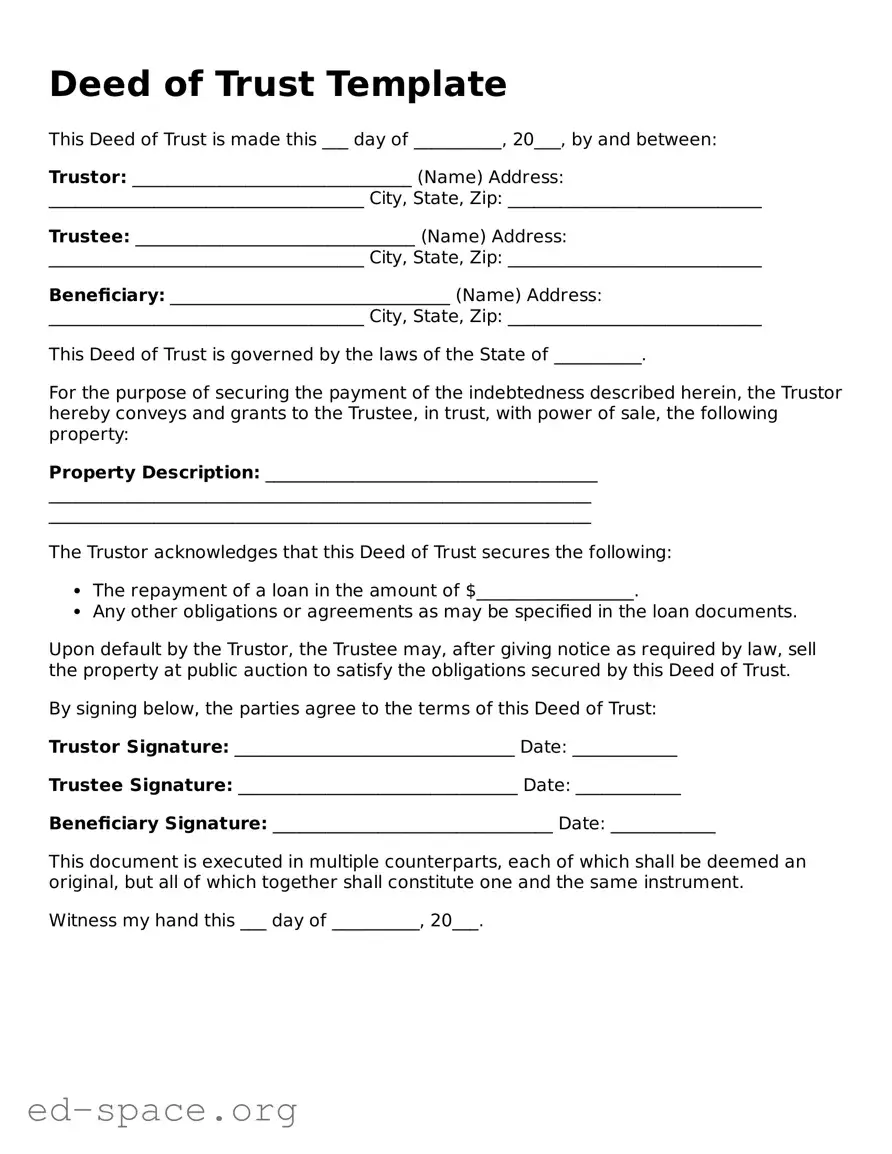
The Deed of Trust form plays a crucial role in real estate transactions, serving as a vital document that outlines the agreement between a borrower, a lender, and a third party known as the trustee. This form is essential for securing a loan, as it provides the lender with a legal claim to the property if the borrower defaults on their mortgage payments. Key elements of the Deed of Trust include the identification of the parties involved, a detailed description of the property being financed, and the terms of the loan, including the amount borrowed and the interest rate. It also specifies the rights and responsibilities of each party, ensuring that all parties are clear on their obligations. Additionally, the Deed of Trust includes provisions for foreclosure, detailing the process that will be followed should the borrower fail to meet their obligations. Understanding the components of this form is important for anyone involved in real estate financing, as it establishes the framework for the loan agreement and protects the interests of all parties involved.
Deed of Trust Template
This Deed of Trust is made this ___ day of __________, 20___, by and between:
Trustor: ________________________________ (Name) Address: ____________________________________ City, State, Zip: _____________________________
Trustee: ________________________________ (Name) Address: ____________________________________ City, State, Zip: _____________________________
Beneficiary: ________________________________ (Name) Address: ____________________________________ City, State, Zip: _____________________________
This Deed of Trust is governed by the laws of the State of __________.
For the purpose of securing the payment of the indebtedness described herein, the Trustor hereby conveys and grants to the Trustee, in trust, with power of sale, the following property:
Property Description: ______________________________________ ______________________________________________________________ ______________________________________________________________
The Trustor acknowledges that this Deed of Trust secures the following:
Upon default by the Trustor, the Trustee may, after giving notice as required by law, sell the property at public auction to satisfy the obligations secured by this Deed of Trust.
By signing below, the parties agree to the terms of this Deed of Trust:
Trustor Signature: ________________________________ Date: ____________
Trustee Signature: ________________________________ Date: ____________
Beneficiary Signature: ________________________________ Date: ____________
This document is executed in multiple counterparts, each of which shall be deemed an original, but all of which together shall constitute one and the same instrument.
Witness my hand this ___ day of __________, 20___.
| Fact Name | Description |
|---|---|
| Definition | A Deed of Trust is a legal document that secures a loan by transferring the title of the property to a trustee until the borrower repays the loan. |
| Parties Involved | The Deed of Trust involves three parties: the borrower (trustor), the lender (beneficiary), and the trustee. |
| Governing Law | The laws governing Deeds of Trust vary by state. For example, in California, it is governed by California Civil Code Section 2920. |
| Foreclosure Process | If the borrower defaults, the trustee can initiate a non-judicial foreclosure, which is generally faster than a judicial foreclosure. |
Once you have your Deed of Trust form ready, it’s time to fill it out carefully. Make sure you have all necessary information at hand, such as the details of the borrower, lender, and property involved. Accuracy is key to ensure everything is in order for the next steps in the process.
What is a Deed of Trust?
A Deed of Trust is a legal document used in real estate transactions that secures a loan by transferring the title of a property to a third party, known as the trustee. This document outlines the terms of the loan and the obligations of both the borrower and the lender. It serves as a way to protect the lender's interest in the property until the loan is fully repaid. In essence, the borrower retains the right to use and occupy the property, but the trustee holds the title until the debt is settled.
How does a Deed of Trust differ from a mortgage?
While both a Deed of Trust and a mortgage serve the same primary purpose—securing a loan—they differ in structure and parties involved. In a mortgage, there are two parties: the borrower and the lender. In contrast, a Deed of Trust involves three parties: the borrower, the lender, and the trustee. The trustee acts as an intermediary, holding the title to the property until the loan is paid off. This difference can impact the foreclosure process, as a Deed of Trust typically allows for a non-judicial foreclosure, which can be quicker and less costly than the judicial process required for a mortgage.
What are the key components of a Deed of Trust?
A Deed of Trust generally includes several key components. These include the names of the borrower, lender, and trustee, a description of the property being secured, the amount of the loan, and the terms of repayment. Additionally, it outlines the rights and responsibilities of all parties involved. Provisions regarding default and foreclosure processes are also included, detailing what happens if the borrower fails to meet their obligations. Understanding these components is crucial for both borrowers and lenders to ensure clarity and compliance with the terms of the agreement.
What happens if the borrower defaults on a loan secured by a Deed of Trust?
If a borrower defaults on a loan secured by a Deed of Trust, the lender can initiate a foreclosure process. Because the Deed of Trust allows for non-judicial foreclosure, the trustee can sell the property without going through the court system. The trustee will typically send a notice of default to the borrower, giving them a chance to remedy the situation. If the borrower fails to do so within a specified period, the trustee can proceed with the sale of the property at a public auction. This process is designed to protect the lender's investment while providing a clear path for resolution.
Not including the correct names of all parties involved. It's essential to ensure that the names of the borrower, lender, and trustee are accurately listed. Missing or incorrect names can lead to complications later on.
Failing to provide a complete property description. The property must be clearly identified, including its address and legal description. Omitting this information can cause disputes or issues with the title.
Using outdated or incorrect forms. Laws and regulations can change, so it's crucial to use the most current version of the Deed of Trust form. Using an old form may lead to legal challenges.
Not having the document notarized. A Deed of Trust usually requires notarization to be legally binding. Without this step, the document may not be enforceable.
Overlooking state-specific requirements. Different states may have unique rules regarding Deeds of Trust. It's important to check local laws to ensure compliance.
Neglecting to read the fine print. Understanding all terms and conditions is vital. Failing to do so can lead to misunderstandings about the obligations involved.
Not keeping copies of the completed document. After filling out the Deed of Trust, it’s wise to retain copies for personal records. This can be helpful for future reference or if disputes arise.
A Deed of Trust is a key document in real estate transactions, particularly when securing a loan. However, it often works alongside other important forms and documents that facilitate the lending process. Here are four commonly used documents that complement a Deed of Trust:
Understanding these documents is crucial for anyone involved in a real estate transaction. Each plays a vital role in ensuring a smooth process and protecting the interests of all parties involved.
When filling out a Deed of Trust form, attention to detail is crucial. Here’s a helpful list of what you should and shouldn't do to ensure the process goes smoothly.
By following these guidelines, you can help ensure that your Deed of Trust is filled out correctly and effectively. Remember, a little diligence can save you from potential headaches down the line.
Understanding the Deed of Trust form is essential for anyone involved in real estate transactions. However, several misconceptions can lead to confusion. Here are eight common misconceptions:
Being aware of these misconceptions can help individuals make informed decisions regarding real estate transactions and financing options.
When filling out and using the Deed of Trust form, keep these key points in mind: