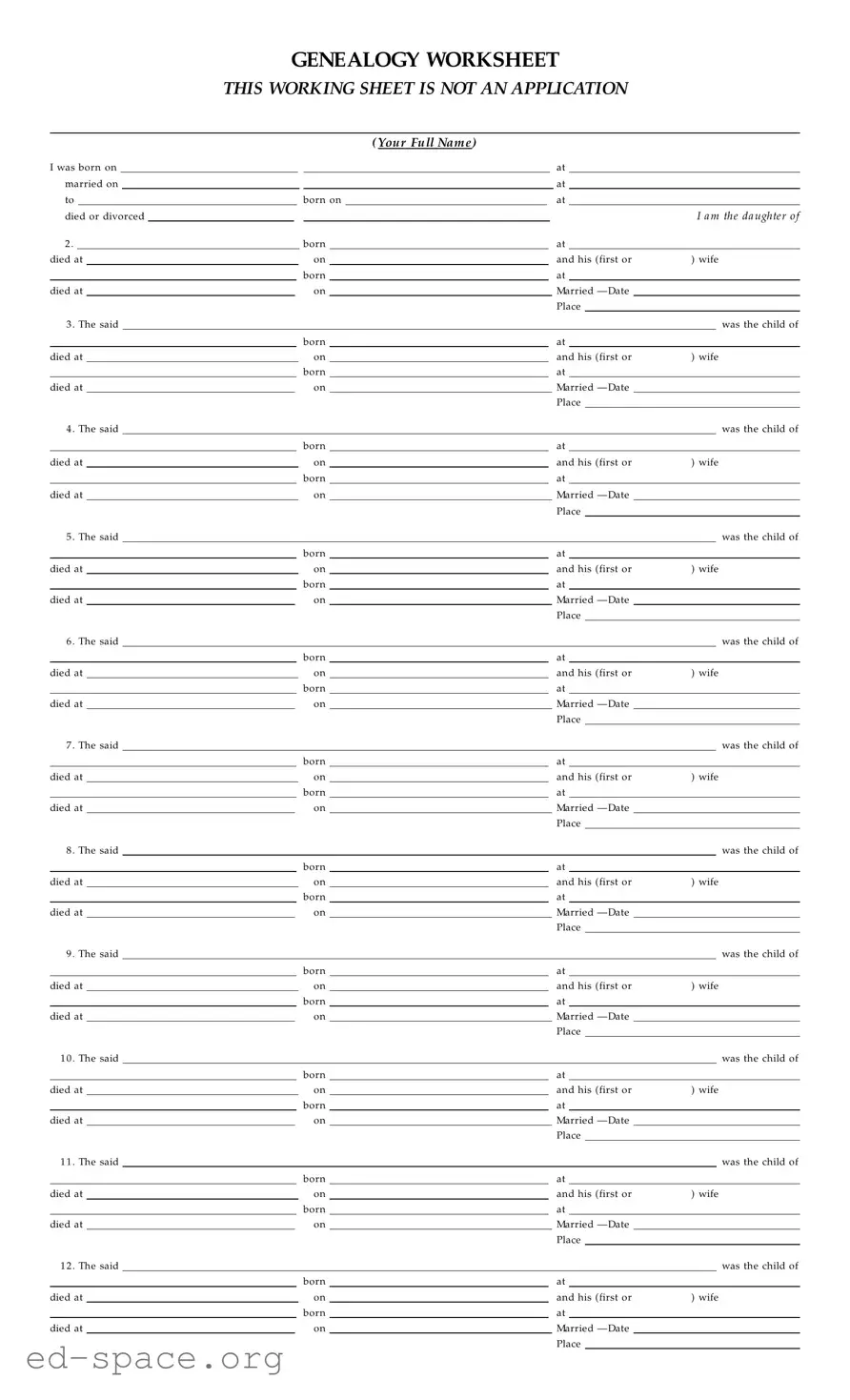
The DAR Genealogy Worksheet is an essential tool for individuals seeking to trace their lineage back to ancestors who participated in the American Revolution. This form serves as a working document, guiding users through the process of documenting their family history. It prompts users to provide detailed information about their own birth, marriage, and death dates, as well as those of their ancestors. Each section allows for the inclusion of multiple generations, ensuring that connections between family members are clearly established. Additionally, the worksheet emphasizes the importance of providing proof for each statement made, whether it be through published records or certified copies of unpublished documents. Users must also detail their Revolutionary ancestor's service, including the specific role they played in establishing American independence. The form requires references for lineage, encouraging the use of reliable sources such as wills, census records, and other historical documents. By meticulously filling out this worksheet, applicants can create a comprehensive family history that honors their heritage and facilitates the application process for membership in the Daughters of the American Revolution.

GENEALOGY WORKSHEET
THIS WORKING SHEET IS NOT AN APPLICATION
|
|
|
|
|
|
|
|
|
|
|
|
( YOU R FU LL NAM E ) |
|
|
|||||||
I was born on |
|
|
|
|
|
|
|
|
|
|
|
at |
|
|
|
||||||
married on |
|
|
|
|
|
|
|
|
|
|
|
at |
|
|
|
||||||
to |
|
|
|
born on |
|
|
|
|
|
at |
|
|
|
||||||||
died or divorced |
|
|
|
|
|
|
|
|
|
|
|
|
|
I a m the da ughte r o f |
|||||||
2 . |
|
|
|
|
|
|
|
|
born |
|
|
|
|
|
|
at |
|
|
|
||
died at |
|
|
|
on |
|
|
|
|
|
|
and his (first or |
) wife |
|||||||||
|
|
|
|
|
|
|
|
|
born |
|
|
|
|
|
|
at |
|
|
|
||
died at |
|
|
on |
|
|
|
|
|
Married — Date |
|
|
||||||||||
|
|
|
|
|
|
|
|
|
|
|
|
|
|
|
|
|
Place |
|
|
||
3 . The said |
|
|
|
|
|
|
|
|
|
|
|
|
|
|
was the child of |
||||||
|
|
|
|
|
|
|
|
|
born |
|
|
|
|
|
|
at |
|
|
|
||
died at |
|
|
|
on |
|
|
|
|
|
|
and his (first or |
) wife |
|||||||||
|
|
|
|
|
|
|
|
|
born |
|
|
|
|
|
|
at |
|
|
|
||
died at |
|
|
on |
|
|
|
|
|
Married — Date |
|
|
||||||||||
|
|
|
|
|
|
|
|
|
|
|
|
|
|
|
|
|
Place |
|
|
||
4 . The said |
|
|
|
|
|
|
|
|
|
|
|
|
|
|
was the child of |
||||||
|
|
|
|
|
|
|
|
|
born |
|
|
|
|
|
|
at |
|
|
|
||
died at |
|
|
|
on |
|
|
|
|
|
|
and his (first or |
) wife |
|||||||||
|
|
|
|
|
|
|
|
|
born |
|
|
|
|
|
|
at |
|
|
|
||
died at |
|
|
on |
|
|
|
|
|
Married — Date |
|
|
||||||||||
|
|
|
|
|
|
|
|
|
|
|
|
|
|
|
|
|
Place |
|
|
||
5 . The said |
|
|
|
|
|
|
|
|
|
|
|
|
|
|
was the child of |
||||||
|
|
|
|
|
|
|
|
|
born |
|
|
|
|
|
|
at |
|
|
|
||
died at |
|
|
|
on |
|
|
|
|
|
|
and his (first or |
) wife |
|||||||||
|
|
|
|
|
|
|
|
|
born |
|
|
|
|
|
|
at |
|
|
|
||
died at |
|
|
on |
|
|
|
|
|
Married — Date |
|
|
||||||||||
|
|
|
|
|
|
|
|
|
|
|
|
|
|
|
|
|
Place |
|
|
||
6 . The said |
|
|
|
|
|
|
|
|
|
|
|
|
|
|
was the child of |
||||||
|
|
|
|
|
|
|
|
|
born |
|
|
|
|
|
|
at |
|
|
|
||
died at |
|
|
|
on |
|
|
|
|
|
|
and his (first or |
) wife |
|||||||||
|
|
|
|
|
|
|
|
|
born |
|
|
|
|
|
|
at |
|
|
|
||
died at |
|
|
on |
|
|
|
|
|
Married — Date |
|
|
||||||||||
|
|
|
|
|
|
|
|
|
|
|
|
|
|
|
|
|
Place |
|
|
||
7 . The said |
|
|
|
|
|
|
|
|
|
|
|
|
|
|
was the child of |
||||||
|
|
|
|
|
|
|
|
|
born |
|
|
|
|
|
|
at |
|
|
|
||
died at |
|
|
|
on |
|
|
|
|
|
|
and his (first or |
) wife |
|||||||||
|
|
|
|
|
|
|
|
|
born |
|
|
|
|
|
|
at |
|
|
|
||
died at |
|
|
on |
|
|
|
|
|
Married — Date |
|
|
||||||||||
|
|
|
|
|
|
|
|
|
|
|
|
|
|
|
|
|
Place |
|
|
||
8 . The said |
|
|
|
|
|
|
|
|
|
|
|
|
|
|
was the child of |
||||||
|
|
|
|
|
|
|
|
|
born |
|
|
|
|
|
|
at |
|
|
|
||
died at |
|
|
|
on |
|
|
|
|
|
|
and his (first or |
) wife |
|||||||||
|
|
|
|
|
|
|
|
|
born |
|
|
|
|
|
|
at |
|
|
|
||
died at |
|
|
on |
|
|
|
|
|
Married — Date |
|
|
||||||||||
|
|
|
|
|
|
|
|
|
|
|
|
|
|
|
|
|
Place |
|
|
||
9 . The said |
|
|
|
|
|
|
|
|
|
|
|
|
|
|
was the child of |
||||||
|
|
|
|
|
|
|
|
|
born |
|
|
|
|
|
|
at |
|
|
|
||
died at |
|
|
|
on |
|
|
|
|
|
|
and his (first or |
) wife |
|||||||||
|
|
|
|
|
|
|
|
|
born |
|
|
|
|
|
|
at |
|
|
|
||
died at |
|
|
on |
|
|
|
|
|
Married — Date |
|
|
||||||||||
|
|
|
|
|
|
|
|
|
|
|
|
|
|
|
|
|
Place |
|
|
||
1 0 . The said |
|
|
|
|
|
|
|
|
|
|
|
|
|
|
was the child of |
||||||
|
|
|
|
|
|
|
|
|
born |
|
|
|
|
|
|
at |
|
|
|
||
died at |
|
|
|
on |
|
|
|
|
|
|
and his (first or |
) wife |
|||||||||
|
|
|
|
|
|
|
|
|
born |
|
|
|
|
|
|
at |
|
|
|
||
died at |
|
|
on |
|
|
|
|
|
Married — Date |
|
|
||||||||||
|
|
|
|
|
|
|
|
|
|
|
|
|
|
|
|
|
Place |
|
|
||
1 1 . The said |
|
|
|
|
|
|
|
|
|
|
|
|
|
|
was the child of |
||||||
|
|
|
|
|
|
|
|
|
born |
|
|
|
|
|
|
at |
|
|
|
||
died at |
|
|
|
on |
|
|
|
|
|
|
and his (first or |
) wife |
|||||||||
|
|
|
|
|
|
|
|
|
born |
|
|
|
|
|
|
at |
|
|
|
||
died at |
|
|
on |
|
|
|
|
|
Married — Date |
|
|
||||||||||
|
|
|
|
|
|
|
|
|
|
|
|
|
|
|
|
|
Place |
|
|
||
1 2 . The said |
|
|
|
|
|
|
|
|
|
|
|
|
|
|
was the child of |
||||||
|
|
|
|
|
|
|
|
|
born |
|
|
|
|
|
|
at |
|
|
|
||
died at |
|
|
|
on |
|
|
|
|
|
|
and his (first or |
) wife |
|||||||||
|
|
|
|
|
|
|
|
|
born |
|
|
|
|
|
|
at |
|
|
|
||
died at |
|
|
on |
|
|
|
|
|
Married — Date |
|
|
||||||||||
|
|
|
|
|
|
|
|
|
|
|
|
|
|
|
|
|
Place |
|
|
|
|

|
|
|
ANCESTOR’S SERVICES |
||
The said |
|
|
who resided during the American |
||
Revolution at |
|
|
|
assisted in establishing |
|
American Independence, while acting in the capacity of |
|
|
|
||
|
|
|
|
|
|
My Ancestor’s services during the Revolutionary War were as follows:
Give source for ancestor’s service above. For published records give author, title, volume and page: applicant shall file a photocopy of official unpublished record.
REFERENCES FOR LINEAGE
Give below proof for EACH statement of Birth, marriage, death dates and places and connections between generations from the applicant through the generation of the Revolutionary ancestor. Published authorities should be cited by title, author, date of publication, volume and page. Send one certified, attested copy or photocopy of each unpublished data. Proofs of line of descent comprise wills, administrations, deeds, church, town and court records, Bible, census and pension records, tombstone inscriptions, genealogies and such other records. TRADITION is not acceptable. Give National Numbers and relationships of any close relatives credited with this ancestor.
1 st. Gen.
2 nd Gen.
3 rd Gen.
4 th Gen.
5 th Gen.
6 th Gen.
7 th Gen.
8 th Gen.
9 th Gen.
1 0 th Gen.
1 1 th Gen.
CHILDREN OF REVOLUTIONARY ANCESTOR
( By e a ch m a rria ge , if m a rrie d m o re tha n o nce .)
TO WHOM MARRIED, NOTING IF
NAMES |
|
DATES OF BIRTH |
MARRIED MORE THAN ONCE |
|
|
|
|
|
|
|
|
|
|
|
|
|
|
|
|
|
|
|
|
|
|
|
|
|
|
|
|
|
|
|
|
|
|
|
|
|
|
|
|
|
|
|
|
|
|
|
|
|
|
|
|
|
|
|
|
|
|
|
|
|
|
|
|
|
|
|
|
|
|
|
Do cum e nt No . |
( |
| Fact Name | Description |
|---|---|
| Purpose | The Dar Genealogy Worksheet is a working sheet for documenting genealogical information. It is not an official application. |
| Information Required | Users must provide details such as names, birth dates, marriage dates, and death dates of ancestors. |
| Generational Tracking | The worksheet allows for tracking lineage across multiple generations, up to 12 generations. |
| Revolutionary War Services | Applicants must document the services of their ancestors during the American Revolution, including the capacity in which they served. |
| Proof of Lineage | Proofs of lineage must include official records such as wills, census records, and marriage certificates. Tradition alone is not acceptable. |
| References Requirement | Applicants need to provide references for each statement of birth, marriage, and death, including published authorities. |
| Document Number | The form is identified as Document No. RGG-1001, revised in February 1999. |
Completing the DAR Genealogy Worksheet is an essential step in documenting your lineage. By following the instructions carefully, you will be able to provide the necessary information to support your application. This process requires attention to detail and accuracy to ensure that your family history is correctly represented.
After filling out the worksheet, it is important to compile any required documentation to support your claims. This may include certified copies of records, published works, or other relevant materials that validate your lineage and connections to the Revolutionary ancestor. Ensure that all sources are properly cited and that you have included everything necessary for a thorough review.
What is the purpose of the DAR Genealogy Worksheet?
The DAR Genealogy Worksheet is designed to assist individuals in documenting their lineage for the purpose of establishing eligibility for membership in the Daughters of the American Revolution (DAR). This form helps applicants organize vital information about their ancestors, including birth, marriage, and death details, as well as any relevant service records during the American Revolution.
How should I fill out the DAR Genealogy Worksheet?
To fill out the worksheet, start with your full name and provide your birth details, including the date and place. Proceed to document your immediate family, beginning with your parents and moving through each generation. For each ancestor, include their birth and death information, marital details, and any relevant historical context. Ensure that you provide accurate dates and locations to maintain the integrity of your lineage documentation.
What types of records are acceptable as proof of lineage?
Acceptable records include official documents such as birth certificates, marriage licenses, death certificates, wills, and census records. Additionally, church records, tombstone inscriptions, and published genealogies can serve as proof. It is essential to provide certified or attested copies of unpublished records to substantiate each claim made in the worksheet.
Can I use family traditions as proof of my lineage?
No, family traditions are not considered acceptable proof for the purposes of the DAR Genealogy Worksheet. All claims must be supported by documented evidence. This requirement ensures that the lineage is verifiable and maintains the credibility of the DAR membership process.
What should I do if I cannot find certain records for my ancestors?
If specific records are unavailable, consider alternative sources of information. You may look into local archives, libraries, or genealogical societies that may hold relevant documents. Additionally, online databases and resources can provide access to historical records. If you encounter significant gaps, it may be helpful to consult with a professional genealogist for assistance.
Is the DAR Genealogy Worksheet the final application for membership?
No, the DAR Genealogy Worksheet is not the final application for membership. It serves as a preliminary tool to organize your genealogical information. After completing the worksheet and gathering necessary documentation, applicants must submit a formal application to the DAR for review and approval. The worksheet facilitates this process by ensuring all required information is collected and presented clearly.
Incomplete Information: Many individuals fail to provide complete names, dates, and places for their ancestors. Omitting critical details can lead to confusion and hinder the verification process.
Incorrect Dates: Entering incorrect birth, marriage, or death dates is a common mistake. Double-checking these dates against reliable sources is essential for accuracy.
Missing Relationships: Failing to clearly indicate the relationships between generations can complicate the lineage. Each ancestor should be connected properly to show how they relate to the applicant.
Neglecting to Cite Sources: Many applicants forget to provide the sources for their claims. It is important to document where the information came from, especially for published records.
Ignoring Document Requirements: Not submitting the required certified copies or photocopies of documents can result in delays. Ensure all necessary documentation is included with the worksheet.
Using Tradition as Evidence: Relying on family tradition instead of documented proof is a significant error. Only verifiable records should be used to establish lineage.
Overlooking Ancestor's Services: Failing to accurately describe the ancestor's role during the American Revolution can weaken the application. Provide detailed information about their contributions.
The DAR Genealogy Worksheet is a crucial document for individuals tracing their lineage to ancestors who served during the American Revolution. However, several other forms and documents can support this process. Below is a list of these documents, each described briefly for clarity.
Gathering these documents can significantly aid in establishing a clear lineage and supporting your application. Each piece of evidence contributes to the overall picture of your family's history and connections to Revolutionary ancestors.
When filling out the DAR Genealogy Worksheet form, it’s important to approach the task with care and attention to detail. Here’s a list of things to do and avoid to ensure your submission is accurate and complete.
By following these guidelines, you can help ensure that your application is processed smoothly and efficiently.
The DAR Genealogy Worksheet form is an essential tool for documenting lineage for membership in the Daughters of the American Revolution. However, several misconceptions surround its use and purpose. Below is a list of these misconceptions along with clarifications.
Understanding these misconceptions can help individuals better navigate the process of documenting their ancestry for the DAR. Proper use of the worksheet can streamline the application process and enhance the accuracy of family history records.
When filling out the DAR Genealogy Worksheet, consider the following key takeaways:
Completing the worksheet thoroughly will aid in establishing your lineage and supporting your application.