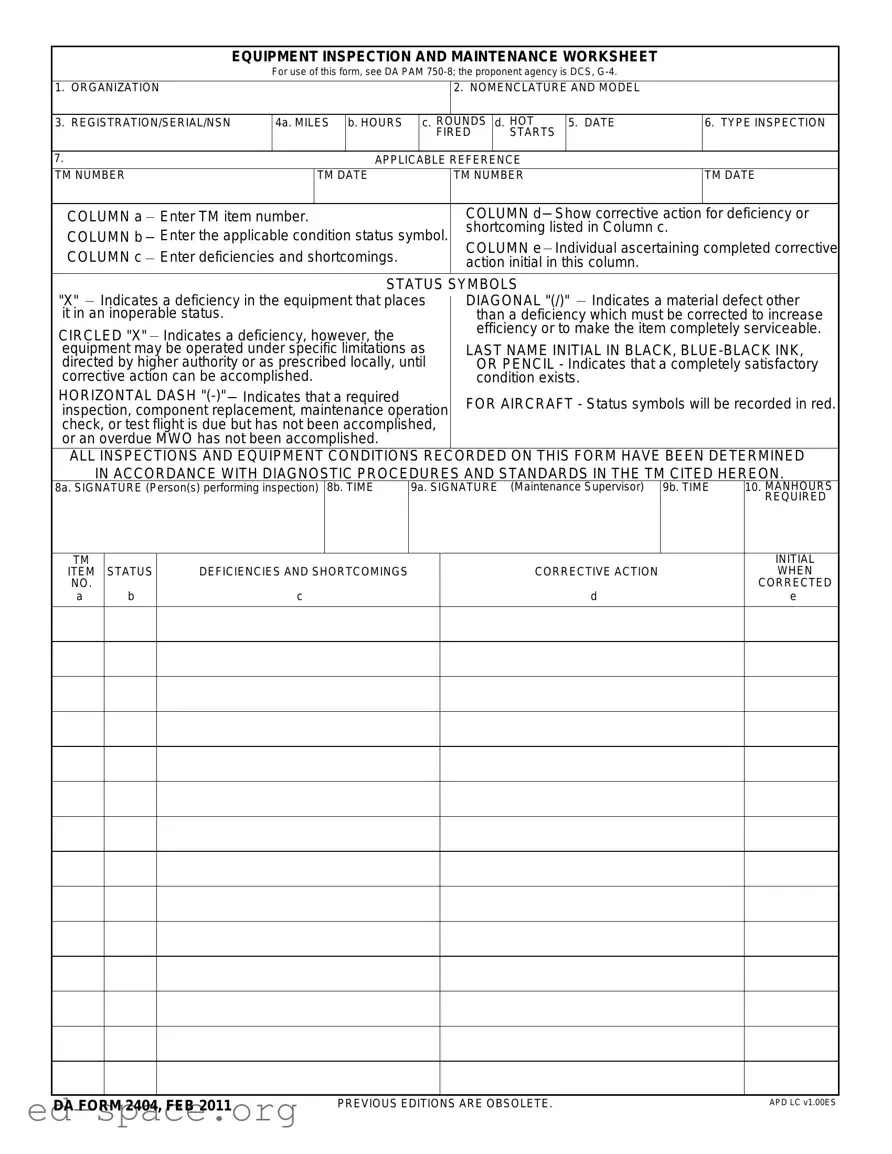
The DA 5988 E form is a crucial tool for managing the inspection and maintenance of military equipment, particularly aircraft. This form facilitates the documentation of equipment status, ensuring that deficiencies and shortcomings are clearly identified and addressed. It includes essential sections such as organization, nomenclature, registration or serial numbers, and various metrics like miles, hours, and fired rounds. Each inspection type is recorded along with applicable technical manual (TM) references, providing a comprehensive overview of the equipment's condition. Status symbols play a significant role in conveying the urgency of maintenance actions. For example, a red "X" indicates that the equipment is inoperable, while a diagonal line suggests a material defect that needs correction. The form also captures the signatures of the personnel involved in the inspection process, ensuring accountability and traceability. By following the guidelines outlined in DA PAM 750-8, users can effectively communicate the maintenance needs of their equipment and ensure operational readiness.
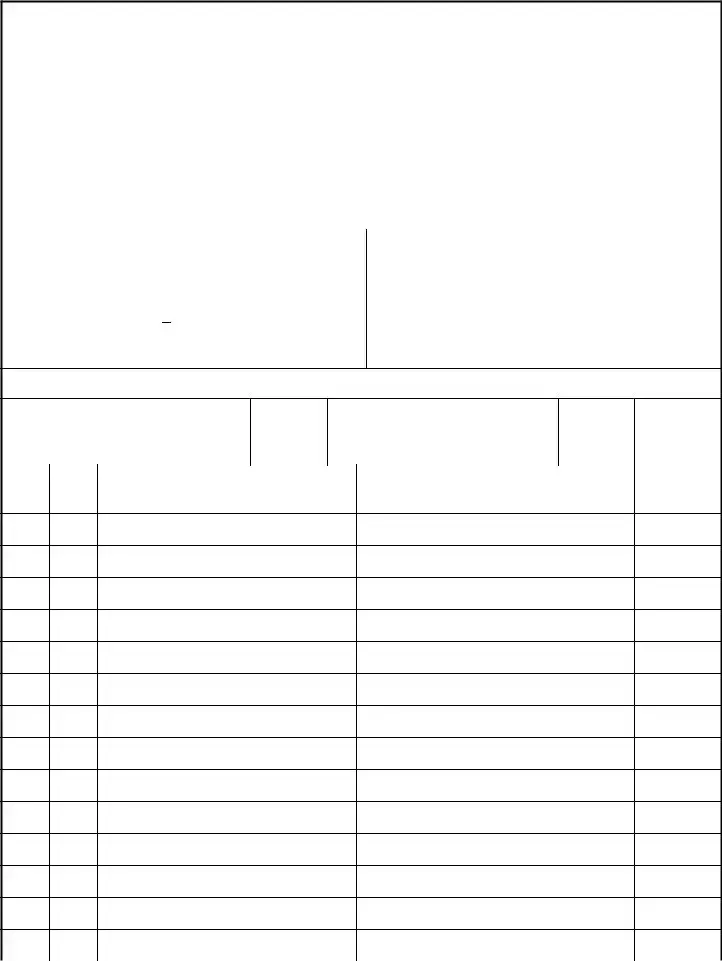
EQUIPMENT INSPECTION AND MAINTENANCE WORKSHEET
For use of this form, see DA PAM
|
1. ORGANIZATION |
|
|
|
|
|
2. NOMENCLATURE AND MODEL |
|
||||||||||||||
|
|
|
|
|
|
|
|
|
|
|
|
|
|
|
|
|
|
|
|
|
|
|
|
3. REGISTRATION/SERIAL/NSN |
4a. MILES |
b. HOURS |
c. FIREDROUNDS |
d. STARTSHOT |
5. DATE |
6. TYPE INSPECTION |
|||||||||||||||
|
|
|
|
|
|
|
|
|
|
|
|
|
|
|
|
|
|
|
|
|
|
|
7. |
|
|
|
|
|
|
|
|
|
APPLICABLE REFERENCE |
|
|
|
|
||||||||
|
TM NUMBER |
|
|
TM DATE |
TM NUMBER |
|
|
|
TM DATE |
|||||||||||||
|
|
|
|
|
|
|
|
|
|
|
|
|
|
|
|
|
||||||
|
COLUMN a |
|
Enter TM item number. |
COLUMN d |
|
Show corrective action for deficiency or |
||||||||||||||||
|
|
|||||||||||||||||||||
|
|
|
|
|||||||||||||||||||
|
COLUMN b |
|
|
|
|
Enter the applicable condition status symbol. |
shortcoming listed in Column c. |
|
||||||||||||||
|
|
|
COLUMN e |
|
|
Individual ascertaining completed corrective |
||||||||||||||||
|
COLUMN c |
|
|
Enter deficiencies and shortcomings. |
|
|
||||||||||||||||
|
|
|
|
|
||||||||||||||||||
|
|
action initial in this column. |
|
|||||||||||||||||||
|
|
|
||||||||||||||||||||
|
|
|
|
|
|
|
|
|
|
|
|
|
|
|||||||||
|
|
|
|
|
|
|
|
|
|
|
STATUS SYMBOLS |
|
|
|
|
|||||||
|
"X" |
|
Indicates a deficiency in the equipment that places |
DIAGONAL "(/)" |
|
Indicates a material defect other |
||||||||||||||||
|
|
|
||||||||||||||||||||
|
it in an inoperable status. |
|
|
|
|
than a deficiency which must be corrected to increase |
||||||||||||||||
|
CIRCLED "X" |
|
|
|
Indicates a deficiency, however, the |
efficiency or to make the item completely serviceable. |
||||||||||||||||
|
|
|
||||||||||||||||||||
|
equipment may be operated under specific limitations as |
LAST NAME INITIAL IN BLACK, |
||||||||||||||||||||
|
directed by higher authority or as prescribed locally, until |
OR PENCIL - Indicates that a completely satisfactory |
||||||||||||||||||||
|
corrective action can be accomplished. |
condition exists. |
|
|||||||||||||||||||
HORIZONTAL DASH
ALL INSPECTIONS AND EQUIPMENT CONDITIONS RECORDED ON THIS FORM HAVE BEEN DETERMINED IN ACCORDANCE WITH DIAGNOSTIC PROCEDURES AND STANDARDS IN THE TM CITED HEREON.
8a. SIGNATURE (Person(s) performing inspection) 8b. TIME 9a. SIGNATURE (Maintenance Supervisor) 9b. TIME 10. MANHOURS REQUIRED
TM |
|
|
|
INITIAL |
ITEM |
STATUS |
DEFICIENCIES AND SHORTCOMINGS |
CORRECTIVE ACTION |
WHEN |
NO. |
|
|
|
CORRECTED |
a |
b |
c |
d |
e |
DA FORM 2404, FEB 2011 |
PREVIOUS EDITIONS ARE OBSOLETE. |
APD LC v1.00ES |
|
|
TM |
STATUS |
ITEM |
|
NO. |
b |
a |
DEFICIENCIES AND SHORTCOMINGS
c
CORRECTIVE ACTION
d
INITIAL
WHEN
CORRECTED e
DA FORM 2404, FEB 2011
APD LC v1.00ES
| Fact Name | Fact Details |
|---|---|
| Form Purpose | The DA 5988 E form is used for recording equipment inspection and maintenance details for aircraft. |
| Governing Regulation | This form is governed by DA PAM 750-8, which provides guidelines for maintenance management. |
| Status Symbols | Status symbols are recorded in red to indicate the condition of the equipment being inspected. |
| Inspection Details | Sections include organization, nomenclature, registration, operational hours, and inspection type. |
| Deficiency Indicators | Symbols like "X" and "(/)" are used to signify deficiencies and material defects that affect equipment operability. |
| Corrective Actions | Column d is designated for noting corrective actions taken to address deficiencies listed in Column c. |
| Signature Requirements | Signatures of both the inspector and the maintenance supervisor are required to validate the inspection process. |
| Time Tracking | Inspection time and the time taken for corrective actions are recorded to monitor maintenance efficiency. |
| Manhours Required | The form includes a section for documenting the total manhours required to complete the maintenance tasks. |
Completing the DA 5988 E form is essential for documenting equipment inspection and maintenance. This process ensures that all necessary information is accurately recorded for future reference and compliance. Follow these steps to fill out the form correctly.
What is the purpose of the DA 5988 E form?
The DA 5988 E form serves as an equipment inspection and maintenance worksheet specifically designed for use with military aircraft. It provides a structured way to document the status of equipment, including any deficiencies or shortcomings that may affect operational readiness. This form helps ensure that maintenance actions are properly recorded and that equipment is inspected in accordance with established standards.
What information is required on the DA 5988 E form?
The form requires several key pieces of information. This includes the organization responsible for the equipment, the nomenclature and model of the aircraft, and its registration or serial number. Additionally, the form captures data on operational metrics such as miles, hours, fired rounds, and start shots. It also requires details about the type of inspection performed and any applicable technical manual (TM) references.
What do the status symbols on the form indicate?
Status symbols are crucial for understanding the condition of the equipment. An "X" indicates a deficiency that renders the equipment inoperable. A diagonal "(/)" signifies a material defect that must be addressed to enhance efficiency. A circled "X" shows that while there is a deficiency, the equipment can still be operated under specific limitations. A horizontal dash "(-)" denotes that an inspection or maintenance action is overdue.
How should deficiencies and corrective actions be recorded?
Deficiencies and shortcomings should be entered in Column c of the form. For each deficiency listed, the corrective action taken must be documented in Column d. It is essential for the individual who completes the corrective action to initial Column e to verify that the issue has been resolved. This process ensures accountability and traceability of maintenance actions.
Who is responsible for signing the DA 5988 E form?
The form requires signatures from both the individual performing the inspection and the maintenance supervisor. This dual-signature requirement ensures that there is oversight and verification of the inspection process. The time of each signature must also be recorded to maintain an accurate timeline of actions taken.
What should be done if a deficiency is identified?
If a deficiency is identified, it must be documented on the DA 5988 E form. The appropriate corrective action should then be taken as indicated in Column d. If the equipment can still be operated under specific limitations, this must be noted, and the operation should be conducted according to the guidance provided by higher authority or local directives until full corrective action can be completed.
Are there any previous editions of the DA 5988 E form?
Yes, the DA 5988 E form has previous editions that are now considered obsolete. Users should ensure they are utilizing the most current version of the form to comply with the latest standards and procedures outlined in DA PAM 750-8. This helps maintain consistency and accuracy in equipment inspection and maintenance documentation.
Not Using the Correct Ink Color: It's essential to use black, blue-black ink, or pencil when filling out the form. Using any other color can lead to confusion and may cause the form to be rejected.
Missing Signatures: Ensure that both the person performing the inspection and the maintenance supervisor sign the form. A missing signature can delay processing and create compliance issues.
Incorrectly Entering Status Symbols: Status symbols must be used correctly to indicate the condition of the equipment. Misplacing or misinterpreting these symbols can lead to misunderstandings about the equipment’s operational status.
Omitting Deficiencies and Shortcomings: All deficiencies and shortcomings should be clearly listed in Column c. Leaving this section blank can result in incomplete documentation and hinder necessary repairs.
Failing to Provide Corrective Actions: In Column d, it's crucial to detail the corrective actions taken for each deficiency. Neglecting this step can prevent proper tracking of maintenance efforts.
Incorrectly Documenting Inspection Type: Make sure to specify the type of inspection accurately. This information is vital for maintaining equipment standards and ensuring compliance with regulations.
Not Including Dates: Each entry must have a date associated with it. Omitting dates can lead to confusion about when inspections or corrective actions were performed.
Using Inconsistent Formatting: Consistency in formatting helps ensure clarity. Avoid mixing different formats for dates or other entries, as this can create misunderstandings.
Ignoring the TM References: Ensure that all applicable TM numbers and dates are included. This information is crucial for verifying that inspections and maintenance align with established standards.
The DA 5988 E form is essential for recording the status of aircraft and ensuring that all necessary inspections and maintenance actions are documented. Alongside this form, several other documents are commonly used to support maintenance and inspection processes. Below is a list of these documents, each with a brief description of its purpose.
Using these documents in conjunction with the DA 5988 E form creates a comprehensive system for managing aircraft maintenance and inspections. This organized approach helps ensure that all equipment remains in optimal condition and meets safety standards.
The DA 5988 E form is an important document used for recording the status and maintenance of equipment. It shares similarities with several other forms that serve related purposes. Below are four documents that are comparable to the DA 5988 E form, along with an explanation of their similarities.
When filling out the DA 5988 E form, attention to detail is crucial. Here are five key actions to take and avoid:
By following these guidelines, you can help ensure that the DA 5988 E form is filled out correctly, facilitating efficient maintenance and inspections.
Misconceptions about the DA 5988 E form can lead to confusion and errors in equipment maintenance. Here are nine common misunderstandings:
Understanding these misconceptions is essential for effective equipment management and maintenance. Proper use of the DA 5988 E form ensures that all equipment remains safe and operational.
Understanding the DA 5988 E form is essential for effective equipment inspection and maintenance. Here are some key takeaways to keep in mind:
Using the DA 5988 E form effectively contributes to the overall safety and reliability of aircraft operations. Proper completion of this form helps ensure that all necessary inspections and maintenance actions are documented and addressed in a timely manner.