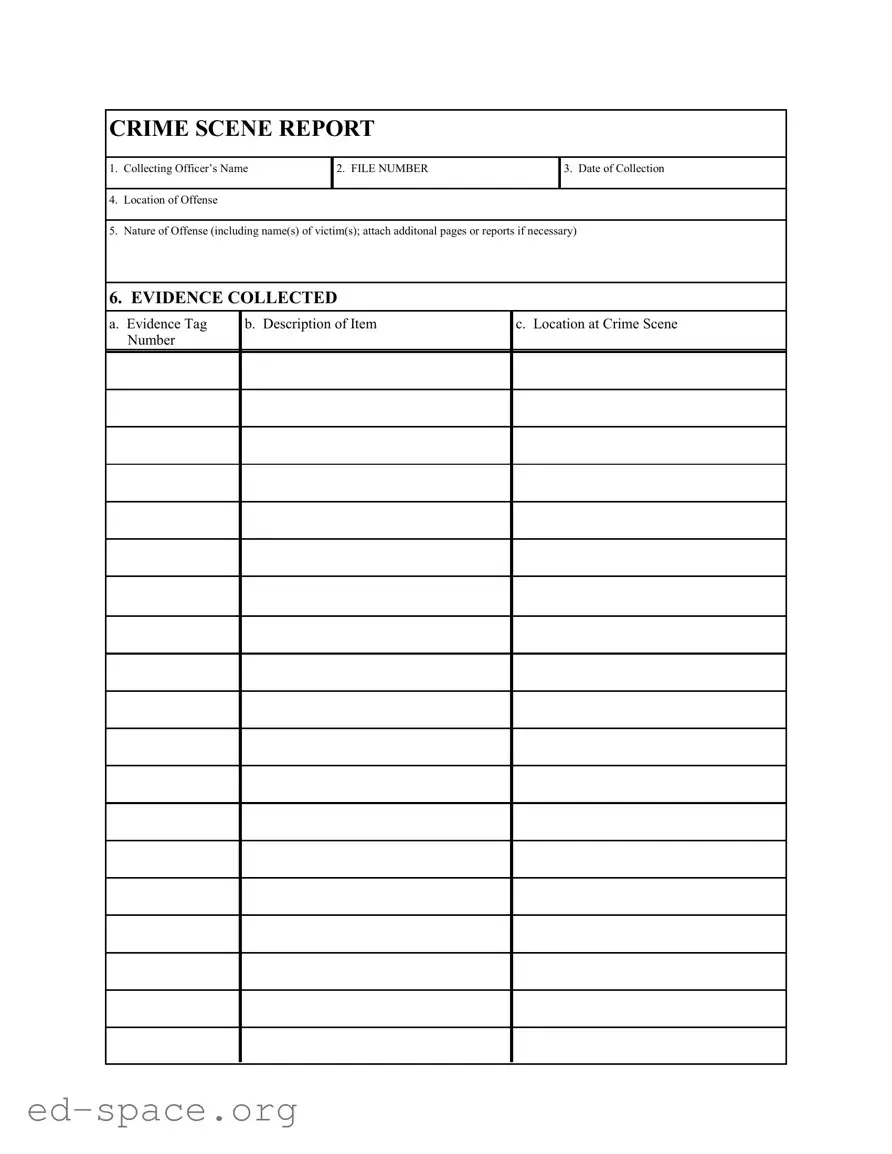
The Crime Scene Report form is a crucial document used by law enforcement to systematically record details of a crime scene. This form captures essential information that aids in the investigation and prosecution of criminal activities. It begins with the name of the collecting officer, ensuring accountability and traceability. The file number provides a unique identifier for the case, while the date of collection establishes a timeline. The location of the offense is clearly noted, as it is vital for understanding the context of the crime. Additionally, the nature of the offense is detailed, including the names of any victims involved. This section may require additional pages if the situation is complex. Evidence collected at the scene is meticulously documented, featuring an evidence tag number, a description of each item, and its precise location within the crime scene. By compiling all these elements, the Crime Scene Report form serves as a foundational tool in the pursuit of justice.

CRIME SCENE REPORT
1. Collecting Officer’s Name
2. FILE NUMBER
3. Date of Collection
4.Location of Offense
5.Nature of Offense (including name(s) of victim(s); attach additonal pages or reports if necessary)
6.EVIDENCE COLLECTED
a.Evidence Tag Number
b. Description of Item
c. Location at Crime Scene
| Fact Name | Description |
|---|---|
| Collecting Officer's Name | This field requires the name of the officer responsible for collecting evidence at the crime scene. |
| File Number | A unique identifier assigned to the case, essential for tracking and referencing the report. |
| Date of Collection | The date when evidence was collected, which is crucial for establishing a timeline of events. |
| Location of Offense | The specific place where the crime occurred, necessary for jurisdictional purposes. |
| Nature of Offense | This section outlines the type of crime, including the names of victims. Additional pages may be attached for more details. |
| Evidence Collected | Details about the evidence gathered, including tag number, description, and exact location at the crime scene. |
| Governing Laws | Each state may have specific laws regarding crime scene reporting. For example, California's Penal Code Section 832.7 governs evidence collection procedures. |
Completing the Crime Scene Report form is an essential step in documenting the details of an incident. This report helps law enforcement maintain accurate records and assists in the investigation process. Follow the steps below to ensure that all necessary information is captured correctly.
What is the purpose of the Crime Scene Report form?
The Crime Scene Report form serves as a comprehensive document that details the collection of evidence at a crime scene. It provides law enforcement with a structured way to record vital information about the offense, including the nature of the crime, the victims involved, and the specific evidence collected. This form is crucial for ensuring that all relevant details are documented accurately for future investigations and legal proceedings.
What information is required from the collecting officer?
The collecting officer must provide their name, which identifies who was responsible for gathering the evidence. This accountability is essential in maintaining the integrity of the investigation. Additionally, the officer must fill in the file number associated with the case, which helps in organizing and referencing the report within the larger framework of the law enforcement system.
What details must be included about the offense?
In the Crime Scene Report, the officer must include the date of the offense, the location where it occurred, and a description of the nature of the offense. This description should encompass the names of any victims involved. If necessary, additional pages or reports can be attached to provide a fuller account of the situation, ensuring that no critical information is overlooked.
How should evidence be documented in the report?
Evidence collected at the crime scene must be meticulously documented. Each piece of evidence should have an evidence tag number for tracking purposes. The report requires a clear description of each item, detailing what it is and its significance. Furthermore, the specific location of the item at the crime scene must be noted, providing context for its relevance to the investigation.
Can additional pages be attached to the Crime Scene Report?
Yes, additional pages can be attached to the Crime Scene Report if the standard form does not provide enough space to capture all necessary details. This flexibility ensures that officers can include comprehensive information without being constrained by the form's layout. It is important to ensure that any attached pages are clearly labeled and referenced within the main report.
What happens to the Crime Scene Report after it is completed?
Once the Crime Scene Report is completed, it becomes part of the official case file. This report is crucial for ongoing investigations, potential prosecutions, and any subsequent legal proceedings. It may be reviewed by detectives, attorneys, and other legal professionals involved in the case. Proper storage and handling of this document are essential to preserve its integrity and confidentiality.
Who has access to the Crime Scene Report?
Access to the Crime Scene Report is typically restricted to law enforcement personnel and authorized legal representatives. Depending on the jurisdiction, certain information may be made available to the public, but sensitive details, especially those involving victims, are often protected to ensure privacy. The handling of these reports is governed by laws and policies designed to balance transparency with the need for confidentiality.
How does the Crime Scene Report contribute to the investigation process?
The Crime Scene Report plays a vital role in the investigation process by providing a detailed account of the evidence collected and the circumstances surrounding the offense. This documentation aids investigators in piecing together the events that transpired and can help establish timelines, identify suspects, and build a case for prosecution. Accurate and thorough reporting is crucial for achieving justice.
What should an officer do if they find discrepancies in the report?
If an officer discovers discrepancies in the Crime Scene Report, it is imperative that they address these issues immediately. They should document the corrections clearly and ensure that any changes are noted in the report. Maintaining accuracy is essential, as discrepancies can undermine the investigation and affect legal outcomes. Officers should follow their department's protocols for amending official documents.
When filling out the Crime Scene Report form, individuals often make several common mistakes that can impact the accuracy and effectiveness of the report. Below is a list of nine mistakes to avoid:
Failure to include the name of the officer who collected the evidence can lead to confusion regarding accountability.
Not providing the correct file number can result in difficulties locating the report in the future.
Neglecting to fill in the date can cause issues with timelines and the chain of custody.
Providing an incorrect location can mislead investigations and affect the overall case.
Failing to provide detailed information about the offense and victims can hinder understanding of the case.
Not fully describing the evidence collected can leave gaps in the report.
Each piece of evidence should have a unique tag number; omitting this can complicate tracking.
Providing a vague description can make it difficult to identify the item later on.
Not indicating where the evidence was found can hinder the investigation process.
By being mindful of these common mistakes, individuals can help ensure that the Crime Scene Report is accurate and thorough, thereby supporting the integrity of the investigation.
When completing a Crime Scene Report form, several other documents may be needed to provide a comprehensive overview of the incident. These forms help ensure all relevant information is documented and organized properly. Here is a list of commonly used forms and documents that often accompany the Crime Scene Report.
Using these forms in conjunction with the Crime Scene Report ensures a thorough investigation and helps maintain the integrity of the case. Each document plays a crucial role in documenting the facts and preserving evidence for potential legal proceedings.
The Crime Scene Report form serves a crucial role in documenting the details of a crime scene. Several other documents share similarities with this form, each tailored to specific aspects of law enforcement and legal processes. Here are eight such documents:
Each of these documents plays a vital role in the broader context of criminal investigations, ensuring that all relevant information is documented and accessible for legal proceedings.
When filling out the Crime Scene Report form, it is important to follow certain guidelines to ensure accuracy and clarity. Here are some things you should and shouldn't do:
Understanding the Crime Scene Report form is crucial for anyone involved in law enforcement or legal proceedings. However, several misconceptions can lead to confusion. Here are seven common misunderstandings:
By addressing these misconceptions, individuals can better understand the importance and function of the Crime Scene Report form in the legal process.
When filling out and using the Crime Scene Report form, keep these key takeaways in mind:
By following these guidelines, you can ensure that the Crime Scene Report is effective and useful for ongoing investigations.