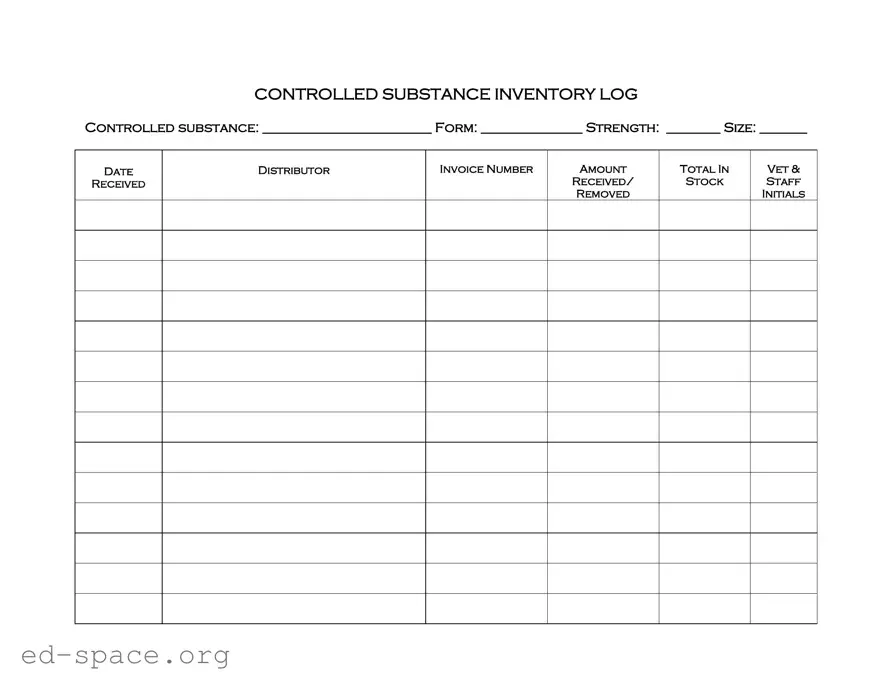
The Controlled Drug Log form serves as a critical tool for tracking and managing controlled substances within a facility. This form is designed to ensure accountability and compliance with regulatory requirements. It includes essential fields such as the name of the controlled substance, its form, strength, and size. Each entry must be accompanied by the date the substance was received, the distributor's information, and the corresponding invoice number. Additionally, the log captures the amount received and the total stock available. Staff members are required to initial the log when substances are removed, providing a clear record of who accessed the controlled drugs. This systematic approach helps maintain accurate inventory levels and supports the responsible handling of potentially dangerous medications.
CONTROLLED SUBSTANCE INVENTORY LOG
CONTROLLED SUBSTANCE: _________________________ FORM: _______________ STRENGTH: ________ SIZE: _______
DATE |
DISTRIBUTOR |
INVOICE NUMBER |
AMOUNT |
TOTAL IN |
VET & |
RECEIVED |
|
|
RECEIVED/ |
STOCK |
STAFF |
|
|
|
|
|
|
|
|
|
REMOVED |
|
INITIALS |
|
|
|
|
|
|
|
|
|
|
|
|
|
|
|
|
|
|
|
|
|
|
|
|
|
|
|
|
|
|
|
|
|
|
|
|
|
|
|
|
|
|
|
|
|
|
|
|
|
|
|
|
|
|
|
|
|
|
|
|
|
|
|
|
|
|
|
|
|
|
|
|
|
|
|
|
|
|
|
|
|
|
|
|
|
|
|
|
|
|
| Fact Name | Description |
|---|---|
| Purpose | The Controlled Drug Log form is used to track the inventory of controlled substances in a facility. |
| Required Information | It includes fields for the controlled substance name, form, strength, size, date, distributor, invoice number, amount received, total stock, and initials of staff involved. |
| Governing Laws | In the United States, the use of this form is governed by the Controlled Substances Act and applicable state laws. |
| Record Keeping | Facilities must maintain accurate records to comply with federal and state regulations regarding controlled substances. |
| Staff Responsibilities | Staff members are required to initial the log upon receiving and removing controlled substances to ensure accountability. |
| Frequency of Use | The log should be updated each time a controlled substance is received or removed from inventory. |
| Storage Requirements | Controlled substances must be stored securely, and the log should be kept in a location accessible only to authorized personnel. |
| Audit Compliance | Regular audits of the log may be conducted to ensure compliance with legal and regulatory requirements. |
Completing the Controlled Drug Log form is essential for maintaining accurate records of controlled substances. Following these steps will ensure that you fill out the form correctly and comprehensively.
What is the purpose of the Controlled Drug Log form?
The Controlled Drug Log form is designed to track the inventory and distribution of controlled substances. This form helps ensure that all transactions involving these drugs are documented accurately, which is crucial for compliance with regulations and for maintaining proper records within a veterinary or medical setting.
What information is required on the form?
Each Controlled Drug Log form requires specific details. You will need to fill in the name of the controlled substance, the form it comes in (such as tablet, liquid, etc.), its strength, and size. Additionally, you must provide the date of receipt, the distributor's name, the invoice number, the amount received, and the total stock. Initials of the staff who received or removed the substance must also be recorded.
How often should the Controlled Drug Log be updated?
It is essential to update the Controlled Drug Log every time a new supply of a controlled substance is received or when any amount is removed from stock. Keeping the log current ensures accurate tracking and helps prevent discrepancies in inventory.
Who is responsible for maintaining the Controlled Drug Log?
The responsibility for maintaining the Controlled Drug Log typically falls on designated staff members, such as veterinarians, pharmacists, or veterinary technicians. These individuals must ensure that the log is accurately filled out and kept up to date to comply with legal requirements.
What should be done if there is an error in the log?
If an error is found in the Controlled Drug Log, it is important to correct it immediately. Draw a single line through the incorrect entry and write the correct information next to it. Initial the correction to indicate that it has been verified. Avoid using white-out or erasing entries, as this can lead to compliance issues.
How long should the Controlled Drug Log be retained?
The Controlled Drug Log should be retained for a minimum of five years. This duration may vary depending on specific state regulations or facility policies. Always check local laws to ensure compliance with retention requirements.
What are the consequences of not maintaining a proper Controlled Drug Log?
Failing to maintain a proper Controlled Drug Log can lead to serious consequences, including legal penalties, loss of licenses, and fines. Inaccurate records can also result in improper medication management, which can jeopardize patient safety.
Can the Controlled Drug Log be kept electronically?
Yes, the Controlled Drug Log can be maintained electronically as long as the system used meets regulatory requirements. Electronic logs should ensure data integrity, security, and easy access for audits. It is essential to have backup systems in place to prevent data loss.
Is training required for staff who handle the Controlled Drug Log?
Yes, training is highly recommended for all staff members who handle the Controlled Drug Log. Proper training ensures that everyone understands the importance of accurate record-keeping and complies with relevant laws and regulations. Regular refreshers can help maintain awareness and knowledge of best practices.
Omitting Required Information: Many individuals fail to fill in all the necessary fields on the form. Each section, including the controlled substance name, form, strength, and size, is crucial for accurate record-keeping.
Incorrect Dates: Entering the wrong date can lead to confusion. Ensure the date of receipt is accurate and corresponds with your inventory records.
Mislabeling the Substance: It's important to double-check the name of the controlled substance. Mistakes in spelling or using abbreviations can create issues during audits.
Forgetting Initials: Each entry must be initialed by the staff member responsible for the transaction. Neglecting to do this can raise questions about accountability.
Failing to Update Stock Amounts: After removing a controlled substance from stock, the amount should be updated immediately. This ensures that the log reflects current inventory levels.
Not Retaining Copies: Always keep a copy of the filled-out form. This practice helps maintain a clear record for future reference and compliance checks.
The Controlled Drug Log form is essential for tracking the handling of controlled substances. Several other forms and documents complement this log to ensure proper management and compliance with regulations. Below are four commonly used documents that work in conjunction with the Controlled Drug Log.
These forms work together to create a comprehensive system for managing controlled substances. Maintaining accurate records not only supports compliance but also enhances patient safety and care quality.
The Controlled Drug Log form is an important document used in managing controlled substances. It shares similarities with several other documents in the realm of drug management and inventory tracking. Here’s a list of nine documents that are similar to the Controlled Drug Log form, along with an explanation of how they relate:
When filling out the Controlled Drug Log form, accuracy and attention to detail are crucial. Here’s a list of things you should and shouldn’t do to ensure compliance and maintain proper records.
Here are some common misconceptions about the Controlled Drug Log form:
When managing controlled substances, accuracy and compliance are paramount. The Controlled Drug Log form is an essential tool for tracking these substances. Here are key takeaways to consider when filling out and using this form:
By adhering to these guidelines, users can ensure that the Controlled Drug Log form is filled out correctly and serves its purpose effectively.