In the realm of estate planning, the Connecticut Transfer-on-Death Deed (TODD) form serves as a powerful tool for property owners looking to streamline the transfer of real estate upon their passing. This form allows individuals to designate a beneficiary who will automatically receive the property, bypassing the often lengthy and costly probate process. One of the significant advantages of the TODD is its simplicity; it can be executed without the need for complex legal procedures, making it accessible for many homeowners. Additionally, the form remains revocable during the owner’s lifetime, offering flexibility should circumstances change. Importantly, the TODD ensures that the property is transferred outside of probate, which can alleviate the burden on loved ones during a difficult time. Understanding the nuances of this form is essential for anyone considering how to manage their real estate assets effectively, ensuring that their wishes are honored while minimizing potential disputes among heirs.
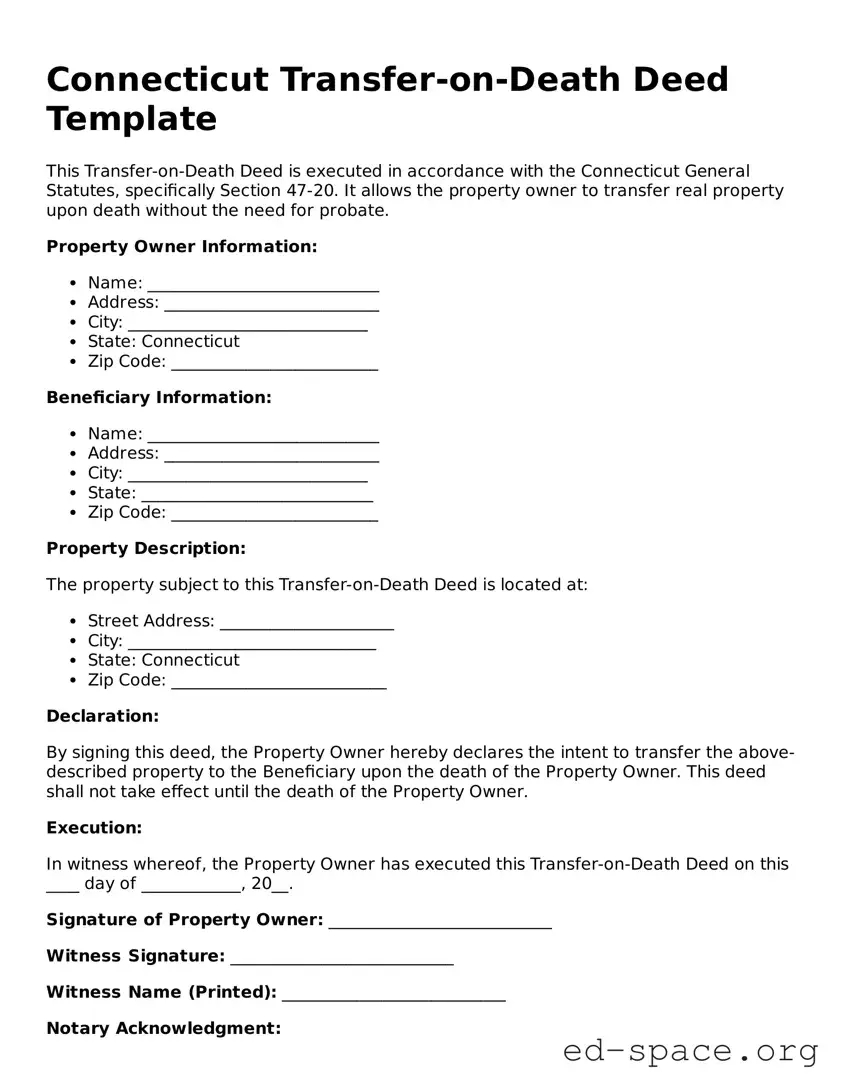
Connecticut Transfer-on-Death Deed Template
This Transfer-on-Death Deed is executed in accordance with the Connecticut General Statutes, specifically Section 47-20. It allows the property owner to transfer real property upon death without the need for probate.
Property Owner Information:
Beneficiary Information:
Property Description:
The property subject to this Transfer-on-Death Deed is located at:
Declaration:
By signing this deed, the Property Owner hereby declares the intent to transfer the above-described property to the Beneficiary upon the death of the Property Owner. This deed shall not take effect until the death of the Property Owner.
Execution:
In witness whereof, the Property Owner has executed this Transfer-on-Death Deed on this ____ day of ____________, 20__.
Signature of Property Owner: ___________________________
Witness Signature: ___________________________
Witness Name (Printed): ___________________________
Notary Acknowledgment:
State of Connecticut, County of ___________________________
On this ____ day of ____________, 20__, before me, a Notary Public, personally appeared ___________________________ (Property Owner), known to me (or satisfactorily proven) to be the person whose name is subscribed to the within instrument, and acknowledged that he/she executed the same for the purposes therein contained.
Notary Public Signature: ___________________________
My Commission Expires: ___________________________
| Fact Name | Details |
|---|---|
| Definition | A Transfer-on-Death (TOD) deed allows an individual to transfer real estate to a beneficiary upon their death without going through probate. |
| Governing Law | The TOD deed in Connecticut is governed by Connecticut General Statutes § 47-36bb to § 47-36jj. |
| Eligibility | Any individual who owns real estate in Connecticut can create a TOD deed. |
| Beneficiary Designation | Multiple beneficiaries can be named, and they can inherit the property in specified shares. |
| Revocation | A TOD deed can be revoked at any time by the owner through a written document, which must be recorded. |
| Effect on Creditors | The property transferred via a TOD deed remains part of the owner's estate for creditor claims until the owner's death. |
| Recording Requirement | The TOD deed must be recorded in the town where the property is located to be effective. |
| Tax Implications | Transfer-on-Death deeds do not trigger gift taxes during the owner's lifetime. |
| Limitations | Certain types of property, such as timeshares and properties held in a trust, may not be eligible for a TOD deed. |
After completing the Connecticut Transfer-on-Death Deed form, the next step involves ensuring that the document is properly executed and recorded with the local land records office. This is crucial for the deed to be legally effective.
What is a Transfer-on-Death Deed in Connecticut?
A Transfer-on-Death Deed (TODD) allows property owners in Connecticut to transfer their real estate directly to a designated beneficiary upon their death. This deed bypasses the probate process, making it easier and quicker for heirs to receive the property without the need for court intervention.
Who can use a Transfer-on-Death Deed?
Any individual who owns real property in Connecticut can utilize a Transfer-on-Death Deed. This includes homeowners, landowners, and individuals holding title to real estate. However, it's important to ensure that the deed is properly executed and recorded to be valid.
How do I create a Transfer-on-Death Deed?
To create a Transfer-on-Death Deed, you must complete the form, including the names of the property owner and the designated beneficiary. After filling out the deed, it must be signed in front of a notary public and then recorded with the town clerk in the municipality where the property is located. This ensures that the deed is legally recognized.
Can I change or revoke a Transfer-on-Death Deed?
Yes, you can change or revoke a Transfer-on-Death Deed at any time while you are alive. To do so, you must create a new deed that either revokes the previous one or designates a different beneficiary. The new deed must also be signed, notarized, and recorded to take effect.
What happens if the beneficiary predeceases me?
If the designated beneficiary passes away before you do, the property will not transfer to them. Instead, the property will be distributed according to your will or, if you do not have a will, according to Connecticut's intestacy laws. It’s wise to consider naming an alternate beneficiary in your deed.
Are there any tax implications with a Transfer-on-Death Deed?
Generally, transferring property via a Transfer-on-Death Deed does not trigger immediate tax consequences for the property owner. However, the beneficiary may be responsible for property taxes once the transfer occurs. Consulting a tax professional is advisable to understand any potential implications fully.
Is a Transfer-on-Death Deed suitable for all types of property?
A Transfer-on-Death Deed can be used for most types of real estate, including residential homes, land, and commercial properties. However, it cannot be used for personal property like vehicles or bank accounts. For those assets, other estate planning tools may be more appropriate.
What are the advantages of using a Transfer-on-Death Deed?
The primary advantage of a Transfer-on-Death Deed is the avoidance of probate, which can be time-consuming and costly. It allows for a straightforward transfer of property to beneficiaries, providing peace of mind for property owners. Additionally, it keeps the details of the transfer private, as they do not become part of the public probate record.
Incorrect Property Description: Many individuals fail to provide a precise description of the property. It is essential to include the correct address and legal description to avoid confusion later on.
Not Including All Owners: If the property is owned jointly, all owners must sign the deed. Omitting one owner can lead to disputes or invalidate the deed.
Failure to Sign and Date: A common oversight is not signing and dating the form. Without a signature and date, the deed may not be legally binding.
Not Notarizing the Document: Connecticut requires that the Transfer-on-Death Deed be notarized. Skipping this step can render the deed ineffective.
Improper Witness Requirements: While Connecticut does not require witnesses for this deed, some individuals mistakenly believe they need them. This can lead to unnecessary complications.
Filing the Deed in the Wrong Location: It’s crucial to file the deed with the appropriate town clerk’s office. Filing it in the wrong location can delay the transfer process.
Not Updating the Deed After Changes: Life circumstances change. Failing to update the deed after marriage, divorce, or the birth of children can lead to unintended consequences.
Ignoring Tax Implications: Some individuals overlook potential tax consequences of transferring property upon death. Understanding these implications is vital for effective estate planning.
When dealing with property transfers in Connecticut, particularly through a Transfer-on-Death Deed, several other forms and documents may be necessary to ensure a smooth process. Each of these documents serves a specific purpose and can help clarify ownership, facilitate the transfer, or address other legal requirements.
Understanding these documents can help individuals navigate the complexities of property transfer in Connecticut. Proper documentation ensures that the wishes of the property owner are honored and that the transfer process is conducted efficiently.
A Transfer-on-Death (TOD) Deed is a unique legal document that allows property owners to transfer their real estate to beneficiaries upon their death, bypassing the probate process. It shares similarities with several other legal documents. Here’s a look at eight documents that are comparable to the Transfer-on-Death Deed:
Understanding these documents can help individuals make informed decisions about how to manage and transfer their assets effectively.
When filling out the Connecticut Transfer-on-Death Deed form, there are important dos and don'ts to consider. Following these guidelines can help ensure that the process goes smoothly.
This is not entirely true. While a Transfer-on-Death Deed allows property to pass directly to the designated beneficiary upon the owner's death, it may still be subject to other probate processes for debts or claims against the estate.
This deed is specifically designed for real estate. It cannot be used for personal property or other types of assets like bank accounts or vehicles.
The beneficiary does not have rights to the property until the owner passes away. Until that time, the owner retains full control and ownership of the property.
This is misleading. While the deed can help transfer specific real estate, a will is still necessary for other assets and to provide overall estate instructions.
The deed should be recorded to be effective, but it can be signed and held until the owner's death. However, recording it sooner can help avoid disputes.
This deed can benefit anyone who owns real estate and wishes to simplify the transfer process to their heirs, regardless of their overall wealth.
Filling out and using the Connecticut Transfer-on-Death Deed form can be a straightforward process if you keep a few key points in mind. Here are some important takeaways to consider:
Understanding these points can help you navigate the process of using a Transfer-on-Death Deed effectively. Proper planning today can save your loved ones time and stress in the future.