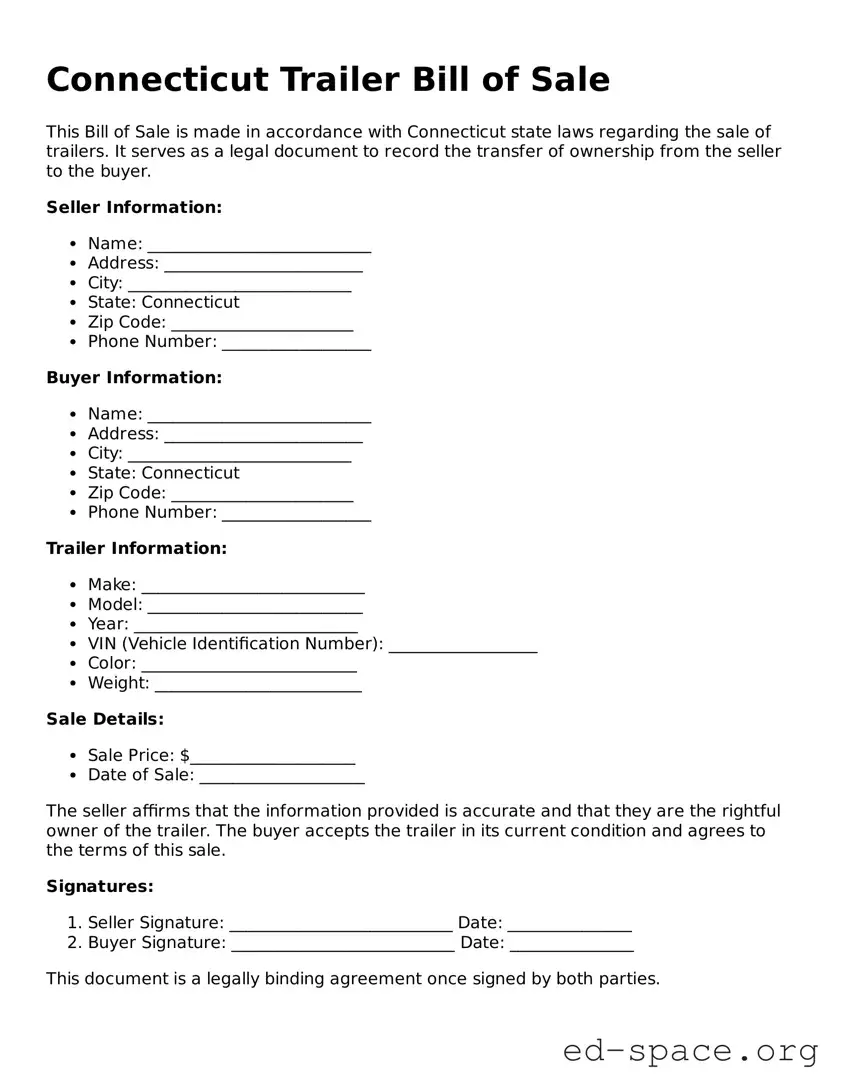
The Connecticut Trailer Bill of Sale form serves as a crucial document in the transfer of ownership for trailers within the state. This form captures essential details, including the names and addresses of both the seller and the buyer, ensuring that both parties are clearly identified. It also requires information about the trailer itself, such as its make, model, year, and Vehicle Identification Number (VIN), providing a comprehensive overview of the asset being sold. Additionally, the form includes sections for the sale price and the date of the transaction, which are vital for record-keeping and potential tax implications. By documenting these key elements, the Trailer Bill of Sale form helps to protect the interests of both parties involved, offering a transparent record of the sale. Furthermore, it may be necessary for registration and titling purposes, reinforcing its importance in the legal transfer process. Overall, this form is an essential tool for anyone engaged in buying or selling a trailer in Connecticut, ensuring that the transaction is conducted smoothly and legally.
Connecticut Trailer Bill of Sale
This Bill of Sale is made in accordance with Connecticut state laws regarding the sale of trailers. It serves as a legal document to record the transfer of ownership from the seller to the buyer.
Seller Information:
Buyer Information:
Trailer Information:
Sale Details:
The seller affirms that the information provided is accurate and that they are the rightful owner of the trailer. The buyer accepts the trailer in its current condition and agrees to the terms of this sale.
Signatures:
This document is a legally binding agreement once signed by both parties.
| Fact Name | Description |
|---|---|
| Purpose | The Connecticut Trailer Bill of Sale form is used to document the sale of a trailer between a seller and a buyer. |
| Governing Laws | This form is governed by the Connecticut General Statutes, specifically sections related to the sale and transfer of personal property. |
| Required Information | Both parties must provide their names, addresses, and signatures. Details about the trailer, including its make, model, and VIN, are also necessary. |
| Notarization | While notarization is not always required, having the document notarized can help verify the identities of the parties involved. |
| Record Keeping | It is advisable for both the seller and the buyer to keep a copy of the completed Bill of Sale for their records. |
After you have obtained the Connecticut Trailer Bill of Sale form, it’s important to fill it out accurately to ensure a smooth transfer of ownership. Follow these steps to complete the form correctly.
Once you have completed the form, keep a copy for your records. The buyer should also retain a copy for their own documentation. This will help in any future transactions or registrations related to the trailer.
What is a Connecticut Trailer Bill of Sale form?
The Connecticut Trailer Bill of Sale form is a legal document used to record the sale of a trailer in the state of Connecticut. This form captures essential details about the transaction, including the buyer's and seller's information, the trailer's description, and the sale price. It serves as proof of ownership transfer and can be crucial for registering the trailer with the Department of Motor Vehicles (DMV).
Why is a Bill of Sale necessary for a trailer transaction?
A Bill of Sale is necessary because it provides a written record of the transaction between the buyer and seller. This document protects both parties by outlining the terms of the sale. For the buyer, it proves ownership and can be used for registration purposes. For the seller, it serves as evidence that the trailer has been sold, which can help avoid future liability issues. Additionally, having a Bill of Sale can simplify the process if any disputes arise later.
How do I fill out the Connecticut Trailer Bill of Sale form?
To fill out the Connecticut Trailer Bill of Sale form, start by entering the date of the sale. Next, provide the full names and addresses of both the buyer and seller. Then, include specific details about the trailer, such as its make, model, year, Vehicle Identification Number (VIN), and any other identifying features. Finally, indicate the sale price and both parties should sign the document. It’s advisable to keep a copy for personal records.
Do I need to have the Bill of Sale notarized?
No, notarization is not required for a Connecticut Trailer Bill of Sale. However, having it notarized can add an extra layer of authenticity to the document. While it is not mandatory, some buyers or sellers may prefer this step for added security. Regardless, both parties should sign the form in the presence of each other to ensure its validity.
Failing to include the date of sale. It's crucial to document when the transaction occurred to establish ownership and for record-keeping purposes.
Not providing the VIN (Vehicle Identification Number). This unique identifier is essential for registering the trailer and confirming its history.
Omitting the seller's and buyer's information. Accurate names and addresses of both parties help avoid disputes later on.
Using incorrect or incomplete trailer description. Details such as make, model, and year are necessary to ensure clarity about the item being sold.
Not signing the form. Both the seller and buyer must sign to validate the transaction.
Forgetting to include the sale price. This information is important for tax purposes and reflects the value of the transaction.
Leaving out odometer readings if applicable. This can provide insight into the trailer's usage and condition.
Not checking for local regulations. Some municipalities may have specific requirements for trailer sales that need to be addressed.
Failing to provide payment details. Indicating how the payment was made can help clarify the terms of the sale.
Not keeping a copy of the completed form. Both parties should retain a copy for their records to protect against future disputes.
When purchasing or selling a trailer in Connecticut, the Trailer Bill of Sale form is essential for documenting the transaction. However, several other forms and documents may also be necessary to ensure a smooth transfer of ownership and compliance with state regulations. Here are four important documents to consider:
Being aware of these additional documents can help streamline the buying or selling process. Ensuring that all paperwork is in order not only protects both parties but also helps avoid potential legal issues down the line. Always consider consulting with a professional if there are any uncertainties regarding the required documentation.
When filling out the Connecticut Trailer Bill of Sale form, attention to detail is crucial. Here’s a list of ten essential dos and don’ts to ensure a smooth transaction.
By following these guidelines, you can help ensure that the sale process is straightforward and legally sound. Take the time to double-check your entries and maintain clear communication with the other party.
The Connecticut Trailer Bill of Sale form is an important document for anyone buying or selling a trailer in the state. However, several misconceptions surround this form that can lead to confusion. Below are six common misconceptions clarified.
Understanding these misconceptions can help facilitate smoother transactions and ensure compliance with Connecticut laws regarding trailer sales.
Filling out and using the Connecticut Trailer Bill of Sale form is an important step in the process of buying or selling a trailer. Here are some key takeaways to keep in mind:
By following these guidelines, individuals can navigate the process of buying or selling a trailer in Connecticut more effectively.