The Connecticut Residential Lease Agreement form serves as a crucial document for both landlords and tenants, outlining the terms and conditions of renting a residential property. This agreement typically includes essential details such as the names of the parties involved, the address of the rental property, and the duration of the lease. Rent amount, payment methods, and due dates are clearly specified to avoid any misunderstandings. Additionally, the form addresses security deposits, maintenance responsibilities, and the conditions under which either party may terminate the lease. It may also cover rules regarding pets, alterations to the property, and the consequences of lease violations. Understanding these components is vital for ensuring a smooth rental experience and protecting the rights of both landlords and tenants. By clearly defining expectations and obligations, this agreement fosters a respectful and transparent relationship between both parties.
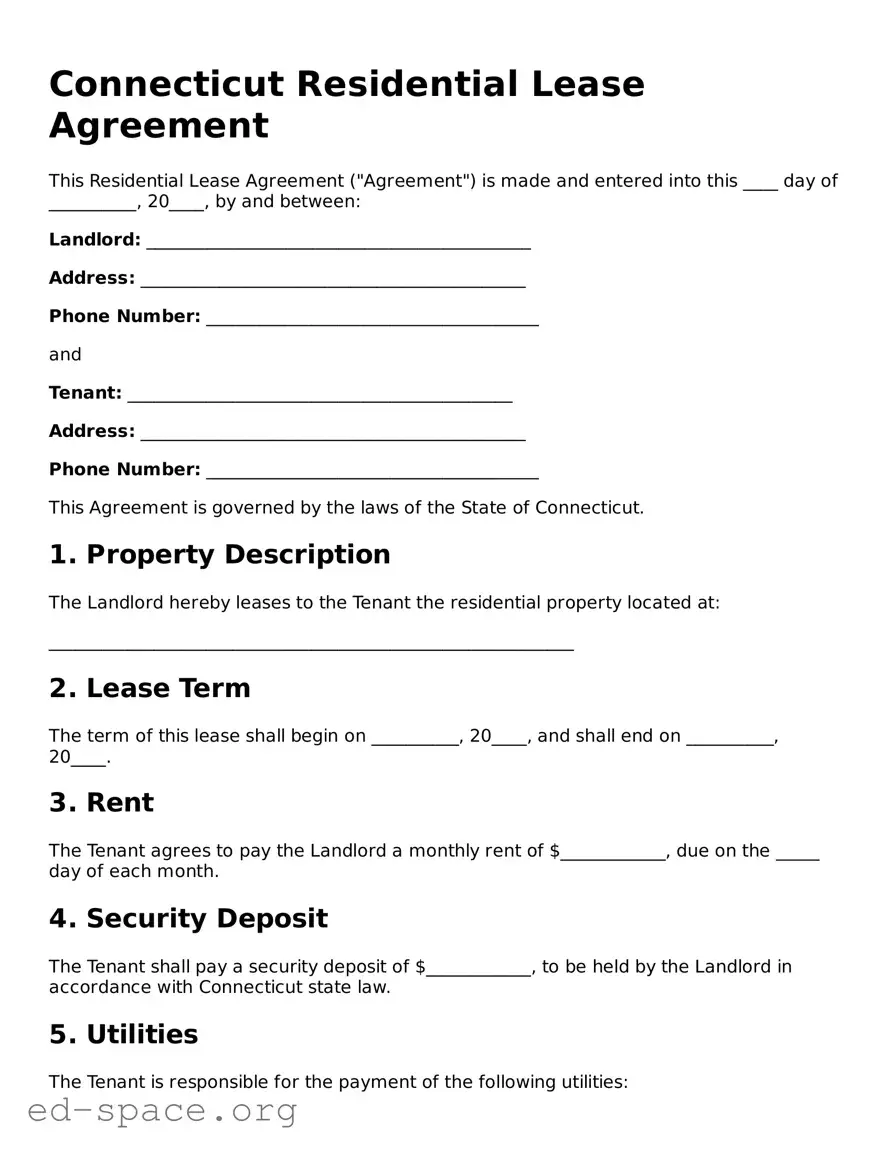
Connecticut Residential Lease Agreement
This Residential Lease Agreement ("Agreement") is made and entered into this ____ day of __________, 20____, by and between:
Landlord: ____________________________________________
Address: ____________________________________________
Phone Number: ______________________________________
and
Tenant: ____________________________________________
Address: ____________________________________________
Phone Number: ______________________________________
This Agreement is governed by the laws of the State of Connecticut.
1. Property Description
The Landlord hereby leases to the Tenant the residential property located at:
____________________________________________________________
2. Lease Term
The term of this lease shall begin on __________, 20____, and shall end on __________, 20____.
3. Rent
The Tenant agrees to pay the Landlord a monthly rent of $____________, due on the _____ day of each month.
4. Security Deposit
The Tenant shall pay a security deposit of $____________, to be held by the Landlord in accordance with Connecticut state law.
5. Utilities
The Tenant is responsible for the payment of the following utilities:
6. Maintenance and Repairs
The Tenant agrees to keep the property in good condition and to notify the Landlord of any needed repairs.
7. Pets
Are pets allowed? Yes / No (circle one)
8. Governing Law
This Agreement shall be governed by the laws of the State of Connecticut.
9. Signatures
By signing below, both parties agree to the terms of this Agreement:
Landlord Signature: ___________________________ Date: __________
Tenant Signature: ___________________________ Date: __________
Both parties acknowledge that they have read and understood this Agreement.
| Fact Name | Description |
|---|---|
| Purpose | The Connecticut Residential Lease Agreement is designed to outline the terms and conditions under which a landlord rents property to a tenant. |
| Governing Laws | This agreement is governed by the Connecticut General Statutes, particularly Chapter 830, which covers landlord-tenant relationships. |
| Duration | The lease can be for a fixed term, such as one year, or it may be a month-to-month arrangement, depending on the agreement between the parties. |
| Security Deposit | Connecticut law allows landlords to collect a security deposit, typically up to two months' rent for unfurnished units and up to three months for furnished units. |
Filling out the Connecticut Residential Lease Agreement form requires attention to detail to ensure all necessary information is accurately provided. After completing the form, both parties will need to review and sign it to finalize the rental agreement.
What is a Connecticut Residential Lease Agreement?
A Connecticut Residential Lease Agreement is a legal document that outlines the terms and conditions between a landlord and a tenant for renting a residential property. This agreement typically includes details such as the rental amount, lease duration, security deposit requirements, and responsibilities of both parties.
What information is typically included in the lease agreement?
The lease agreement usually contains the names of the landlord and tenant, the address of the rental property, the rental amount, payment due dates, security deposit details, maintenance responsibilities, and terms regarding lease termination. It may also cover rules regarding pets, smoking, and alterations to the property.
How long is a typical lease term in Connecticut?
Lease terms in Connecticut can vary. Commonly, leases are for one year, but they can also be month-to-month or for a shorter duration. The specific term should be clearly stated in the lease agreement.
What is a security deposit, and how much can a landlord charge?
A security deposit is a sum of money that a tenant pays to the landlord before moving in. This deposit serves as protection for the landlord against potential damages or unpaid rent. In Connecticut, the maximum security deposit a landlord can require is equivalent to two months' rent for leases longer than one year, and one month's rent for leases of one year or less.
Can a landlord increase the rent during the lease term?
Typically, a landlord cannot increase the rent during the lease term unless the lease agreement includes a provision allowing for such increases. Rent increases usually take effect only after the lease expires or in accordance with the terms outlined in the lease.
What happens if a tenant wants to break the lease early?
If a tenant wishes to break the lease early, they may be subject to penalties as outlined in the lease agreement. Commonly, the tenant may need to provide written notice and may be responsible for paying rent until a new tenant is found or until the lease term ends, depending on the terms of the agreement.
Are there specific laws governing residential leases in Connecticut?
Yes, Connecticut has specific laws that govern residential leases, including the Connecticut General Statutes. These laws cover various aspects, such as security deposits, eviction processes, and tenant rights. Both landlords and tenants should be aware of these regulations to ensure compliance.
What should a tenant do if there are issues with the rental property?
If a tenant encounters issues with the rental property, such as maintenance problems or safety concerns, they should notify the landlord in writing. The landlord is typically responsible for addressing these issues in a timely manner, as outlined in the lease agreement. If the landlord fails to respond, tenants may have legal options available to them.
Can a lease agreement be modified after it is signed?
Yes, a lease agreement can be modified after it is signed, but both parties must agree to the changes. Any modifications should be documented in writing and signed by both the landlord and tenant to ensure clarity and enforceability.
Not providing accurate tenant information. It’s essential to include the full names of all tenants. Missing or incorrect names can lead to confusion later.
Failing to specify the lease term. Clearly stating the start and end dates helps both parties understand the duration of the agreement. Without this, misunderstandings may arise.
Neglecting to outline rent payment details. Indicating the amount due, payment method, and due date is crucial. This prevents disputes over when and how rent should be paid.
Overlooking maintenance responsibilities. The lease should clarify who is responsible for repairs and upkeep. This ensures that both the landlord and tenant know their obligations.
Not including rules about pets. If pets are allowed or prohibited, this should be clearly stated. This avoids potential issues and misunderstandings later on.
Ignoring the signature section. Both parties must sign the lease for it to be valid. Failing to do so can render the agreement unenforceable.
When entering into a rental agreement in Connecticut, several important documents often accompany the Residential Lease Agreement. These documents help clarify the responsibilities of both landlords and tenants, ensuring a smooth rental experience. Here are some key forms you might encounter:
These documents work together to create a comprehensive framework for the rental relationship. Understanding each form's purpose can empower both landlords and tenants, fostering a respectful and transparent rental experience.
When filling out the Connecticut Residential Lease Agreement form, it’s important to be thorough and careful. Here’s a list of things you should and shouldn’t do to ensure the process goes smoothly.
When it comes to the Connecticut Residential Lease Agreement form, several misconceptions can lead to confusion for both landlords and tenants. Understanding these myths is crucial for ensuring a smooth rental experience. Below are some common misconceptions and clarifications regarding this important document.
By addressing these misconceptions, both landlords and tenants can foster a better understanding of their rights and responsibilities under the Connecticut Residential Lease Agreement. Clarity in these matters leads to healthier rental relationships and fewer disputes.
When filling out and using the Connecticut Residential Lease Agreement form, it is essential to consider the following key takeaways: