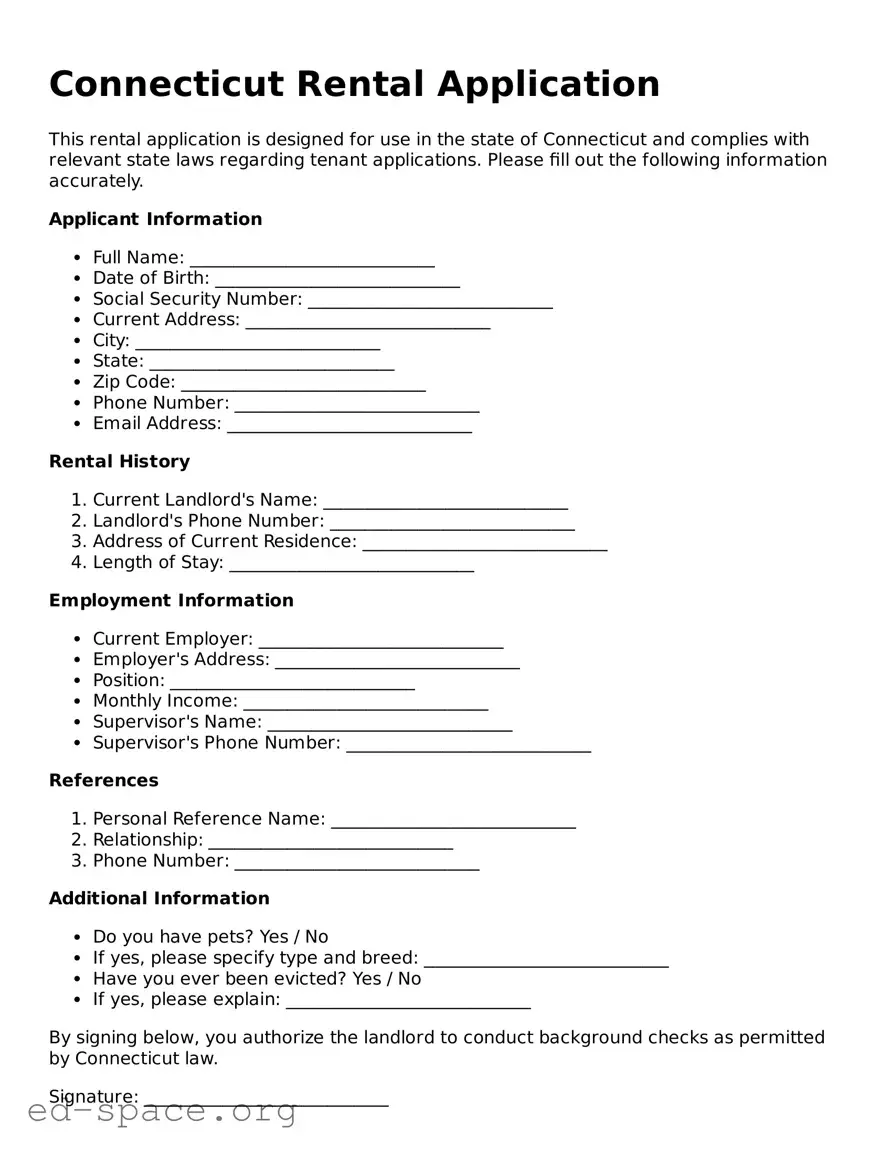
When seeking a rental property in Connecticut, understanding the rental application form is crucial for both tenants and landlords. This form serves as a key tool for evaluating potential tenants, allowing landlords to gather essential information such as employment history, credit score, and references. It typically includes sections for personal identification, rental history, and financial details, ensuring that landlords can make informed decisions. Tenants must also be aware of the legal obligations associated with the information they provide, as inaccuracies can lead to complications in the rental process. Additionally, the application may require a fee, which is often non-refundable, so it is important for applicants to prepare thoroughly before submission. Being well-versed in the specifics of the Connecticut rental application form can streamline the process and help secure a desirable rental agreement.
Connecticut Rental Application
This rental application is designed for use in the state of Connecticut and complies with relevant state laws regarding tenant applications. Please fill out the following information accurately.
Applicant Information
Rental History
Employment Information
References
Additional Information
By signing below, you authorize the landlord to conduct background checks as permitted by Connecticut law.
Signature: ____________________________
Date: ____________________________
| Fact Name | Details |
|---|---|
| Purpose | The Connecticut Rental Application form is used by landlords to screen potential tenants. |
| Information Required | Applicants typically provide personal information, rental history, employment details, and references. |
| Application Fee | Landlords may charge an application fee to cover the costs of background checks, though it must be reasonable. |
| Governing Law | The application process is governed by Connecticut General Statutes, particularly Section 47a-6a. |
| Fair Housing Compliance | Landlords must comply with federal and state fair housing laws, ensuring no discrimination occurs during the application process. |
After obtaining the Connecticut Rental Application form, you will need to fill it out completely to provide the necessary information to the landlord or property manager. Ensure that all details are accurate and up to date to facilitate the application process.
What is a Connecticut Rental Application form?
The Connecticut Rental Application form is a document that prospective tenants complete to apply for rental housing. This form typically collects personal information, rental history, employment details, and references to help landlords assess potential tenants.
Why do I need to fill out a rental application?
Filling out a rental application allows landlords to evaluate your suitability as a tenant. It helps them make informed decisions based on your financial stability, rental history, and character references. This process is crucial for ensuring a good match between tenants and properties.
What information is typically required on the rental application?
Most rental applications will ask for your full name, contact information, Social Security number, employment details, income, rental history, and references. Some landlords may also request information about pets or any criminal history. Providing accurate and complete information is essential.
Is there a fee for submitting a rental application?
Many landlords charge an application fee to cover the cost of background checks and processing. This fee can vary, so it's important to ask the landlord about any associated costs before submitting your application. Remember, this fee is typically non-refundable, regardless of whether your application is approved or denied.
How long does it take to process a rental application?
The processing time for a rental application can vary significantly depending on the landlord or property management company. Generally, you can expect a response within a few days to a week. If you have not heard back after a week, it may be appropriate to follow up with the landlord.
What happens if my rental application is denied?
If your application is denied, the landlord is required to inform you of the decision. They should also provide a reason for the denial, which may include insufficient income, poor rental history, or negative background check results. Understanding the reasons can help you address any issues for future applications.
Can I appeal a rental application denial?
While there is no formal appeal process for a rental application denial, you can reach out to the landlord to discuss the reasons behind their decision. If you believe there has been a mistake or if circumstances have changed (like a new job), you can present this information and ask if they would reconsider your application.
Do I need to provide references with my rental application?
Yes, most rental applications will require you to provide personal and professional references. These individuals can vouch for your character and reliability as a tenant. Be sure to inform your references in advance, so they are prepared to speak positively about you if contacted by the landlord.
What should I do if I have a criminal record?
If you have a criminal record, it's essential to be honest on your rental application. Some landlords may conduct background checks, and failing to disclose this information can lead to denial. You might also want to provide context or documentation regarding your rehabilitation efforts, which can help present your case more favorably.
Can I modify the rental application form?
Generally, you should not modify the rental application form provided by the landlord. Altering the form can lead to confusion or may be viewed unfavorably. If you feel that additional information is necessary, consider discussing this with the landlord separately rather than changing the form itself.
Incomplete Information: Many applicants fail to provide all the necessary details requested on the form. This can include missing out on sections like employment history or references. Leaving any part blank may delay the application process or lead to automatic denial.
Incorrect Personal Details: It's crucial to ensure that all personal information is accurate. Common mistakes include misspelling names, providing incorrect Social Security numbers, or failing to update addresses. Such errors can complicate background checks and verification processes.
Neglecting to Sign: A signature is often required to validate the application. Some individuals overlook this essential step, which can result in the application being considered invalid. Always double-check that the form is signed before submission.
Failure to Provide Documentation: Supporting documents, such as proof of income or identification, may be required. Applicants sometimes forget to attach these documents or assume they are not necessary. Missing documentation can lead to delays or rejection of the application.
Not Reading the Instructions: Each rental application may come with specific instructions. Ignoring these guidelines can lead to mistakes, such as using the wrong format for phone numbers or failing to meet the application deadline. Taking the time to read and understand the instructions can prevent unnecessary issues.
When applying for a rental property in Connecticut, the Rental Application form is just one of several documents that landlords may require. Each of these documents serves a specific purpose and helps ensure a thorough screening process. Below is a list of commonly used forms and documents that often accompany the Rental Application.
Having these documents prepared can streamline the rental application process and provide both landlords and tenants with a clearer understanding of their rights and responsibilities. Each form plays a critical role in ensuring that the rental agreement is fair and transparent for all parties involved.
Lease Agreement: Both documents outline the terms and conditions of renting a property. The lease agreement formalizes the rental arrangement after the application is approved.
Employment Application: Similar to a rental application, this document collects information about a person's background and qualifications, helping to assess suitability for a position.
Credit Application: A credit application requests personal and financial information to evaluate an individual's creditworthiness, akin to how a rental application assesses a potential tenant's reliability.
Background Check Authorization: This document allows landlords to verify a tenant's history, just as a rental application may require consent to conduct background checks.
Tenant Screening Report: Similar in purpose, this report summarizes a potential tenant's rental history, credit score, and criminal background, which are often evaluated through the rental application.
Guarantor Application: This document is used when a potential tenant lacks sufficient credit or income. It collects information about a guarantor's financial status, much like a rental application gathers details about the tenant.
Pet Application: If a rental property allows pets, this application gathers information about the pet and its owner, similar to how a rental application gathers details about the tenant.
Roommate Agreement: This document outlines the responsibilities and expectations between roommates. It serves a similar purpose to a rental application by establishing clear terms for cohabitation.
When filling out the Connecticut Rental Application form, it's essential to follow certain guidelines to ensure a smooth process. Here are four things you should and shouldn't do:
When it comes to renting a property in Connecticut, many individuals encounter misconceptions about the rental application process. Understanding the facts can help you navigate this important step more effectively. Here are eight common misconceptions:
In reality, each landlord or property management company may have their own specific application form with unique requirements and questions.
Most applications require personal details, including your social security number, employment history, and references to assess your suitability as a tenant.
While credit scores are important, landlords often look at rental history, income, and personal references as well.
Even current tenants may need to fill out a new application if they are renewing their lease or moving to a different unit within the same property.
Submitting an application and paying the fee does not guarantee that you will be approved for the rental. The landlord must review all applications before making a decision.
If you realize you made a mistake or want to update information, you can usually contact the landlord to discuss any changes.
Many landlords are willing to work with applicants who have minor issues in their background, especially if they demonstrate stability and responsibility.
Each landlord has the discretion to set their own application process and criteria, which can vary widely from one property to another.
By dispelling these misconceptions, you can approach the rental application process with greater confidence and clarity. Understanding the requirements and expectations can ultimately lead to a smoother experience in securing your next home.
When filling out the Connecticut Rental Application form, it's important to keep a few key points in mind. This form helps landlords assess potential tenants, so accuracy and clarity are crucial.
By keeping these takeaways in mind, you can navigate the rental application process more smoothly and increase your chances of securing your desired rental property.