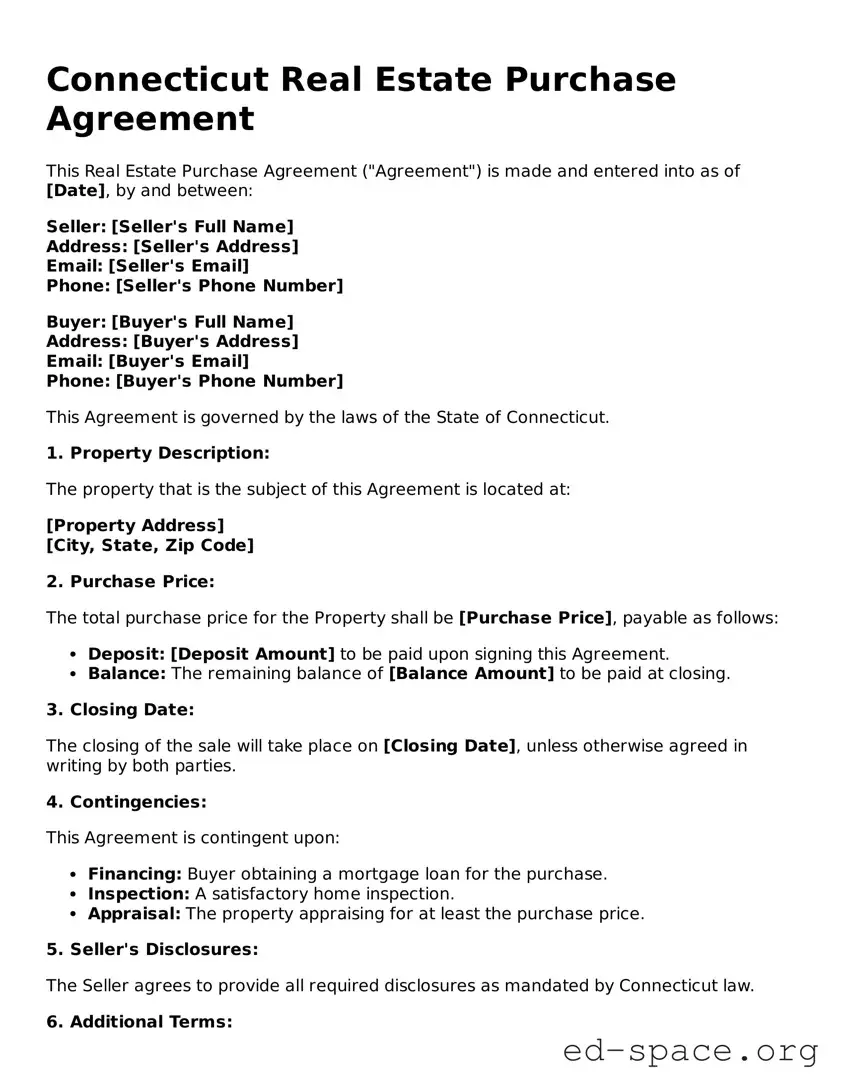
When engaging in the process of buying or selling property in Connecticut, the Real Estate Purchase Agreement form serves as a crucial document that outlines the terms and conditions of the transaction. This form typically includes essential details such as the purchase price, the property description, and the closing date. Additionally, it addresses contingencies that may arise, such as financing and inspection requirements, ensuring that both parties have a clear understanding of their obligations. The agreement also specifies the earnest money deposit, which demonstrates the buyer's commitment to the purchase. Furthermore, it outlines the responsibilities of both the buyer and the seller, including disclosures and the transfer of property title. By carefully reviewing and completing this form, individuals can facilitate a smoother transaction and help protect their interests throughout the real estate process.
Connecticut Real Estate Purchase Agreement
This Real Estate Purchase Agreement ("Agreement") is made and entered into as of [Date], by and between:
Seller: [Seller's Full Name]
Address: [Seller's Address]
Email: [Seller's Email]
Phone: [Seller's Phone Number]
Buyer: [Buyer's Full Name]
Address: [Buyer's Address]
Email: [Buyer's Email]
Phone: [Buyer's Phone Number]
This Agreement is governed by the laws of the State of Connecticut.
1. Property Description:
The property that is the subject of this Agreement is located at:
[Property Address]
[City, State, Zip Code]
2. Purchase Price:
The total purchase price for the Property shall be [Purchase Price], payable as follows:
3. Closing Date:
The closing of the sale will take place on [Closing Date], unless otherwise agreed in writing by both parties.
4. Contingencies:
This Agreement is contingent upon:
5. Seller's Disclosures:
The Seller agrees to provide all required disclosures as mandated by Connecticut law.
6. Additional Terms:
Any additional terms or conditions agreed upon by both parties should be documented here:
[Additional Terms]
7. Signatures:
By signing below, both parties agree to the terms of this Agreement:
Seller's Signature: ____________________________ Date: _______________
Buyer's Signature: ____________________________ Date: _______________
This Agreement constitutes the entire understanding between the parties and supersedes all prior negotiations and agreements.
| Fact Name | Description |
|---|---|
| Governing Law | The Connecticut Real Estate Purchase Agreement is governed by the laws of the State of Connecticut. |
| Purpose | This form outlines the terms and conditions of a real estate transaction between a buyer and a seller. |
| Key Components | It typically includes details such as purchase price, closing date, and contingencies. |
| Signature Requirement | Both parties must sign the agreement for it to be legally binding. |
| Disclosure Obligations | Sellers are required to disclose any known defects or issues with the property in the agreement. |
After obtaining the Connecticut Real Estate Purchase Agreement form, you will need to fill it out carefully. Each section requires specific information about the property, the buyer, and the seller. Ensure that all details are accurate to avoid complications later in the transaction.
What is a Connecticut Real Estate Purchase Agreement?
The Connecticut Real Estate Purchase Agreement is a legal document used when buying or selling real estate in Connecticut. This agreement outlines the terms and conditions of the sale, including the purchase price, property description, and any contingencies that may apply. It serves as a binding contract between the buyer and seller, ensuring that both parties understand their rights and obligations throughout the transaction.
What key elements should be included in the agreement?
Essential elements of a Connecticut Real Estate Purchase Agreement include the names of the buyer and seller, a detailed description of the property, the purchase price, and the closing date. Additionally, it should outline any contingencies, such as financing or inspections, and specify how earnest money will be handled. Including these details helps prevent misunderstandings and protects both parties during the transaction.
Can the agreement be modified after it is signed?
Yes, the Connecticut Real Estate Purchase Agreement can be modified after it is signed, but both parties must agree to the changes. Any modifications should be documented in writing and signed by both the buyer and seller to ensure clarity and enforceability. This helps maintain a clear record of any changes made to the original agreement.
What happens if one party does not fulfill their obligations?
If one party fails to fulfill their obligations under the agreement, the other party may have legal options available. This could include seeking damages or specific performance, which means asking the court to enforce the terms of the agreement. It's important for both parties to understand their rights and responsibilities to avoid potential disputes and ensure a smooth transaction.
Incomplete Information: One common mistake is leaving sections of the form blank. Each party involved in the transaction should provide their full legal name, contact information, and any relevant details about the property. Omitting this information can lead to confusion or delays.
Incorrect Property Description: It is essential to accurately describe the property being purchased. This includes the address, lot number, and any specific details that distinguish the property. Errors in this section can create legal issues later on.
Failing to Specify Contingencies: Buyers often overlook the importance of including contingencies, such as financing or inspection clauses. These conditions protect the buyer's interests and should be clearly stated in the agreement.
Ignoring Deadlines: The agreement includes various deadlines for actions like inspections, appraisals, and closing dates. Failing to adhere to these timelines can jeopardize the transaction or result in penalties.
Not Understanding Terms: Some individuals may not fully grasp the terms used in the agreement. It is crucial to understand concepts such as earnest money, closing costs, and possession dates to avoid misunderstandings.
Neglecting Signatures: A valid agreement requires signatures from all parties involved. Forgetting to sign or having an incomplete signature can render the agreement unenforceable.
In Connecticut, various forms and documents accompany the Real Estate Purchase Agreement to facilitate the transaction process. These documents serve different purposes, ensuring that both buyers and sellers are protected and informed throughout the real estate transaction.
Understanding these documents is crucial for anyone involved in a real estate transaction in Connecticut. Each form plays a vital role in protecting the interests of all parties and ensuring a smooth transfer of property ownership.
The Real Estate Purchase Agreement is a critical document in real estate transactions. It serves as a formal agreement between a buyer and a seller regarding the terms of the property sale. Several other documents share similarities with this agreement, each serving specific purposes in real estate dealings. Below is a list of nine documents that are comparable to the Real Estate Purchase Agreement, along with explanations of their similarities.
Each of these documents plays a unique role in real estate transactions, yet they share common elements with the Real Estate Purchase Agreement, emphasizing the importance of clarity and mutual understanding in property dealings.
When filling out the Connecticut Real Estate Purchase Agreement form, it’s essential to follow certain guidelines to ensure accuracy and compliance. Below are some important dos and don’ts to keep in mind.
By adhering to these guidelines, you can help facilitate a smoother real estate transaction process in Connecticut.
When it comes to the Connecticut Real Estate Purchase Agreement form, several misconceptions can lead to confusion. Here are seven common misunderstandings:
This is not true. The Connecticut Real Estate Purchase Agreement can be used for both residential and commercial properties, making it versatile for various transactions.
While signing the agreement indicates intent, it becomes legally binding only when all parties have signed and any contingencies are satisfied.
While many terms can be negotiated, some aspects, such as state laws and regulations, must be adhered to, limiting flexibility in certain areas.
While it's not legally required, having a lawyer review the agreement is highly advisable. They can help identify potential issues and protect your interests.
Changes can be made to the agreement before it is finalized. Any modifications should be documented and agreed upon by all parties involved.
This is a misconception. Contingencies, such as financing or inspection, must be explicitly stated in the agreement. They are not included by default.
Each transaction is unique, and the agreement can be customized to reflect the specific needs and circumstances of the buyer and seller.
Understanding these misconceptions can help you navigate the real estate process more effectively and ensure a smoother transaction.
Understanding the Connecticut Real Estate Purchase Agreement form is essential for anyone involved in a real estate transaction. Here are some key takeaways that can help guide you through the process:
By keeping these points in mind, you can navigate the Connecticut Real Estate Purchase Agreement with greater confidence and clarity.