The Connecticut Notice to Quit form is a crucial document in the landlord-tenant relationship, serving as a formal notification that a tenant must vacate the rental property. This form is often the first step in the eviction process, and it outlines the reasons for the notice, which may include non-payment of rent, lease violations, or the expiration of a lease agreement. By providing clear information, the form helps ensure that both parties understand their rights and responsibilities. It is important to note that the Notice to Quit must be properly filled out and delivered to the tenant in accordance with state laws to be effective. Additionally, the timeframe for the tenant to respond or vacate the premises varies based on the reason for the notice. Understanding the nuances of this form can empower landlords and tenants alike, fostering a more transparent and respectful rental experience.
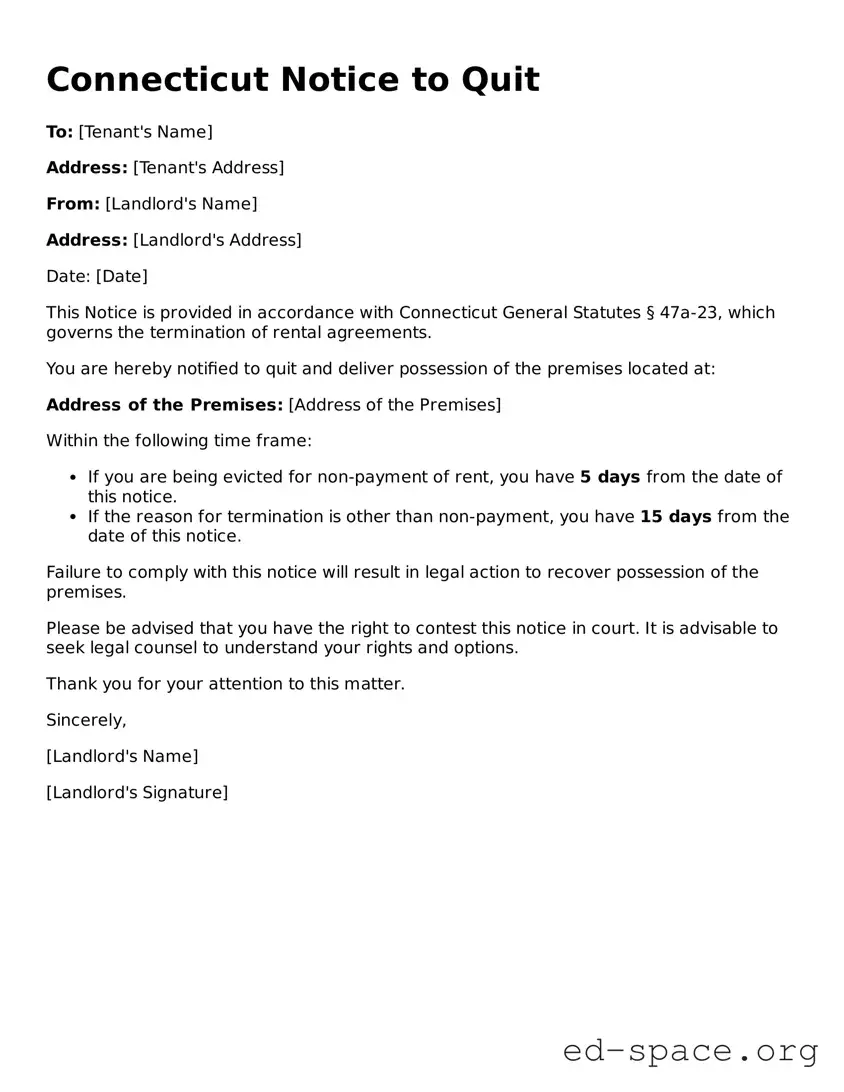
Connecticut Notice to Quit
To: [Tenant's Name]
Address: [Tenant's Address]
From: [Landlord's Name]
Address: [Landlord's Address]
Date: [Date]
This Notice is provided in accordance with Connecticut General Statutes § 47a-23, which governs the termination of rental agreements.
You are hereby notified to quit and deliver possession of the premises located at:
Address of the Premises: [Address of the Premises]
Within the following time frame:
Failure to comply with this notice will result in legal action to recover possession of the premises.
Please be advised that you have the right to contest this notice in court. It is advisable to seek legal counsel to understand your rights and options.
Thank you for your attention to this matter.
Sincerely,
[Landlord's Name]
[Landlord's Signature]
| Fact Name | Description |
|---|---|
| Purpose | The Connecticut Notice to Quit form is used by landlords to inform tenants that they must vacate the rental property. |
| Governing Law | This form is governed by Connecticut General Statutes § 47a-23. |
| Delivery Method | Landlords can deliver the Notice to Quit in person, by certified mail, or by leaving it at the tenant's dwelling. |
| Timeframe | The notice typically requires a tenant to vacate the property within 3 days for non-payment of rent or 15 days for other lease violations. |
| Required Information | The form must include the tenant's name, the address of the rental property, and the reason for termination. |
| Legal Consequences | If a tenant does not comply with the Notice to Quit, the landlord may proceed with eviction proceedings in court. |
Once you have your Connecticut Notice to Quit form ready, it’s essential to fill it out accurately to ensure that the process moves forward smoothly. This form is a critical step in the eviction process, and any errors could lead to delays or complications. Follow these steps closely to complete the form correctly.
After completing the form, you will need to serve it to the tenant according to state guidelines. Make sure to keep a record of how and when the notice was delivered, as this will be important if further legal action becomes necessary.
What is a Notice to Quit in Connecticut?
A Notice to Quit is a formal document that a landlord provides to a tenant, indicating the intention to terminate a rental agreement. This notice is often the first step in the eviction process. In Connecticut, it typically informs the tenant that they must vacate the property by a specified date, usually giving them a certain number of days to do so, depending on the reason for the eviction.
What are the common reasons for issuing a Notice to Quit?
Landlords may issue a Notice to Quit for several reasons. Common causes include non-payment of rent, violation of lease terms, or illegal activity on the premises. Each reason may have different notice periods required by Connecticut law, so it’s essential for landlords to understand the specifics of their situation before proceeding.
How long does a tenant have to respond to a Notice to Quit?
The time frame for a tenant to respond to a Notice to Quit varies based on the reason for the notice. For instance, if the notice is due to non-payment of rent, the tenant typically has 5 days to either pay the overdue rent or vacate the property. For lease violations, the notice period might be longer, often around 15 days. It is crucial for tenants to read the notice carefully to understand their obligations.
What should a Notice to Quit include?
A proper Notice to Quit should clearly state the reason for the eviction, the date by which the tenant must leave, and any relevant details regarding the lease agreement. Additionally, it should include the landlord's contact information and be signed by the landlord or their representative. This clarity helps avoid confusion and ensures that the notice complies with legal requirements.
Can a tenant contest a Notice to Quit?
Yes, tenants have the right to contest a Notice to Quit. If they believe the notice is unjust or that they have rectified the issue (such as paying overdue rent), they can communicate this to the landlord. If necessary, tenants may also seek legal advice or representation to address the situation formally, especially if the landlord pursues eviction in court.
What happens if a tenant does not leave by the specified date?
If a tenant does not vacate the property by the date specified in the Notice to Quit, the landlord can initiate eviction proceedings. This typically involves filing a summary process action in court. The tenant will then have the opportunity to present their case. If the court rules in favor of the landlord, the tenant may be ordered to leave the premises and could face additional consequences, such as a judgment for unpaid rent.
Is legal assistance recommended when dealing with a Notice to Quit?
Yes, seeking legal assistance is often advisable for both landlords and tenants when dealing with a Notice to Quit. Legal professionals can provide guidance on rights and responsibilities, help ensure compliance with state laws, and represent parties in court if necessary. Understanding the complexities of rental laws can significantly impact the outcome of any disputes.
Failing to provide accurate tenant information. It’s crucial to include the correct names of all tenants listed on the lease. Omitting a name can lead to delays or complications in the eviction process.
Not specifying the reason for the notice. Connecticut law requires that a valid reason be stated. Whether it’s for non-payment of rent or lease violations, clarity is essential.
Incorrectly stating the notice period. The law mandates specific timeframes depending on the reason for the notice. Miscalculating this period can render the notice invalid.
Using outdated forms. Always ensure that you are using the most current version of the Notice to Quit form. Laws and requirements can change, and outdated forms may not comply.
Neglecting to sign and date the form. A Notice to Quit must be signed by the landlord or their authorized agent. Without a signature, the notice is not legally binding.
Failing to serve the notice properly. The law requires that the notice be delivered in a specific manner. Whether it’s through certified mail or personal delivery, ensuring proper service is vital for the notice to be enforceable.
In the process of landlord-tenant disputes in Connecticut, several documents are commonly used alongside the Notice to Quit form. Each of these documents serves a specific purpose in ensuring that both parties understand their rights and responsibilities. Below is a list of these documents, along with brief descriptions of their functions.
These documents play a crucial role in the eviction process and help ensure that both landlords and tenants are aware of their rights and obligations. Understanding each of these forms can facilitate a smoother resolution to disputes.
When dealing with a Notice to Quit form in Connecticut, it is crucial to approach the process with care. Here are some essential dos and don’ts to consider:
Following these guidelines can help facilitate a smoother process and ensure that your rights are protected throughout the eviction proceedings.
Understanding the Connecticut Notice to Quit form is essential for both landlords and tenants. However, several misconceptions can lead to confusion and missteps. Here are ten common misunderstandings:
The Notice to Quit is specifically for terminating a tenancy due to lease violations or non-payment of rent, not for arbitrary reasons.
While personal service is one option, the notice can also be sent via certified mail, which is often more convenient.
There are different types of Notices to Quit depending on the reason for termination, such as non-payment or lease violations.
Ignoring a Notice to Quit can lead to eviction proceedings. It is important to respond appropriately.
The Notice to Quit does not result in immediate eviction; it simply starts the process. Tenants have time to respond.
This form can also apply to commercial leases, depending on the terms of the agreement.
A written Notice to Quit is required to formally document the request for termination of tenancy.
Landlords may choose to withdraw the Notice to Quit before initiating eviction proceedings, depending on the circumstances.
The Notice must specify a timeframe for the tenant to vacate, typically at least three days for non-payment of rent.
Tenants may also issue a Notice to Quit to landlords under certain conditions, such as when the landlord fails to maintain the property.
Being aware of these misconceptions can help both landlords and tenants navigate the process more effectively and avoid potential legal issues.
When dealing with the Connecticut Notice to Quit form, there are several important aspects to consider. Here are key takeaways to help you navigate the process effectively:
Understanding these key points can help ensure that the process goes smoothly and complies with Connecticut law.